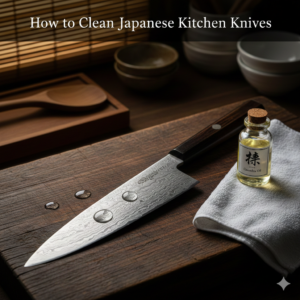
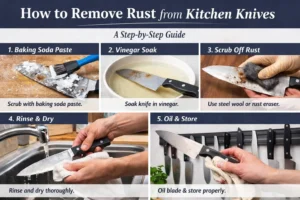
Store Japanese knives dry, sheathed, and supported to protect the edge and steel.
If you want your gyuto, santoku, or yanagiba to last a lifetime, storage matters as much as sharpening. I’ve spent years testing systems in home kitchens and pro spaces, and I’ll show you how to store japanese kitchen knives the right way. This guide blends expert insight with real-world habits you can use today.
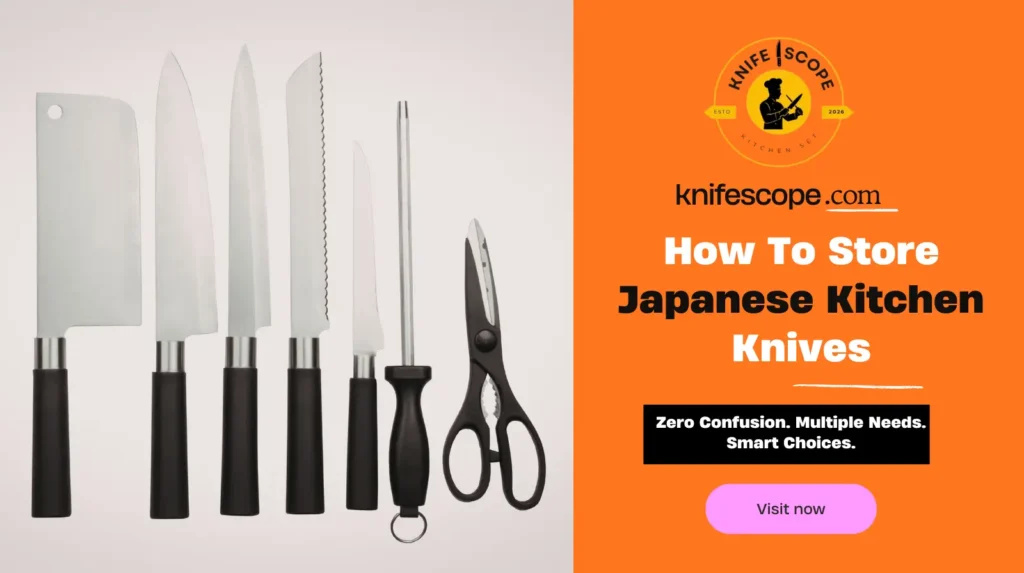
Understanding Japanese Knife Anatomy and Materials
Japanese knives are different by design. Many use harder steel and thin grinds. That gives you a crazy sharp edge. It also means the edge is fragile.
Some knives use carbon steel. It patinas and can rust fast if left wet. Others use stainless steel. It resists rust but still needs care. Single-bevel knives like yanagiba and usuba chip if they knock into other tools. This is why how to store japanese kitchen knives is not the same as storing Western knives.
Handles also matter. Wa handles are wood and can swell or crack with moisture swings. Blades with kurouchi finishes have a black scale that helps resist rust. Do not scrape it off when you store or clean.
The takeaway is simple. Protect the edge. Keep it dry. Keep it stable. Then choose storage that matches your space and knife type. That is the core of how to store japanese kitchen knives.

Source: knifewear.com
Principles of Safe Storage
Think of storage as insurance. You lock in sharpness, safety, and hygiene. Use these simple rules when thinking about how to store japanese kitchen knives:
- Keep knives dry before storage. Wipe with a soft towel. Air dry for a minute.
- Shield the edge. Use a saya, blade guard, or a lined block or strip.
- Avoid blade contact. Do not let knives touch metal, ceramic, or other blades.
- Control humidity. Aim for a dry, stable spot away from steam and splashes.
- Make access safe. Grab the handle first. Keep tips and edges pointing down or away.
In my kitchen, I made one change that paid off fast. I added a towel station near the sink. I dry the knife, then pop it into its saya or onto a cork-backed magnet. No chips. No rust. This is how to store japanese kitchen knives in a way that fits daily life.
Source: musashihamono.com
Storage Options Compared
There is no one best way. The best choice depends on your kitchen and knife set. Here is how to store japanese kitchen knives with common systems, and what to watch for.
Wooden saya sheaths
Great for single-bevel and premium knives. They protect the edge and tip. They also breathe, which helps with moisture. Use a snug fit and store only when the blade is dry. Add a tiny camellia oil film if you have carbon steel.Universal blade guards
Cheap, simple, and good for drawers or travel. Pick guards with a felt or soft lining. Avoid hard plastic inside if it scratches. Wipe dry before sliding in.Magnetic wall strips
Choose wood or cork-faced magnets. They grip without scraping. Place the spine down first, then roll the blade on. This is a solid way to handle how to store japanese kitchen knives in small kitchens. Avoid bare steel magnets if you can; they can scratch and shock the edge.In-drawer knife trays or blocks
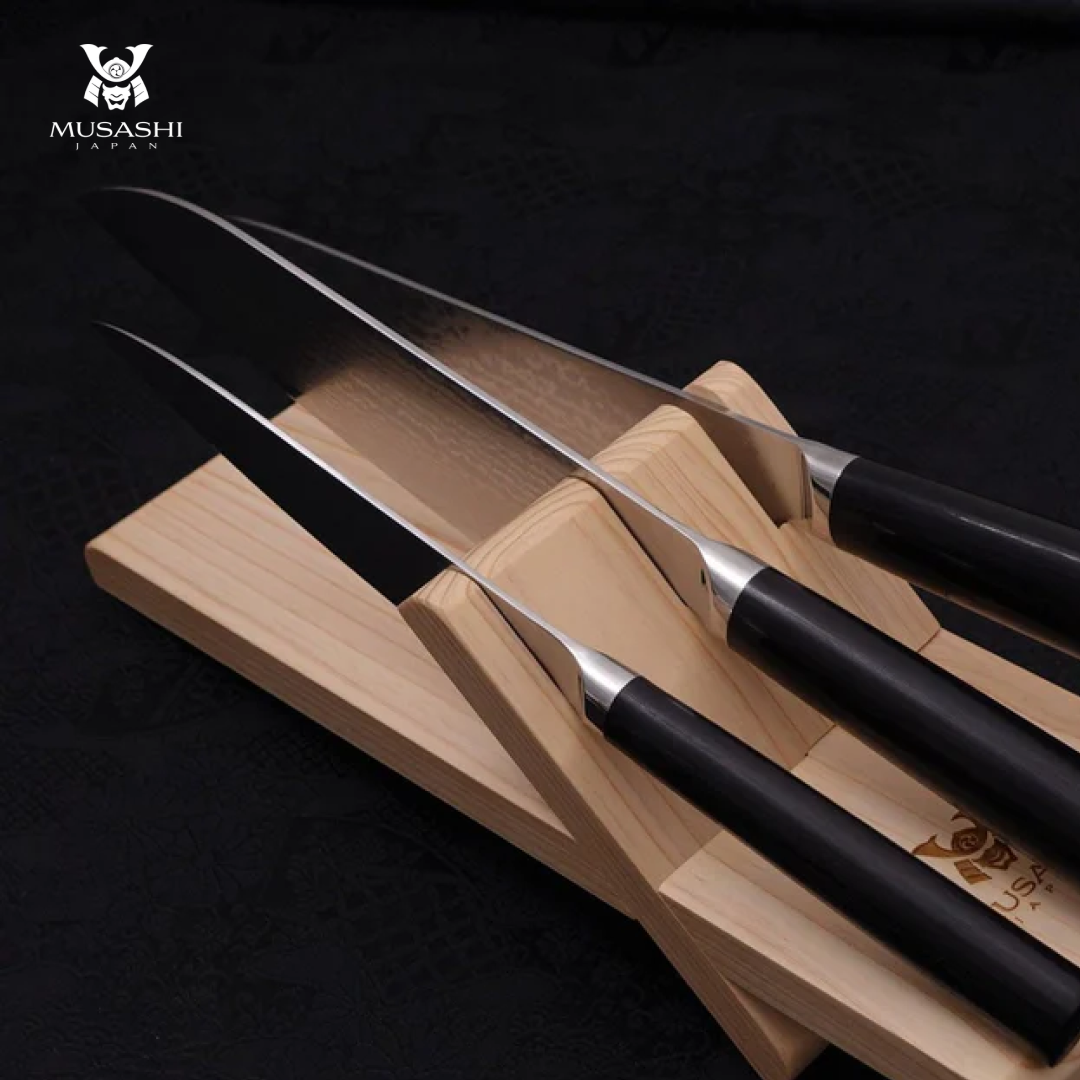
Keeps counters clear and edges safe. Pick wood or soft plastic with separate slots. Make sure slots fit long blades like a 240 mm gyuto or 300 mm yanagiba.Countertop blocks
Good if you have room. Look for horizontal slot designs with wide slots for tall blades. Clean the block inside now and then. Moist crumbs are bad news for carbon steel.Knife rolls and cases
Best for pros or travel. Use these for transport, not daily storage. Wrap blades in guards or sayas. Add a silica gel pack to control moisture.
Personal note: I used a bare metal magnet for a month. It chipped a petty when I bumped it while cooking. I swapped it for a walnut magnet with a soft face. Problem solved. That small change made how to store japanese kitchen knives far safer for me.

Source: knifewear.com
How to Store Japanese Kitchen Knives Day to Day
Use a short routine. It keeps your knives sharp and rust-free. It also builds a habit around how to store japanese kitchen knives.
After each use:
- Rinse with warm water. No soaking.
- Wipe with a soft sponge. Use gentle soap if needed.
- Rinse, then dry right away with a clean towel.
- Let the knife air dry for 30 to 60 seconds.
- For carbon steel, wipe a drop of camellia or food-safe mineral oil. Very thin.
- Place the knife in a saya, guard, tray, or on a soft-faced magnet.
Weekly:
- Check edges and tips for chips. Re-seat loose sayas.
- Wipe down magnets and blocks. Keep dust and oil build-up away.
- Rotate knives in a block so moisture does not hide in one slot.
Monthly:
- Inspect handles. Wax or oil wood handles if dry.
- Refresh silica gel if you store in a drawer or cabinet.
This simple plan is how to store japanese kitchen knives without stress. It is fast. It works.
Source: reddit.com
Special Cases: Carbon Steel, Kurouchi, and Damascus
Carbon steel cuts like a dream. It also rusts fast. If you ask how to store japanese kitchen knives made of carbon steel, the answer is dry, oiled, and aired.
Carbon steel
Dry right away. Apply a thin oil film if you will not use the knife in 24 hours. Use breathable storage like wood sayas. Do not trap moisture.Kurouchi finishes
The black layer helps resist rust. Keep it dry. Do not scrub with harsh pads. Store in a saya or on a soft magnet.Damascus or tsuchime (hammered) finishes
Wipe clean of acids like lemon or onion. Dry well because water can hide in patterns. Use guards with soft linings.
In humid summers, I keep a small dehumidifier near the prep area. It lowered surface rust spots on my carbon steel nakiri to zero. That is a big win for how to store japanese kitchen knives in damp climates.
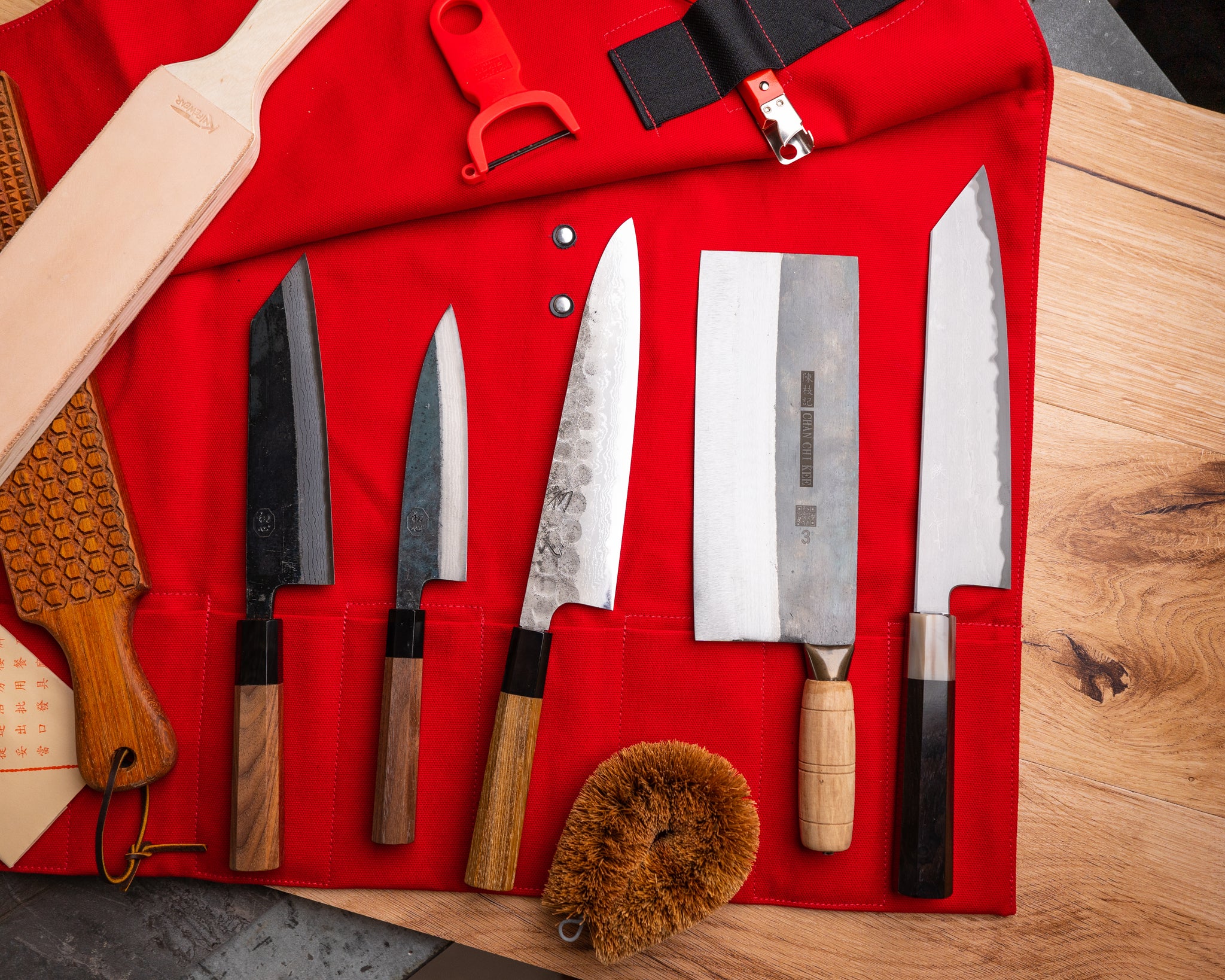
Source: knifewear.com
Mistakes to Avoid and Safety Tips
Small mistakes can cost you an edge or a finger. These are the big ones to avoid when thinking about how to store japanese kitchen knives:
- Tossing knives in a drawer. Edges hit other tools and chip.
- Storing knives wet. Water trapped in sayas or guards leads to rust.
- Using harsh metal magnets. They shock and scratch blades.
- Leaving knives on a wet cutting board. Handles swell. Tips bend.
- Storing above a hot oven or dishwasher vent. Heat and steam hurt wood and steel.
- Leaving the edge exposed with kids around. Always shield the blade.
Safety tips:
- Handle-first access. Make storage intuitive and safe to grab.
- Edge-down in blocks. Tip and edge should be protected.
- Use bright lighting in your storage zone. Reduce accidents.
These simple habits are the backbone of how to store japanese kitchen knives for both safety and performance.

Source: musashihamono.com
Setting Up a Humidity-Smart Knife Zone
Moisture is the silent killer. Build a micro-climate for your knives. This is a big part of how to store japanese kitchen knives for the long term.
- Place storage away from sinks and steam. Side walls work well.
- Use silica gel packs in drawers or cases. Refresh them often.
- Choose wood that breathes, like walnut or hinoki. It buffers humidity.
- Keep a soft towel near the storage spot. Dry hands before you grab.
- In very humid places, add a small dehumidifier to the room.
I also keep a tiny bottle of camellia oil and a microfiber cloth in the drawer. It takes five seconds to oil a carbon steel blade. This habit changed how to store japanese kitchen knives in my home and saved me from surprise rust.

Source: co.uk
Travel and Long-Term Storage
Travel and long rests need extra care. Plan for shock, moisture, and time. That is still part of how to store japanese kitchen knives.
For travel:
- Use sayas or lined guards for every blade.
- Place in a padded roll or hard case.
- Add silica gel. Avoid checking knives in luggage if possible.
For long-term storage:
- Clean, dry, and oil the blade. Very thin coat.
- Wrap in anti-rust paper or a clean cotton cloth.
- Store in a breathable sheath. Avoid sealing in plastic.
- Check every few months if humidity is high.
When I moved cross-country, I oiled each knife and used wood sayas plus a hard case. Not a scratch. That plan is how to store japanese kitchen knives safely over long distances.
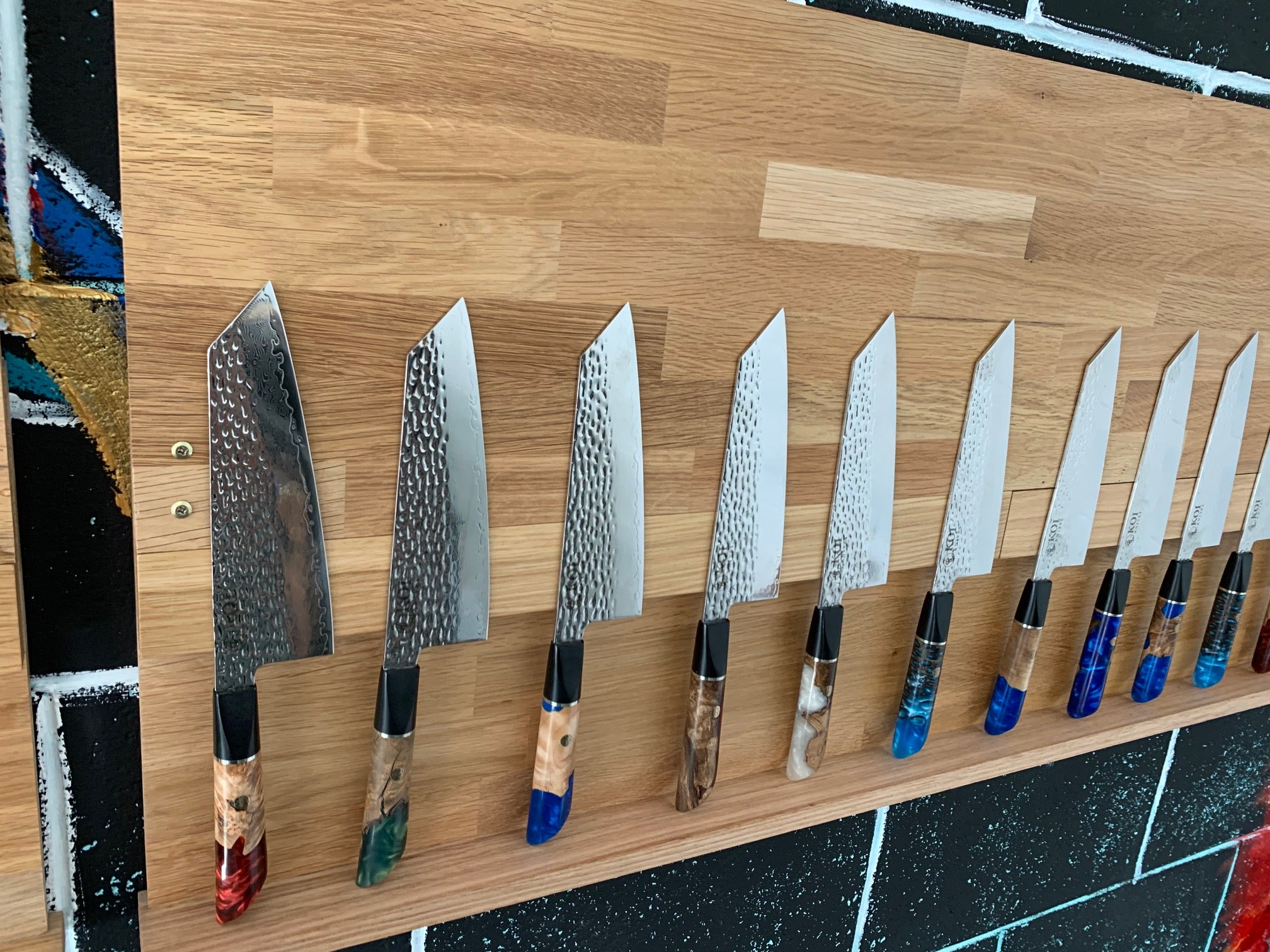
Source: koiknives.com
Frequently Asked Questions of how to store japanese kitchen knives
Can I store Japanese knives on a magnetic strip?
Yes, if the strip has a wood or soft face. Place the spine first, then roll the blade on to avoid edge shock.
Do I need a saya if I have a knife block?
A saya helps when you move knives or need extra protection. For single-bevel knives, a fitted saya is ideal even if you use a block.
How dry should the knife be before storage?
Fully dry. Wipe, then let it air dry for 30 to 60 seconds before sheathing or mounting.
Is oiling required for stainless steel knives?
Not daily, but a light oil film helps for long breaks or humid rooms. It adds a safety layer against corrosion.
What is the best way to store a carbon steel knife overnight?
Dry well, add a thin coat of camellia or mineral oil, then sheath in a breathable saya or lined guard. Keep it away from steam.
Can I put Japanese knives in the dishwasher for quick drying?
No. Heat, steam, and movement can warp handles and dull edges. Hand wash and towel dry only.
Are bamboo blocks safe for Japanese knives?
Yes, if slots fit the blade and are kept clean and dry. Avoid forcing wide blades into narrow slots.
Conclusion
Smart storage protects your edge, your hands, and your investment. Keep knives dry, shielded, and easy to reach. Use sayas, soft magnets, or clean trays. Control humidity and build a quick routine. That is how to store japanese kitchen knives with confidence and care.
Set up your storage zone this week. Try one upgrade, like a wood-faced magnet or a fitted saya. Want more tips? Subscribe for gear guides, sharpening tricks, and step-by-step care checklists.

Olivia Bennett is a knife care and sharpening specialist with 6+ years of hands-on experience in blade maintenance, whetstone sharpening, and rust prevention. She creates simple, safe guides to help users maintain razor-sharp kitchen knives at home.
Expertise: Knife Sharpening, Maintenance, Blade Care