Hold the rod vertical and stroke the blade at a steady angle, light pressure, five to ten strokes per side.
I have sharpened hundreds of kitchen knives and trained cooks on blade care. This guide explains how to use honing rod with clear steps, reasons, and tips you can trust. Read on to learn safe technique, common mistakes, and when to reach for a true sharpener.
Why a honing rod matters
A honing rod realigns a blade's edge. It does not remove much steel. It fixes tiny bends and keeps knives cutting cleanly.
Using a honing rod regularly saves time. It keeps knives performing between actual sharpenings. Learning how to use honing rod correctly makes cooking safer and faster.
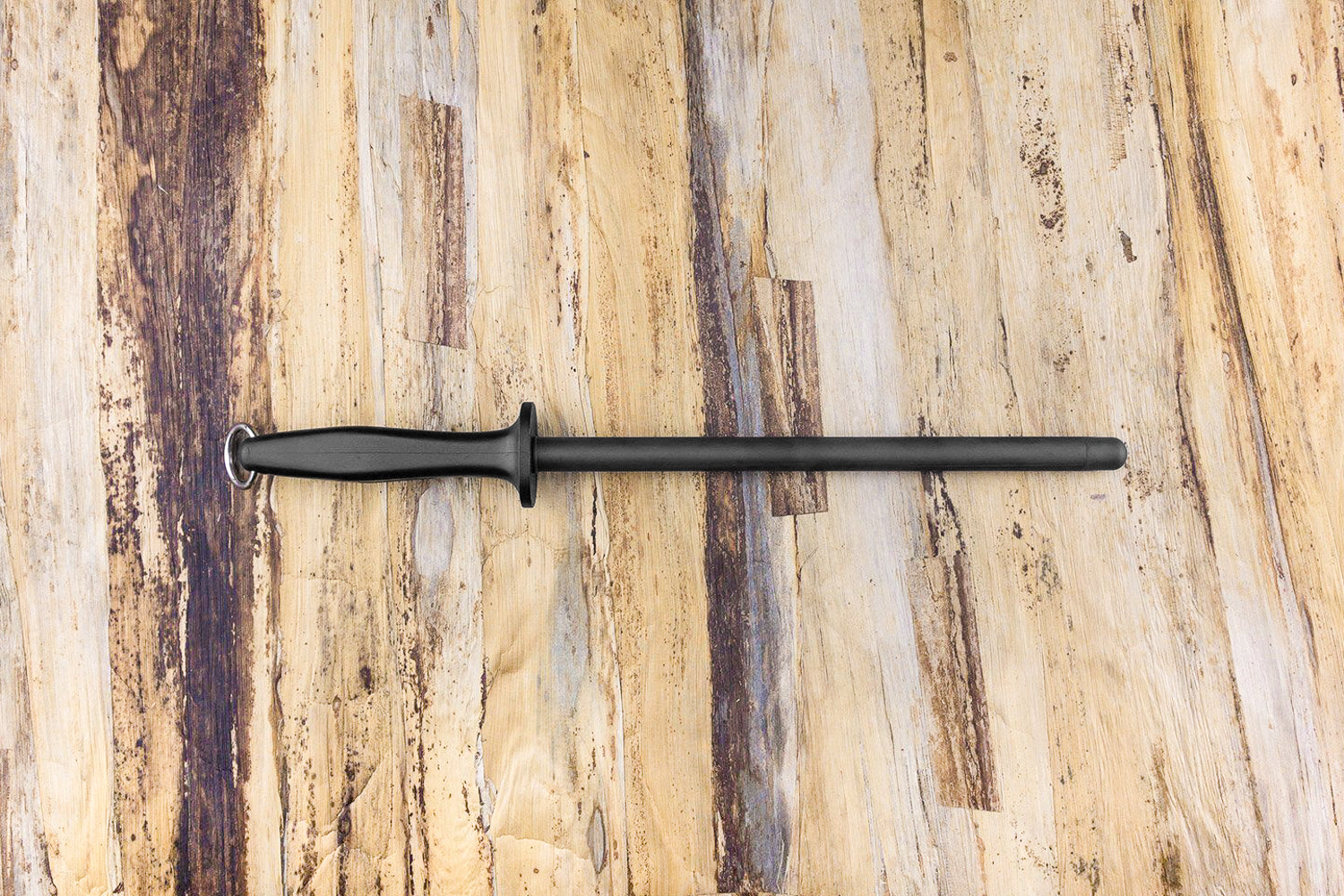
Types of honing rods
Choosing the right rod helps you get results fast. Match the rod to your knife type and usage.
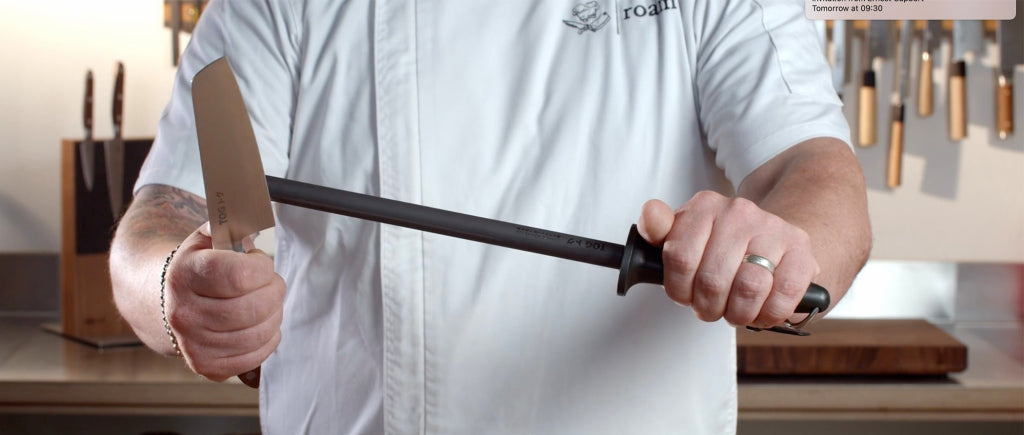
- Steel rod. Good for everyday stainless and carbon knives. It realigns edges quickly and is common in home kitchens.
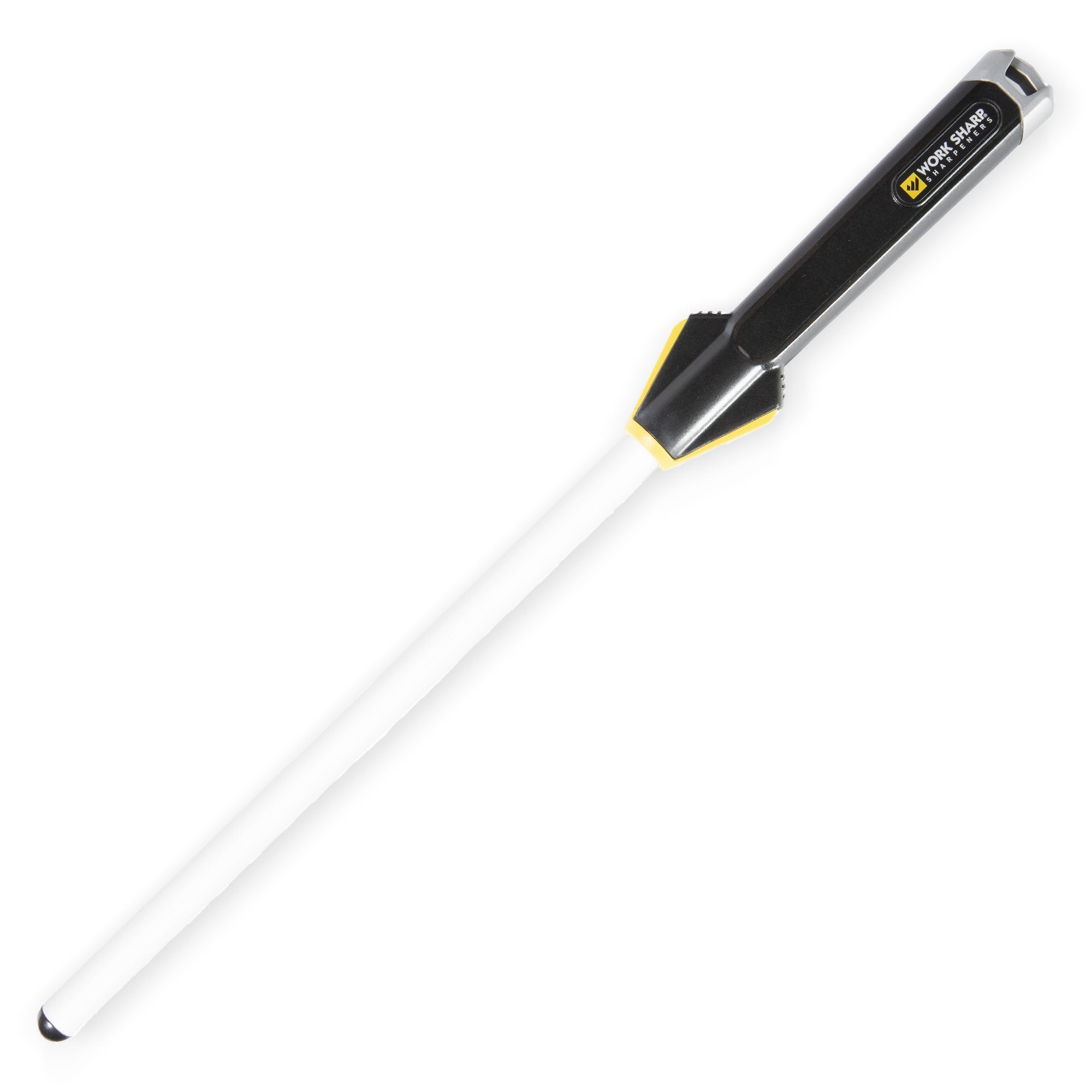
- Ceramic rod. Slightly abrasive and good for fine edges. It removes a small amount of metal and helps restore polish.
- Diamond rod. The most abrasive option. Use for very dull knives or hard steels that resist other rods.
Each rod feels different. Try them to find what suits your hands and knives. The type you pick changes how you use and maintain the rod.

Step-by-step: how to use honing rod
This section gives a clear, repeatable method. Practice slowly until the motion feels natural.
Position yourself and the knife
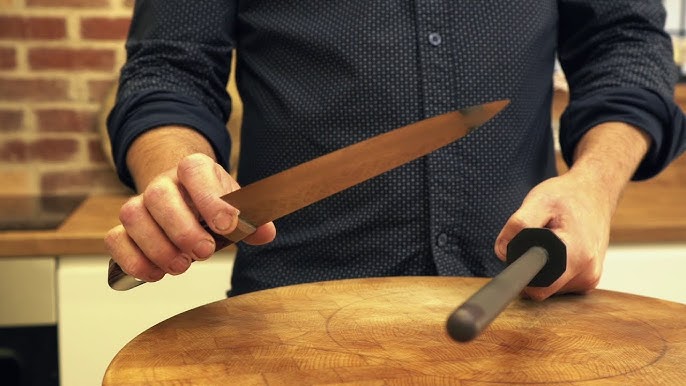
- Stand with good balance. Hold the rod vertically, tip resting on a cutting board.
- Grip the rod handle firmly. Keep the rod steady.
Set the angle
- Find the knife's bevel angle. Typical kitchen knives sit at 15 to 20 degrees.
- Hold the blade so the edge meets the rod at the chosen angle.
Stroke the blade
- Start at the heel of the knife. Slide the blade down and across the rod toward the tip.
- Use light pressure. Keep the angle consistent.
- Repeat on the other side. Alternate sides every stroke or do five to ten strokes per side.
Check the edge
- Gently feel for burrs with caution or test by slicing paper.
- If the edge still drags, repeat steps with careful control.
Finish and clean
- Wipe the blade to remove metal particles. Store the rod safely.
Practice these moves slowly. Speed comes with control. Doing this routine often makes knives perform like new.

Practical tips from experience
I learned a few fast lessons while training chefs and home cooks. These make a big difference.
- Keep your wrists steady. Unsteady wrists change angle and waste time.
- Use a board under the rod. It prevents slipping and protects surfaces.
- Start slow. Quick strokes make uneven edges.
- Make small corrections. If a knife feels dull, five strokes per side often works.
I once watched a cook press hard and ruin the edge on a good knife. Light pressure and steady angle save expensive blades. These simple habits keep knives sharper longer.
:max_bytes(150000):strip_icc()/winners-graphic-resized-sea-honing-steels-test-messermeister-12-1200-grit-ceramic-sharpening-rod-ashlee-redger-40-a6423424ed454c639fe82d0a40f2bacd.jpg "How To Use Honing Rod: Quick Sharpening Guide 5")
Common mistakes and how to avoid them
Avoid habits that undo your work. These are the top errors and fixes.
Pressing too hard
- Problem: Removes metal and shortens blade life.
- Fix: Use gentle pressure and consistent angle.
Inconsistent angle
- Problem: Creates uneven edge and reduced sharpness.
- Fix: Visualize or mark a 15–20 degree guide until muscle memory forms.
Honing a very dull blade
- Problem: Rod won’t restore a badly nicked edge.
- Fix: Sharpen with stones or a professional tool first.
Over-honing
- Problem: Too much realignment can wear small areas unevenly.
- Fix: Hone when needed, not every minute. Test the edge before you hone again.
Caring for and storing your honing rod
The rod itself needs care to last and work well. Good maintenance keeps performance high.
Clean after use
- Wipe metal shavings off the rod with a cloth.
- For ceramic or diamond rods, rinse and dry if manufacturer allows.
Inspect for damage
- Check for chips or uneven wear.
- Replace rods that are damaged or worn thin.
Store safely
- Hang the rod or keep it in a block upright.
- Avoid tossing it in a drawer where it can nick other tools.
A well-cared rod gives consistent guidance for every stroke.

When to sharpen instead of hone
Knowing when to sharpen is key. Honing is maintenance. Sharpening restores a worn edge.
Honing rod use case
- Use daily or before each heavy use if the knife is only mildly misaligned.
Sharpening need
- When the knife is dull, chipped, or slicing poorly, you must sharpen.
- Use stones, guided systems, or a pro service for real edge repair.
If you try to fix a dull knife with only a honing rod, the results will be weak. Learn how to use honing rod for upkeep and sharpen when the edge needs real metal removal.
Quick practical questions
How often should I hone my knife?
Hone weekly with moderate use and before heavy prep sessions. Frequent honing keeps the edge aligned and cuts better.
Does honing make a knife sharper?
Honing improves cutting feel by realigning the edge. It does not replace sharpening when metal needs removal.
Can I hone serrated knives?
You can lightly realign serrations, but most serrated knives need specialized tools. Avoid heavy rod use on serrated edges.

Frequently Asked Questions of how to use honing rod
What angle should I use when learning how to use honing rod?
Aim for 15 to 20 degrees for most kitchen knives. Use a lower angle for fine Japanese knives and a slightly higher angle for heavy blades.
How many strokes per side when you hone?
Do five to ten light strokes per side. Check the edge and repeat only if needed.
Will a honing rod fix chips in my blade?
No. A honing rod cannot remove chips. You need a sharpening stone or pro repair for chips.
Is it safe to hold the rod vertically?
Yes, holding the rod vertical on a board is safe and stable. Keep your fingers behind the rod and away from the blade path.
Can I use a honing rod on ceramic knives?
Most ceramic knives are too hard for regular rods. Use a diamond rod very gently or follow the knife maker's guidance.
How long does a honing rod last?
With proper care, a quality rod lasts years. Replace it if it becomes uneven, chipped, or clogged.
Conclusion
Using a honing rod is a simple skill that keeps knives sharp, safe, and fast in the kitchen. Practice the angle, use light pressure, and hone regularly to prolong the life of your blades. Try the steps here during your next meal prep and notice the difference in every slice. Share your experience, ask questions below, or subscribe for more practical knife care tips.

Maliha Akter is a kitchen knife reviewer and food preparation specialist with over 6 years of experience testing Japanese kitchen knives and everyday cooking tools. She focuses on performance, safety, durability, and real-world usability to help home cooks choose the right knives for efficient and enjoyable cooking.
Expertise:Japanese Knives • Vegetable Knives • Product Reviews • Kitchen Efficiency • Knife Care