A compact, versatile Japanese chef's knife built for precise slicing, dicing, and detail work.
I have used and tested many knives over a decade in professional kitchens and home labs. This guide explains what a japanese bunka knife is, why chefs choose it, how to use and care for it, and how to pick the right model for your needs. Read on for practical tips, comparisons, and real-world lessons that will help you decide if a japanese bunka knife belongs in your toolkit.

What is a Japanese Bunka Knife?
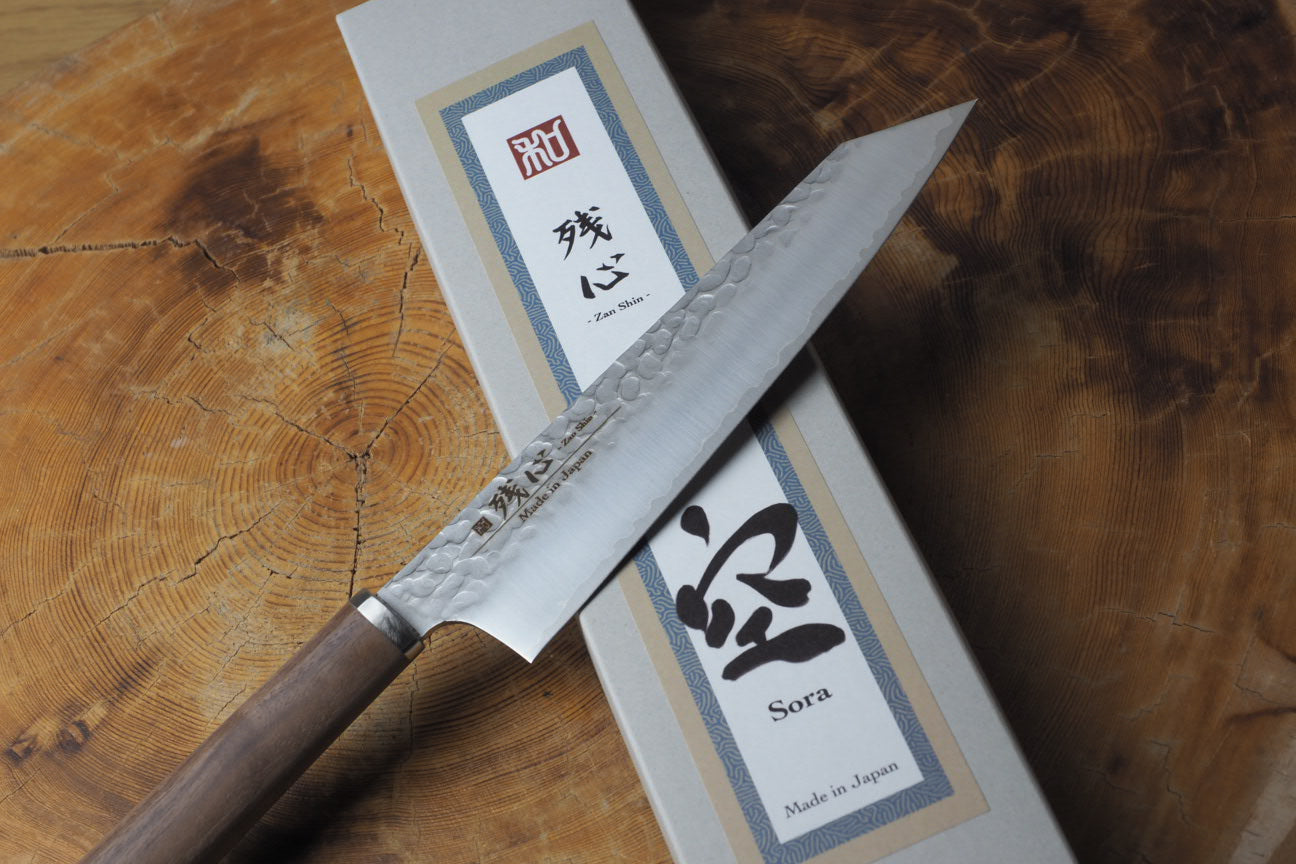
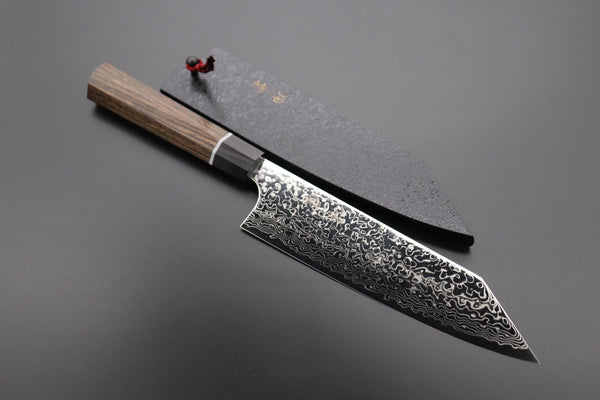
A japanese bunka knife is a multipurpose Japanese kitchen knife with a compact blade and a distinctive pointed tip. It blends the best traits of a santoku and a petty knife, giving users a nimble tool for vegetables, fish, and small meats.
Key characteristics
- Blade length usually 150–180 mm for nimble control.
- Pointed tip for piercing and detail cuts.
- Slightly curved belly and flat section for push and pull cuts.
- Often made in both stainless and high-carbon steels.
The japanese bunka knife shines when you need accuracy and speed. It is small enough for fine tasks but large enough to handle main prep jobs.
History and design evolution
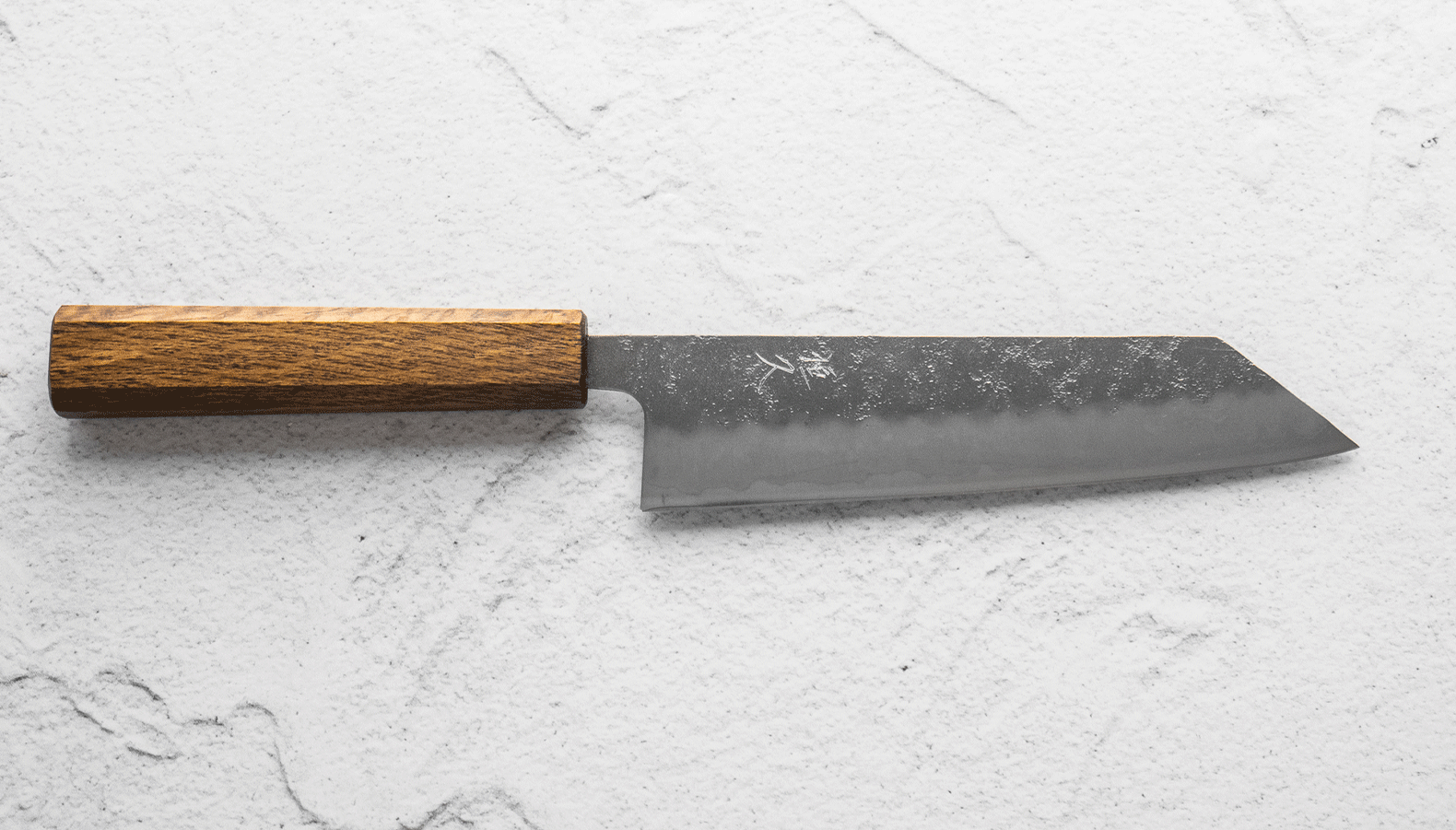
The bunka evolved in post-war Japan as cooks sought a knife that combined utility and precision. It took cues from traditional Japanese shapes and western needs for versatility. Over time, makers refined the bunka blade to offer a sharper tip and a more balanced feel.
Design influences
- Traditional Japanese wa and yo handles to suit varied grips.
- Blade grinds ranging from single-bevel to double-bevel for different users.
- Modern steels for edge retention and stainless options for low maintenance.
Understanding the design helps explain why the japanese bunka knife fits so many tasks in a kitchen. Its form is purposeful and born from practical use.
Blade geometry, steel, and builds
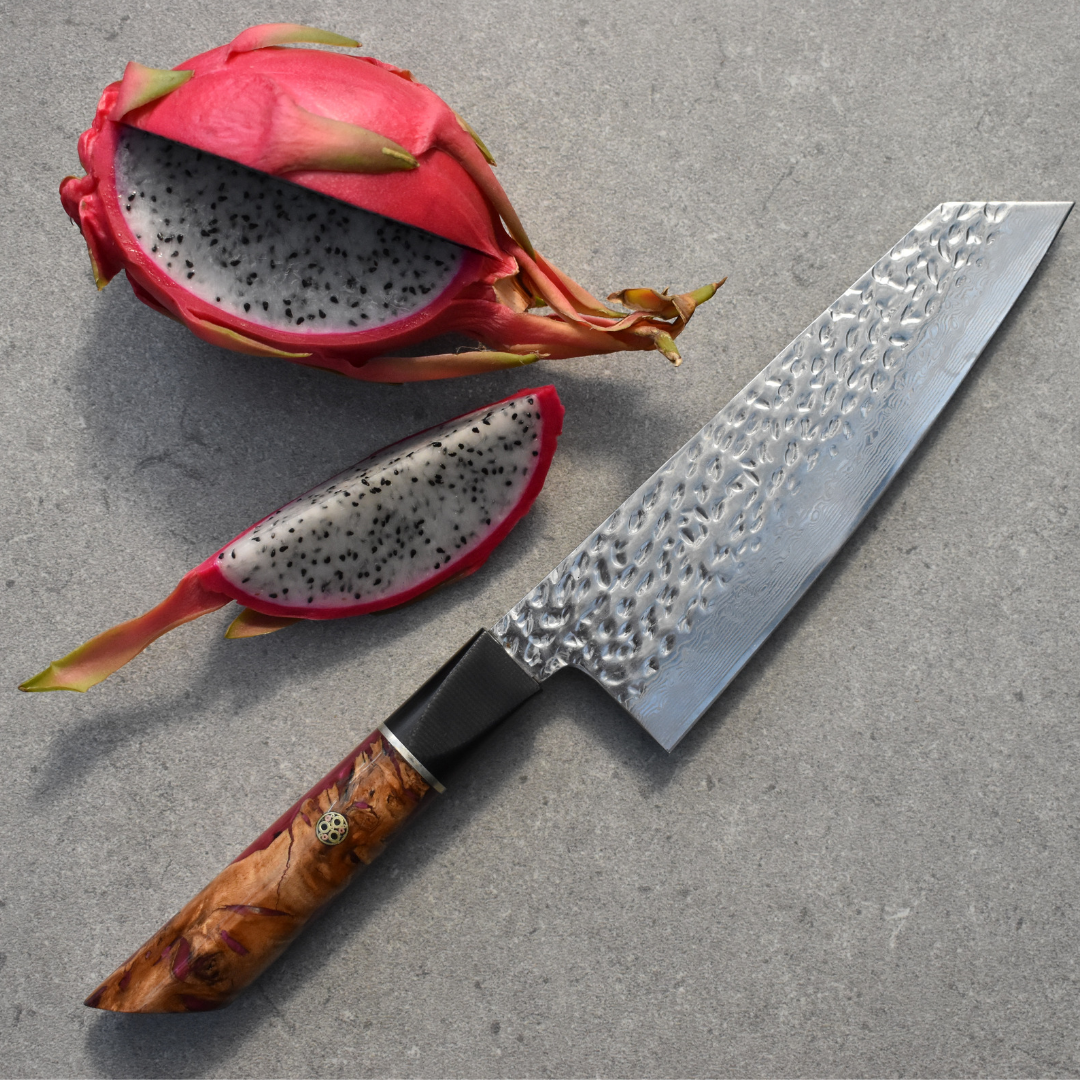
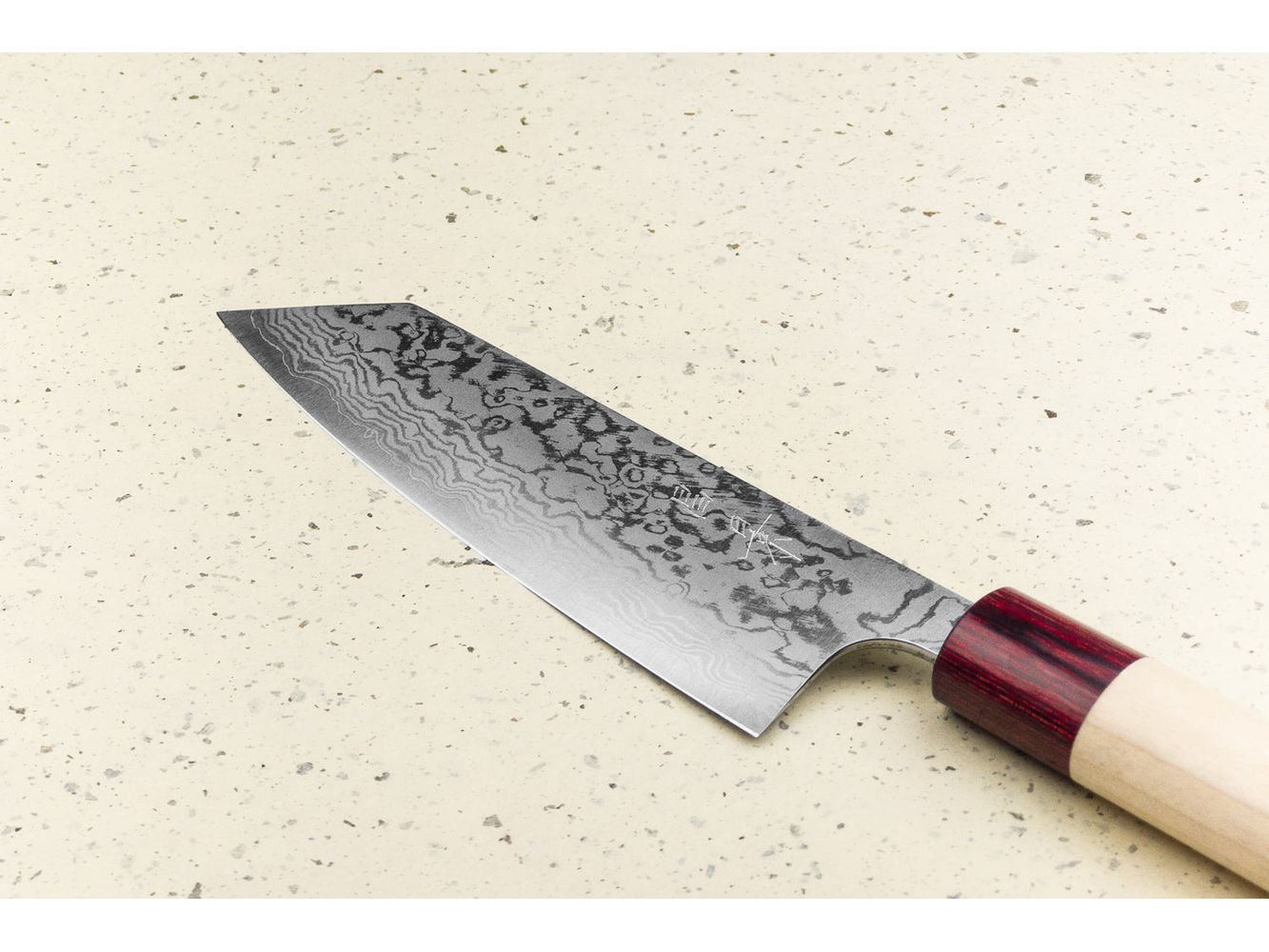
Blade geometry and steel determine performance. The japanese bunka knife often features a thin edge and a narrower profile than a western chef knife. Typical steels and grinds you will see include:
Common steels
- Stainless steels such as VG-10 and AUS-10 for corrosion resistance.
- High-carbon steels like White and Blue (Shirogami/Aogami) for keen edges.
- Powdered steels (SG2/SGPS) for long edge life and fine polish.
Edge and grind
- Double-bevel 15–18° per side is common for balance of sharpness and durability.
- Some traditional models use a single-bevel for left- or right-handed specialists.
- A pointed tip and flat to slightly curved belly enable both chopping and piercing.
This mix of geometry and metallurgy gives the japanese bunka knife its signature performance: fast, precise, and agile.
How to use a Japanese Bunka Knife: techniques and tips
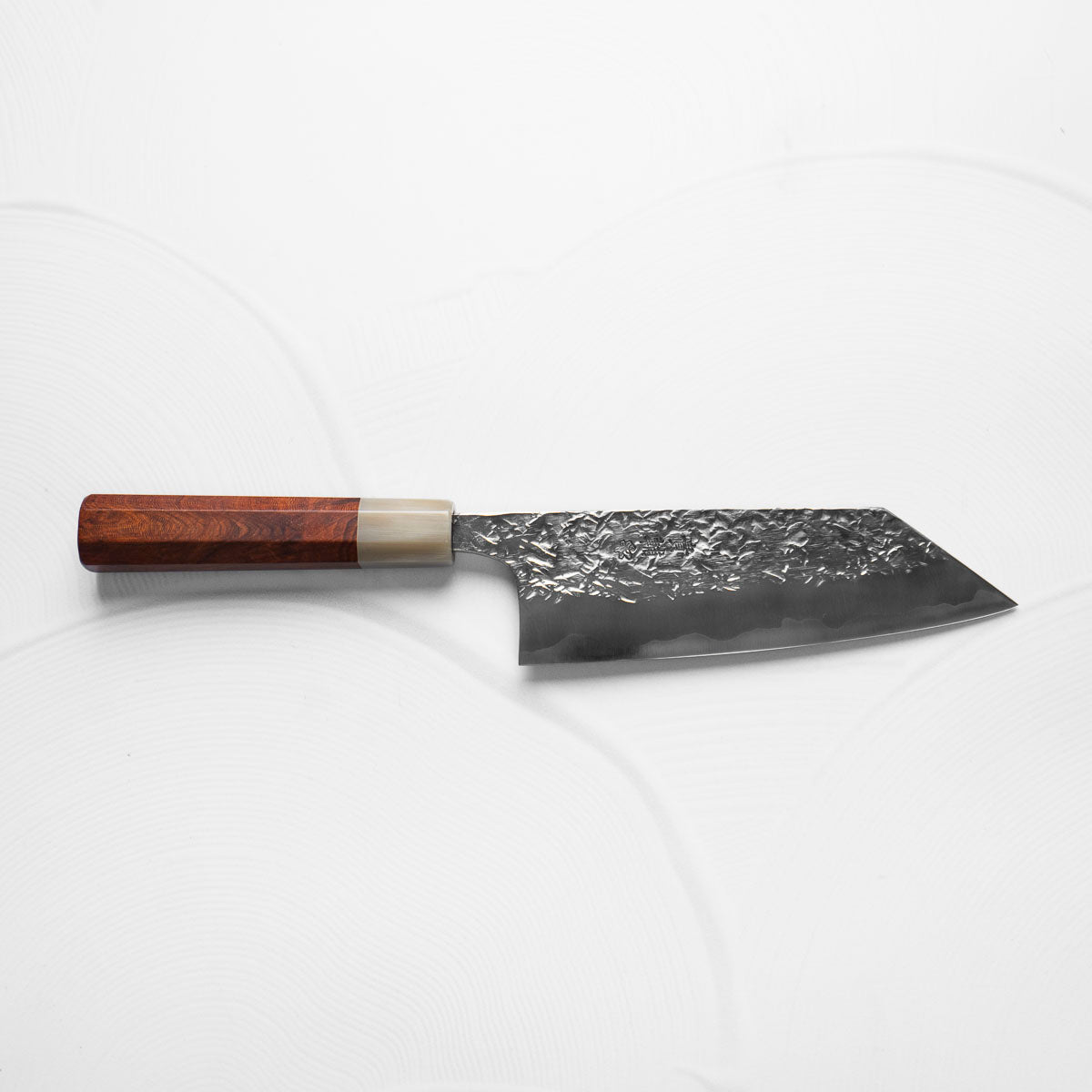
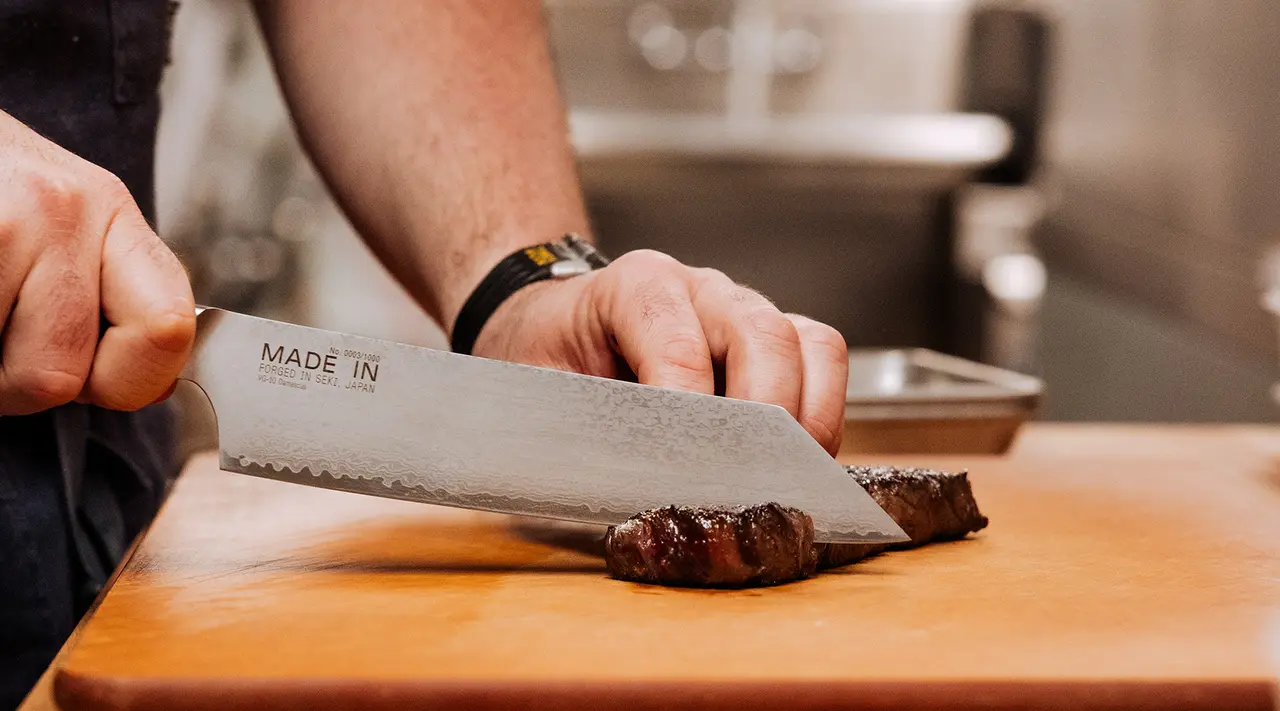
The japanese bunka knife adapts to many cutting styles. You can slice, dice, mince, and carve small proteins effectively. Here are practical techniques I use daily:
Basic moves
- Rock-chop small veg with short, controlled strokes using the belly.
- Use the pointed tip for trimming, peeling, and scoring fish.
- Push-cut for clean slices of fish and soft produce.
- Use the flat section for thin slicing and even cuts.
Grip and stance
- Pinch the blade near the bolster for control on fine cuts.
- Use a forward/backward grip for longer slices.
- Keep your guide hand curled to protect fingers during prep.
Real-use tip: For herbs and microgreens, the japanese bunka knife lets you chop quickly without bruising. Handle it like a scalpel for accuracy.
Maintenance, sharpening, and care
Caring for a japanese bunka knife keeps it reliable and safe. Sharpening is best done with a whetstone, and storage matters to avoid damage.
Daily care
- Rinse and dry immediately after use; avoid dishwashers.
- Use a soft cloth and mild soap for cleaning.
Sharpening steps
- Soak a medium grit whetstone (1000) and a fine grit (3000–6000).
- Maintain a consistent angle (about 15° per side) and work evenly.
- Finish with a light stropping to polish the edge.
Storage and safety
- Use a magnet, wooden sheath, or knife block to protect the blade.
- Avoid contact with bones or frozen food to keep the edge intact.
Personal tip: I sharpen every few weeks in a busy kitchen and hone daily. This keeps the japanese bunka knife slice-ready and reduces chip risk.
Buying guide: how to pick the right Japanese Bunka Knife
Choosing the right japanese bunka knife depends on budget, use, and preferences. Consider blade length, steel, handle, and intended tasks.
Selection checklist
- Blade length: 150 mm for detail work; 180 mm for broader prep.
- Steel: choose stainless for low care, carbon for maximum sharpness.
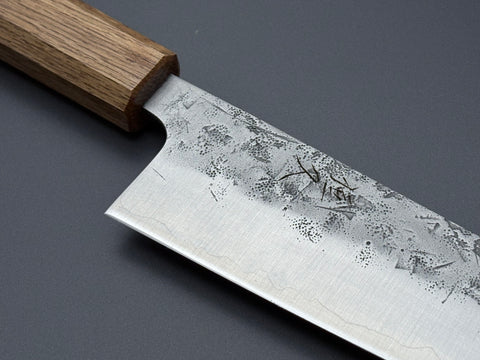
- Handle: wa (round) for traditional feel, western (full tang) for heft.
- Grind: single-bevel if you want ultra-fine cuts and have skill; double-bevel for all-round use.
Budget ranges
- Entry-level: good stainless options under $100.
- Mid-range: better steels and build quality around $100–$300.
- High-end: hand-forged or powdered steels can be $300+.
Advice: Test the feel if possible. I once bought based on looks and returned it because the handle felt off. Fit matters as much as steel.
Comparing the Japanese Bunka Knife to other knives
A clear view of alternatives helps you decide. The japanese bunka knife sits between santoku, gyuto, and petty knives.
Bunka vs santoku
- Bunka has a sharper tip and slightly narrower profile.
- Santoku is broader with a flatter edge for up-and-down cuts.
Bunka vs gyuto
- Gyuto is longer and mimics a western chef knife for big tasks.
- Bunka is shorter and more nimble for detail work.
Bunka vs petty
- Petty is smaller and best for tiny jobs.
- Bunka offers a middle ground of size and reach.
Use the bunka when you want precision without losing the ability to handle larger prep tasks.
Limitations and when not to use a bunka
No knife is perfect for every job. The japanese bunka knife has limits.
Key limitations
- Not ideal for heavy bone work or splitting large cuts.
- Thin edges can chip if used on hard materials.
- Single-bevel variants require skill and are less forgiving.
Know the limits and keep a cleaver or heavy chef knife for tough jobs. Protect your bunka with the right tasks, and it will last.
Personal experience, mistakes to avoid, and pro tips
I’ve used a japanese bunka knife in restaurants and at home for years. My practical lessons can save you time and expense.
What I learned
- Avoid the dishwasher; it ruins handles and edges.
- Don't use it on frozen foods or to pry items.
- Invest in a whetstone and learn to sharpen. Sending a knife out for sharpening is costly over time.
Pro tips
- Use the pointed tip for precise trimming of fish and poultry.
- Keep a small paring or petty for tiny tasks to save the bunka’s edge.
- Practice a consistent honing routine; it keeps prep fast and clean.
These small habits kept my bunka performing like new after heavy use.
Frequently Asked Questions of japanese bunka knife
What is the ideal blade length for a japanese bunka knife?
Most users prefer 150–180 mm for balance between control and reach. Smaller blades are better for fine work; larger ones handle bulk prep.
Can a japanese bunka knife replace a chef's knife?
It can for many home cooks, but a gyuto or full chef's knife is better for large roasts and heavy tasks. Use a bunka for precision and medium prep.
How do I sharpen a japanese bunka knife at home?
Use a whetstone starting at about 1000 grit, maintain ~15° per side, and finish with a finer stone or strop. Work slowly and keep the angle consistent.
Is a single-bevel bunka better than double-bevel?
Single-bevel can give super-thin cuts but is harder to use and maintain. Double-bevel is more versatile and user-friendly for most cooks.
Are bunka knives good for professional kitchens?
Yes; many chefs value the japanese bunka knife for speed and accuracy. It pairs well with other specialist knives to cover all tasks.
Conclusion
The japanese bunka knife is a nimble, precise, and versatile tool that fits many kitchens. It excels at detailed work while still handling everyday prep. Choose the right length, steel, and handle for your needs, and keep it sharp and cared for to get the best results. Try one alongside your current knives, practice basic sharpening, and you’ll quickly see why the bunka earns a place in so many cooks’ toolkits. Explore models, ask questions, and leave a comment about your experience or what you want to learn next.
Maliha Akter is a kitchen knife reviewer and food preparation specialist with over 6 years of experience testing Japanese kitchen knives and everyday cooking tools. She focuses on performance, safety, durability, and real-world usability to help home cooks choose the right knives for efficient and enjoyable cooking.
Expertise:Japanese Knives • Vegetable Knives • Product Reviews • Kitchen Efficiency • Knife Care