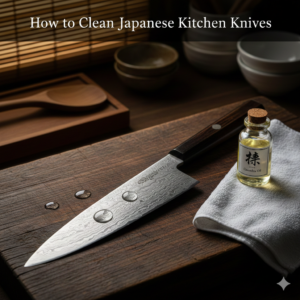
Keep blades dry, hone often, sharpen right, oil carbon steel, and store safely.
If you love a keen edge, this guide is for you. I sharpen and service Japanese knives for home cooks and chefs. Here, I share proven japanese knife maintenance tips that keep blades sharp, safe, and rust free. Follow along to get more life, more control, and more joy from your gyuto, santoku, or yanagiba.
Why Japanese knives need special care
Japanese knives are hard and thin. Many sit around 60–64 HRC. That means they take a very sharp edge. It also means they chip if you abuse them. A soft board and good habits matter a lot.
Some knives are single bevel. Others are double bevel with a narrow angle. A small mistake can roll the edge. Good care keeps the line true and the cut clean. The japanese knife maintenance tips below respect that thin geometry and hard steel.
Use these basics and you will see real gains in cut quality and safety. You will also spend less time on full sharpening.

Source: musashihamono.com
Daily habits that protect the edge
Think of edge care like brushing your teeth. Small daily steps prevent big work later.
Do this every time you cook:
- Wipe the blade often during prep to keep it dry and clean.
- Use a soft board like end-grain wood or quality plastic.
- Cut straight down or slice forward. Do not twist in hard foods.
- Avoid bones, frozen food, and thick rinds with your fine knife.
- Hand wash with mild soap, then dry at once. Do not soak.
- Park the knife on a dry towel between tasks.
These simple japanese knife maintenance tips guard against chips, rust, and dull edges. They take seconds and save hours.
Source: japan-knifeshop.com
Cleaning, drying, and rust control
Water is the enemy. Rust can form in minutes on carbon steel. Stainless helps, but it is not stain proof.
Do this after each use:
- Wash by hand with warm water and mild soap.
- Dry right away. Wipe from spine to edge. Be careful near the tip.
- For carbon steel, add a thin film of camellia or food grade mineral oil.
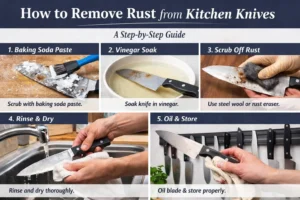
- If you see orange rust, rub it off with a soft rust eraser. Rinse and dry.
- Let a gray patina form on carbon steel. It helps resist rust.
These japanese knife maintenance tips keep your edge bright and your hands safe. A dry blade is a happy blade.

Source: meesterslijpers.nl
Honing vs sharpening: what to do and when
Honing realigns a tired edge. Sharpening removes steel to form a new edge. Hard Japanese steel likes light honing, not heavy steeling.
Follow these points:
- Use a fine ceramic rod for quick touch-ups. Avoid grooved steel rods.
- Keep the rod angle near your edge angle, about 12–15 degrees per side.
- Use three to five light strokes per side. Check the edge. Stop when it bites.
- If honing does not help, it is time to sharpen on a stone.
I touch up my gyuto with a ceramic rod once or twice a week. That move cuts down on full stone work. These simple japanese knife maintenance tips can add months between full sharpenings.

Source: musashihamono.com
Whetstone sharpening step-by-step
Stones give the best edge with the least risk. They are also calm and fun to use.
Tools you need:
- Soaking whetstones: 1000 grit and 3000–6000 grit
- A flattening plate or coarse stone for lapping
- A stable base and a damp towel
- A marker to color the edge
Steps:
- Soak splash-and-go or water stones as the maker suggests.
- Flatten the stone. A flat stone gives a flat bevel.
- Color the edge with a marker. It shows your angle and contact.
- Set a 12–15 degree angle per side for most double bevel knives.
- Push and pull with light, even strokes. Work the whole edge.
- Feel for a small burr along the opposite side. That means you hit the apex.
- Flip and repeat. Raise a burr on the second side.
- Move to the finer stone. Use light strokes to refine and remove the burr.
- Deburr with very light edge-leading strokes. Try a few passes on a cork or soft wood.
- Strop on leather or newsprint for a crisp bite. Wipe clean and dry.
Go slow. Pressure should drop as the edge gets sharper. With practice, this takes 10–15 minutes. These japanese knife maintenance tips will keep your edges keen without thinning the blade too fast.

Source: seidoknives.com
Caring for single-bevel knives
Single-bevel blades like yanagiba and usuba have an ura, a slight hollow on the flat side. Keep that side flat on the stone. Do not lift or you will round the edge.
Core points:
- Work the bevel face first until you raise a clean burr.
- Lay the ura flat. Use light strokes to remove the burr and polish.
- Use a fine stone for final work. Many go to 6000 or 8000 grit.
- Add a tiny micro-bevel if you need more strength near the tip.
If you are new, practice on a less costly blade first. These careful japanese knife maintenance tips protect the ura and the look of the blade.
Source: tonma.jp
Handle and ferrule care
Many Japanese knives use a ho wood or walnut handle. Water can swell wood and split it near the ferrule.
Do this to protect the handle:
- Do not soak the handle or leave it in a wet sink.
- Wipe dry after each wash. Stand the knife on its spine for a minute to air dry.
- Rub a small amount of board wax or mineral oil on wood handles each month.
- For pakkawood or resin handles, a wipe and dry is enough.
A sound handle helps control and safety. Simple japanese knife maintenance tips here keep your knife steady in hand.

Source: kireaji.ca
Storage and travel
Storage should protect the edge and the user. Avoid loose drawers and hard contact.
Better options:
- A wooden saya that fits your blade
- A felt or plastic edge guard
- A wood-faced magnetic strip mounted away from heat and steam
- An in-drawer block with slots
- A padded knife roll for travel, plus a guard on each blade
Add a silica gel pack in your roll if you carry carbon steel. These japanese knife maintenance tips prevent dings, chips, and rust on the road.

Source: co.jp
Common mistakes to avoid
Small slips cause big damage. I have learned these the hard way.
Avoid these traps:
- Dishwasher use, even once
- Glass, marble, or bamboo boards
- Scraping food with the edge; use the spine instead
- Twisting the blade in squash or dense roots
- Using grooved steel rods on hard steel
- Sharpening at a steep angle that shortens the life of the blade
- Failing to flatten stones
- Leaving the knife wet under a towel
Keep this list close. These japanese knife maintenance tips block the most common edge killers.
Maintenance schedule checklist
A clear plan makes care easy. Copy this and post it near your board.
After each use:
- Hand wash, dry well, and store in a saya or guard.
- Wipe a thin coat of oil on carbon steel.
Weekly:
- Touch up with a fine ceramic rod if needed.
- Clean the handle and ferrule area.
Monthly:
- Sharpen on a 1000 grit stone, then refine if dull or slipping.
- Flatten stones and refresh your setup.
Quarterly:
- Deep clean patina buildup if food sticks more than usual.
- Inspect for chips and fix on a medium stone.
These timed japanese knife maintenance tips keep your routine steady and stress free.
Troubleshooting: chips, rust, and stubborn dullness
Chips happen. For small chips, start on a 400–800 grit stone to set a new edge. Raise a burr across the gap, then refine. For large chips, a pro can grind safely and fast.
Light rust wipes off with a soft rust eraser. Rinse, dry, and oil. Stubborn dullness often means a wire burr still hangs on. Deburr with lighter strokes, a cork pass, then a few edge-leading strokes on a fine stone. These japanese knife maintenance tips fix most issues without drama.
Frequently Asked Questions of japanese knife maintenance tips
How often should I sharpen a Japanese knife?
Most home cooks sharpen every 4–8 weeks. Touch up with a ceramic rod as needed to stretch the time.
What angle should I use on a whetstone?
Aim for 12–15 degrees per side for most double bevel knives. Single-bevel blades need a flat ura and a controlled bevel angle.
Can I use a steel honing rod on Japanese knives?
Use a fine ceramic rod instead. Grooved steel rods can chip or fatigue hard steel.
What oil is safe for carbon steel?
Food grade mineral oil or camellia oil works well. Use a thin coat after drying the blade.
Are bamboo cutting boards okay?
Bamboo is very hard and can dull edges faster. Choose end-grain wood or quality plastic instead.
How do I store my knife safely?
Use a saya, edge guard, or wood-faced magnetic strip. Avoid loose drawers where the edge can hit metal.
What grit stones do I need to start?
A 1000 grit stone and a 3000–6000 grit stone will cover most needs. Add a coarse stone if you must fix chips.
Conclusion
Great care is steady, simple, and fast. Dry the blade. Use a soft board. Hone light. Sharpen right. Store it safe. With these japanese knife maintenance tips, your knife will glide, not drag, and last for years.
Choose one habit to start today. Wipe dry after each cut or oil carbon steel after work. Then add the next step next week. Ready for more? Subscribe for new guides, ask a question in the comments, or share your best tip with the community.

Maliha Akter is a kitchen knife reviewer and food preparation specialist with over 6 years of experience testing Japanese kitchen knives and everyday cooking tools. She focuses on performance, safety, durability, and real-world usability to help home cooks choose the right knives for efficient and enjoyable cooking.
Expertise:Japanese Knives • Vegetable Knives • Product Reviews • Kitchen Efficiency • Knife Care