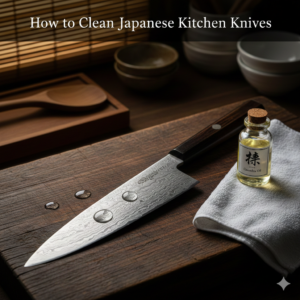
Keep it sharp, clean, dry, and honed on water stones; avoid abuse.
Japanese knives reward care with scary-sharp performance and a joy to use. In this guide, I’ll show you the exact steps I use for japanese knife performance maintenance, from daily care to stone work. With years at the bench and on the line, I’ll help you avoid chips, keep the edge stable, and turn upkeep into a simple routine tailored for japanese knife performance maintenance.

Why Japanese knives feel different and demand different care
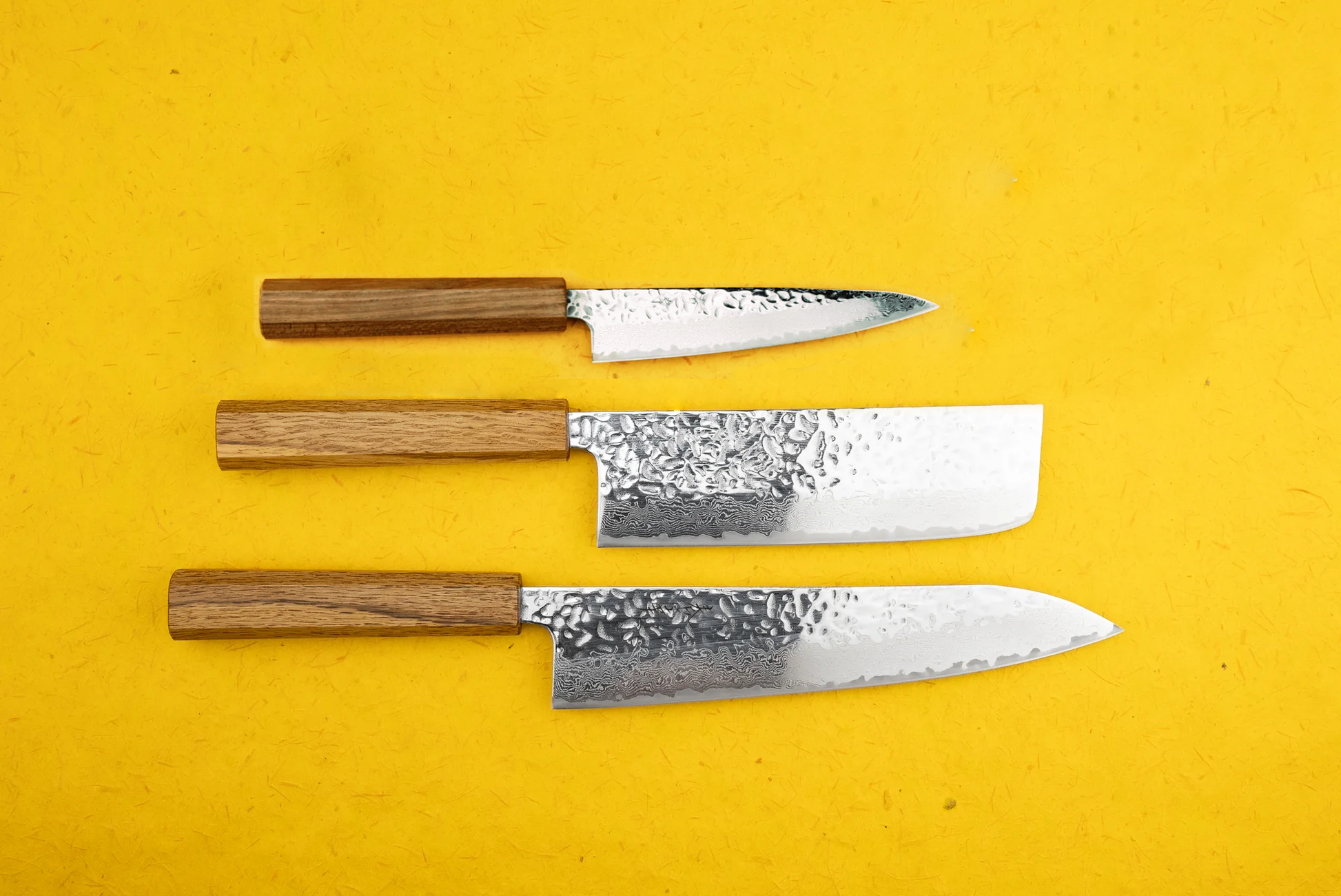
Japanese knives are hard, thin, and ground to fine angles. Most sit around 60–64 HRC, which gives long edge life but makes them less forgiving if twisted or slammed. Single-bevel blades cut like lasers but need precise sharpening. Double-bevel gyutos and santokus are easier to live with but still prefer light hands and smart habits during japanese knife performance maintenance.
Many have a hard core steel and softer cladding. The core takes the sharp edge; the cladding adds toughness. Damascus looks great, but performance comes from the steel choice and geometry below it. Keeping that geometry intact is a big part of japanese knife performance maintenance.

Daily care that protects the edge
The edge fails first in daily use, not on the stone. Small habits protect it and cut down on sharpening time.
- Wipe and dry right after use. Water and acids can stain or rust the core.
- Never twist in a cut. Slice forward and back, then lift.
- Skip bones, shells, frozen food, and thick squash with a thin gyuto.
- Hand wash with mild soap. No dishwasher. Dry at once.
- Store in a saya, edge guard, or wood-faced magnetic strip.
A soft board matters. End-grain wood or soft rubber keeps the apex from rolling. Glass or granite is edge death. Simple steps like these are the backbone of japanese knife performance maintenance.
Honing, stropping, and when to sharpen
Think of honing and stropping as tune-ups. Sharpening is the full service.
- Use a fine ceramic rod with very light strokes if you must hone. Steel rods can tear a hard edge.
- Strop on leather or balsa with a fine compound to clean up the burr and add bite.
- Sharpen on stones when the knife slips on tomato skin, skates on onion, or reflects light along the edge.
My rule of thumb: strop after each session, light hone weekly if needed, and full stones every few weeks at home use. In pro kitchens, weekly stones are normal. This schedule anchors japanese knife performance maintenance without wasting steel.

Water stone sharpening: a simple, repeatable process
Water stones give control, a clean bite, and easy feedback. Here’s the routine I teach.
- Choose grits. 1000 for shaping a working edge. 3000–6000 to refine. 8000 if you like polished push cuts.
- Soak soaking stones for 10–15 minutes. Splash-and-go stones need only water on the surface.
- Set the angle. Most double-bevel Japanese knives like 12–15 degrees per side. Use the marker trick on the bevel to confirm.
- Raise a burr. Light pressure, edge leading, full strokes. Keep the angle steady. Work until you feel a uniform burr, then switch sides.
- Deburr. Lighter strokes at the same angle. Then 1–2 trailing strokes per side. Finish with a few very light edge-leading passes.
- Strop to clean the apex. A few strokes on leather makes a clean, keen bite.
- Flatten stones with a lapping plate or coarse flattening stone. Flat stones mean flat bevels.
I once rushed a 240 mm gyuto on a 400 grit stone and pushed too hard. I chased a wire burr for 15 minutes. Lesson learned: low pressure and flat stones win. That lesson sits at the heart of japanese knife performance maintenance.
Edge geometry: thinning, micro-bevels, and chip control
Even with good sharpening, the blade gets thicker behind the edge over time. Thinning restores that glide.
- Thinning: every 3–5 full sharpenings, lay the blade a bit flatter than edge angle and remove a little steel behind the edge. Refine on higher grits.
- Micro-bevel: add 1–2 degrees and make 2–3 light passes per side. This boosts durability with little loss of bite.
- Tip work: sharpen the tip with shorter strokes and reduce pressure. Tips chip first.
These touches keep cutting feel light and stable. They also make japanese knife performance maintenance faster because you won’t fight a wedge-y blade later.

Steel matters: carbon, stainless, and powder metallurgy
Different steels react to the same routine in different ways.
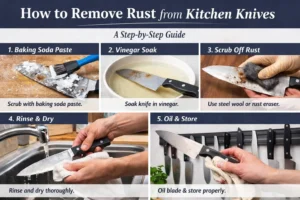
- Carbon steels like Shirogami and Aogami take a screaming edge fast. They rust if left wet. Wipe often, accept a light patina, and oil before long storage.
- Stainless like VG-10 and Ginsan resist rust but can feel “toothy.” They like a 3000–6000 finish for food release and bite.
- Powder steels like SG2/R2 hold an edge very long. They may feel glassy on stones. Use quality stones and be patient with deburring.
Match finish to task. Toothier finishes (2k–3k) grab tomato skin. Polished edges (6k–8k) push cut proteins. Choosing the right finish is a quiet win in japanese knife performance maintenance.

Fixing chips, bends, and common mistakes
Stuff happens. Here’s how to fix it the right way.
- Small chips: start at 400–600 grit and grind until the chip is gone, keeping the edge straight. Then rebuild the bevels.
- Big chips: raise the angle slightly, or add a micro-bevel to protect the repair. Sometimes you must remove more steel to reset the line.
- Bent tips: if only lightly bent, press flat between two wood blocks. For breaks, re-profile on coarse stone.
Mistakes to avoid:
- Too much pressure. It digs ruts and makes uneven bevels.
- See-saw strokes that rock the angle.
- Over-polishing without proper deburring. That leaves a wire edge that fails fast.
Gentle hands and patience save steel and time in japanese knife performance maintenance.
Cutting boards, storage, and work habits
The right board and storage are cheap insurance.
- Use end-grain wood or soft rubber boards. They are kind to edges and easy on wrists.
- Keep the board clean and damp on the bottom to stop slipping.
- Store in a saya, edge guard, or wood-faced magnetic strip. In-drawer blocks work if the slots are clean and dry.
Work smart:
- Use a glide and lift motion. No hacking.
- Clear grit and seeds from the board before fine cuts.
- Keep a cheap beater knife for rough jobs.
These habits reduce chips and make japanese knife performance maintenance simple and repeatable.

A long-term plan and realistic budget
Plan your upkeep like you plan meals. It keeps surprises away and your edge ready.
- Starter kit: 1000 and 3000–6000 stones, flattening plate, leather strop, edge guard.
- Time budget: 10 minutes of stropping per week, 20–30 minutes of stones per month at home use.
- Pro help: if the blade is warped, very chipped, or single-bevel geometry is off, use a trusted sharpener.
Track dates in a small log. Note grit, angle tweaks, and edge feel. Over time, this record becomes your personal map for japanese knife performance maintenance.
Frequently Asked Questions of japanese knife performance maintenance
How often should I sharpen a Japanese knife?
Home cooks can sharpen every 3–6 weeks with light daily care. Pros often sharpen weekly due to heavy use.
What angle should I use on a double-bevel Japanese knife?
Aim for 12–15 degrees per side. Keep it steady and add a tiny micro-bevel if the edge chips.
Can I use an electric sharpener?
Most electric units remove too much steel and set a wide angle. Use water stones or a guided system designed for fine angles.
Do I need a honing rod?
A fine ceramic rod can help with light touch-ups. Avoid grooved steel rods because they can damage a hard edge.
Which cutting board is best for edge life?
End-grain wood is the top choice, with soft rubber close behind. Avoid glass, stone, and very hard boards.
How do I stop rust on carbon steel?
Wipe and dry at once, and let a patina form. Add a light coat of food-safe oil before storage.
What grit should I finish on for vegetables?
A 3000–6000 finish gives bite and clean slices. Go higher only if you like a glassy feel for push cuts.
Conclusion
Great performance comes from small, steady habits. Clean as you go, use soft boards, strop often, and sharpen with a light touch. Build a simple plan for japanese knife performance maintenance, and your blade will glide, not grind.
Start today: pick one habit to improve, then schedule your next stone session. Want more tips like this? Subscribe, share your questions, or tell me what knife you’re working on.
Olivia Bennett is a knife care and sharpening specialist with 6+ years of hands-on experience in blade maintenance, whetstone sharpening, and rust prevention. She creates simple, safe guides to help users maintain razor-sharp kitchen knives at home.
Expertise: Knife Sharpening, Maintenance, Blade Care