Japanese knife sharpening angle: typically 15–20° per side for optimum sharpness and control.
I have sharpened hundreds of Japanese blades over many years. This guide explains the japanese knife sharpening angle in clear steps. You will learn how angle affects performance, which angles suit which knives, and how to set and keep the right angle at home or professionally. Read on for proven tips, simple tests, and mistakes to avoid.
Why the japanese knife sharpening angle matters
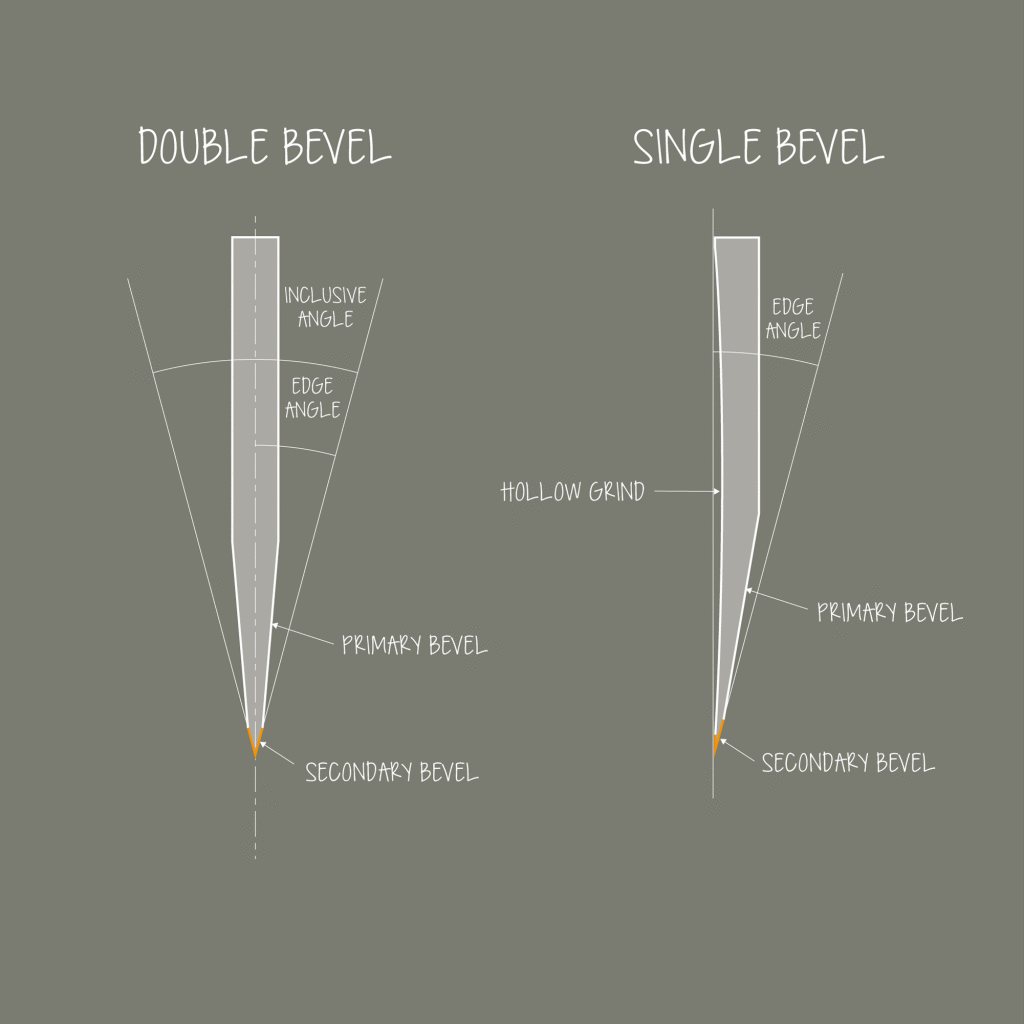
The angle defines the edge geometry. A lower japanese knife sharpening angle makes a keener edge. A higher angle gives more strength and durability. Matching angle to blade steel and use is key to performance and lifespan.

Common japanese knife sharpening angles and what they mean
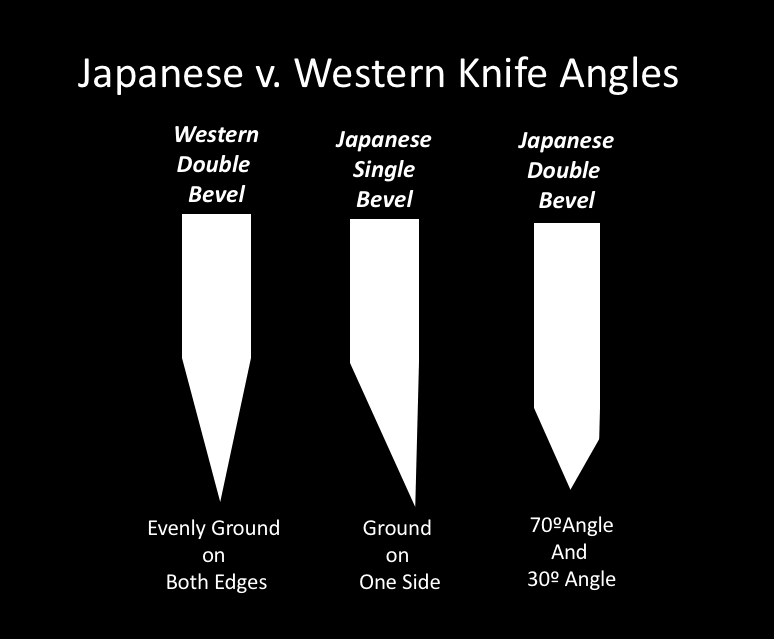
Many traditional Japanese kitchen knives use acute edges. Typical double-bevel Japanese knives sit around 12° to 20° per side. Single-bevel knives often use a 10° to 15° primary bevel on the cutting side and a small backing bevel on the flat side.
Common ranges and their uses:
- 10°–12° per side: For ultra-fine cutting, soft foods, delicate slicing. Needs frequent care.
- 13°–15° per side: Balanced for sashimi and precise work. Popular on high-hardness steels.
- 15°–20° per side: Better for daily kitchen tasks and mixed use. Offers more resilience.
- 20°+ per side: Good for tougher work or older steels that chip at lower angles.
If you use the phrase japanese knife sharpening angle often in conversation, you will start to sense which angle fits your routine. Steel hardness, blade profile, and food type all influence the final choice.
How to measure and set the japanese knife sharpening angle
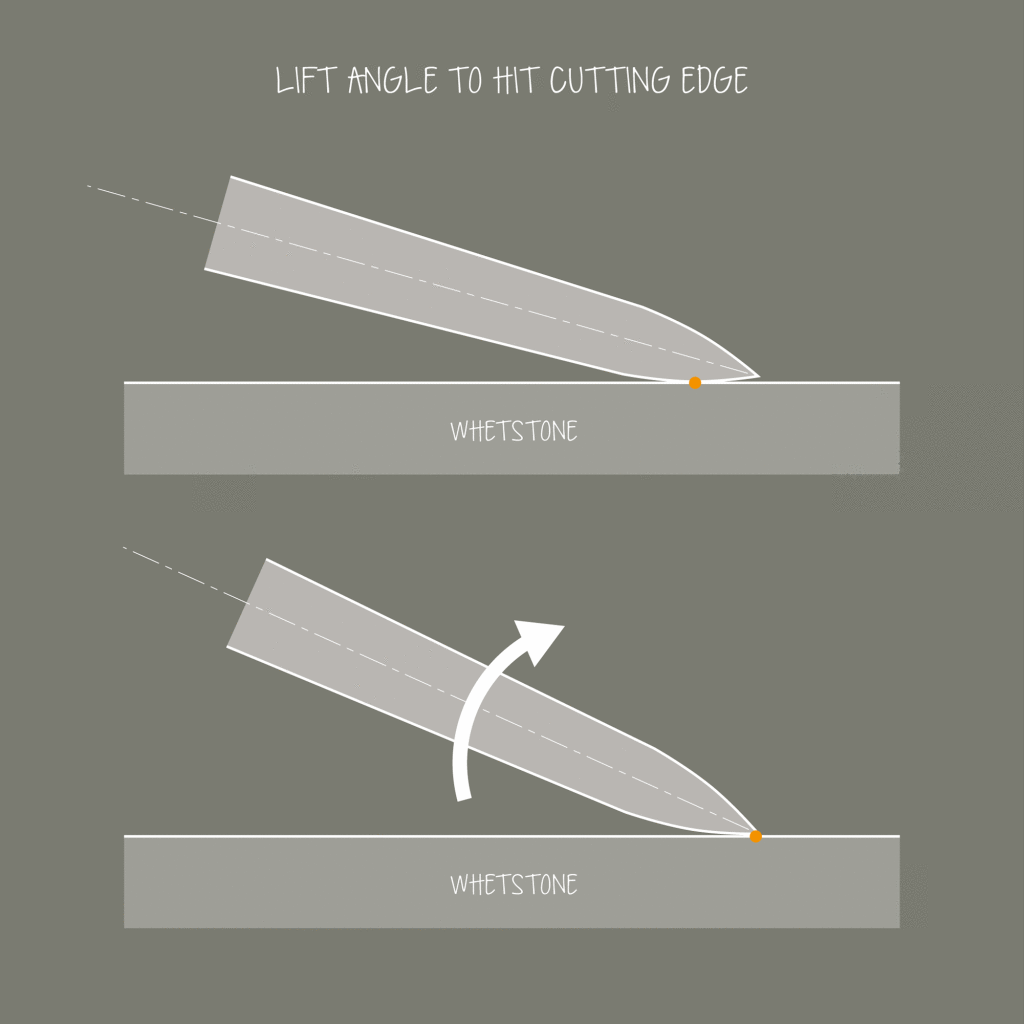
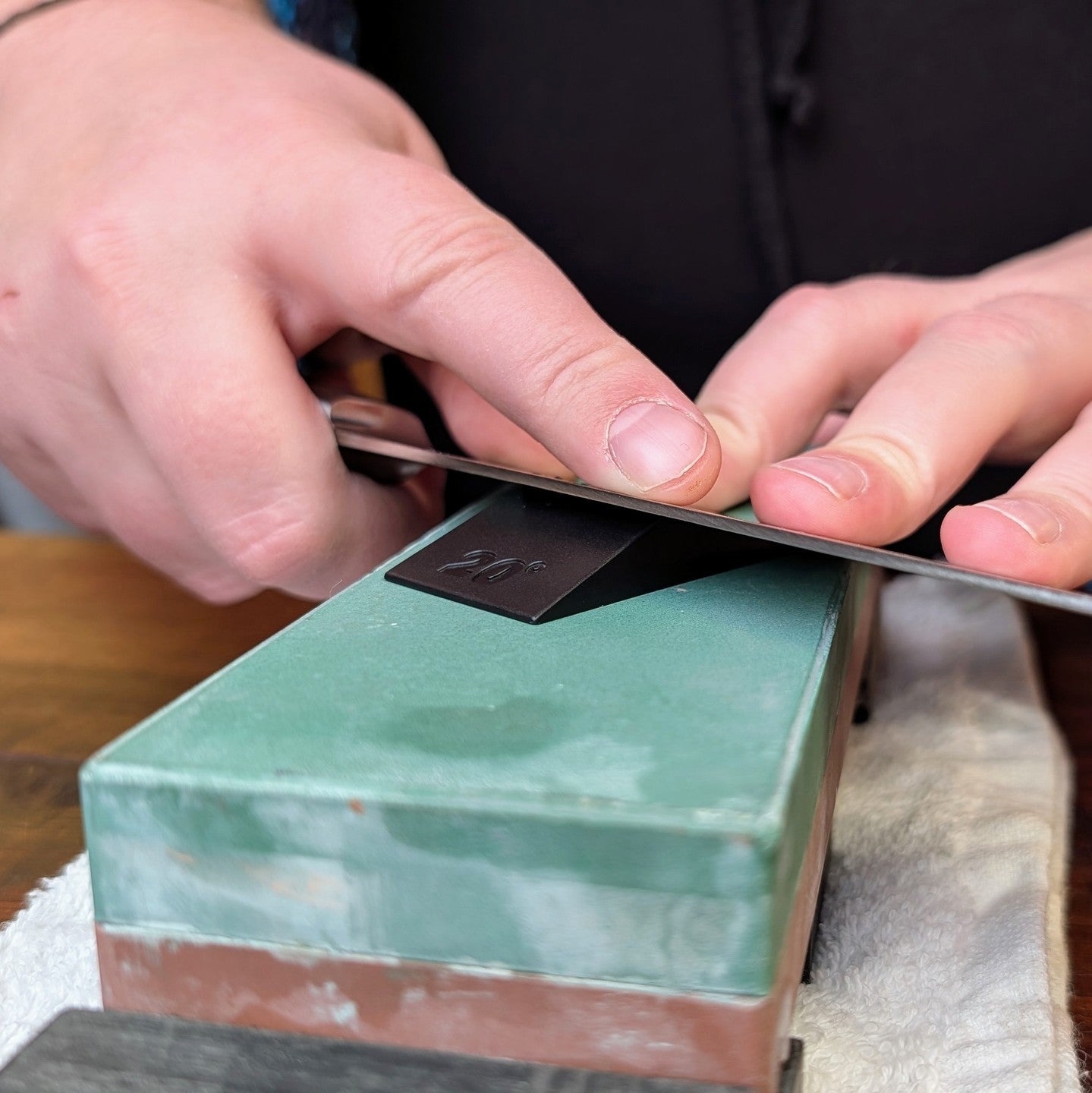
Measuring the angle is simple with the right tools. Use an angle guide or a digital protractor for accuracy. You can also use coins, business cards, or an angle jig for a reliable visual guide.
Step-by-step basic method:
- Clean the blade and stone surface.
- Place the edge lightly on the stone at a guessed angle.
- Adjust using an angle guide or by eye until it matches the chosen degree.
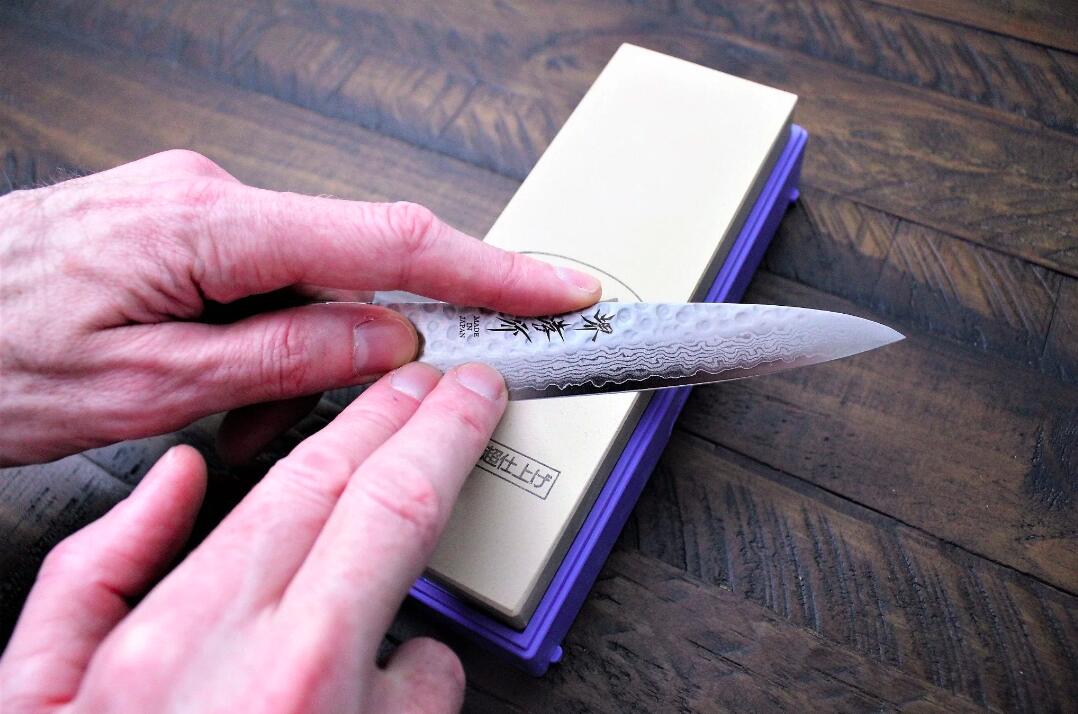
- Keep strokes even and countable to maintain the angle.
Practice holding a steady angle for a few minutes. I learned to hold 15° reliably by practicing short controlled passes. This made my japanese knife sharpening angle consistent and repeatable.
Stones, tools, and techniques that match the japanese knife sharpening angle
Waterstones are the standard for Japanese steels. Use coarse stones (400–1000 grit) to reshape edges. Move to medium (1000–3000 grit) for sharpening. Finish on fine stones (4000–8000+ grit) for polish.
Other tools:
- Angle guides: Great for beginners to lock in the japanese knife sharpening angle.
- Leather strops: Remove burrs and refine the edge.
- Ceramic rods: Good for touch-ups without changing the angle.
Technique tips:
- Use light pressure on fine grits.
- Keep strokes even and consistent.
- Watch the burr form and disappear; that signals a good edge.
From my trials, a 15° per side edge often sharpens quicker and stays sharper longer on 60–63 HRC steels. Adjust as needed for softer or harder steels.
Maintenance and edge care for your japanese knife sharpening angle
Honing maintains the edge without changing the angle. Use a ceramic rod or light strop regularly. Hone before each use or weekly for moderate use.
When to reset the angle:
- If the blade chips, rolling occurs, or the edge dulls quickly.
- If you see inconsistent cuts or the burr won’t form.
- After heavy use or if you change the blade’s role in the kitchen.
Keep stones flat and clean. A hollow or uneven stone will alter the japanese knife sharpening angle. I flatten stones with a diamond plate monthly to avoid angle drift.

Common mistakes and expert tips when working with japanese knife sharpening angle
Mistakes to avoid:
- Trying too low an angle on soft steel; it will chip.
- Pressing too hard; pressure changes the angle.
- Skipping grit steps; that leads to a weak edge.
Expert tips:
- Start with a safe angle like 15° per side, then refine.
- Count strokes and mirror sides for symmetry.
- Use magnification or a loupe to inspect the burr and polish.
A small habit I adopted was to mark the spine with tape. It helped me keep the same angle by eye. That simple trick improved my edges quickly.
Frequently Asked Questions of japanese knife sharpening angle
What angle should I use for a Japanese chef knife?
For general work, aim for 15° per side. If you need extreme precision, go down to 12°–13°, but expect more maintenance.
Can I sharpen a Japanese knife at 20° per side?
Yes. A 20° per side edge is tougher. It suits everyday use and rougher tasks without frequent touch-ups.
How do I check my japanese knife sharpening angle at home?
Use an angle guide, digital protractor, or simple visual aids like coins stacked. Practice and a steady wrist improve accuracy.
Does steel hardness affect the japanese knife sharpening angle I should choose?
Yes. Harder steels tolerate lower angles and get keener edges. Softer steels need higher angles to avoid chipping.
How often should I reset the japanese knife sharpening angle?
Reset when chipping, rolling, or poor cutting appears. For busy cooks, every few months is common. Light honing can extend time between resets.
Is a single-bevel edge different from a double-bevel regarding angle?
Yes. Single-bevel edges use a very acute cutting side and a flat or slightly backed side. The japanese knife sharpening angle on a single bevel is often lower on the cutting side.
Conclusion
Choosing and keeping the right japanese knife sharpening angle shapes performance, durability, and joy in the kitchen. Start with a sensible angle, practice steady strokes, and maintain stones and tools. Make a habit of light honing and flattening stones to protect your investment. Try a 15° per side setup first, then adjust for steel and tasks. Share your results, ask questions, or subscribe for more sharpening guides and tips.

Maliha Akter is a kitchen knife reviewer and food preparation specialist with over 6 years of experience testing Japanese kitchen knives and everyday cooking tools. She focuses on performance, safety, durability, and real-world usability to help home cooks choose the right knives for efficient and enjoyable cooking.
Expertise:Japanese Knives • Vegetable Knives • Product Reviews • Kitchen Efficiency • Knife Care