Most Japanese vegetable knife types include nakiri, usuba, santoku, bunka, and kiritsuke.
If you want clean cuts and fast prep, you need the right blade. In this guide, I break down japanese vegetable knife types with clear tips, simple answers, and real use notes. I have tested these blades in busy kitchens and at home. You will learn which knife to pick, why it matters, and how to care for it.
Why Japanese vegetable knife types matter
Vegetables have skin, flesh, and water. A blade that glides saves time and waste. That is why japanese vegetable knife types focus on thin steel and keen edges.
Japan built tools for exact cuts. The goal is clean slices, no crush. This keeps flavor and looks. When you pick the right tool, you move faster and feel safe.
I have tried many shapes in pro prep. Once I matched the knife to the task, my work changed. The cuts were sharp, and cleanup was smooth. This is the power of japanese vegetable knife types.

The core types: nakiri and usuba
Two shapes lead the way for veg work. Nakiri is the home hero. Usuba is the pro’s blade. Both are made for push cuts and flat contact on the board.
Nakiri: the friendly workhorse
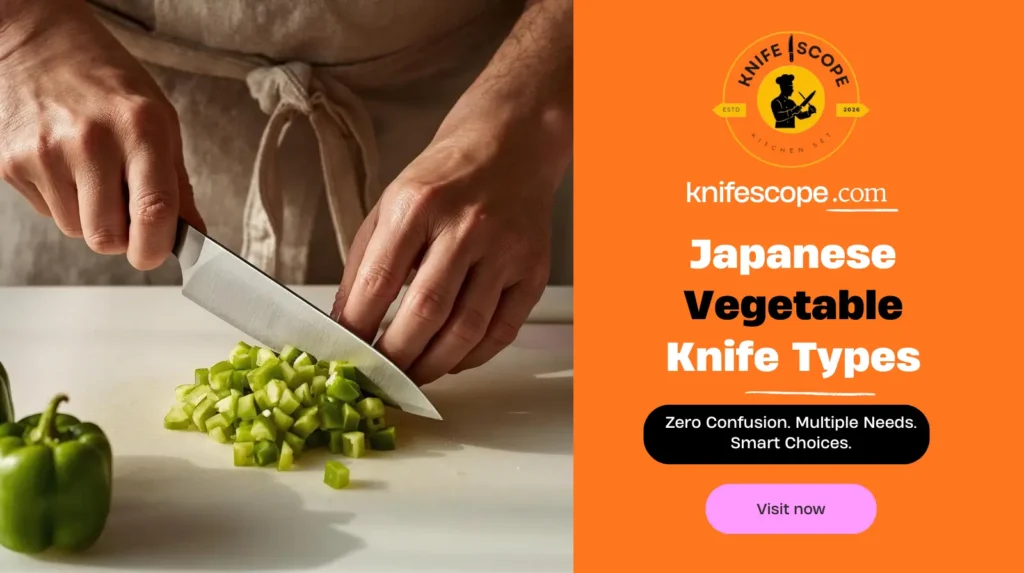
A nakiri has a flat edge and a tall blade. It makes full contact with the board. That means no accordion cuts in onions or cukes. It shines with push and pull cuts.
Use a nakiri for daily prep. Think carrots, cabbage, and herbs. It is usually double bevel, so it suits right and left hand users. It is easy to sharpen. If you are new to japanese vegetable knife types, start here.
Personal note: My first nakiri felt odd at first. The tall blade helped guide my knuckles. In a week, my veggie dice was neat and fast.
Usuba: the precise specialist
An usuba is a single bevel vegetable knife. It is common in pro Japanese kitchens. The edge is very thin and very sharp. It can make paper thin sheets and clean julienne.
Usuba has two main shapes. The Kanto style has a square tip. The Kansai style has a slightly curved tip. Right hand versions are common. Left hand versions exist, but they cost more.
Usuba needs skill and care. It can chip if you twist or pry. If you want peak control and artful cuts, it is worth the effort. It is a core blade among japanese vegetable knife types.
Versatile options for vegetable prep
Not every cook wants a pure veg blade. Some knives do many jobs well. These shapes still excel at greens and roots.
Santoku
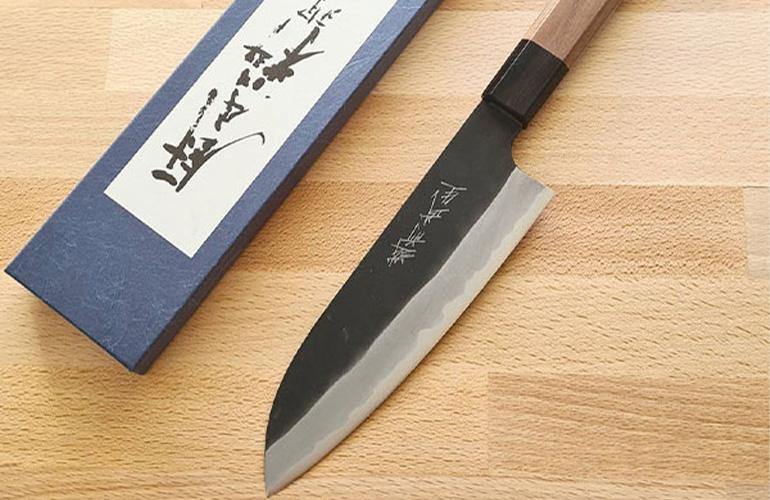
Santoku means three virtues. Meat, fish, and veg. It has a short blade and a gentle curve. It works for slice, chop, and mince.
For home cooks, a santoku is a safe pick. It handles onions and herbs with ease. It is usually double bevel and easy to sharpen. Within japanese vegetable knife types, it gives you range with one tool.
Bunka
Bunka is like a santoku with a tip. The tip is great for detail work. You can core tomatoes or trim bad spots with care. The flat heel is nice for push cuts on veg.
I reach for a bunka when I want one knife on a small board. It stays out of the way yet feels strong. It is a favorite for home meal prep.
Kiritsuke (hybrid)
Kiritsuke has a long, aggressive tip. In its classic form, it can be single bevel and strict. Many makers now offer double bevel kiritsuke. These hybrids are friendly and sharp.
A double bevel kiritsuke can slice greens, chop roots, and do detail. It takes space and skill, though. In lists of japanese vegetable knife types, it sits as a bold, do-all option.

Blade geometry and steel for vegetables
Geometry is the heart of performance. Thin behind the edge means low wedge force. That equals clean cuts and less juice loss. A flat or near-flat profile helps with full contact and no micro-tears.
Key points to check:
- Bevel type. Double bevel is easy and balanced. Single bevel is extreme and precise.
- Grind. Convex grinds can reduce sticking. Flat grinds feel keen but may stick more.
- Spine thickness. A thin spine near the tip gives you fine control.
Steel affects edge life and care. Many Japanese blades sit around 60 to 62 HRC. Some go higher. Hardness helps edge retention. It can also make chipping more likely.
Common steels:
- Carbon steel. Sharp and quick to hone. Needs care to prevent rust. Forms a patina that protects.
- Stainless steel. Lower care and good for wet prep. Modern alloys keep a fine edge.
- Powder steel. Very hard and long lasting. Needs a light touch on stones.
I like carbon steel for all day veg prep. It takes a crisp edge that glides. If you want less fuss, pick a good stainless core. For japanese vegetable knife types, steel choice sets your daily routine.

Size, weight, handle, and balance
Length and height shape your feel. A nakiri is often 165 to 180 mm in length. An usuba can run 180 to 210 mm. Taller blades guide your knuckles and help scoop food.
Weight varies by maker. Lighter knives move fast and feel nimble. Heavier knives track straight and can split big gourds. Try both if you can.
Handles come in two styles:
- Wa handle. Round or octagonal, light, and easy to grip. It shifts the balance forward.
- Yo handle. Western style with a full tang. It feels firm and familiar.
Pick what feels safe in your hand. I like a light wa handle for long prep sets. It fades away as the blade does the work. That is the joy of japanese vegetable knife types.
Technique tips for clean, safe cuts
Good technique makes your knife sing. It also keeps your fingers safe.
Try these habits:
- Use a push cut on carrots and celery. Keep the blade vertical and let it glide.
- Keep the tip down for herbs. Rock in small moves to avoid bruising.
- Use a straight slice on tomatoes. Do not press. Let the edge do the job.
- Keep a slight micro-bevel. It boosts edge life and stops micro chips.
Set your board on a damp towel. Keep your grip firm but loose. I tell students to hold the handle like a small bird. Not too tight, not too soft. With japanese vegetable knife types, a gentle hand wins.

Care, sharpening, and daily maintenance
Sharp knives are safer. Dull edges slip and crush. A few daily steps go far.
Do this often:
- Wipe the blade as you work. Dry it fast after washing.
- Never leave it in a sink. Store it in a saya, rack, or guard.
- Use a wood or soft plastic board. Hard boards kill the edge.
Sharpen with water stones. Start with 1000 grit for most work. Jump to 3000 to 6000 grit for polish. Add a light strop for bite. For single bevels, keep the shinogi line flat. For double bevels, set a small micro-bevel of 1 to 2 degrees. This boosts strength.
Fact check note from the field: Many Japanese blades will chip if you twist or pry. Cut straight. If you hit bone or hard seeds, stop and reset. This keeps japanese vegetable knife types in top shape.
Buying guide: budgets, makers, and fit
Your first question is budget. The second is use. The third is care level. Match all three to avoid regret.
Good paths:
- Entry level. Stainless or stainless clad. Easy care. Great for home cooks.
- Mid tier. Harder steel with nicer grinds. A leap in feel and finish.
- High end. Fine grinds, hand polish, and rare steels. Best if you love to sharpen and care.
Check these before you buy:
- Flatness of the edge. You want full board contact.
- Food release. Look for grind marks or slight convex faces.
- Spine and choil comfort. These edges should be eased for long prep.
I have sent many friends to start with a budget nakiri. It builds skill with little stress. As you grow, add an usuba or a bunka. This way you get the most from japanese vegetable knife types.
Common mistakes and how to avoid them
Even a great knife fails with bad habits. Here are frequent traps.
- Board choice. Glass or marble will dull or chip your edge. Use wood or soft plastic.
- Wrong cut. Do not use a twist or pry. Make straight, clean moves.
- Poor storage. Loose drawers cause dings. Use a sheath or rack.
- Wet neglect. Wipe dry at once. Protect carbon steel from rust.
I learned the hard way by chipping a thin usuba on a squash seed. Now I slow down for dense veg and switch to a sturdier blade when needed. Care and patience help all japanese vegetable knife types last longer.
Frequently Asked Questions of japanese vegetable knife types
What is the main difference between a nakiri and an usuba?
A nakiri is double bevel and easy to use. An usuba is single bevel and made for very fine cuts.
Can a santoku replace a nakiri for vegetables?
Yes, for most home tasks a santoku works well. A nakiri gives a flatter edge and cleaner push cuts.
Which steel is best for beginners?
Stainless or stainless clad steel is best for low care. It resists rust and still gets very sharp.
How often should I sharpen a vegetable knife?
Home cooks can sharpen every 4 to 8 weeks. Pros may need weekly touch ups based on use.
Do I need a left-handed usuba?
If you are left-handed and want a single bevel usuba, yes. Double bevel knives work for both hands.
Conclusion
The right blade turns vegetable prep into a calm, quick ritual. Choose a shape that fits your work, keep it sharp, and use gentle, straight cuts. With that, japanese vegetable knife types will reward you with clean slices and sweet flavors.
Try a nakiri if you want an easy start. Add a bunka or usuba as your skills grow. Ready to level up your prep? Explore more guides, ask a question, or subscribe for new tips.

Sophia Martinez is a culinary tools reviewer with 7+ years of experience analyzing kitchen knives and food prep tools. She specializes in practical testing, comparison reviews, and helping users improve kitchen efficiency through better equipment choices.
Expertise: Knife Reviews, Kitchen Tools, Meal Prep Optimization