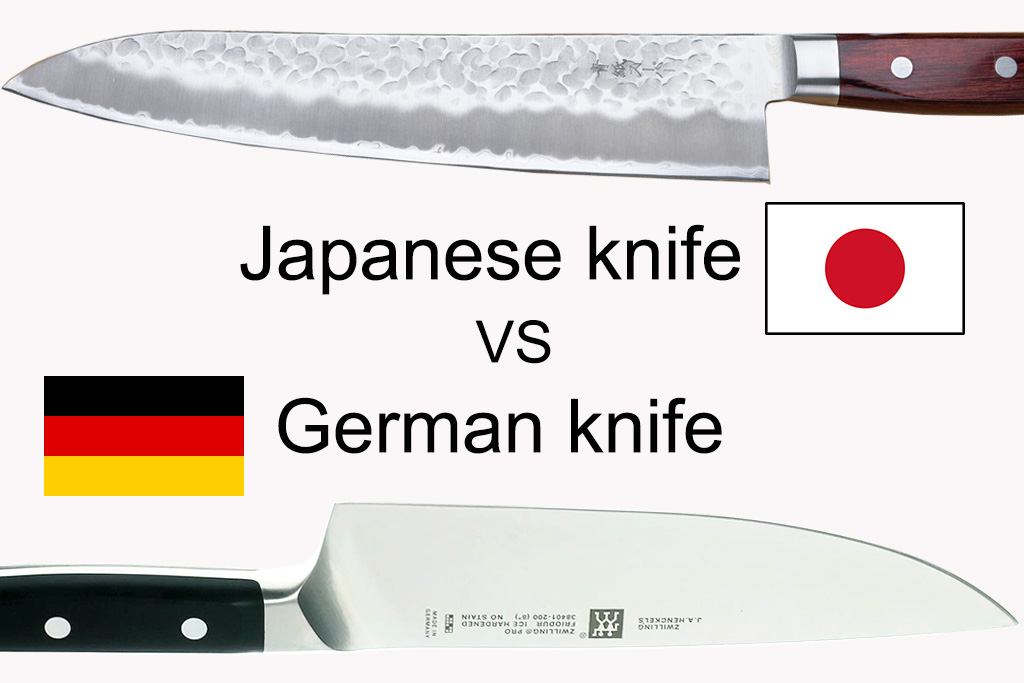
Japanese knives favor precision and hard steel; German knives favor toughness and versatility.
If you cook often, the Japanese vs German knives debate matters. I have used both in home and pro kitchens. Each style shines in different hands and tasks. In this guide, I break down steel, shape, use, and care with clear tests and real tips. By the end, you will know which knife style suits your food, your grip, and your budget.

Key differences at a glance
The short version helps before we go deep.
- Steel: Japanese is harder and holds a thin edge. German is softer and resists chips.
- Edge: Japanese angles are smaller for laser cuts. German angles are wider for strength.
- Profile: Japanese blades are flatter and like push cuts. German blades are curvier and like rocking.
- Weight: Japanese knives feel light and fast. German knives feel solid and forgiving.
- Care: Japanese needs gentle boards and good technique. German handles rough use better.
These points set the frame for Japanese vs German knives. We will unpack each one with examples next.
Origins and design philosophy
The roots shape the tools. Japanese blades come from a culture of fine slicing and fish work. Think kaiseki and sushi. Thin cuts show respect for texture. That is why edges are lean and hard.
German knives come from Solingen’s tool craft. The focus is on hard daily use. Think root veg, bones, and dense meats. The profile and spine give power and safety.
This background explains why Japanese vs German knives feel so different on the board.

Steel and hardness explained
Steel choice drives edge life and care. Most Japanese knives use harder steel. Typical hardness is around 60–66 HRC. Common names include VG‑10, AUS‑10, SG2/R2, and carbon steels like Aogami and Shirogami. Hard steel holds a fine edge longer. But it can chip if abused.
Most German knives use stainless like X50CrMoV15 or X55CrMoV14. Hardness is around 55–58 HRC. Softer steel rolls instead of chips. It is easy to hone back with a rod. Edge life is shorter, but the knife is tough.
In Japanese vs German knives, these steel traits decide how often you sharpen and how hard you can push.
Blade geometry and edge profiles
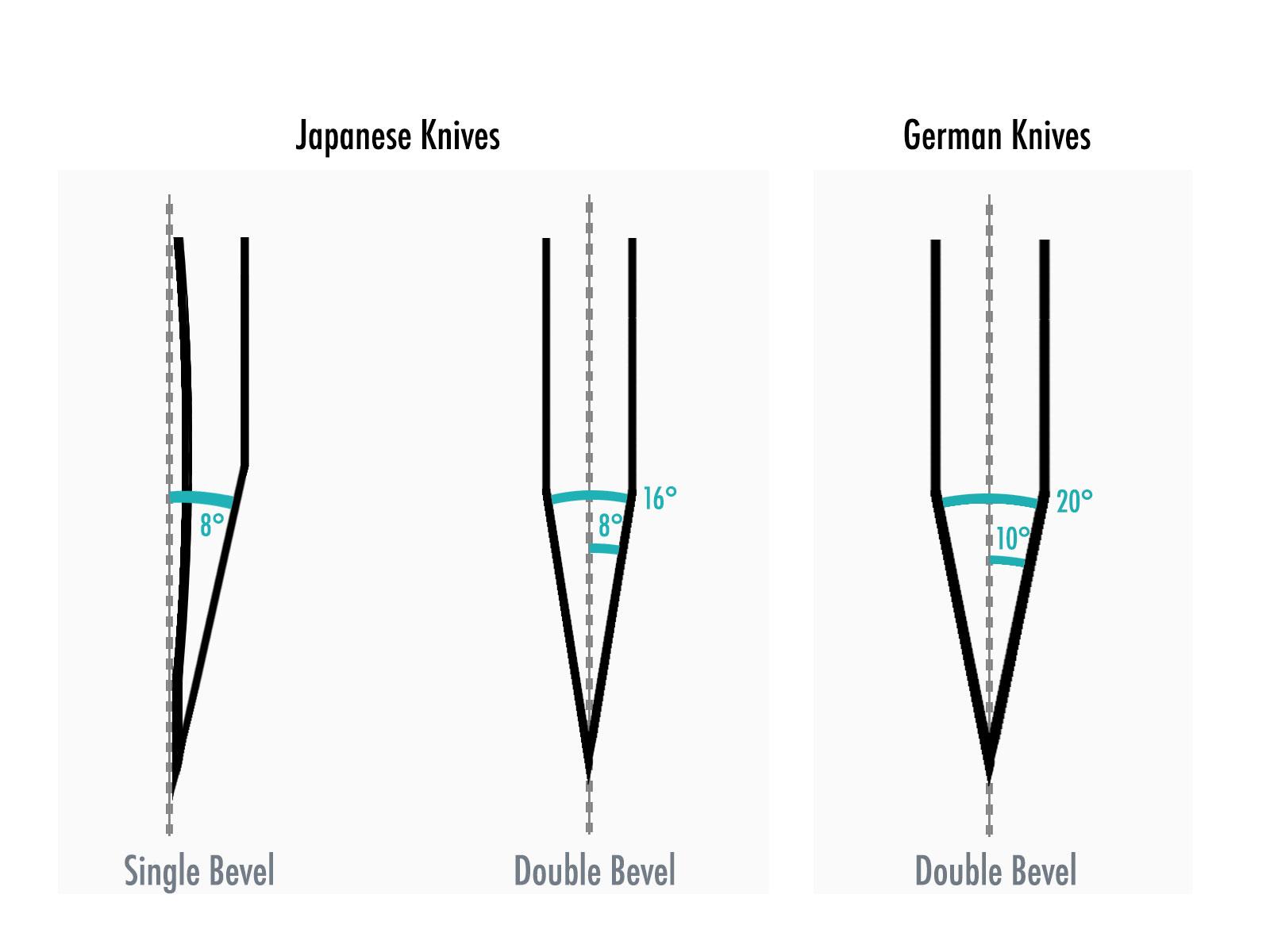
Angle matters. Japanese edges are often 10–15 degrees per side. Some single‑bevel knives are even keener. This makes clean, low‑force cuts. Tomatoes fall in smooth slices. Herbs resist bruising.
German edges are usually 15–20 degrees per side. Some brands use modern grinds to stay thin near the edge. You get more metal behind the edge. That means strength and fewer chips.
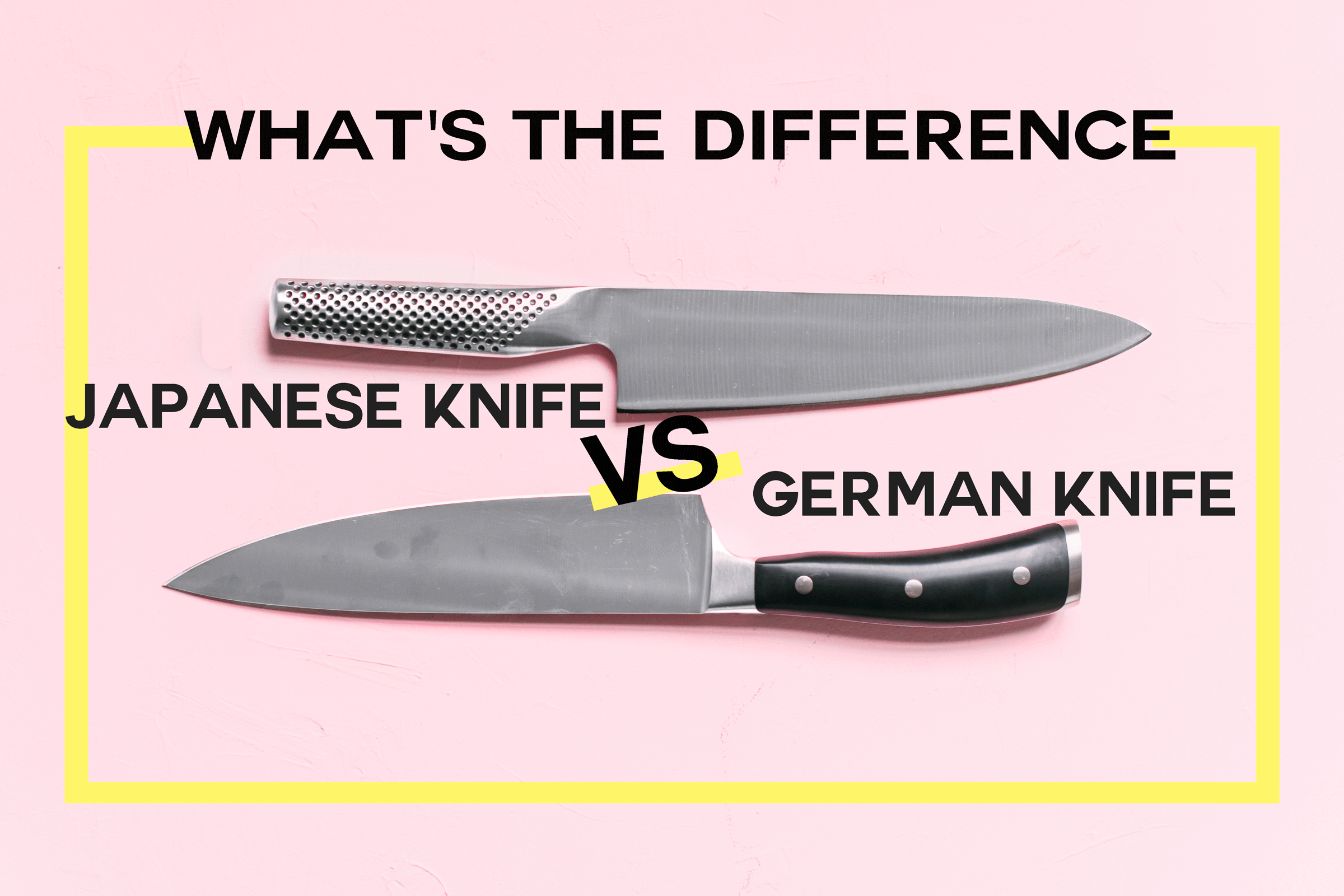
Blade shape matters too. Many Japanese gyuto and santoku have flatter bellies. They excel at push and pull cuts. German chef’s knives have a deeper belly. They rock well and make mincing safe and fast.
So, Japanese vs German knives will change how your hand moves and how your food looks.
Construction and build details
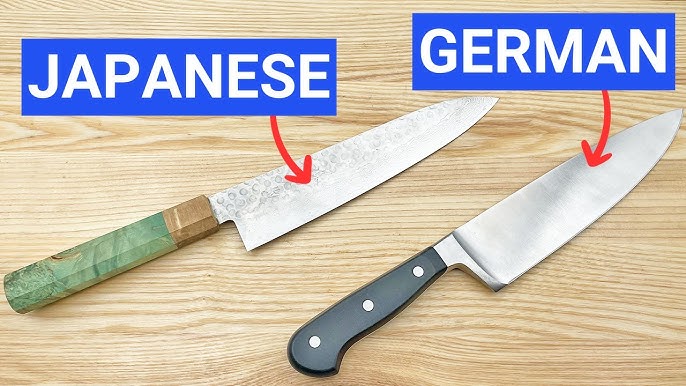
Craft shapes feel. Many Japanese knives are thin at the spine with a distal taper. Some are san‑mai, with a hard core and softer cladding. That gives crisp cuts with some toughness. Handles can be wa (octagonal or D‑shape) or Western.
German knives often have a full tang and a solid bolster. The spine is thick and rounded for comfort. The knife feels planted. That weight helps with confident chops.
Both forged and stamped options exist in each camp today. But the build cues above are still common and define Japanese vs German knives in the hand.
Ergonomics, grip, and balance
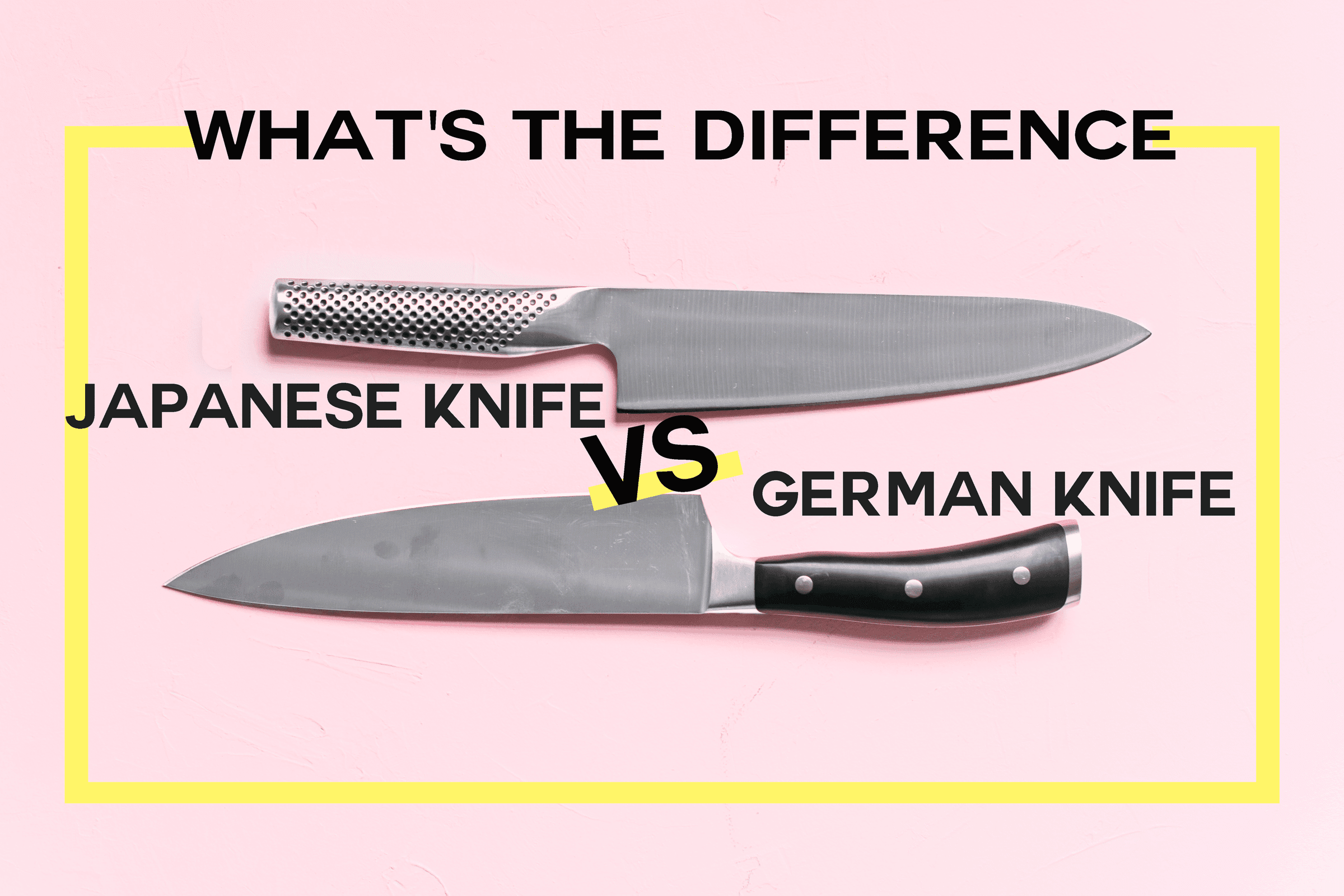
How it sits in your hand matters as much as steel. Japanese wa handles are light. Balance sits more forward, near the blade. This aids tip control and fine work. It rewards a pinch grip.
German handles are heavier with clear finger guards. Balance sits closer to the hand. That gives control in rocking cuts and strong chops. It feels safe for new users.
Try both if you can. The right feel often decides Japanese vs German knives for you more than spec sheets.
Best uses and real‑world examples
Here is how I match tool to task in my kitchen tests.
- Delicate slicing: Japanese gyuto or sujihiki. Great for fish, ripe fruit, and paper‑thin veg.
- All‑day prep: German chef’s knife. It tackles onions, carrots, and herbs with fewer breaks to hone.
- Hard squash or melons: German wins. The thicker spine and softer edge shrug off stress.
- Fine julienne and chiffonade: Japanese shines. Low friction and tiny edge angle keep cuts neat.
- Poultry with joints: German is safer. It can tap through cartilage without fear of chips.
Cooking style drives this choice. If you value precision cuts, Japanese vs German knives will push you toward Japan. If you value one tool for many jobs, Germany may fit better.

Sharpening, honing, and daily care
Edge care is not the same for both camps.
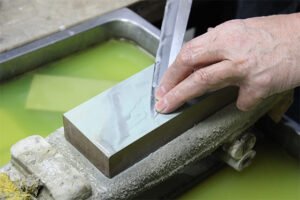
- For Japanese knives: Use water stones. Start with 1000 grit, then 3000–6000. Add a light micro‑bevel to boost strength. Avoid steel rods on very hard blades. Wipe dry at once. Use soft boards like end‑grain wood.
- For German knives: A ceramic or fine steel rod helps daily. Stone work every few weeks keeps the edge fresh. Use wood or quality plastic boards. Avoid glass, bamboo, and stone boards for any knife.
I once chipped a hard Aogami petty on a glass board during a shoot. Lesson learned. In Japanese vs German knives, the board can be the hero or the villain.

Price, value, and what you actually get
Spending more should bring real gains.
- Budget range: German stamped chef’s knives offer great value and easy care. Entry‑level Japanese stainless gyuto can be thin and sharp, but fit and finish vary.
- Mid‑range: Heat treatment and grind quality improve on both sides. Japanese vs German knives both feel refined here.
- High‑end: Japanese makers shine with high HRC, thin grinds, and hand finishes. German makers offer durable, polished workhorses with superb ergonomics.
Pay for grind quality and heat treat first. Pretty Damascus is nice, but the edge and geometry matter more.
Which should you choose? A simple decision guide
Answer these questions to pick with confidence.
- Do you prize clean, thin, even cuts? Choose Japanese.
- Do you want one knife that forgives mistakes? Choose German.
- Are you willing to learn stone sharpening? Japanese pays off.
- Do you prefer rocking and heavy chopping? German fits better.
- Do you cook lots of fish and veg? Japanese vs German knives favors Japanese.
- Do you break down birds or winter squash? German is safer and simpler.
If your budget allows, own one of each. Use the right tool for the job. That ends the Japanese vs German knives debate in your kitchen fast.
Care and safety checklist
Keep your investment sharp and safe.
- Hand wash and dry at once. No dishwasher.
- Store in a block, sheath, or on a magnet bar.
- Use soft cutting boards only.
- Keep fingers tucked and use a pinch grip.
- Hone often. Sharpen on stones before the edge dies.
- Avoid twisting in cuts or prying. Use the right tool for bones.
These simple steps extend edge life for both Japanese vs German knives.
Frequently Asked Questions of Japanese vs German knives
Are Japanese knives always sharper than German knives?
They arrive with a finer edge angle, so they often feel sharper. Both can get razor sharp if you sharpen well.
Do Japanese knives chip more easily?
Harder steel can chip if misused or dropped. Use soft boards and avoid bones to reduce the risk.
Can I use a honing rod on Japanese knives?
Use a fine ceramic rod on tougher Japanese stainless only. For very hard or carbon blades, stick to water stones.
Which knife is better for beginners?
German knives are more forgiving and safe for heavy use. They handle mistakes and rough boards better.
How often should I sharpen my knife?
Home cooks can sharpen every 4–8 weeks with light honing in between. Pros may sharpen weekly due to higher use.
Conclusion
You now know how steel, geometry, and ergonomics shape performance. Japanese vs German knives is not a fight. It is a choice based on tasks, care, and feel. Pick the style that matches your food and your habits, then learn to maintain it well.
Ready to go deeper? Try a side‑by‑side test at home this week. Slice tomatoes, cut an onion, and break down a chicken. Note what feels better and why. Subscribe for more hands‑on gear guides, or drop a comment with your questions and wins.
Maliha Akter is a kitchen knife reviewer and food preparation specialist with over 6 years of experience testing Japanese kitchen knives and everyday cooking tools. She focuses on performance, safety, durability, and real-world usability to help home cooks choose the right knives for efficient and enjoyable cooking.
Expertise:Japanese Knives • Vegetable Knives • Product Reviews • Kitchen Efficiency • Knife Care