Proper kitchen knife care preserves sharpness, safety, and blade life with simple routines.
I’ve spent years testing knives, sharpening them, and teaching home cooks how to keep blades reliable and safe. This guide on kitchen knife care explains what to do, why it matters, and how to build easy habits that protect your knives and speed up prep work. You’ll find clear steps, common mistakes to avoid, real-world tips from my experience, and answers to the questions people ask most often about caring for their knives. Read on to make kitchen knife care simple, practical, and routine.
Understanding kitchen knife care
Kitchen knife care means daily cleaning, proper storage, and regular sharpening to keep blades safe and effective. Good care reduces accidents, preserves edge life, and saves you money over time.
Why it matters
- Sharp knives cut better and require less force. This lowers the risk of slips and cuts.
- Proper storage protects the blade from nicks and corrosion.
- Routine maintenance keeps performance steady so you don’t need frequent professional sharpening.
Key concepts
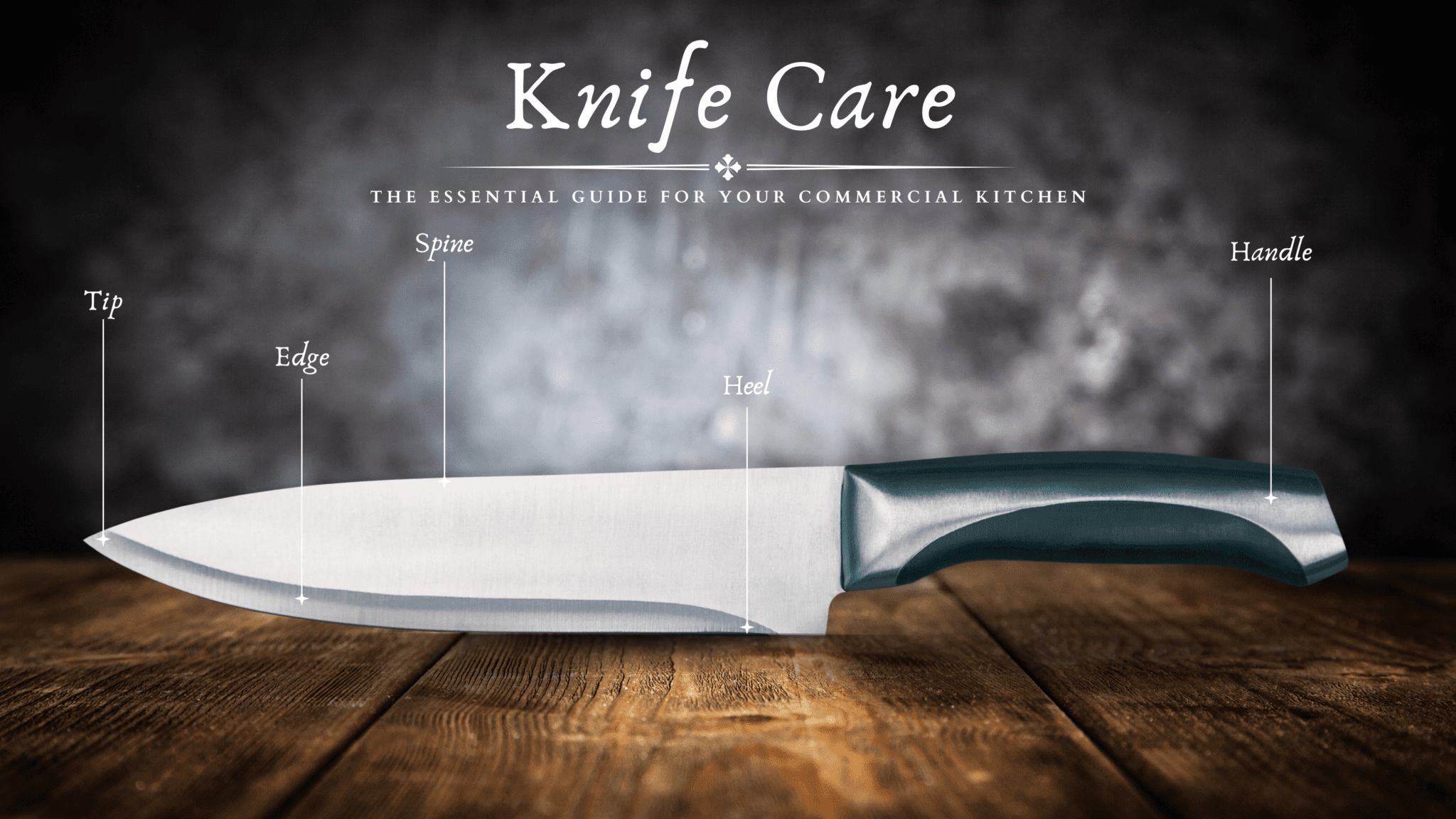
- Edge angle: the bevel angle controls how sharp and durable a blade is.
- Honing vs sharpening: honing realigns an edge; sharpening removes metal and rebuilds the edge.
- Steel types affect how you care for the knife and how often you sharpen it.
I’ve seen people ruin good knives by using the wrong boards, tossing blades in sinks, or trying to sharpen without learning the basics. This guide solves those problems with clear steps and examples.

Daily care and safe handling
Daily kitchen knife care starts at the sink and ends at the storage spot. Clean, dry, and store knives correctly every time.
Cleaning routine
- Rinse immediately after use to remove acids and salts that can stain or pit the steel.
- Wash by hand with warm water and mild soap. Avoid dishwashers that bump blades and expose them to harsh detergents.
- Dry with a clean towel right away to prevent rust or spots.
Safe handling
- Always cut on a stable surface and never attempt to catch a falling knife.
- Carry knives point-down and blade-back from your body.
- Use the right knife for the job to avoid twisting or misusing the blade.
Storage options
- Magnetic strip keeps knives accessible and avoids contact damage.
- Knife block protects edges but needs cleaning inside.
- Blade guards or sheaths are good for drawer storage and transport.
These daily habits are the core of kitchen knife care. Small steps add up to big improvements in blade life and kitchen safety.
Sharpening and honing: step-by-step
Understanding how often to sharpen and when to hone is central to kitchen knife care. Both actions are necessary but different.
Honing basics
- Use a honing rod to realign the edge before or after each use.
- Hold the rod vertically, sweep the blade at the proper angle across the rod, and repeat 5–10 times per side.
- Honing does not remove metal; it keeps the edge straight.
Sharpening basics
- Sharpen when honing no longer restores the edge and cutting feels dull.
- Use a whetstone, guided sharpener, or professional service depending on your comfort level.
- Typical grit progression: coarse to remove metal, medium to refine, fine to polish.
How to sharpen on a whetstone (simple steps)
- Soak or wet the stone if required by the manufacturer.
- Set the angle between 15–20 degrees for most kitchen knives. Harder steels can use lower angles.
- Push or pull the blade along the stone while maintaining angle. Do equal passes on each side.
- Finish with a fine grit and then strop or hone to polish the edge.
How often to sharpen
- Home cooks: every 6–12 months depending on use.
- Heavy use: every 1–3 months.
- Hone regularly; sharpening less often but with proper technique.
I sharpen all my knives on a stone. Early on I over-removed metal. Now I use small, controlled passes and check with simple paper tests. This keeps sharpening efficient and part of smart kitchen knife care.

Deep maintenance and repairs
Sometimes knives need more than daily care. Deep maintenance restores function and value.
When to get professional service
- Large chips, bent tips, or complex restorations are best handled by a pro.
- High-end knives with special heat treatment often respond better to specialist sharpening.
DIY blade repair
- Small chips can be ground out with a coarse stone, then refined with finer grits.
- Reprofiling an edge changes the bevel angle; do this only if you understand trade-offs between sharpness and durability.
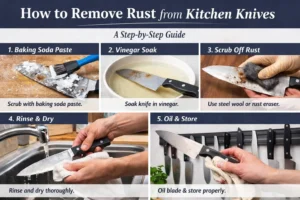
- Remove rust with fine abrasive or a mild acid solution; neutralize and dry immediately.
Preventative maintenance
- Oil carbon steel blades lightly after drying to avoid rust.
- Inspect bolts and handles and tighten or repair as needed.
- Keep bolts, rivets, and full tangs clean and dry to preserve handle life.
Be honest about skill limits. I tried fixing a badly chipped chef’s knife once and ended up losing too much metal. Now I send major repairs to a pro and handle tuning and light sharpening at home. That saved the blade and my time.
Materials and blade types: what they mean for care
Different blade materials change how you practice kitchen knife care. Know your steel or ceramic and adapt.
Stainless steel
- Resists rust but still needs cleaning.
- Easier to maintain; suitable for busy kitchens.
Carbon steel
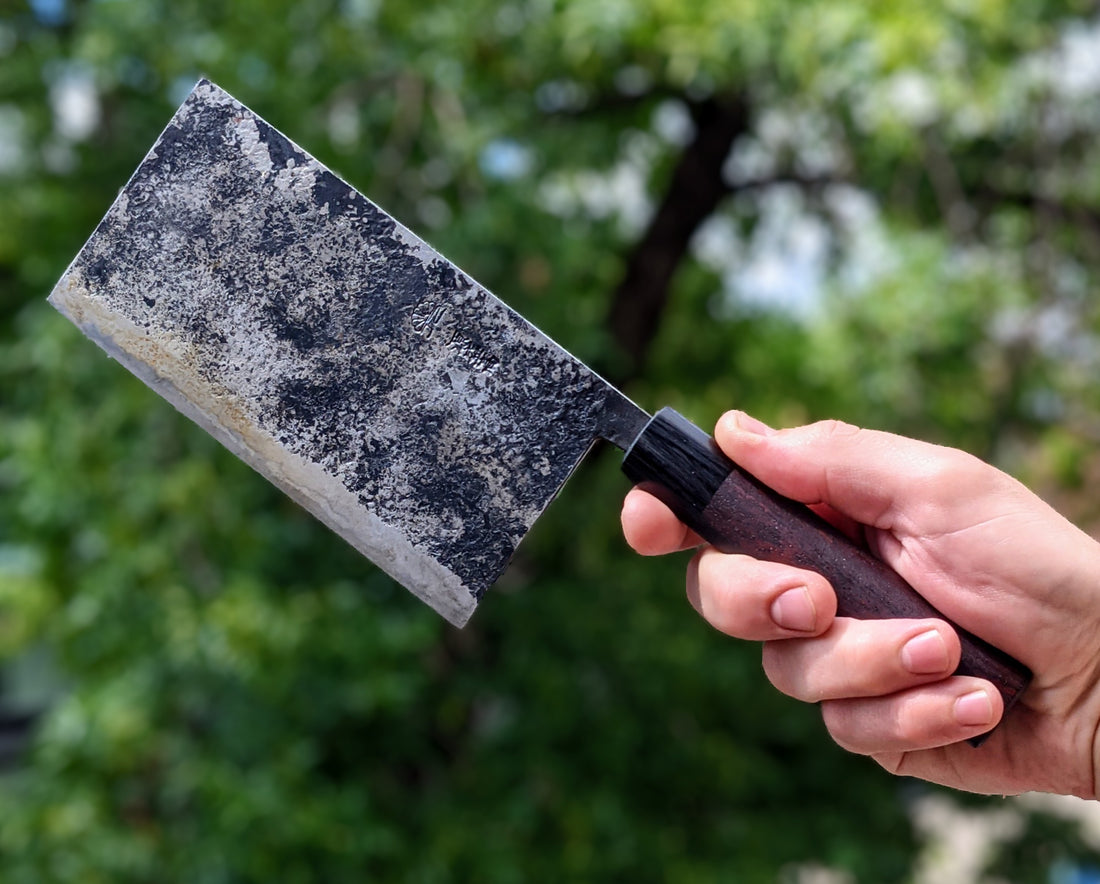
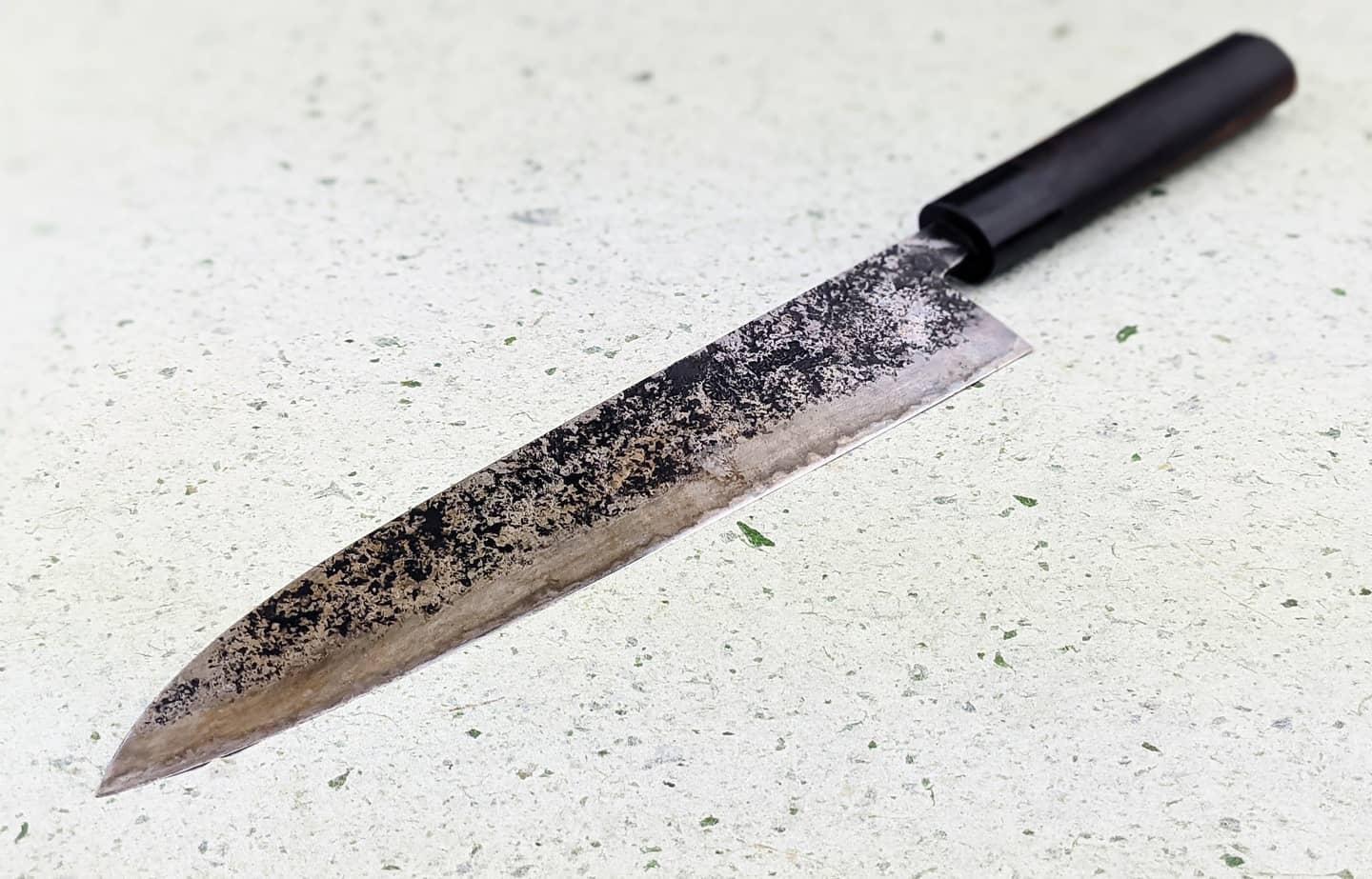
- Takes a finer edge but can rust or patina.
- Requires prompt drying and occasional oiling as part of kitchen knife care.
High-carbon stainless (powder steels)
- Combines edge retention with corrosion resistance.
- Still benefits from regular honing and proper storage.
Ceramic blades
- Very sharp and corrosion-free.
- Breakable; do not drop and avoid hard cutting tasks. Sharpen with special tools.
- Wood handles need drying and occasional oiling.
- Synthetic handles tolerate dish soap and damp conditions better.
Choosing the right knife for your style reduces maintenance. I use carbon steel for my favorite prep knife because it holds a razor edge. I accept the oiling and patina because the performance is worth it.

Do’s and Don’ts of kitchen knife care
Simple lists help build reliable habits. Keep these do’s and don’ts next to your prep station.
Do’s
- Do wash and dry knives by hand immediately after use.
- Do hone daily and sharpen when the edge dulls.
- Do store knives safely to avoid edge contact and accidents.
- Do use wood or plastic cutting boards to protect blades.
Don’ts
- Don’t put knives in the dishwasher.
- Don’t cut on glass, stone, or metal surfaces.
- Don’t use a knife to pry, open cans, or do tasks it’s not built for.
- Don’t ignore small chips or wobbling handles.
Following these simple rules will keep your knives performing and safe. I recommend printing a short list and sticking it near your prep area if you’re training habits.
Personal experience and lessons learned
Real change comes from small, repeated practices. Here are a few things I learned that might help.
What worked for me
- Routine honing after every few uses kept me from needing full sharpens often.
- Switching to a magnetic strip stopped drawer nicks and made prep faster.
- Using a paper test and thumb drag (carefully) helped me check edges without special tools.
Mistakes to avoid
- Letting knives soak in a sink led to one irreparable handle delamination.
- Over-sharpening early in my learning cost usable metal. Now I sharpen less and hone more.
Quick ritual I use
- After every cooking session: wash, dry, hone, and store. It takes two minutes and prevents most problems.
These practical steps are part of my recommended kitchen knife care routine. Try them for a month and you’ll notice better performance and fewer mishaps.

Frequently Asked Questions of kitchen knife care
How often should I hone my knives?
Hone after every use or at least every few uses. Honing realigns the edge and delays the need for sharpening.
How often should I sharpen my knives?
Sharpen when honing no longer restores the edge, typically every 6–12 months for home cooks. Frequency depends on use and steel type.
Can I put knives in the dishwasher?
No. Dishwashers can dull and damage blades and handles. Hand wash and dry knives to extend their life.
What is the best cutting board for knife care?
Use wood or high-density plastic boards. They are gentle on edges compared to glass, stone, or metal.
How do I remove rust from a carbon steel knife?
Gently rub with fine abrasive or a rust eraser, then neutralize and dry. Lightly oil afterward to prevent recurrence.
Is it okay to use a pull-through sharpener?
Yes for quick fixes, but they can remove more metal than necessary. Use stones or professional sharpening for best long-term results.
Conclusion
Good kitchen knife care is simple: clean, dry, store, hone, and sharpen when needed. These habits keep knives sharp, safe, and reliable. Start with a two-minute end-of-day routine and you’ll see better cuts, fewer accidents, and longer blade life. Try the steps above this week and notice the difference. Share your progress, ask questions, or subscribe to get more practical knife care tips.

Maliha Akter is a kitchen knife reviewer and food preparation specialist with over 6 years of experience testing Japanese kitchen knives and everyday cooking tools. She focuses on performance, safety, durability, and real-world usability to help home cooks choose the right knives for efficient and enjoyable cooking.
Expertise:Japanese Knives • Vegetable Knives • Product Reviews • Kitchen Efficiency • Knife Care