A knife's anatomy is the set of named parts that define its function and performance.
I have spent years working with blades, testing designs, and teaching others how knives work. This guide on knife anatomy breaks down each part, why it matters, and how the pieces work together so you can choose, use, and care for knives with real confidence. Read on for clear, practical insight drawn from hands-on experience and industry best practices.
Knife anatomy: core components and definitions
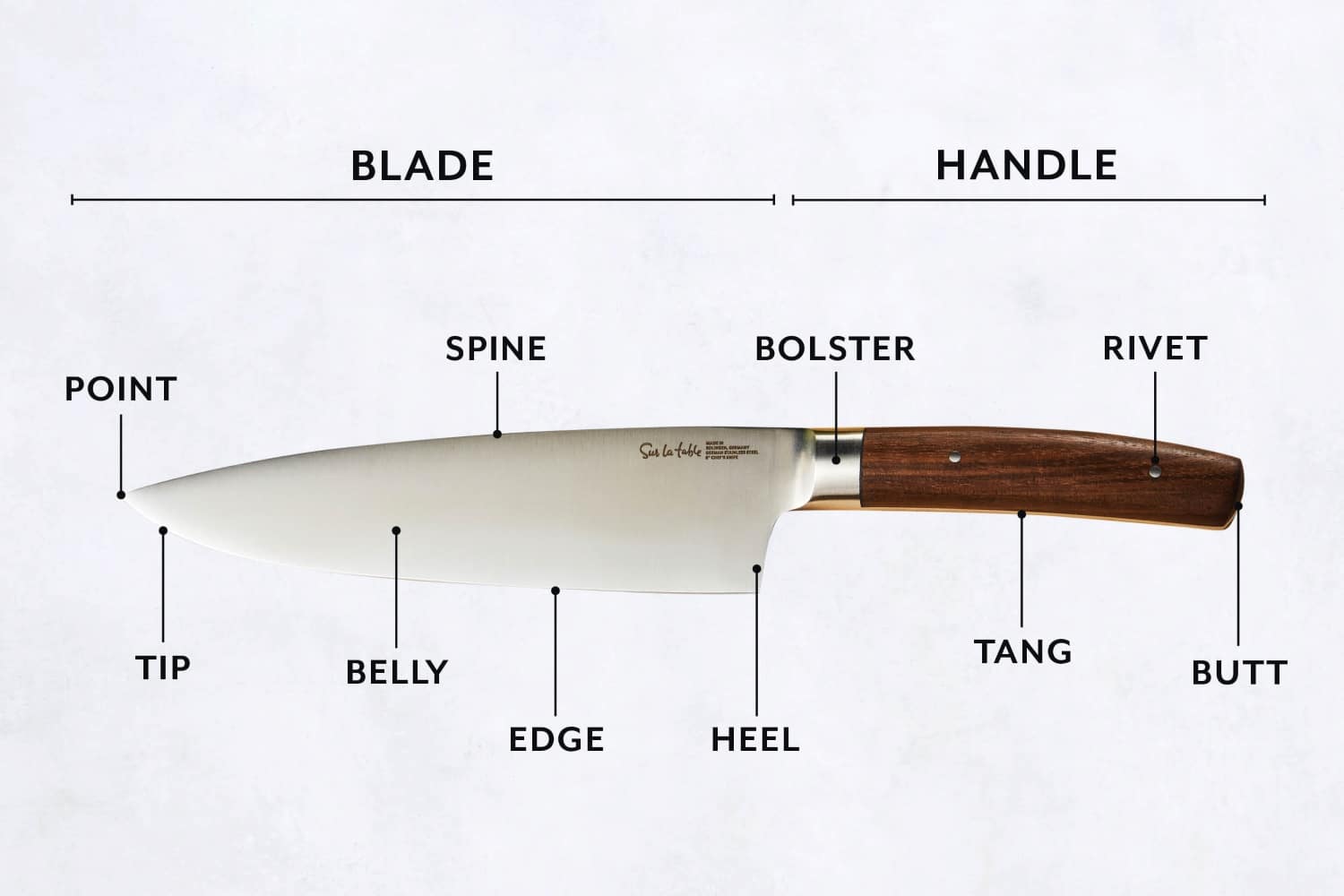
Understanding knife anatomy begins with the big picture. The main components are the blade, the handle, and the junction between them. Each part has subcomponents that affect balance, strength, cut performance, and safety.
Key terms to know:
- Blade: The metal cutting portion of the knife.
- Edge: The sharpened line used to cut.
- Spine: The unsharpened back of the blade.
- Tang: The extension of the blade into the handle.
- Handle: The part you grip; includes scales, guard, and pommel.
Knowing knife anatomy helps you pick the right knife for a task and maintain it properly. I’ll show practical examples and simple rules you can use right away.

Blade parts and what they do
A blade is more than a single edge. Its shape and anatomy determine how it slices, pierces, and resists wear.
Important blade parts:
- Tip: The forward-most point used for piercing and delicate work.
- Point: The broader area near the tip that controls penetration.
- Edge: Runs from tip to heel; its geometry defines sharpness and durability.
- Heel: The rear section of the edge used for heavy cutting or chopping.
- Spine: Provides stiffness and a place to apply pressure with the thumb.
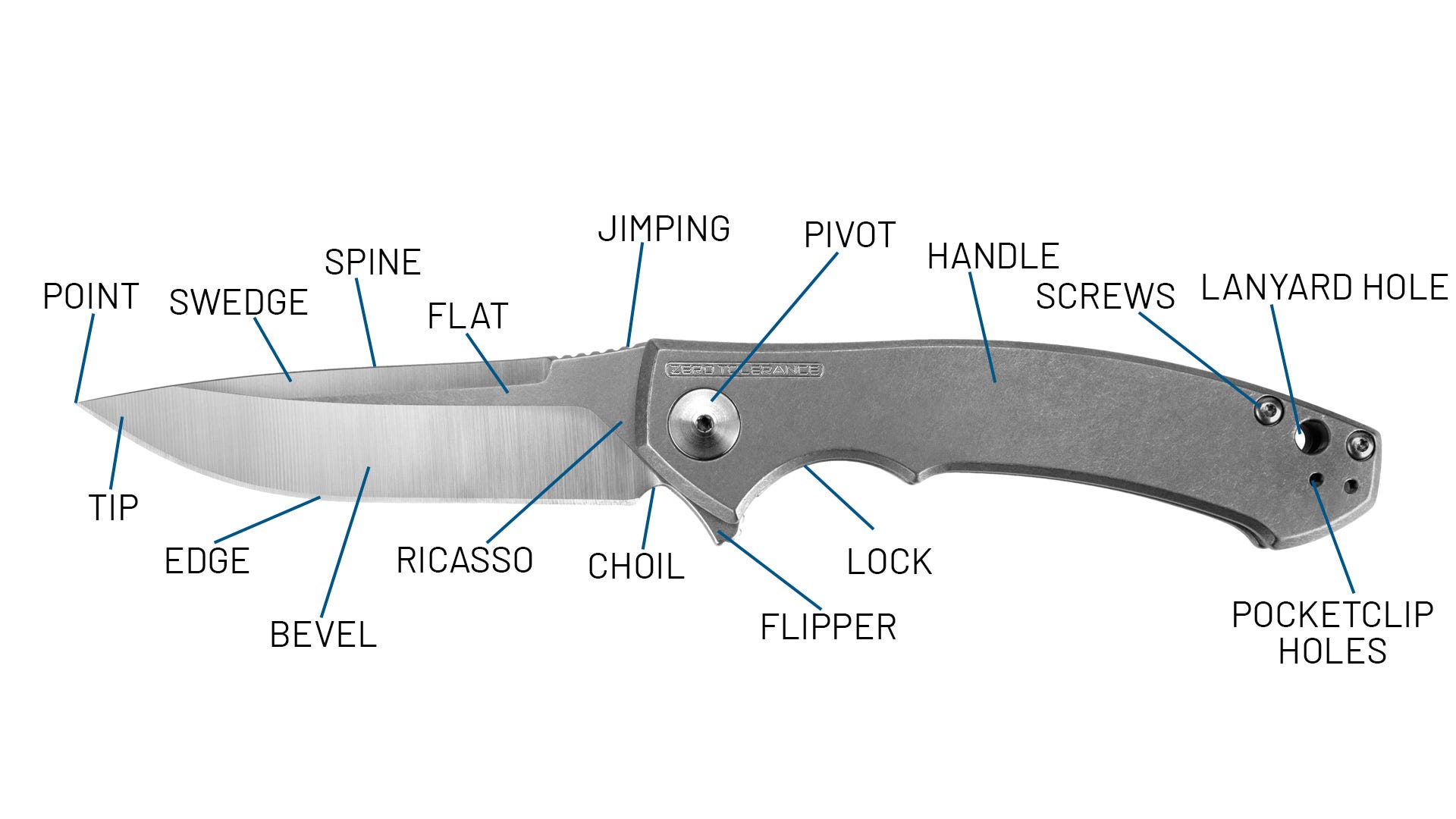
- Ricasso: Unsharpened section near the handle, useful for grip control on some knives.
- Fuller: A groove sometimes found in blades to reduce weight without losing strength.
Blade anatomy affects performance. For example, a thin edge with a narrow bevel cuts best for slicing but dulls faster. A thicker spine increases strength but reduces finesse. Over my years testing knives, I learned how small changes in edge geometry change how a knife feels and cuts.

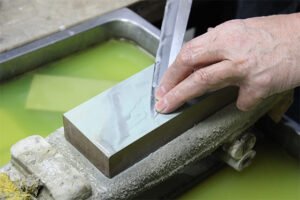
Edge geometry and sharpening basics
Edge shape is a core part of knife anatomy that directly influences cutting ability.
Common edge geometries:
- V-edge: Symmetrical bevels on both sides; versatile and common.
- Scandi: Single wide bevel, great for woodworking and controlled cuts.
- Hollow grind: Thin, very sharp edge that excels at slicing.
- Convex: Rounded bevel that resists chipping and holds up under heavy use.
Sharpening essentials:
- Match the sharpening angle to the knife’s intended use.
- Use progressively finer stones or systems to refine the edge.
- Test with paper or a light shave test; avoid pushing angles beyond design.
I once ruined a quality blade by forcing a very low angle that the steel couldn’t support. The lesson: respect the knife anatomy and design when sharpening.
Handle and tang types: strength, comfort, and balance
Handle design is central to safe, effective knife use. The tang and handle materials shape balance and durability.
Common tang types:
- Full tang: Metal runs the full length of the handle; best strength and balance.
- Partial tang: Metal stops short of the handle; lighter but less durable.
- Hidden tang: Tang is concealed and often lighter; common in dress knives.
Handle elements:
- Scales: The grip slabs attached to the tang, made of wood, composite, or polymer.
- Guard: Prevents the hand from sliding onto the blade.
- Pommel: End cap that may add balance or secure the tang.
In my workshop, full-tang knives outlast partial-tang pieces when used for heavy tasks. Choose handle material that fits your grip and activity, and ensure maintenance for porous materials like wood.

Blade steels, heat treatment, and their role in anatomy
The metal and its treatment are invisible parts of knife anatomy that define edge retention, toughness, and corrosion resistance.
Key steel factors:
- Composition: Carbon, chromium, vanadium, and other elements change hardness and rust resistance.
- Hardness (HRC): Harder steels hold edges longer but can be brittle.
- Heat treatment: Proper tempering creates a balance between hardness and toughness.
How this affects anatomy:
- A brittle steel can chip at the tip or edge if geometry is too thin.
- A softer steel may deform faster, changing edge shape and requiring more maintenance.
I’ve worked with both stainless and high-carbon steels. Each has trade-offs. Understand the steel’s properties before altering edge geometry or using the knife in demanding settings.

Knife types and how anatomy changes by purpose
Knife anatomy adapts to purpose. The same core parts appear across styles, but proportions change.
Examples:
- Chef’s knife: Long belly, balanced feel, tip used for fine work and heel for chopping.
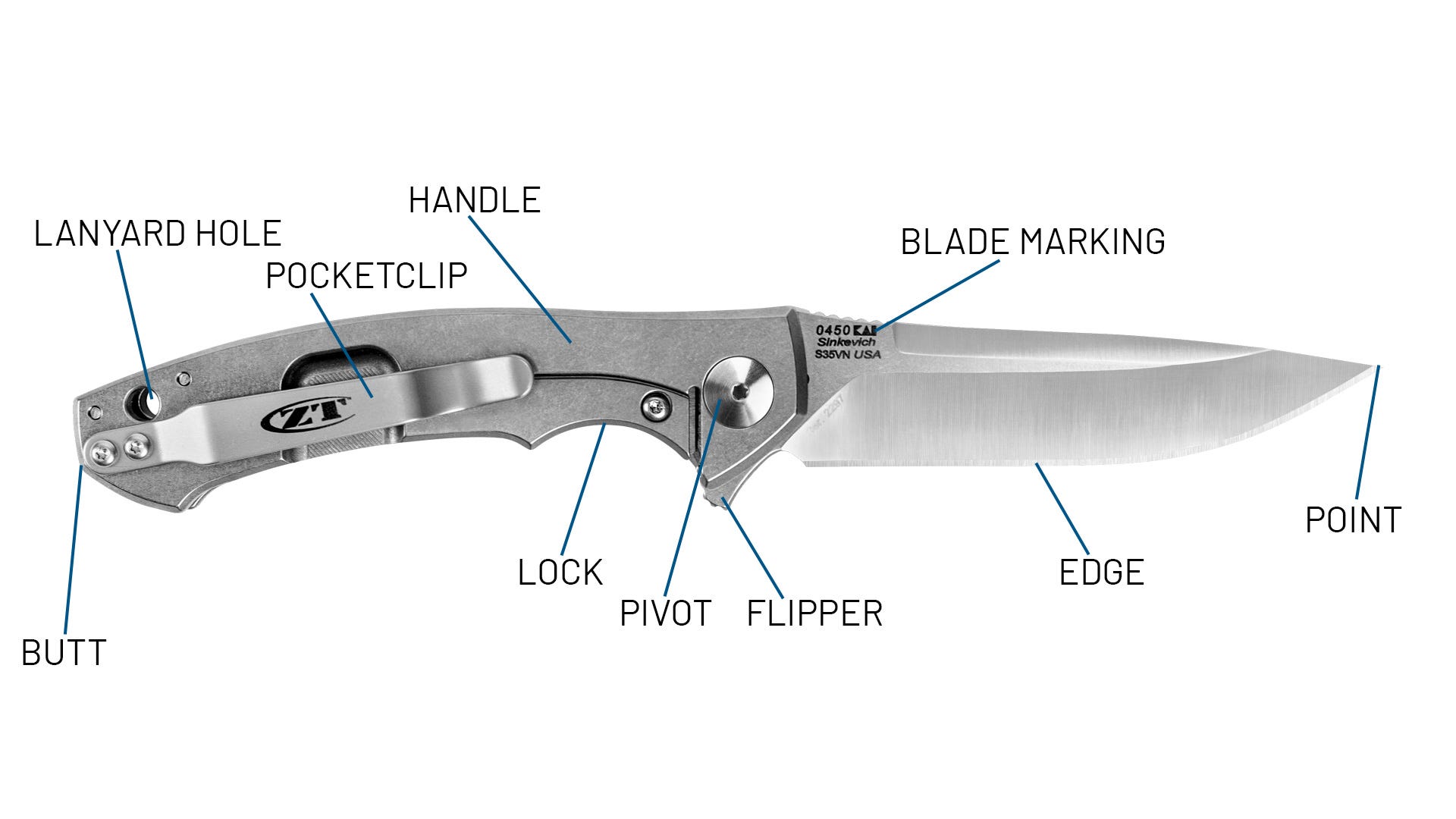
- EDC folding knife: Shorter blade, often with a thicker spine and reinforced tip.
- Survival or tactical knife: Strong tip, thick spine, full tang, and durable handle.
- Skinning knife: Curved belly and very thin edge for clean slicing.
Matching anatomy to task prevents tool misuse. For instance, using a thin paring knife for batoning wood will damage the tip and edge geometry. Choose the right anatomy for the job.
Maintenance, care, and safety tied to anatomy
A knife’s anatomy guides how you care for it. Proper maintenance preserves function and safety.
Routine care tips:
- Clean after every use; dry thoroughly to prevent corrosion at the heel and ricasso.
- Hone regularly to maintain edge geometry between sharpenings.
- Store safely to protect the edge and avoid accidents.
Safety tied to anatomy:
- A secure handle and appropriate guard reduce slipping toward the edge.
- Balanced knives reduce wrist strain and accidental cuts.
- Understanding tip and point strength prevents misuse that could cause breakage.
From my experience, simple habits like gentle drying and matching the task to the knife’s anatomy extend life dramatically.

Practical buying and inspection checklist
When assessing a knife, inspect anatomy to ensure quality and fit.
Checklist:
- Check the tang: full tang for heavy-duty use; hidden tang for light tasks.
- Examine spine and tip: look for uniform grind and no chips.
- Feel the handle: ensure scales fit without gaps and the grip suits your hand.
- Assess balance: the knife should feel stable and comfortable when gripped near the bolster.
I recommend testing by holding and simulating typical cuts. A well-matched anatomy will feel intuitive and safe.

Common questions people also ask
Here are a few direct answers to common PAA-style questions about knife anatomy.
What part of the knife is best for slicing?
- The edge and belly are best for slicing. A thin edge and long belly create smooth pulls and clean cuts.
Why does tang type matter?
- Tang type affects strength and balance. Full tangs offer superior durability for heavy use.
How does spine thickness affect performance?
- A thicker spine increases strength but reduces slicing finesse. It is ideal for heavy-duty tasks.
Can wrong sharpening ruin knife anatomy?
- Yes. Sharpening at an inappropriate angle can weaken the tip and change edge geometry, shortening blade life.
How often should you hone versus sharpen?
- Hone weekly with moderate use and sharpen only when honing no longer restores the edge. Frequency depends on steel and use.
Frequently Asked Questions of knife anatomy
What are the main parts of a knife?
A knife's main parts are the blade and the handle, with the tang connecting them. The blade includes the tip, point, spine, edge, and heel.
How does the tang affect knife strength?
The tang determines how much metal extends into the handle; a full tang gives the best strength and balance for heavy use. Partial or hidden tangs are lighter but less robust.
What is edge geometry and why is it important?
Edge geometry is the angle and shape of the bevels that form the cutting edge. It dictates sharpness, cutting efficiency, and durability.
Which handle materials are best for outdoor knives?
Stable, water-resistant materials like micarta, G10, and certain treated hardwoods perform best outdoors. They resist swelling and maintain grip when wet.
How do I identify a quality blade grind?
Look for consistent bevels, smooth transitions from spine to edge, and no tool marks. Quality grinds reflect attention to the knife's design and function.
Does blade shape affect maintenance needs?
Yes. Thin, finely ground blades often require more frequent sharpening and careful use, while thicker blades tolerate rougher tasks and less maintenance.
Can I change a knife’s anatomy by modifying it?
You can alter aspects like edge geometry and handle scales, but improper changes can weaken the knife or make it unsafe. Modify only with proper tools and knowledge.
Are full-tang knives always better?
Full-tang knives are stronger and often more durable, but they are heavier. The “better” choice depends on intended use and personal preference.
How does heat treatment relate to knife anatomy?
Heat treatment sets the steel’s hardness and toughness, which interact with edge geometry and blade thickness to define cutting performance and durability.
What causes tip breakage?
Tip breakage often results from using the tip for prying or striking hard surfaces, or from thin edge geometry on brittle steel. Match task to the knife’s design.
Conclusion
Understanding knife anatomy gives you the power to choose the right tool, use it safely, and keep it working well for years. Review the blade, edge geometry, tang, handle, and steel when buying or maintaining a knife, and match anatomy to task to avoid damage and injury. Start by inspecting one of your knives today, test how its anatomy fits your needs, and adjust care or technique accordingly. Share your experiences, ask questions, or subscribe to stay updated on practical knife knowledge.

Maliha Akter is a kitchen knife reviewer and food preparation specialist with over 6 years of experience testing Japanese kitchen knives and everyday cooking tools. She focuses on performance, safety, durability, and real-world usability to help home cooks choose the right knives for efficient and enjoyable cooking.
Expertise:Japanese Knives • Vegetable Knives • Product Reviews • Kitchen Efficiency • Knife Care