A knife’s anatomy includes blade, edge, and handle parts that guide performance.
If you cook, camp, or carry a daily blade, knowing its parts will level up your skill and safety. In this Knife anatomy diagram & explanation, I break down every piece in plain language. I’ve sharpened, fitted handles, and tuned balance for years. You’ll get clear labels, real use cases, and solid tips you can use today.

Understanding the Knife Anatomy Diagram
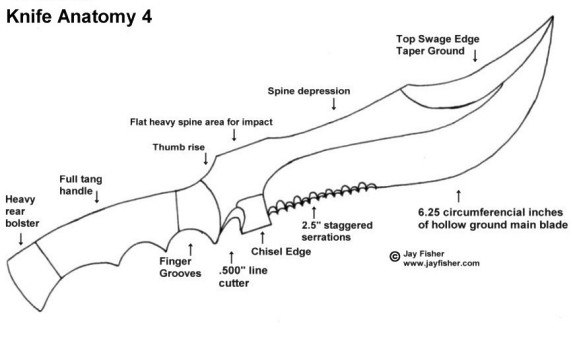
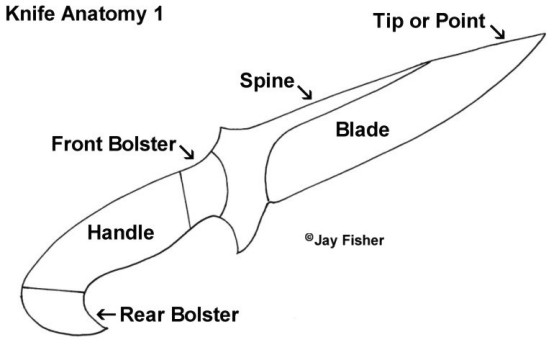
A good diagram shows how each part works together. You will see the spine on top, the edge on the bottom, and the point up front. Labels mark the tip, belly, heel, choil, and ricasso. On the handle, you will see scales, rivets, liners, and the butt or pommel.
Think of the diagram like a map. Each part affects cut, feel, and safety. This Knife anatomy diagram & explanation will help you read that map fast.
Source: jayfisher.com
Blade Anatomy: From Spine to Edge
Start with the spine. It is the thick top of the blade. It adds strength and can be used to guide your hand. Next is the flat of the blade. That is the broad face you wipe and use to scoop food.
The edge is where the work happens. It has a bevel that meets in a fine line. The heel is the back of the edge. It is strong and good for firm cuts. The belly is the curved middle. It rocks for herbs and fast chops.
The tip and point handle detail work. Think scoring, trimming, and precision cuts. The choil is the cut-out near the heel. It gives finger room. The ricasso is the unsharpened part between the blade and handle. A swedge is a false edge near the tip on some knives. A fuller is a groove that can cut weight but keep strength.
When you match this to a Knife anatomy diagram & explanation, the labels make instant sense.

Source: fnsharp.com
Handle Anatomy: Grip, Comfort, Control
The handle gives control and safety. Scales are the sides you hold. They sit on the tang and are held by rivets or pins. Liners can add strength and a clean fit. The butt or pommel caps the end. Some knives have a lanyard hole for a cord.
A bolster or guard can stop your hand from sliding forward. Some kitchen knives have a half or no bolster for easy sharpening. Ferrules show up on many Japanese handles. They reinforce the front. This is where fit and finish matter. A smooth transition from blade to handle feels secure.
In this Knife anatomy diagram & explanation, you will see how each handle piece shapes grip and balance.
Source: jayfisher.com
Grinds, Bevels, and Edge Types
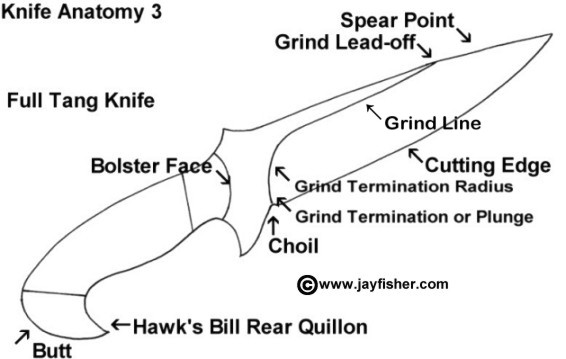
Grind is the blade cross-section. It affects sharpness, bite, and food release. Common grinds include flat, hollow, convex, and Scandi. A flat grind is simple and easy to sharpen. A hollow grind gets very sharp and thin. A convex grind is strong and smooth through food. Scandi is thick and great for wood work.
Bevels set the edge. Most kitchen knives use 12 to 20 degrees per side. Western chef knives often sit at 15 to 20. Many Japanese styles are 10 to 15. Some blades have a chisel grind with one main bevel. Micro-bevels add strength. Serrated edges last on bread and rope but need special tools.
This Knife anatomy diagram & explanation will show how grind lines flow from spine to edge.

Source: sharpedgeshop.com
Tangs, Bolsters, and Balance
The tang is the blade steel that runs into the handle. A full tang runs the whole length and shows along the handle. It feels solid and stable. Hidden tangs sit inside the handle and can be very strong if well made. Rat-tail tangs are thinner and lighter.
Bolsters add weight near the pinch grip. They can help balance and protect fingers. Balance matters more than weight alone. I look for a balance point near the pinch. That spot lets the knife feel like an extension of your hand.
A Knife anatomy diagram & explanation highlights tang shape, bolster size, and how they set balance.
Source: jayfisher.com
Points and Profiles: What Shape Does
Blade profile means how the edge curves. Chef knives have a gentle curve for rocking. Santoku blades are flatter and great for push cuts. Nakiri blades are very flat and excel at veg work. Bread knives have long blades with serrations.
Tip shapes also guide use. Drop points are all-around. Clip points offer fine tips for detail. Tanto tips have strong points for piercing. Sheepfoot tips are safe near fingers. Pick the shape that fits your cuts.
Tie this back to the Knife anatomy diagram & explanation. The profile line tells you how the knife will move.

Source: knifeaid.com
Steel, Materials, and Coatings
Steel choice affects sharpness, toughness, and rust care. Carbon steel is easy to sharpen and can get very sharp. It can rust, so dry it well. Stainless steel resists rust. Many kitchen steels sit around 56 to 62 HRC for a balance of edge and durability.
Handle materials also matter. Wood feels warm and looks great. It needs care. Micarta and G-10 are tough and stable. They grip well even when wet. Composites like pakkawood resist water. Coatings like DLC or PVD can add wear and rust resistance. Stonewash and satin finishes hide marks and clean well.
A solid Knife anatomy diagram & explanation often notes steel types and handle materials to guide choices.

Source: shutterstock.com
Care, Sharpening, and Safety by the Anatomy
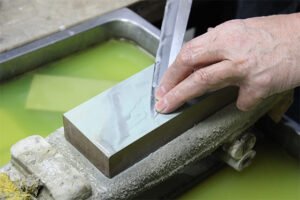
Care follows the parts. Wash by hand, dry right away, and store on a magnetic strip or in a sheath. Honing aligns the edge. Do it often. Sharpen on stones when the edge no longer bites. Match the bevel angle to your knife style.
Use a cutting board that is kind to edges. Wood and soft plastic are best. Use the choil and heel to place your hand. Use a pinch grip at the spine and blade for control. Keep fingers tucked under your guide hand. A safe knife is a sharp knife used with good form.
This is where a Knife anatomy diagram & explanation turns into daily habits.
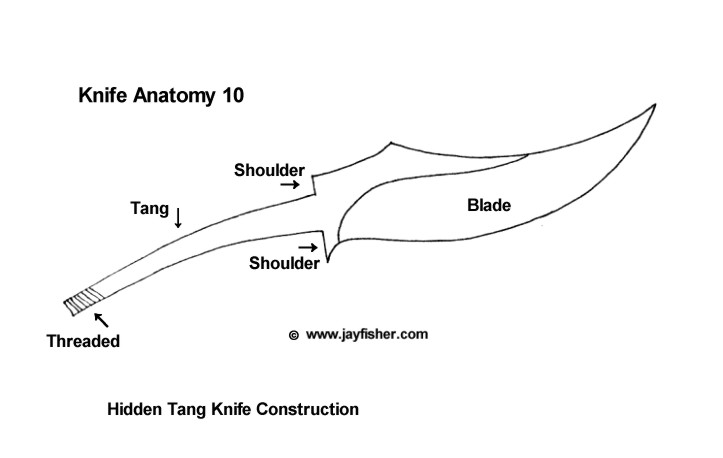
Source: jayfisher.com
How to Read and Sketch a Knife Anatomy Diagram
Want to read or draw your own diagram? Try this simple plan.
- Outline the blade shape first: spine, point, and edge curve.
- Add key labels: tip, belly, heel, choil, and ricasso.
- Sketch the handle with scales, rivets, and butt or pommel.
- Mark the tang type and any bolster or guard.
- Note the grind line and bevel angle ranges.
A step-by-step Knife anatomy diagram & explanation helps you see how form drives function.
Common Knife Types and How Anatomy Differs
Chef’s knives run from 6 to 10 inches with a curved profile. They do most kitchen work. Santoku knives are shorter, flatter, and great for fine slicing. Nakiri knives are tall and flat for veg prep. Bread knives have long serrations and a thin spine. Boning and fillet knives are narrow and flexible. Cleavers are tall and heavy for power chops. Pocket knives add locks, backspacers, and clips to their anatomy.
Each type changes parts to fit its job. The spine thickness, tip shape, and handle style all shift. A Knife anatomy diagram & explanation for each type will show why they feel so different.
Frequently Asked Questions of Knife anatomy diagram & explanation
What are the most important parts to learn first?
Focus on the spine, edge, tip, heel, and choil. These five tell you how a knife cuts and feels.
What does a bolster do on a knife?
A bolster adds weight and protects your fingers. It also helps balance the knife near the pinch grip.
How do grind and bevel change performance?
Grind sets how the blade moves through food. Bevel and angle set sharpness, bite, and durability.
Is full tang always better?
Full tang feels solid and balanced, but it is not the only strong option. A good hidden tang can be just as strong.
What edge angle should I use?
For most kitchen knives, aim for 15 to 20 degrees per side. Go lower for fine slicing and higher for more strength.
How do I prevent rust on carbon steel?
Wash, dry, and oil lightly after use. Use a board that does not hold water and avoid soaking.
Why does my knife wedge in hard veg?
The grind and blade thickness may be too thick. Try a thinner grind or a convex edge for smoother release.
Conclusion
Now you can look at any knife and read its story from tip to butt. You know how the spine, grind, and handle shape guide every cut. You can pick better tools, care for them, and work with more speed and safety.
Put this guide to work today. Study a Knife anatomy diagram & explanation, check your grip, and tune your edge. If this helped, explore more resources, subscribe for new guides, or drop a question in the comments.

Emily Carter is a kitchen knife specialist with over 8 years of experience testing and reviewing Japanese kitchen knives. She focuses on blade performance, comfort, durability, and real-life cooking usability. Her goal is to help home cooks choose reliable, high-quality knives for everyday cooking.
Expertise: Japanese Knives, Vegetable Cutting, Product Testing