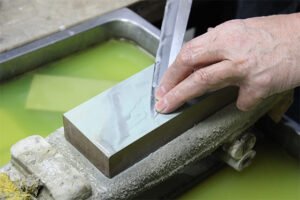
Knife blade anatomy covers the shape, parts, edge geometry, material, and finish.
I have studied, handled, and tested knives for over a decade. I know how small differences in knife blade anatomy change performance, feel, and care. This guide breaks down each part, explains common grinds and materials, and offers real tips from hands-on experience so you can choose, use, and maintain blades with confidence. Read on for a complete, practical, and expert view of knife blade anatomy.
Core parts of a knife blade
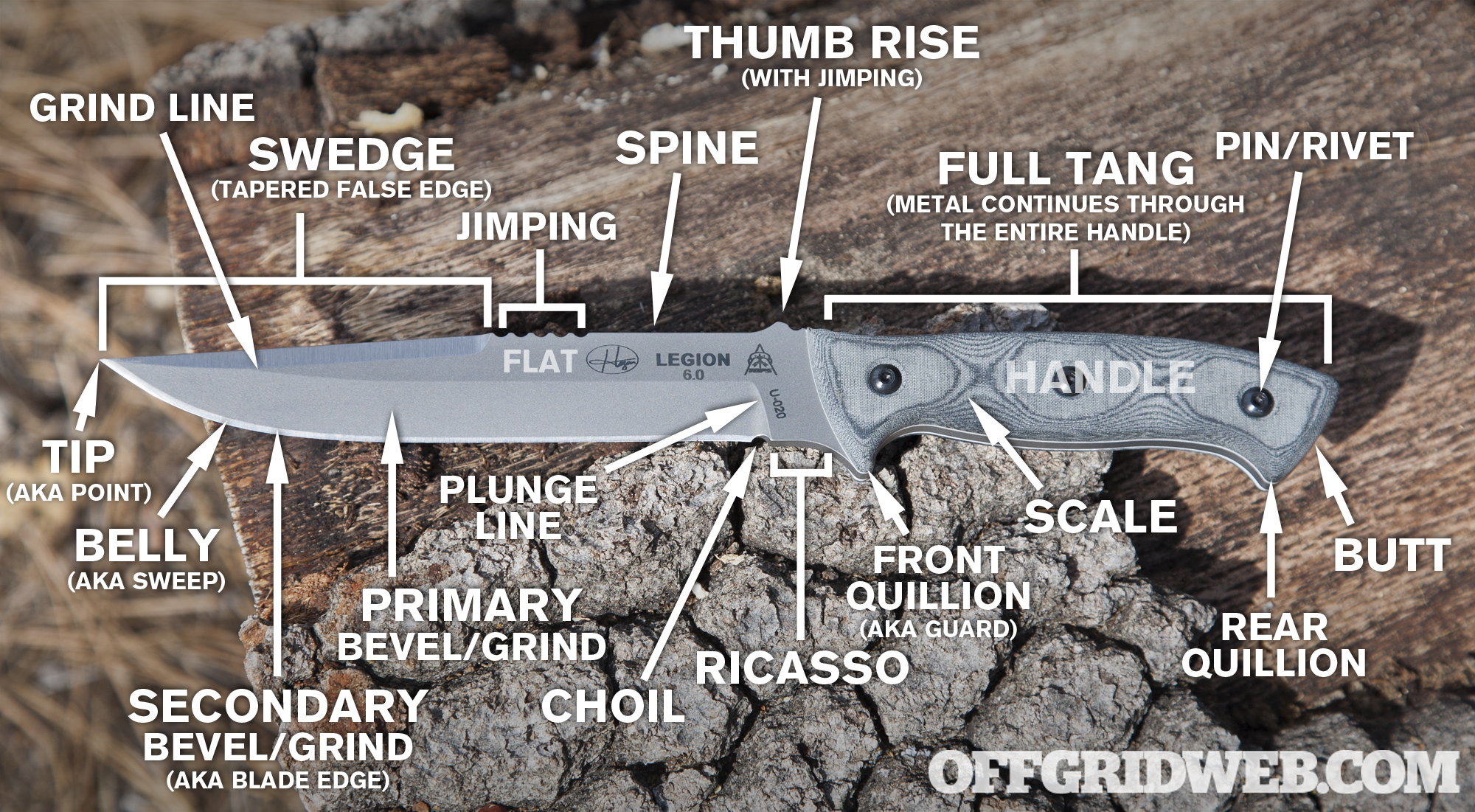
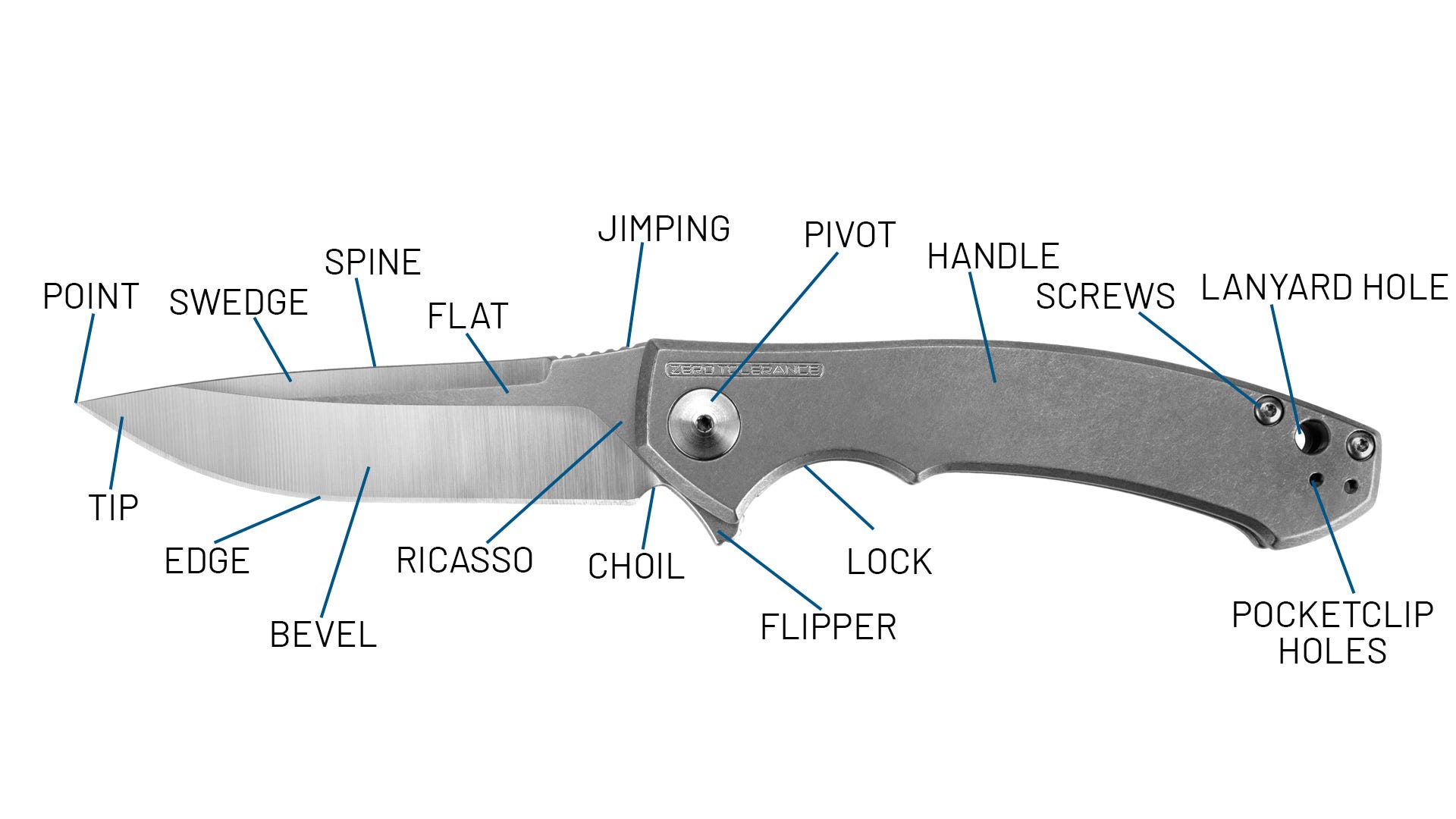
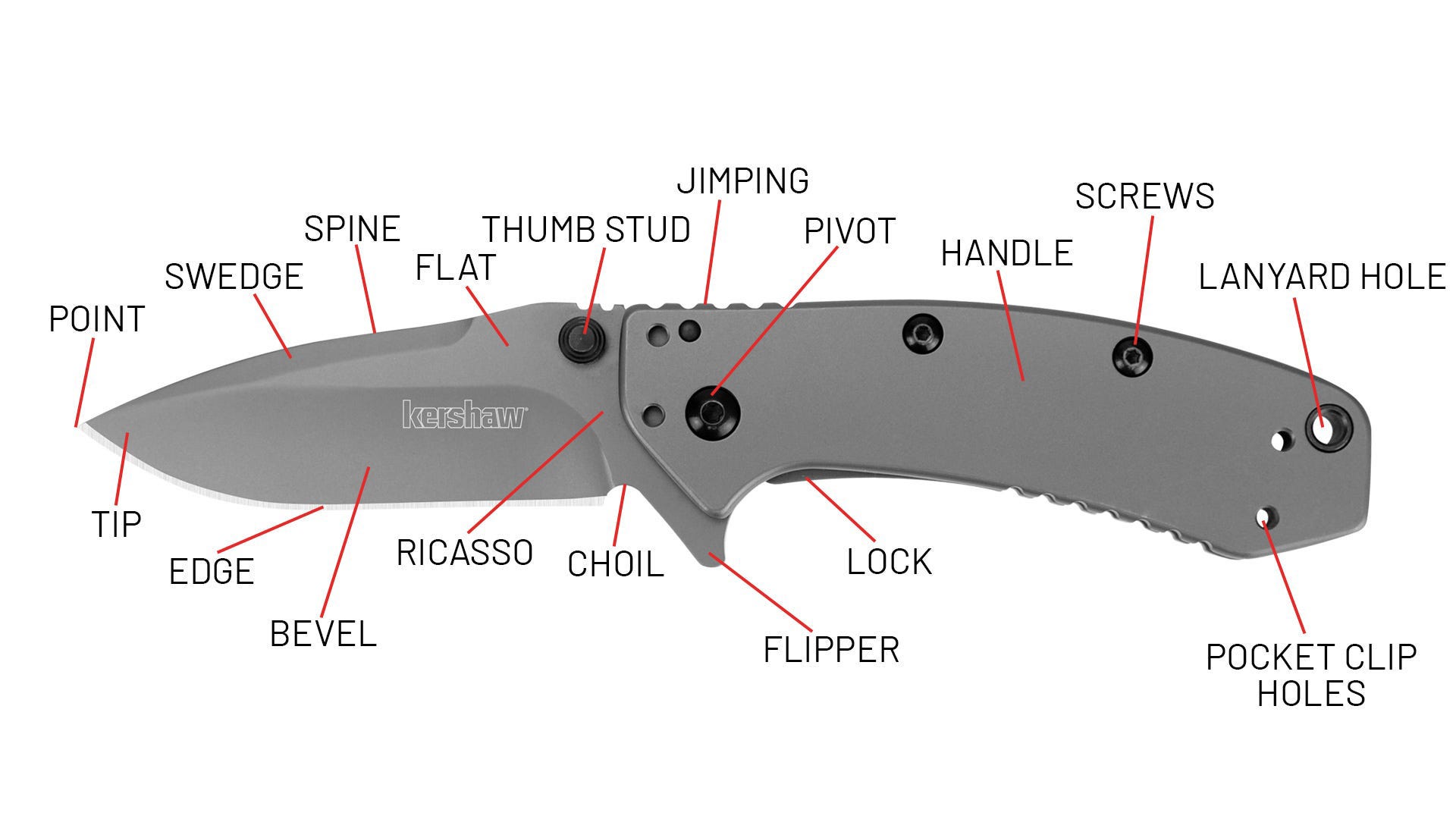
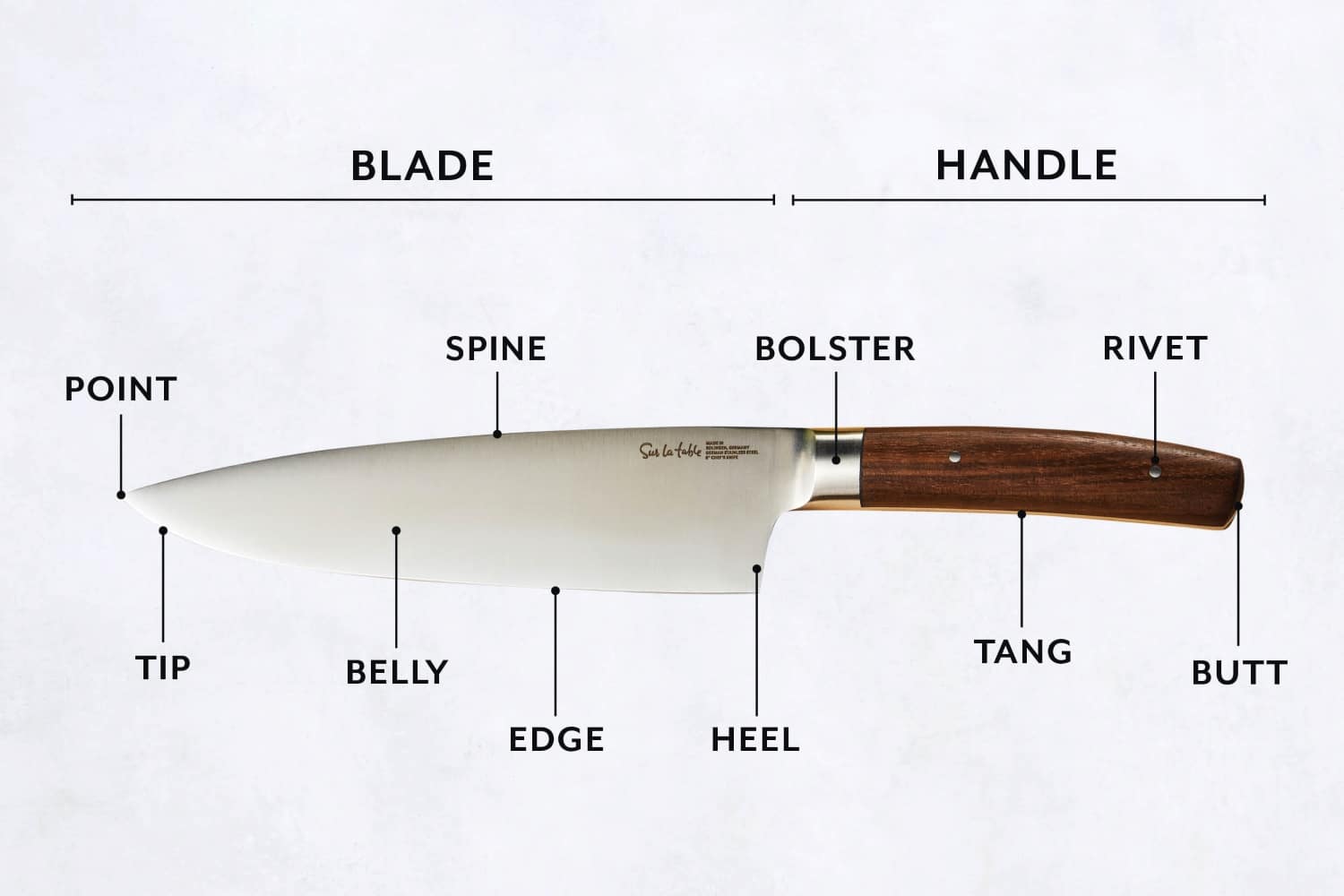
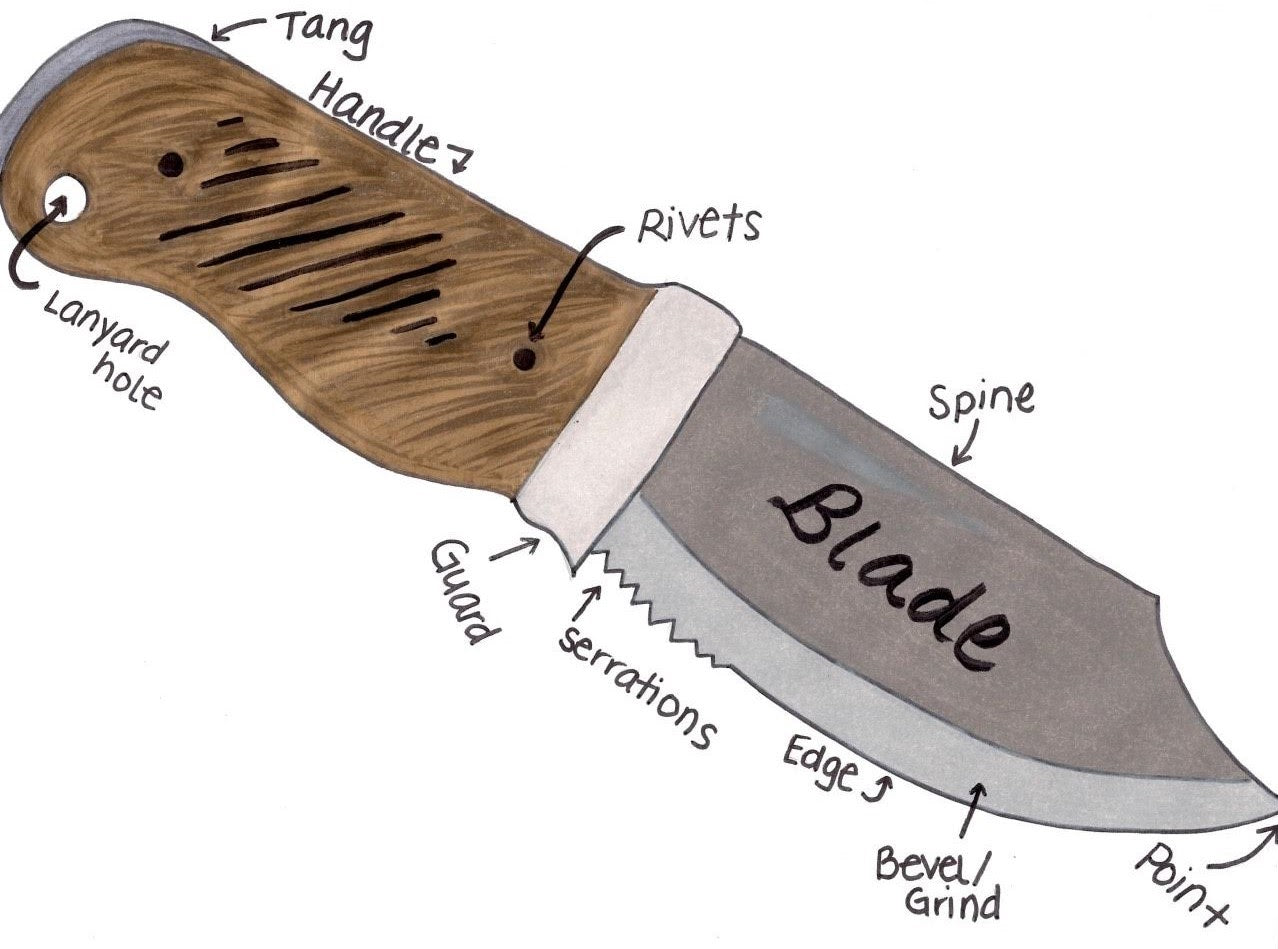
Understanding knife blade anatomy starts with the basic parts. Each part plays a role in cutting, balance, and safety. Here are the core elements to know.
Point
The point is the front of the blade. It affects piercing and fine work.
Tip
The tip is the area near the point. A stronger tip resists breakage.
Edge
The edge is the sharp line that cuts. Grind and angle set how it performs.
Spine
The spine is the top, unsharpened part. It adds strength and can be used for pressure.
Heel
The heel is the rear cutting area near the handle. It handles heavy cuts.
Choil
The choil is a cutout near the handle. It allows safe sharpening and can provide a finger rest.
Ricasso
The ricasso is the flat unsharpened section above the handle. It helps with grip and control.
Tang
The tang is the part of the blade that extends into the handle. Full tangs add strength.
Bolster
The bolster is a thick area between blade and handle. It adds balance and finger protection.
Each of these parts is a fundamental piece of knife blade anatomy. Knowing them helps you evaluate knives for tasks like cooking, outdoor work, or carving.

Blade profiles and grinds
Blade profile and grind shape define how a knife cuts. Blade profile is the outline. Grind is the cross-section.
Common blade profiles
- Drop point: Versatile and strong. Good for general use.
- Clip point: Has a clipped spine for better piercing.
- Tanto: Strong tip for heavy duty work.
- Spear point: Symmetrical and good for thrusting.
Common grinds
- Flat grind: Even taper from spine to edge. Good balance of durability and sharpness.
- Hollow grind: Concave sides yield very thin edges for razor sharpness.
- Convex grind: Rounded sides for strength and long edge life.
- Sabre grind: Partial taper focused on the edge, common on outdoor knives.
- Double bevel: Symmetrical V shape, common for kitchen knives.
Choosing a profile and grind depends on task and preference. I often choose flat grinds for kitchen knives and convex grinds for bushcraft blades. Both choices reflect trade-offs in sharpness and toughness.
Materials and heat treatment
Blade steel and heat treatment are central to knife blade anatomy. They determine hardness, toughness, and edge retention.
Common steel families
- Stainless steel: Resists rust. Easier care for kitchen knives.
- Carbon steel: Easier to sharpen and holds a keen edge. Needs rust prevention.
- Tool steels and powdered steels: Offer high performance and uniform structure.
Key heat treatment factors
- Hardness (HRC): Higher numbers resist wear but can be brittle.
- Tempering: Lowers brittleness and improves toughness.
- Quenching: Locks hardness quickly to stabilize the structure.
When I test blades, I look at edge retention, ease of sharpening, and corrosion resistance. Heat treatment often matters more than the nominal steel name. Industry standards and metallurgical research back this view.

Edge types and geometry
Edge geometry is a major part of knife blade anatomy. Geometry affects cutting ease, durability, and maintenance.
Edge geometry basics
- Bevel angle: Lower angles cut better but dull faster. Higher angles are durable.
- Microbevel: Small secondary bevel for easy resharpening.
- Serrated edge: Good for sawing and soft or fibrous materials.
- Scalloped edge: Small hollow sections that reduce friction.
Practical examples
- A 15-degree per-side edge is razor sharp for slicing.
- A 20-25 degree per-side edge is durable for outdoor use.
- Serrations excel on rope, bread, and tomato skins.
From my experience, matching edge geometry to use prevents frustration. A wrong angle means more sharpening or broken tips.
Blade finishes and coatings
Finish and coatings influence friction, corrosion resistance, and appearance. They are a subtle but important part of knife blade anatomy.
Common finishes
- Satin: Visible directional grain that reduces glare.
- Mirror: Polished and smooth; easy to clean but shows scratches.
- Stonewash: Hides wear and reduces stickiness.
Coatings and treatments
- DLC and PVD: Thin hard coatings that add wear resistance.
- Nitride and ceramic coatings: Improve hardness and reduce corrosion.
- Heat color changes: Can signal temper and add visual appeal.
I often prefer simple finishes for kitchen knives to ease cleaning. For outdoor tools, coatings add protection without much weight.
Blade maintenance and care
Caring for blade anatomy keeps a knife safe and useful. Proper maintenance extends blade life and performance.
Daily care tips
- Clean after use with mild soap and water. Dry immediately.
- Avoid dishwashers for most knives.
- Store in a block, sheath, or magnetic strip to protect edges.
Sharpening routine
- Hone regularly to realign the edge.
- Sharpen with whetstones or guided systems as needed.
- Use a strop for a polished, keen edge.
Rust prevention and handling
- Apply light oil on carbon steel blades.
- Avoid acidic foods without prompt cleaning.
- Inspect the tip, spine, and choil for damage.
Personal experience: Once I ignored a small chip on a blade tip. Continued use made the chip worse. Regular inspection and timely sharpening saved the blade and my safety.
Frequently Asked Questions of knife blade anatomy
What is the most important part of knife blade anatomy?
The edge and its geometry are most crucial because they determine cutting performance. Material and heat treatment follow closely for durability.
How does blade grind affect cutting?
Grind shapes how the blade thins to the edge. Hollow grinds cut very well, while convex grinds resist damage and hold up under hard use.
Does steel type change knife blade anatomy?
Steel type itself is not anatomy, but it affects how parts perform. Heat treatment and geometry interact with steel to define real behavior.
How often should I sharpen my knife?
Sharpen when honing no longer restores the edge. For frequent home use, a light sharpen every few months is common.
Can coatings change knife performance?
Yes. Coatings can lower friction and add corrosion resistance but may hide wear and alter sharpening slightly.
What is a choil and why does it matter?
A choil is a notch or rounded area near the handle that eases sharpening and can allow for a full grip. It helps preserve handle safety and makes edge work easier.
Conclusion
Understanding knife blade anatomy empowers better choices and better care. Know the parts, grinds, materials, and angles. Match them to your tasks and maintain your blades with simple habits. Try adjusting edge angles and finishes on one knife to feel the difference. If you found this useful, explore more guides, subscribe for updates, or leave a comment with your knife questions.

Maliha Akter is a kitchen knife reviewer and food preparation specialist with over 6 years of experience testing Japanese kitchen knives and everyday cooking tools. She focuses on performance, safety, durability, and real-world usability to help home cooks choose the right knives for efficient and enjoyable cooking.
Expertise:Japanese Knives • Vegetable Knives • Product Reviews • Kitchen Efficiency • Knife Care