Pick a magnetic strip for space and airflow; choose a block for simplicity and safety.
I’ve tested both in busy home kitchens and pro prep spaces. This guide breaks down knife block vs magnetic strip with clear pros, cons, and real-life tips. If you want a confident, safe choice that protects your blades and fits your space, read on.
What really decides knife block vs magnetic strip
Both systems store knives. But the right choice depends on space, safety needs, hygiene, and your daily flow. Think about how you cook, who uses your kitchen, and where you have room.
Key factors I use with clients:
- Space: countertop vs wall real estate.
- Safety: kids, pets, crowded counters.
- Hygiene: moisture, airflow, and cleaning habits.
- Knife mix: blades, lengths, and how many you own.
- Workflow: reach, visibility, and cooking speed.
- Install limits: renters vs homeowners.
You’ll see the knife block vs magnetic strip choice isn’t only style. It’s function, care, and longevity.

Source: thecookingguild.com
Knife block: pros, cons, and best use
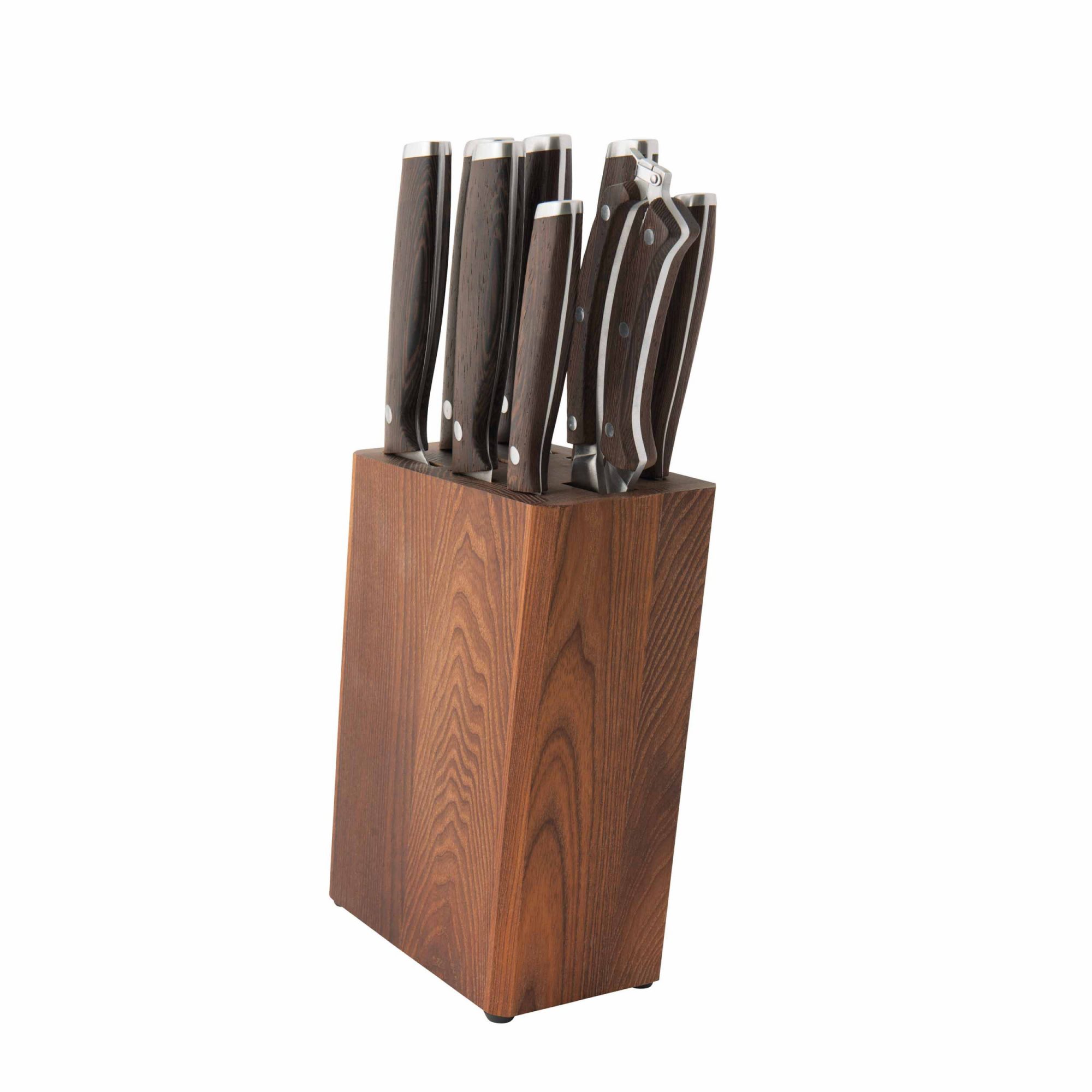
A block is the classic. It’s plug-and-play and often ships with a set. No drilling. No measuring. Slide in and go.
Pros:
- Simple and fast setup with no tools.
- Safer for homes with kids since knives are covered.
- Protects blades from dust and splatter.
- Many styles and woods to match your kitchen.
Cons:
- Slots can trap crumbs and moisture if not cleaned.
- Fixed slots may not fit odd knives or long gyutos.
- Rubbing in and out can dull edges over time.
- Takes up counter space you may need.
Best for:
- Families who want covered storage.
- Renters who can’t drill walls.
- Sets that match slot sizes.
Pro tip from my own kitchen: choose an angled block with wider universal slots or a bristle-style insert. It fits chef knives, santokus, and even petty knives without forcing the edge against wood.
For hygiene, keep the block dry, wipe slots with a thin brush, and let it sit in a sunny, airy spot between deep cleans. This reduces microbial growth in the wood.

Source: oishya.com
Magnetic strip: pros, cons, and best use
A magnetic strip saves space and boosts airflow. Your blades are visible and dry fast after washing.
Pros:
- Zero counter footprint and easy access while cooking.
- Excellent airflow to help dry blades.
- Works with any blade shape and length.
- Inspires better care since knives are in sight.
Cons:
- Poor magnets can drop knives or twist edges.
- Bad mounting can be unsafe near heat or sinks.
- Edges can chip if dragged off the bar.
- Exposed knives require awareness around kids.
Best for:
- Small kitchens and galley layouts.
- Cooks who want fast access.
- Mixed sets with different blade sizes.
Pro tip from my test kitchen: choose a strip with continuous rare-earth magnets, not spot magnets. Mount it high enough to avoid knocks and far from steam and heat. When removing a knife, pivot the spine off first, then lift the edge away. This protects the edge from micro-chips.

Source: mysekkin.com
Hygiene and food safety
Moisture and food bits lead to microbes. Blocks can hold dampness in slots if knives are stored wet. Airflow matters. Dry knives fully before storage.
Safer habits that work:
- For blocks: wash, dry, and air knives before slotting. Brush slots monthly. Wipe with a mild soapy solution and dry well. Let the block air out to stay clean.
- For strips: keep the wall area clean. Mount away from the stove to avoid grease. Wipe the bar often. Dry blades fully before hanging.
Food safety guidance stresses dry, clean surfaces. Wood is fine when kept dry. Steel is fine when kept dry. The system is only as safe as your routine. Knife block vs magnetic strip both meet hygiene needs if you follow good habits.
Source: oishya.com
Blade care and longevity
Edge life comes down to friction and impact. Both systems can be gentle when used right.
For blocks:
- Insert with the spine leading to avoid scraping the edge.
- Choose universal inserts or wider slots.
- Avoid jammed fits that rub steel.
For strips:
- Place knives with the spine touching first. Then roll the edge in.
- Remove by rolling the spine off before lifting the edge.
- Use a quality bar with even pull to prevent sliding.
A good routine helps either way:
- Hand wash and dry right away.
- Hone lightly every few uses.
- Sharpen on stones or by a pro as needed.
- Use guards for travel or drawer storage.
The knife block vs magnetic strip debate is not about which ruins knives. It’s about how you handle placement and removal every day.
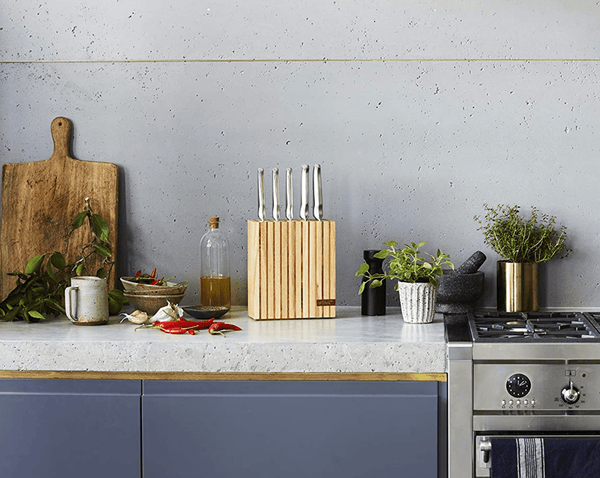
Source: com.au
Space, style, and workflow
Space often decides the winner. Small apartment? A wall strip frees the counter. Large family kitchen? A block near the prep zone can feel natural.
What I look for on site:
- If counters are crowded, go vertical with a strip.
- If walls are tiled or off-limits, a block wins.
- If you love a clean, gallery look, choose a wood or steel strip that matches hardware.
- If you want a warm, classic vibe, a walnut block looks great and reduces visual clutter.
Think of your kitchen like a workbench. Where your hands rest and move should guide the knife block vs magnetic strip choice.

Source: com.au
Installation and safety tips
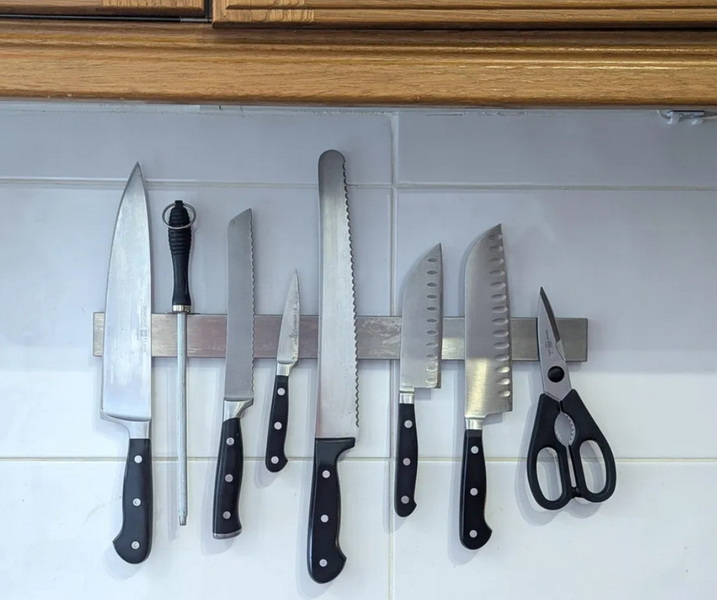
Good mounting is non-negotiable for strips. A secure bar with the right height makes daily use safe and smooth.
Do this:
- Hit wall studs or use strong anchors rated for the load.
- Keep 18–24 inches from sinks and heat to avoid steam and grease.
- Mount with the top of the bar near eye level for easy reach.
- Leave enough clearance under the bar to grasp handles.
Kid safety:
- In family homes, choose a high strip or stick with a block.
- If using a block, place it deep on the counter, not at the edge.
Knife block vs magnetic strip both can be safe. It’s the setup that matters.
Source: saafiknife.com
Price and value
Both options span a wide price range. Blocks vary by wood, size, and brand. Strips vary by magnet strength, build, and finish.
What to expect:
- Blocks: budget to premium, especially for hardwood or designer styles.
- Strips: lower cost for basic steel, more for wood-faced and rare-earth bars.
- Hidden costs: time for cleaning blocks vs install tools for strips.
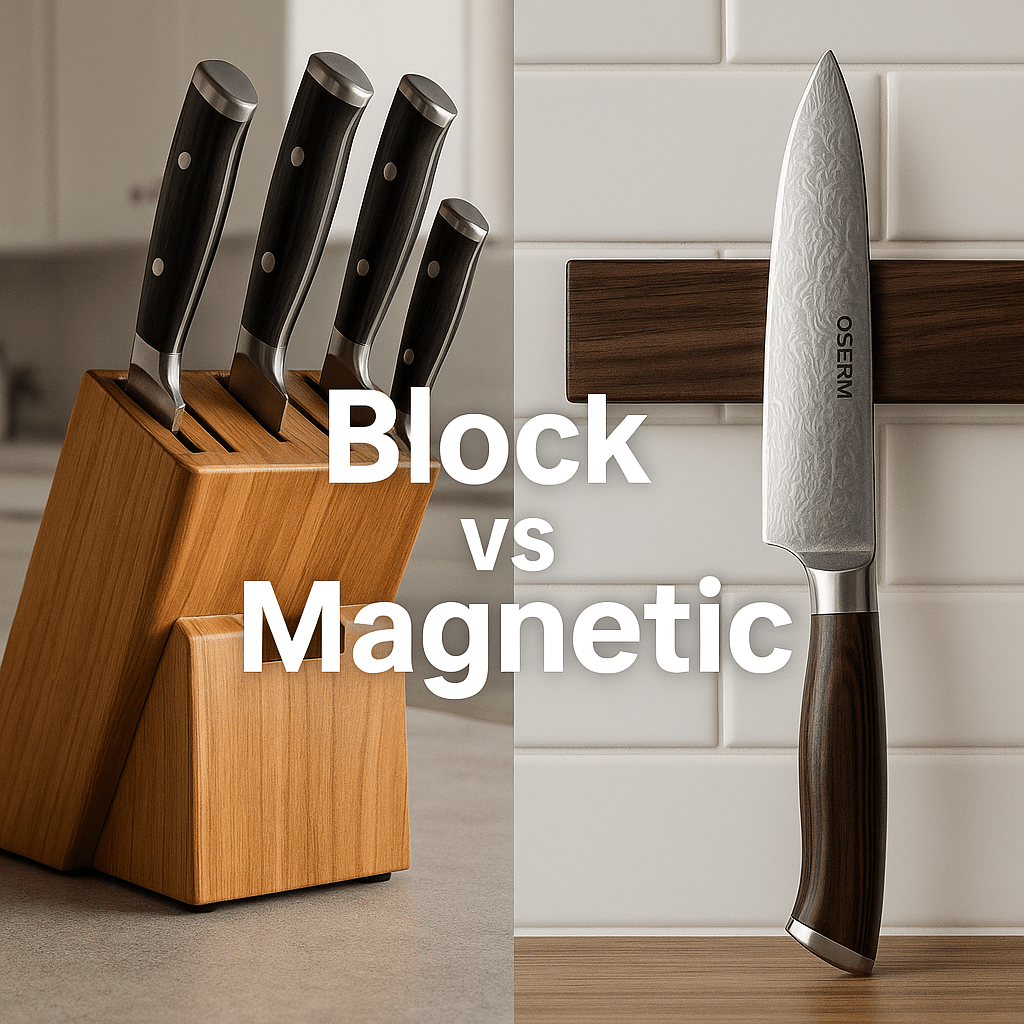
Value tip: invest in one excellent strip or block rather than cycling through cheap options. A stable, well-made unit protects pricey knives and saves cash over time. For cost and care, knife block vs magnetic strip is closer than most think.
Source: oserm.com
Which is right for you? A simple decision guide
Choose a magnetic strip if:
- Your counter is tight and you cook often.
- You want fast access and better airflow.
- Your knife set has mixed sizes and shapes.
Choose a block if:
- You have kids or want covered storage.
- You prefer a classic look and zero drilling.
- Your set matches common slot sizes.
Hybrid approach I use at home:
- Daily drivers on a strip.
- Bread knife, boning knife, or extras in a block or drawer with guards.
If you still feel torn on knife block vs magnetic strip, pick the hybrid. It gives you access, safety, and flexibility as your kit grows.
Frequently Asked Questions of knife block vs magnetic strip
Is a magnetic strip safe for my knives?
Yes, if you use proper technique. Touch the spine first and roll the edge in and out to avoid chips.
Do knife blocks dull blades faster?
They can if the edge scrapes slots. Choose wider or universal inserts and insert with the spine leading.
Can I mount a magnetic strip without drilling?
Some strips use strong adhesive backs. They work on clean, smooth walls, but screws into studs are more secure.
Will a strip hold heavy chef knives?
A quality strip with rare-earth magnets will. Look for continuous magnets and solid mounting hardware.
Which is more hygienic?
Both are hygienic with good habits. Dry knives fully, clean surfaces often, and keep them away from moisture and grease.
Is a block or strip better for renters?
A block is easiest. If you use a strip, try an adhesive model or mount on a removable board.
Can I store carbon steel knives on a strip?
Yes, as long as you dry the blade and oil lightly. Keep it away from steam and wipe the bar often.
Conclusion
Your perfect setup should fit your space, your knives, and your daily flow. A magnetic strip shines in small kitchens and busy prep zones. A knife block offers simple, safe storage with no drilling. Use the tips above to protect your edges, keep things clean, and cook with confidence.
Try the option that solves your biggest pain today—space, safety, or speed. Then refine from there. If this helped, share it with a cooking friend, subscribe for more gear guides, or drop your questions in the comments.

Emily Carter is a kitchen knife specialist with over 8 years of experience testing and reviewing Japanese kitchen knives. She focuses on blade performance, comfort, durability, and real-life cooking usability. Her goal is to help home cooks choose reliable, high-quality knives for everyday cooking.
Expertise: Japanese Knives, Vegetable Cutting, Product Testing