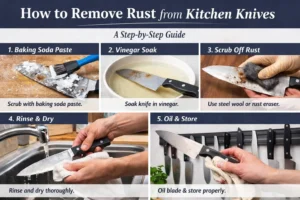
Keep knives sharp, clean, dry, and stored safely to last longer.
If you’re starting from scratch, I’ll show you knife care for beginners in clear steps you can use today. I’ve taught new cooks and pros, and I’ve fixed many dull, chipped blades. Here, you will learn what works, what fails, and why knife care for beginners saves money, time, and fingers.

Why knife care matters
A well-kept knife is safer. It cuts clean and fast. It also keeps food fresh by making neat cuts that bruise less.
Knife care for beginners is about small habits. Do a few right things each day. You will feel the difference in a week. Your prep will be smoother, and your blade will last.
I learned this the hard way. I once left a wet knife in a sink. Rust bloomed by morning. A five-minute routine would have saved me an hour of work.
Source: equinecares.com
The basic toolkit for knife care for beginners
Knife care for beginners does not need many tools. Start simple. Add more when you need it.
You will want:
- A soft sponge for hand wash
- Mild dish soap for easy clean
- A clean towel for fast dry
- A honing rod to align the edge
- A whetstone or guided sharpener to restore the edge
- A wooden or plastic cutting board to protect the blade
- Food-safe mineral oil to guard and lube the steel
- Blade guards or a safe storage solution to prevent chips
These tools keep knives sharp, clean, and safe. You can upgrade later, but this kit covers the basics.

Source: seisukeknife.com
Daily habits that extend blade life
Knife care for beginners is about daily wins. Small steps give big gains.
Try these habits:
- Wash by hand right after use
- Dry at once with a clean towel
- Use the right board every time
- Hone lightly before or after each session
- Store the knife so the edge does not hit other tools
I hone before I start prep. It takes 10 seconds. My edge holds longer, and I sharpen less often.
Source: koiknives.com
Washing and drying, the right way
Hand wash beats the dishwasher every time. Heat, harsh soap, and clatter can hurt the blade and handle. Food safety guides agree that knives should not go in a dishwasher.
Do this each time:
- Rinse off food right away
- Use warm water and mild soap
- Wipe with the spine away from your fingers
- Rinse and dry at once
- Air dry for a minute before storage
If you must soak, keep it short. Long soaks can swell wood handles and invite rust.
Source: knifewear.com
Honing vs sharpening: simple steps that work
Knife care for beginners often blurs honing and sharpening. They are not the same. Honing realigns the edge. Sharpening removes steel to form a new edge.
How to hone with a rod:
- Hold the rod tip on a towel for grip
- Set a 15–20 degree angle
- Sweep the blade heel to tip, light and smooth
- Do 5–8 strokes per side
- Wipe the blade before use
How to sharpen on a whetstone:
- Soak a water stone if needed, or wet it well
- Use the coarse side first, about 1000 grit
- Keep a steady 15–20 degree angle
- Move the blade in arcs, heel to tip
- Feel for a light burr along the edge
- Flip, repeat, then go to a finer stone (3000–6000) to polish
- Rinse, dry, and strop on a towel
Knife care for beginners improves fast with good honing. Sharpen only when honing no longer helps. A dull knife slides and is risky. A sharp knife bites and stays true.

Source: musashihamono.com
Cutting boards that protect your edge
Your board is your road. Hard roads wreck tires. Hard boards wreck edges.
Choose:
- End-grain wood for best edge life
- Edge-grain wood or quality plastic for easy care
- Big boards for safe space
Avoid:
- Glass, stone, bamboo, or steel boards
- Old, grooved plastic with deep cuts
Knife care for beginners starts with a soft board. It pays off every day.
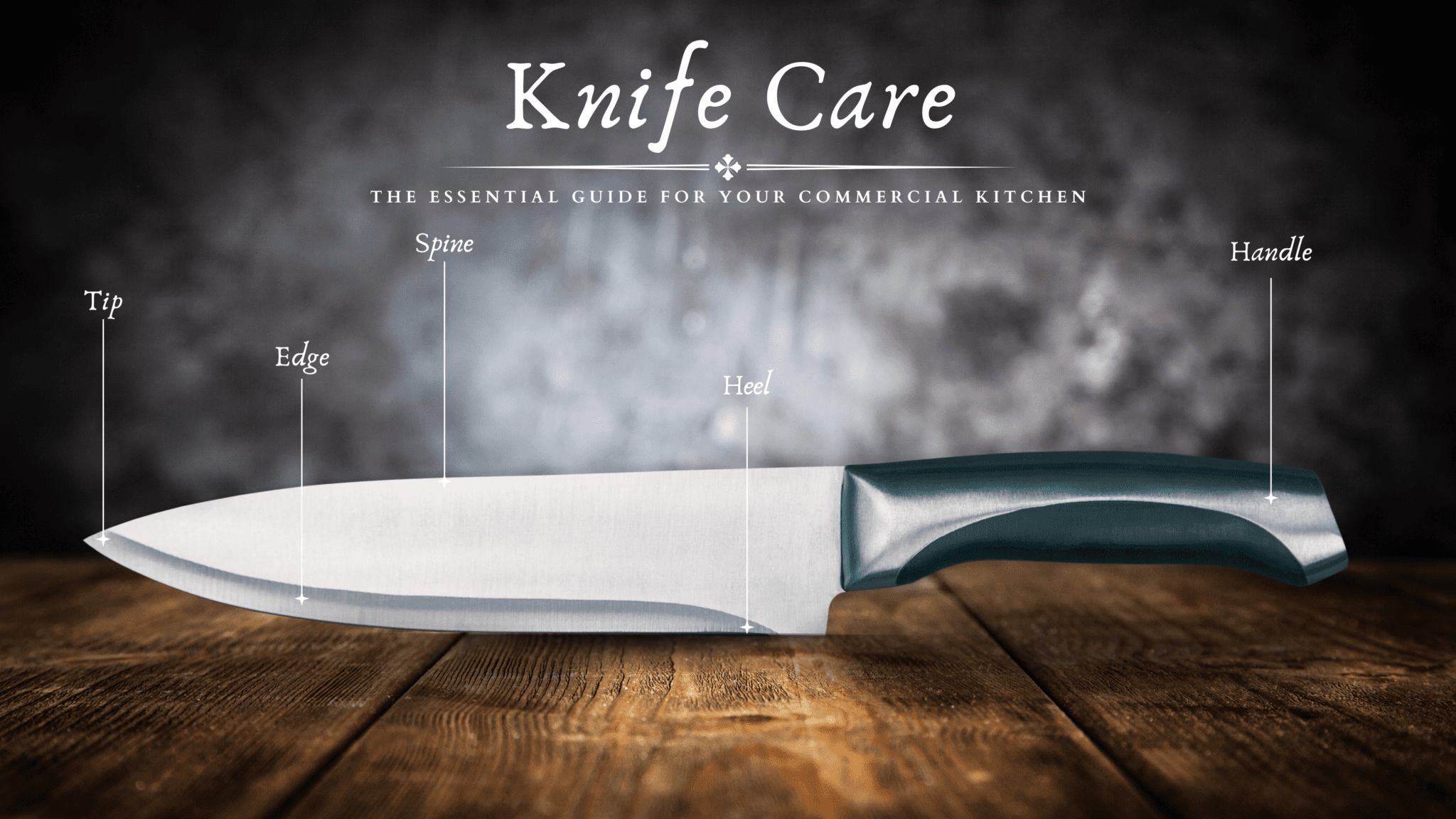
Source: bsrequipment.com
Safe storage that prevents chips
How you store your knife matters. Loose drawers chip edges and cut fingers.
Good options:
- Magnetic wall strip to keep edges dry and safe
- In-drawer knife tray so blades do not touch
- Knife block with clean, dry slots
- Blade guards for bags or tight kitchens
Wipe blades dry before storage. A dry home is key to knife care for beginners.
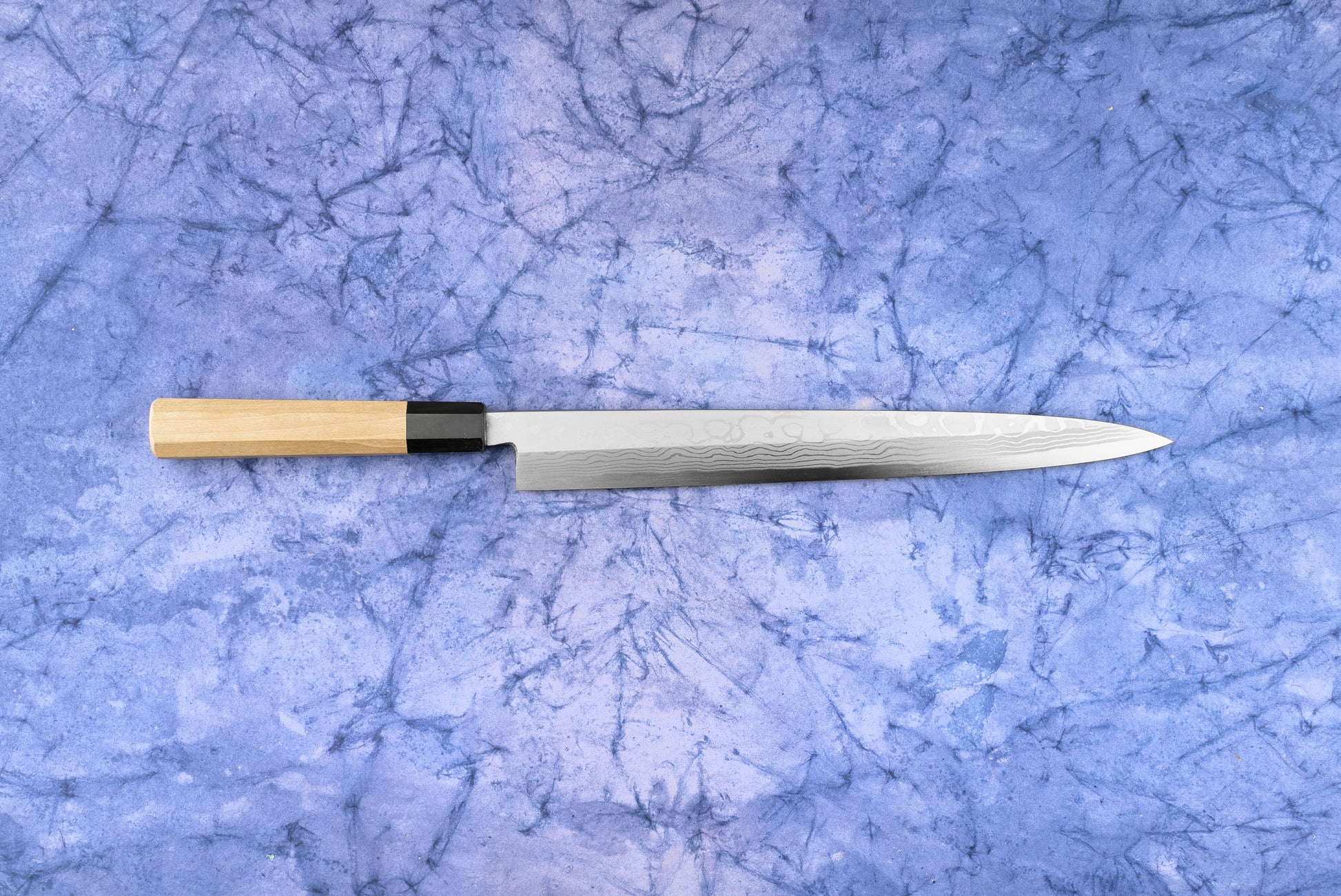
Source: knifewear.com
Rust prevention, oiling, and patina
Stainless steel resists rust, but it still can stain. Carbon steel is sharper but needs more care. Both love a clean, dry life.
Use these steps:
- Dry at once after washing
- Wipe a thin coat of food-safe mineral or camellia oil if you live in a humid area
- For carbon steel, expect a gray patina. It helps guard the blade
- For small rust spots, make a paste of baking soda and water. Rub gently with a soft sponge, rinse, and dry
Do not use motor oil or harsh acid. Keep it food safe. Knife care for beginners should be simple and safe.

Source: montanaknifecompany.com
Safe handling and cutting habits
A safe grip saves you daily. Use a pinch grip: thumb and index on the blade, other fingers on the handle. Curl your guide hand into a claw.
Keep these rules:
- Never try to catch a falling knife
- Cut on a stable board with a damp towel under it
- Keep the tip on the board for fast, safe mincing
- Use a gentle rocking motion, not brute force
- Stop if the edge starts to slip and hone
This is the heart of knife care for beginners. Your hands and your blade both last longer.
Common mistakes to avoid
I see the same errors often. Avoid them and you stay ahead.
Steer clear of:
- Dishwashers
- Soaking knives for long periods
- Thin glass or stone boards
- Cutting frozen food or bones with a fine chef’s knife
- Tossing knives in drawers with loose tools
- Using steel wool on the edge
- Skipping honing for months
Knife care for beginners is mostly about what not to do. Dodge these traps and you win.
A simple maintenance schedule and checklist
A plan keeps you on track. This is the routine I share with new cooks.
Daily:
- Hand wash and dry
- Hone lightly
- Store with care
Weekly:
- Deep clean the handle and bolster
- Check for chips or bent tips
- Clean your board with hot, soapy water and dry
Monthly:
- Full sharpen if honing fails the paper test
- Oil carbon steel blades very lightly
- Clean and oil wooden boards
Seasonal:
- Inspect storage tools
- Flatten water stones if they dish out
- Replace worn guards or boards
Knife care for beginners grows into a quick habit. Ten minutes a week is enough for most home cooks.
Frequently Asked Questions of knife care for beginners
How often should I sharpen my knife?
For home use, sharpen every 1–3 months. Hone before or after each session to keep the edge aligned.
What angle should I use when sharpening?
Aim for 15–20 degrees per side. Keep it steady rather than perfect, as consistency matters more.
Can I put my knife in the dishwasher?
No. Heat, detergent, and banging ruin edges and handles. Hand wash and dry right away.
Which cutting board is best for my knives?
End-grain wood is best for edge life. Quality plastic is fine too and easy to sanitize.
How do I know my knife is dull?
If it slides on a tomato or crushes herbs, it is dull. If honing does not help, it is time to sharpen.
Is oiling the blade necessary?
Light oiling helps, especially for carbon steel and humid homes. Use a thin coat of food-safe mineral oil.
Can I use one knife for everything?
A chef’s knife covers most tasks. Avoid bones, cans, or frozen food with it to protect the edge.
Conclusion
Good knife care is simple: clean, dry, hone, store, and sharpen when needed. Knife care for beginners becomes second nature once you follow a short routine. Your food will look better, and your work will feel easier.
Start today. Hone your main knife, wash and dry it well, and fix your storage. Want more tips like this? Subscribe, share your wins, or leave a question, and I will help you level up fast.

Maliha Akter is a kitchen knife reviewer and food preparation specialist with over 6 years of experience testing Japanese kitchen knives and everyday cooking tools. She focuses on performance, safety, durability, and real-world usability to help home cooks choose the right knives for efficient and enjoyable cooking.
Expertise:Japanese Knives • Vegetable Knives • Product Reviews • Kitchen Efficiency • Knife Care