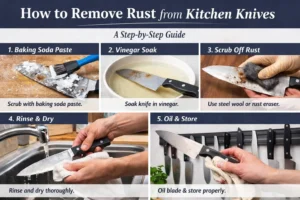
Proper, regular care keeps knives sharp, safe, and long-lasting—simple habits prevent costly damage.
I have worked with knives for years in kitchens and workshops, and I wrote this guide to share clear, practical knife care tips you can use today. This article covers cleaning, sharpening, storage, product choices, common mistakes, and real-world lessons so you can keep your knives performing like new.

Why proper knife care matters
Knives are tools and investments. Good knife care tips protect your blades and keep them safe to use. A well-maintained knife cuts better, reduces accidents, and lasts far longer than a neglected one.
A dull or damaged blade forces you to use more force. That raises the chance of slipping and injury. Proper knife care tips help you avoid this by keeping edges sharp and handles stable.
Beyond safety, knife care preserves value. High-quality blades can be repaired and reconditioned if you follow stable maintenance habits. If you want kitchen knives or outdoor tools to stay useful, follow these knife care tips.
Essential knife care tips
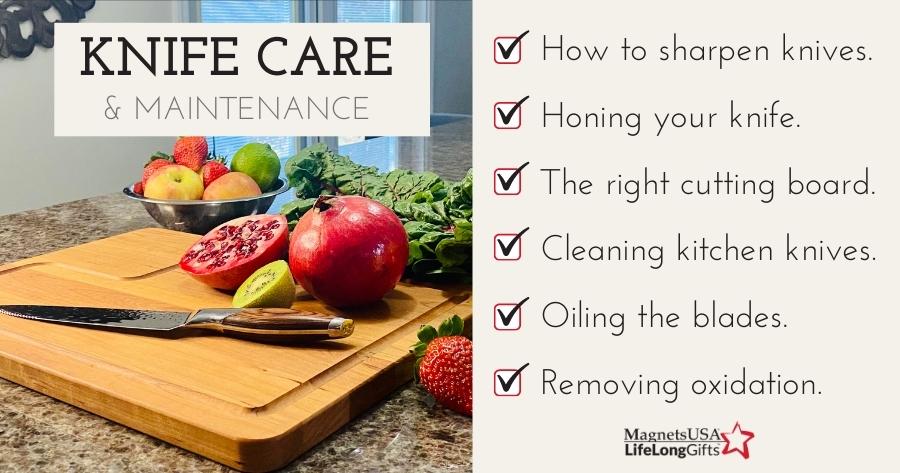
Here are the core knife care tips I recommend for any blade, whether kitchen, pocket, or hunting knives.
- Clean immediately after use with warm water and mild soap; dry thoroughly to prevent rust.
- Avoid dishwashers; high heat and detergents can harm blades and handles.
- Use wooden or plastic cutting boards; hard surfaces like glass and stone dull edges quickly.
- Store knives safely in a block, magnetic strip, or sheath to protect the edge and prevent accidents.
- Hone regularly to realign the edge; sharpen only when honing no longer restores performance.
- Oil carbon-steel blades lightly after cleaning to prevent oxidation.
- Tighten loose handles and screws promptly to keep the knife safe to use.
These knife care tips form a routine. Do the basics after each use and add deeper maintenance monthly or as needed.
Sharpening and honing: what to do and when
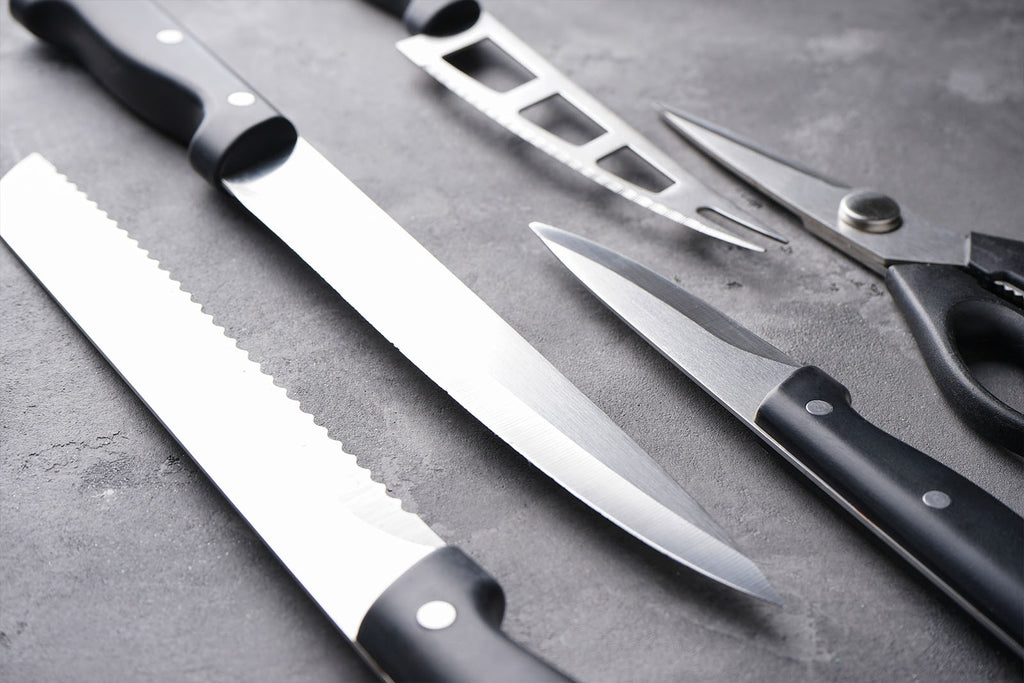
Sharpening and honing are different tasks. Honing straightens the edge. Sharpening removes metal to form a new edge. Both are key knife care tips.
Hone with a steel or ceramic rod before or after each use if you cook often. Use light strokes and maintain the correct angle for your blade. For most kitchen knives, that angle is 15–20 degrees per side. For harder steels, slightly narrower angles may apply.
Sharpen when honing no longer fixes the bite. Use a whetstone, guided sharpener, or a professional service. Whetstones give the best control. Start with a coarse grit to repair chips, then move to medium and fine grits for polishing.
Tips from experience:
- Test sharpness safely by slicing through a sheet of paper or a tomato skin.
- Keep stroking consistent and count passes to retain symmetry.
- When in doubt, send expensive knives to a pro rather than risk removing too much metal.
PAA-style question: How often should I sharpen my kitchen knives?
Answer: Most home cooks sharpen every 6–12 months, with honing weekly. Frequency depends on use, cutting surface, and steel hardness.
Cleaning and storage to prevent damage
Cleaning and storage are simple but vital knife care tips. A quick wash and proper storage prevent rust, warping, and dulling.
Cleaning steps:
- Rinse blade with warm water and mild soap.
- Wipe the edge away from you to avoid cuts.
- Dry fully with a soft cloth, including the handle junction.
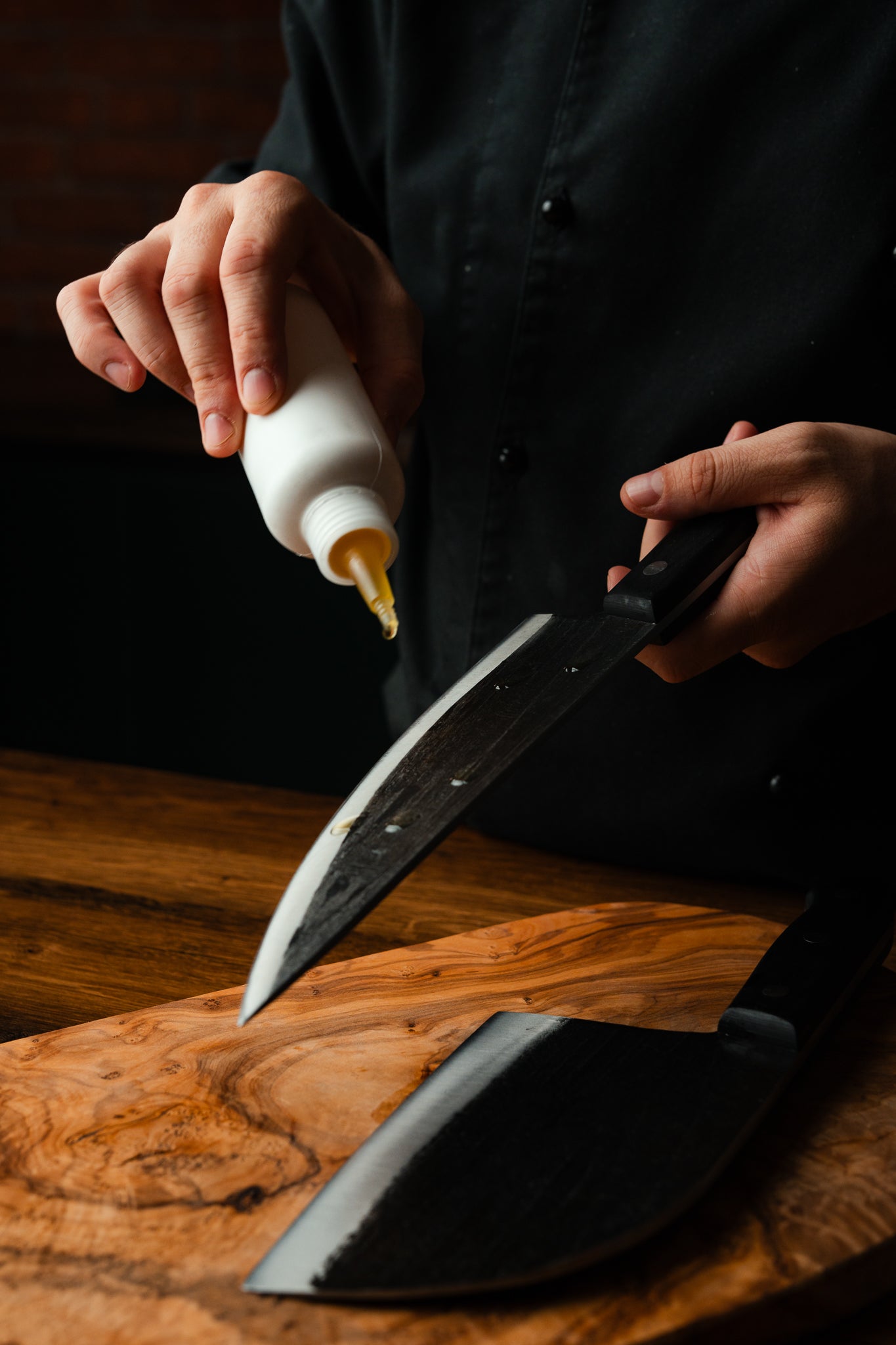
- For carbon steel, apply a thin oil layer if not used immediately.
Storage options:
- Knife block keeps blades separated and accessible.
- Magnetic strips hold knives horizontally and keep edges visible.
- Blade guards or sheaths are great for drawers and transport.
- Drawer trays prevent banging and edge contact.
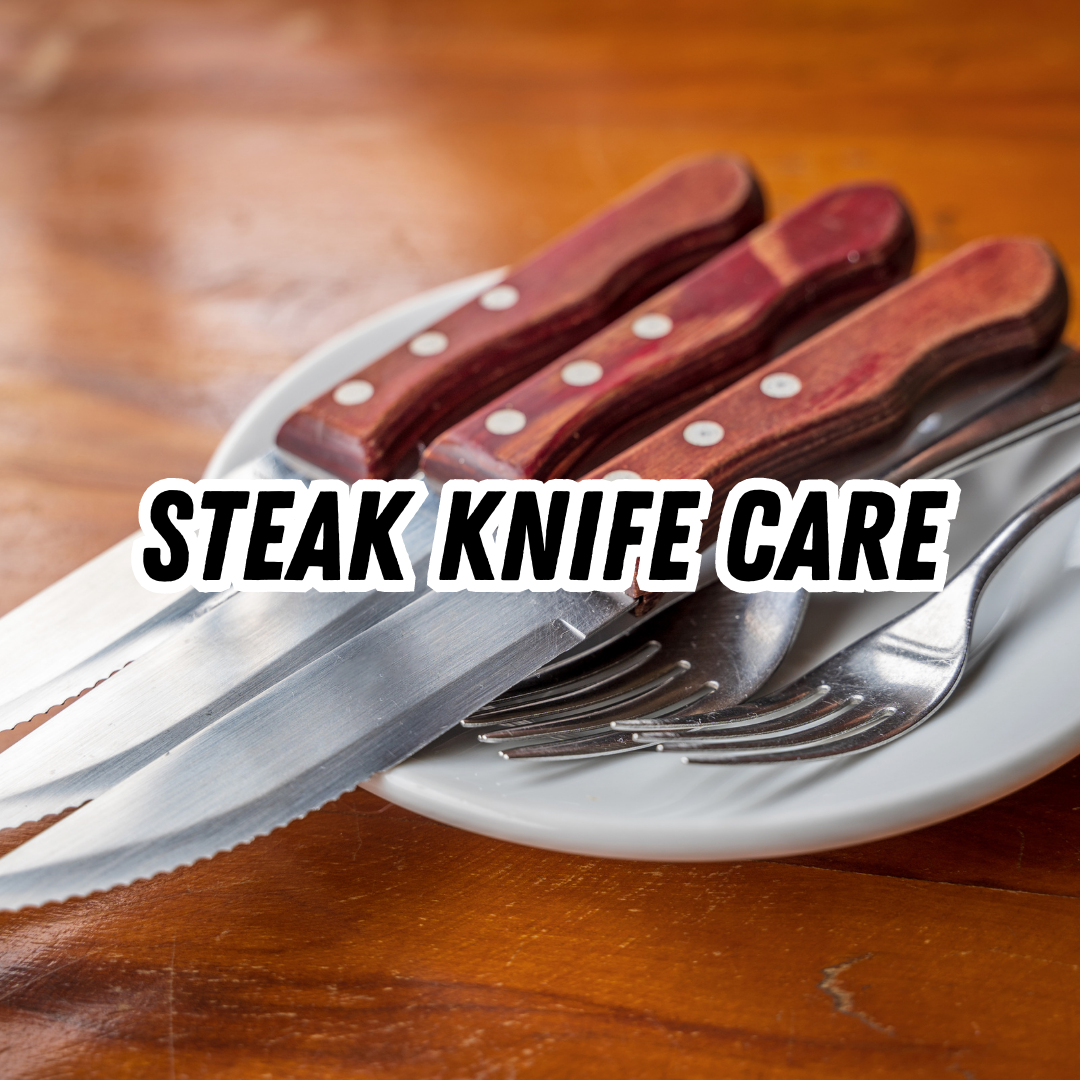
Avoid tossing knives loose in drawers. That wears the edge and is dangerous. Use storage that supports both safety and knife health.
Choosing oils, cleaners, and maintenance products
Select products that match your blade type as part of knife care tips. Stainless steel resists rust but can stain. Carbon steel needs more protection. Ceramic and bonded blades have other needs.
Product guidelines:
- Mild dish soap is usually enough for daily cleaning.
- Food-safe mineral oil is ideal for carbon-steel blades and wooden handles.
- Camellia oil or light mineral oil works well on edible-contact surfaces.
- Avoid acidic cleaners or citrus oils for long-term metal care.
- Use a stone or honing rod compatible with your blade hardness.
Do not use vegetable oils for blade protection; they can go rancid. For handles, use appropriate conditioners: linseed or specialized wood oils for wooden scales, and silicone-based treatments for composites if recommended.

Common mistakes and how to avoid them
People often ruin knives by following a few bad habits. Here are common errors and how to fix them with straightforward knife care tips.
- Mistake: Putting knives in the dishwasher. Consequence: Heat and movement dull and corrode blades. Fix: Hand wash and dry immediately.
- Mistake: Cutting on glass, ceramic, or stone. Consequence: Edges chip fast. Fix: Use wood or plastic boards.
- Mistake: Over-sharpening every time. Consequence: Excessive material loss shortens knife life. Fix: Hone regularly and sharpen only when needed.
- Mistake: Storing knives loosely. Consequence: Dents, chips, and accidents. Fix: Use blocks, magnetic strips, or sheaths.
- Mistake: Ignoring handle maintenance. Consequence: Loose or rotten handles cause slips. Fix: Tighten hardware and treat wooden handles.
These knife care tips help avoid costly mistakes and improve safety.

Personal experience and real-world lessons
I learned many knife care tips the hard way. Early on, I put blades in a dishwasher. A favorite chef's knife emerged pitted and dull. I now hand wash every blade and oil carbon steel.
I once tried a cheap sharpener and removed too much metal. That knife never felt the same. Now I favor stones or professional sharpening for valuable blades. My rule: invest time or money where the knife has value.
A useful habit I adopted is a short weekly check. I inspect edges, tighten handles, and hone for a minute. This small routine keeps knives ready and avoids surprises during busy service.

How to build a simple maintenance schedule
Consistency turns knife care tips into lasting results. Here is an easy schedule you can follow.
Daily
- Clean and dry after each use.
- Hone briefly if you use knives daily.
Weekly
- Inspect handles and screws.
- Lightly oil carbon steel blades.
Monthly
- Sharpen if sash slices show resistance.
- Deep clean handles and storage areas.
Annually
- Send high-value knives for professional tune-up if you lack sharpening skills.
- Refinish wooden handles if they show wear.
A simple plan prevents problems before they grow.

Frequently Asked Questions of knife care tips
How do I know when to sharpen instead of hone?
Sharpen when honing no longer restores a clean cut. If the blade tears rather than slices, use a sharpener or stone.
Can I use a ceramic rod on all knives?
Ceramic rods work on most steels but may be too abrasive for very hard or brittle blades. Use with care and test on an inexpensive knife first.
Is oiling necessary for stainless steel knives?
Stainless steel resists rust, but a light oil layer still helps prevent stains and reduces fingerprints that can lead to corrosion over time.
What cutting board is best for blade longevity?
Cut on soft wooden or high-density plastic boards. These materials cushion edges and extend blade life.
Are there safe ways to sharpen pocket knives at home?
Yes. Use a whetstone or a high-quality guided sharpener. Keep a steady angle and take light passes to avoid removing too much metal.
Conclusion
Good knife care tips are simple habits done consistently. Clean and dry after use, hone often, sharpen when needed, store safely, and choose the right oils and tools. These steps keep knives sharp, safe, and long-lasting.
Start a small routine today. A five-minute weekly check and regular honing will protect your investment and make cutting tasks easier and safer. Share your experiences, ask questions, or subscribe for more practical knife care tips and hands-on guides.

Maliha Akter is a kitchen knife reviewer and food preparation specialist with over 6 years of experience testing Japanese kitchen knives and everyday cooking tools. She focuses on performance, safety, durability, and real-world usability to help home cooks choose the right knives for efficient and enjoyable cooking.
Expertise:Japanese Knives • Vegetable Knives • Product Reviews • Kitchen Efficiency • Knife Care