Knife edge types determine blade shape, function, and sharpening needs for every cutting task.
I have studied, used, and sharpened knives for over a decade. I write about knife edge types with hands-on experience and clear knowledge. This guide breaks down edge profiles, grinds, materials, sharpening tips, and real-world advice. Read on to pick the right knife edge types for the tasks you care about.
What are knife edge types?
Knife edge types describe the shape and finish of a blade's cutting edge. This includes the visible edge profile and the underlying grind geometry. Edge type affects how a knife slices, how long it stays sharp, and how you sharpen it. Knowing common knife edge types helps you match a blade to a job.

Common knife edge types and what they do
Below are the most used knife edge types and clear notes on how they perform.
- Plain (straight) edge — Smooth edge with no teeth. Best for clean, precise cuts on meat, vegetables, and paper.
- Serrated edge — Saw-like teeth along the edge. Great for bread, rope, and fibrous material, and useful when you cannot re-sharpen often.
- Combination edge — Plain near the tip, serrated near the handle. Useful for versatile tasks that need both slicing and sawing.
- Granton edge (scalloped) — Small dimples along the blade. Reduces sticking and helps thin slices release cleanly.
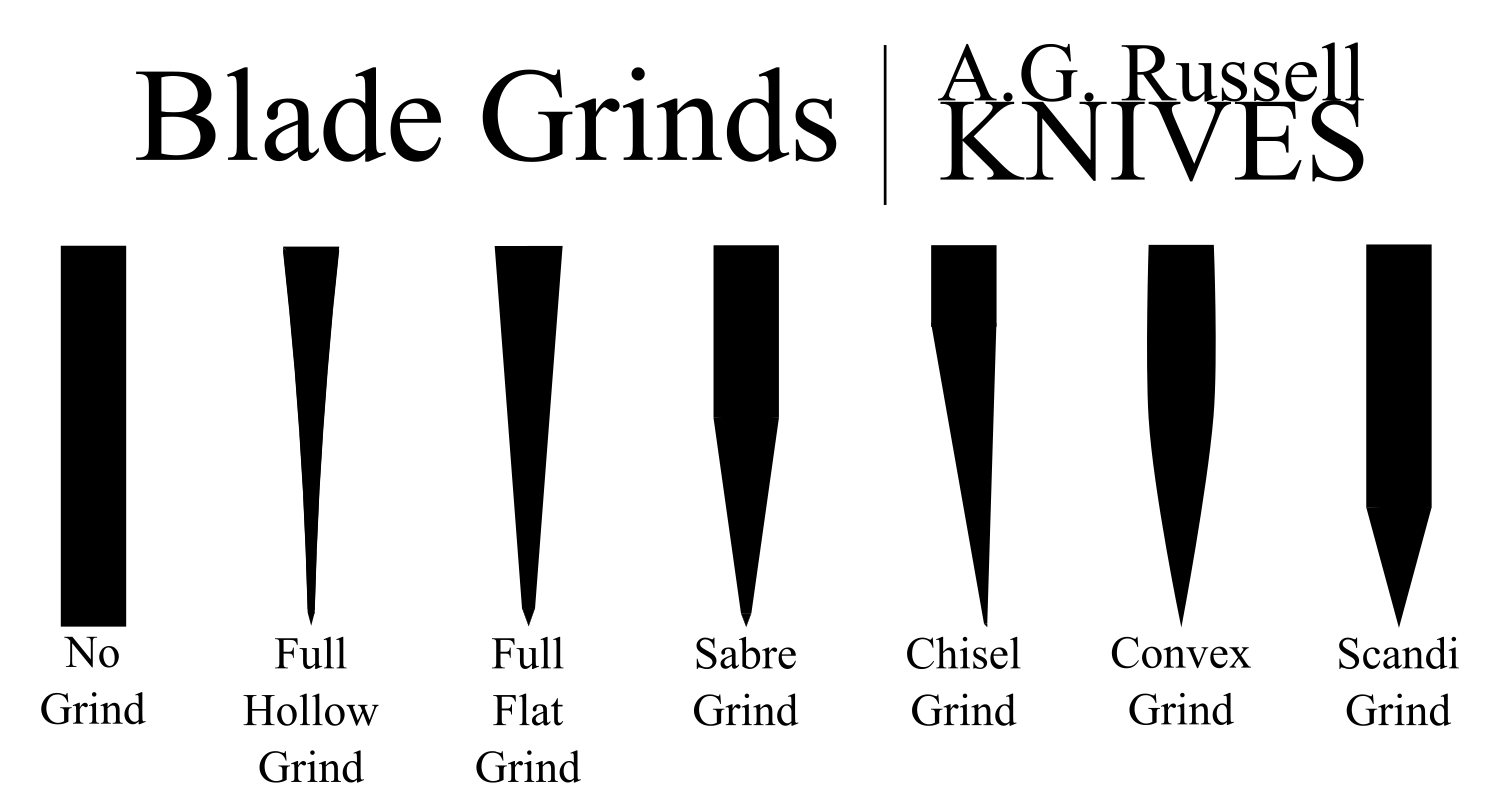
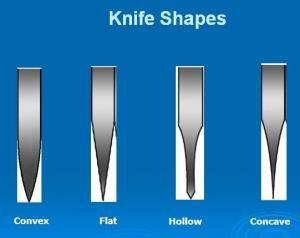
- Hollow grind — Concave sides that form a very sharp thin edge. Excellent for fine slicing and shaving, but can be fragile.
- Flat (V) grind — Straight taper to the edge. Good all-round strength and easy to sharpen.
- Convex edge — Rounded taper to the edge. Strong and durable for heavy use and batoning.
- Chisel edge — One side ground, the other flat. Common in certain kitchen knives and woodworking tools for precise cuts.
- Micro-serrated — Tiny serrations along a mostly plain edge. Offers tooth for tough skins while keeping smooth slicing.
Each of these knife edge types has trade-offs. For instance, serrated edges cut tough crusts but are harder to sharpen. Plain edges slice cleanly but dull faster on abrasive surfaces.

Edge grinds and geometry: how they affect performance
Grind type is closely linked to knife edge types. The grind shapes the sides of the blade that meet at the edge.
- Hollow grind — Produces a thin, razor-like edge. Great for delicate slicing. Needs frequent touch-ups.
- Flat grind — A straight taper gives a balanced edge. Easy to maintain and versatile.
- Sabre grind — Similar to flat but with a secondary bevel. Stronger at the edge for hard use.
- Convex grind — Rounded profile that supports the edge. Good for chopping and rugged tasks.
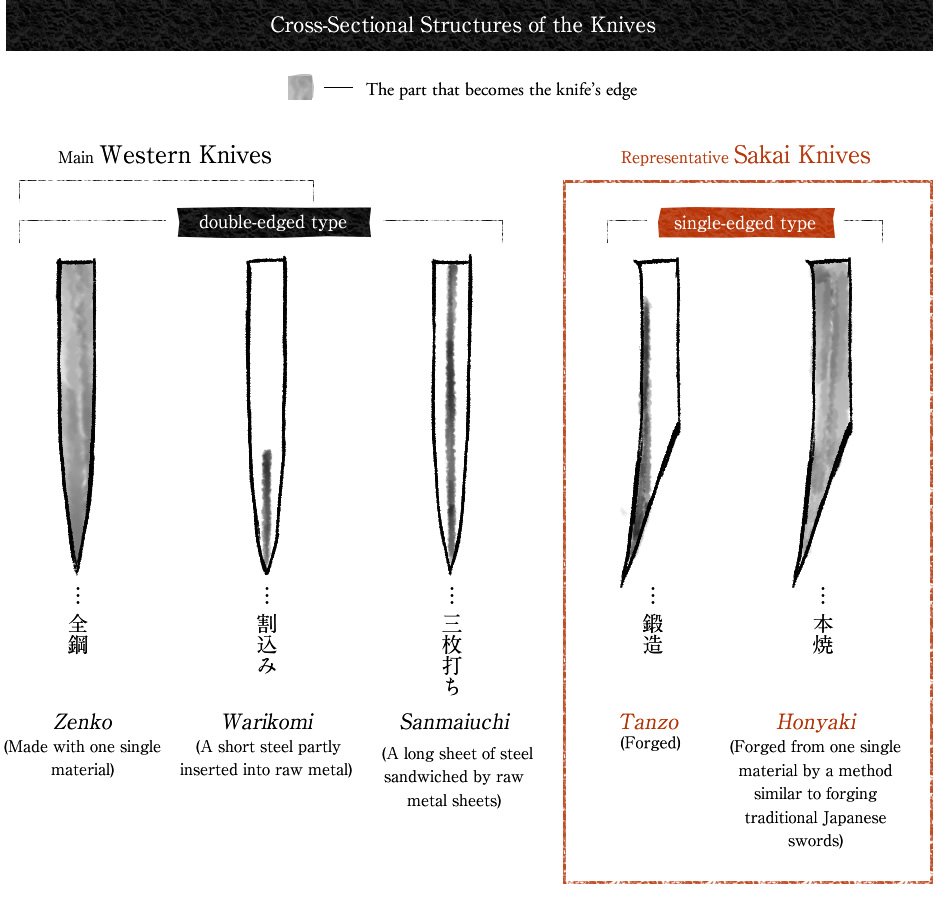
- Single-bevel vs double-bevel — Single-bevel blades cut precisely to one side and are favored in some cuisines and trades. Double-bevels are symmetric and common for general use.
How geometry affects the blade:
- Sharpness — Thinner grinds cut easier and feel sharper.
- Durability — Thicker grinds and convex edges resist chips.
- Ease of sharpening — Flat and sabre grinds are straightforward to sharpen. Hollow grinds need more skill.
From my shop experience, a flat grind with a plain edge is the most forgiving for home cooks. For outdoor users, a convex edge with a robust steel lasts through hard tasks.
Materials, hardness, and how they interact with knife edge types
The steel or material matters as much as the edge shape. Hardness, alloying, and heat treatment change how an edge performs.
- Hard steels (HRC 60+) — Hold a point longer, ideal for fine plain edges. They can be brittle and chip on hard surfaces.
- Softer steels — Tough and forgiving. They dull faster but resist chipping, which suits serrated or convex edges.
- Stainless vs carbon — Stainless resists corrosion and is common for kitchen blades. Carbon steels take a keener edge and are easier to sharpen but need more care.
Match steel and edge:
- Plain, hollow grinds pair well with hard steels for long-lasting sharpness.
- Serrated and convex edges work well on tougher, tougher-temp steels to survive use without chipping.
I once fitted a hard stainless blade with a serrated section after finding that the original plain edge kept chipping when used to cut frozen packaging. The fix held up for months.

Sharpening, maintenance, and practical tips
Sharpening depends on your knife edge types. Keep tools and angles simple.
- Sharpening angles — 15°–20° per side for most kitchen knives; 20°–25° for heavy-use blades. Lower angles are sharper but more fragile.
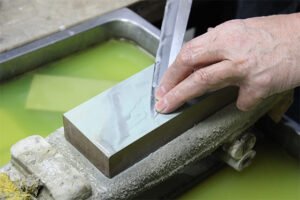
- Plain edges — Use stones, guided systems, or stropping for a keen edge. Move from coarse to fine stones.
- Serrated edges — Hone each tooth with a small ceramic rod. Work slowly and match the groove.
- Scalloped or Granton edges — Treat like plain edges but avoid grinding out the scallops.
- Convex edges — Use rotary tools or hand methods that preserve the rounded profile.
- Strop after stones — A leather strop removes burrs and polishes the edge.
Practical tips from experience:
- Keep a small pocket sharpener for quick touch-ups on the go.
- Avoid electric sharpeners for thin hollow grinds. They remove too much metal.
- Test a blade on paper after sharpening. A clean slice shows correct sharpness.

Selecting the right knife edge type for your needs
Choose knife edge types with the task in mind. Here are simple matchups.
- Cooking and precise slicing — Plain edge with flat or hollow grind.
- Bread and tomatoes — Serrated edge helps cut without crushing.
- Outdoor, survival, and batoning — Convex or sabre grind with a tougher steel.
- Multi-use EDC — Combination edges or a robust flat grind.
- Professional specialty work — Single-bevel edges for certain culinary or craft tasks.
Consider these factors:
- Frequency of sharpening you can do.
- Types of material you cut most.
- Weight, balance, and handling preference.
When I teach a knife class, I always ask what the student cuts most. That single question clears up many edge selection problems.

Common mistakes and safety
Avoid these errors with knife edge types to keep tools safe and lasting.
- Sharpening at inconsistent angles — This ruins the edge shape.
- Using the wrong edge — Serrated knives used for chopping or cutting bone will wear unevenly.
- Over-polishing thin edges — You can remove too much metal and weaken the blade.
- Ignoring handle and tang — Edge type matters less if the knife slips or the handle fails.
Safety tips:
- Cut away from your body and keep fingers clear.
- Store knives securely to protect the edge and hands.
- Replace or repair chips instead of forcing a dull blade.
PAA-style user questions
What edge is best for slicing meat?
- A plain edge with a fine hollow or flat grind is best. It gives smooth, clean slices and minimizes tearing.
Are serrated edges hard to sharpen?
- Sharpening serrations is slower because each tooth needs attention. A ceramic rod makes it manageable at home.
Can a chisel edge be used by right- and left-handed users?
- Chisel edges are often made for one hand. Left-handed users should look for the correct bevel or a double-bevel alternative.
How often should I strop a knife?
- Strop lightly after every few sharpenings or when the blade feels less slick on soft foods. Stropping restores the polished edge quickly.
Do edge types affect corrosion?
- Edge type itself does not cause corrosion. The blade material and finish determine corrosion resistance more than the edge style.
Frequently Asked Questions of knife edge types
What is the sharpest knife edge type?
The sharpest edges are thin hollow grinds or finely honed plain edges. They cut with minimal effort but require more care to avoid damage.
Which edge type is best for bread?
Serrated edges are best for bread because the teeth cut through crust without crushing the loaf. They also work well on tomatoes and ropes.
How do I maintain a serrated edge at home?
Use a ceramic or tapered rod to hone each serration. Work tooth by tooth and keep the original profile intact.
Are convex edges hard to sharpen?
Convex edges need special hand techniques or a slack-belt method. You can maintain them with care, but they are not ideal for quick sharpening on stones.
Can I convert a plain edge to serrated?
Yes, a skilled sharpener can add serrations, but this is permanent and can change balance and maintenance needs. Consider buying a serrated knife first.
How does steel hardness affect edge choice?
Harder steels hold finer edges longer and suit plain or hollow grinds. Softer, tougher steels pair well with serrated or convex edges for durability.
Is a combination edge useful for everyday carry?
Combination edges offer both slicing and sawing in one blade. They are versatile and common in EDC folders for mixed tasks.
Conclusion
Understanding knife edge types lets you choose blades that fit real needs. Match edge shape, grind, and steel to the tasks you do most. Use the right sharpening method and protect the blade to get the best life and performance from your knives. Try one new edge type next month. Test it, care for it, and note the difference. Share your results, ask questions, or subscribe to learn more about knife care and selection.

Maliha Akter is a kitchen knife reviewer and food preparation specialist with over 6 years of experience testing Japanese kitchen knives and everyday cooking tools. She focuses on performance, safety, durability, and real-world usability to help home cooks choose the right knives for efficient and enjoyable cooking.
Expertise:Japanese Knives • Vegetable Knives • Product Reviews • Kitchen Efficiency • Knife Care