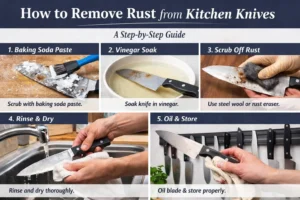
A reliable knife maintenance routine keeps blades sharp, safe, and long-lasting with minimal effort.
I have maintained kitchen, outdoor, and pocket knives for over a decade. In this guide I share a clear, step-by-step knife maintenance routine that you can use today. I explain why each task matters, which tools to buy, and how often to act. Read on to learn practical tips, mistakes to avoid, and simple checks that keep knives performing at their best.

Why a knife maintenance routine matters
A good knife maintenance routine protects your investment. Blades that are cared for cut cleaner and safer. Dull or corroded knives can slip and cause injury. Routine care also saves money by delaying or preventing costly repairs and replacements.
A maintenance plan helps you spot problems early. Small chips, loose handles, and rust are fixable if found fast. Follow a routine and you will enjoy better cutting, less waste, and more confidence in the kitchen or field.

Basic daily knife maintenance routine
A short daily routine prevents most issues. Do these steps after each use.
- Rinse and wash the blade with warm water and mild soap. Avoid harsh detergents.
- Dry the knife immediately with a soft cloth. Do not air dry for long.
- Wipe the handle and check for looseness or cracks.
- Store the knife safely in its sheath, a block, or on a magnetic strip.
These daily steps keep your knife clean and ready. Repeat them every time you use the blade to minimize corrosion and wear.

Weekly and monthly tasks for longevity
Add deeper care on a schedule. These tasks keep edge geometry and hardware in good shape.
- Weekly: Hone the edge once or twice with a honing rod to realign the blade. Inspect for nicks or rust.
- Monthly: Inspect rivets, screws, and handles. Tighten hardware and re-glue loose scales if needed.
- Every 3–6 months: Sharpen or strop the edge depending on use. Apply a light oil to carbon-steel blades.
A consistent cadence prevents big repairs. Adjust frequency to your use level. Heavy daily use needs more frequent sharpening and inspection.

Sharpening: when and how
Sharpening is the core of a knife maintenance routine. Know when to sharpen and the best methods.
When to sharpen
- If the knife tears rather than slices, sharpen it.
- Test by slicing paper or tomato. If the cut pulls, sharpen.
- Heavy users may sharpen monthly; home cooks can often sharpen every 3–6 months.
How to sharpen
- Whetstones give the best control. Use coarse to remove damage and fine to hone.
- Guided sharpeners help beginners keep the right angle.
- Pull-through sharpeners are quick but remove more metal.
Edge angle guide
- 15–20 degrees per side is common for kitchen knives.
- Outdoor knives can use wider angles for toughness.
People also ask
How often should I hone versus sharpen?
Hone after every few uses; sharpen only when honing no longer restores the edge. Honing realigns; sharpening removes metal.
Can I sharpen with a ceramic rod?
Yes, a ceramic rod refines an already sharp edge, but it cannot replace a stone for reshaping.
What grit should I start with on a stone?
Use 400–1000 grit for damaged edges and 3000–8000 grit for finishing and polishing.
Practice makes sharpening faster and safer. Keep strokes even and count passes per side. Use light pressure and maintain angle consistency.
Cleaning and rust prevention
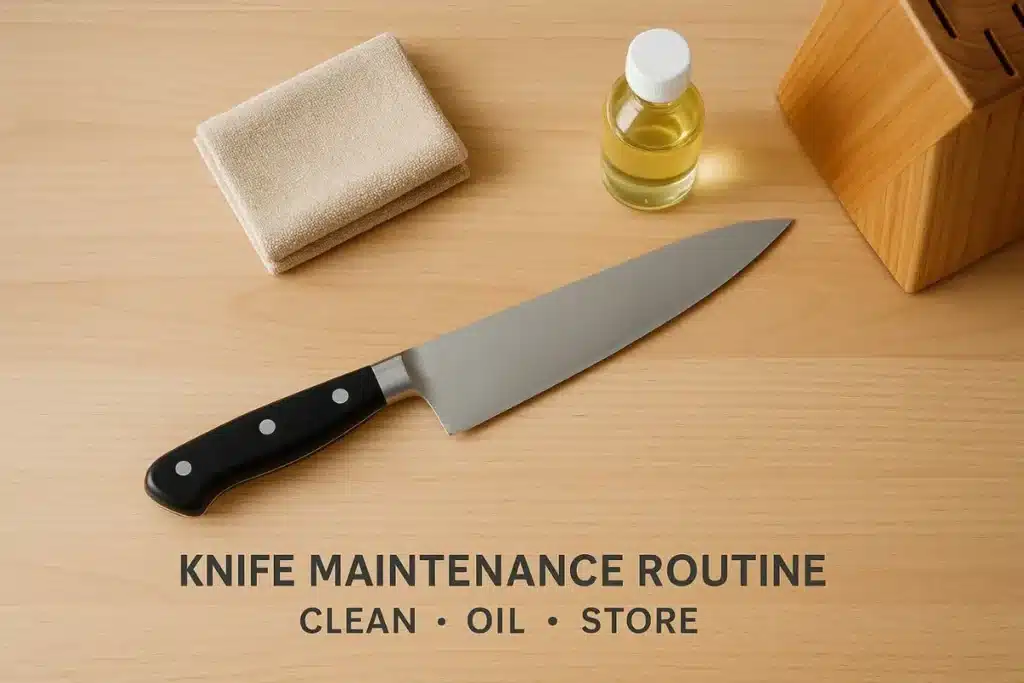
Cleaning and rust control are key parts of a knife maintenance routine. Different steels need different care.
- Stainless steel resists rust but still needs cleaning and drying.
- Carbon steel sharpens easily but rusts faster and needs oiling.
- For rust spots, gently scrub with a non-abrasive pad or use a paste of baking soda and water.
- Apply a thin coat of food-safe oil on carbon steel after drying.
- Avoid the dishwasher; heat and detergents damage blades and handles.
Good cleaning reduces discoloration and bacteria. It also preserves edge life and overall appearance.

Storage and handling best practices
Proper storage protects the blade and keeps users safe. Choose storage that suits your routine.
- Use a knife block, magnetic strip, or individual sheath for each blade.
- Store knives dry and away from moisture.
- Avoid tossing knives into drawers without protection.
- For long-term storage, lightly oil carbon steel and wrap in cloth.
Handle knives with respect. Use a cutting board that won’t blunt the edge, like wood or high-density plastic. Avoid glass, ceramic, and metal surfaces.
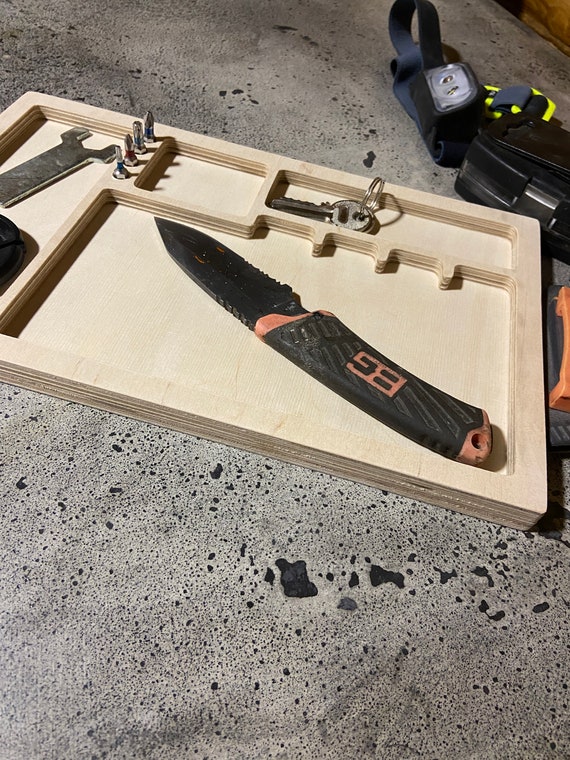
Tools and supplies checklist for an effective knife maintenance routine
A small kit covers most needs. Gather the right tools to save time and do the job right.
- Whetstones of multiple grits
- Honing rod (ceramic or steel)
- Leather strop and polishing compound
- Food-safe oil (for carbon steel)
- Microfiber or soft cotton cloths
- Rust remover or mild abrasive paste
- Screwdriver set for handle hardware
- Magnetic strip or knife block for storage
Invest in quality tools. Cheap gear can damage blades and slow learning. Keep your kit organized and ready.

Common mistakes and how to avoid them
Avoiding common errors improves results and safety. Here are pitfalls I’ve seen and how to fix them.
- Mistake: Using the dishwasher. Fix: Hand wash and dry each time.
- Mistake: Over-sharpening or wrong angle. Fix: Learn a single angle and stick to it.
- Mistake: Skipping inspection. Fix: Check weekly for cracks, loose handles, or chips.
- Mistake: Storing knives loose. Fix: Use sheaths or organized racks.
Catching errors early saves blades. Small, steady steps beat occasional extreme fixes.
Personal experience and lessons learned
Over the last ten years I maintained dozens of knives for home cooks and outdoorsmen. Simple routines stood out.
- A daily rinse and dry prevented 90% of rust problems.
- Honing weekly kept edges usable for months before sharpening.
- Investing in a mid-range whetstone made sharpening less stressful.
- I once ruined a chef’s knife with a cheap pull-through sharpener; I now recommend stones for high-value blades.
My best advice: make the routine a habit. Ten minutes per week keeps knives reliable and safe.
Frequently Asked Questions of knife maintenance routine
How often should I sharpen my kitchen knives?
Sharpen based on use. Home cooks often sharpen every 3–6 months; heavy users may need monthly sharpening.
Is honing the same as sharpening?
No. Honing realigns the edge. Sharpening removes metal to recreate the edge.
Can I use oil on stainless steel knives?
Yes, a light coating of food-safe oil can help protect stainless steel in humid environments, though it’s less necessary than with carbon steel.
What is the best way to remove rust from a blade?
Use a mild abrasive paste or a soft steel wool with light oil. Work gently to avoid removing too much metal.
Are electric sharpeners bad for knives?
Not always. They work fast but remove more metal and can change the edge angle. Use with care and sparingly.
Can I put my knife in the dishwasher?
No. Dishwashers expose knives to heat, detergent, and banging that dull and damage blades and handles.
Conclusion
A consistent knife maintenance routine protects your blades and keeps you safe. Start with daily cleaning, regular honing, and scheduled sharpening. Add rust prevention, proper storage, and the right tools to the plan.
Make this routine a habit. Spend a few minutes after each use and a bit more on a schedule. Your knives will cut better, last longer, and make daily tasks easier. Try one new step this week and notice the difference. Leave a comment with your maintenance tips or subscribe to get more practical knife care guides.

Maliha Akter is a kitchen knife reviewer and food preparation specialist with over 6 years of experience testing Japanese kitchen knives and everyday cooking tools. She focuses on performance, safety, durability, and real-world usability to help home cooks choose the right knives for efficient and enjoyable cooking.
Expertise:Japanese Knives • Vegetable Knives • Product Reviews • Kitchen Efficiency • Knife Care