Knife sharpening restores a dull blade to a precise, safe, and efficient cutting edge.
I have sharpened hundreds of kitchen and outdoor knives over 15 years as a cook and tool hobbyist. This guide explains knife sharpening clearly, with step-by-step methods, tool choices, and real tips I use in my workshop and kitchen. Read on to learn how to sharpen safely, pick the right grit and angle, and maintain sharp knives that last.
Why knife sharpening matters
A sharp knife cuts cleanly, safely, and with less effort. Dull knives slip and force you to press harder, which causes accidents. Proper knife sharpening keeps food texture intact and reduces waste. It also extends the life of a blade by removing minimal metal when done right.
Knife edge basics: geometry, bevels, and grit
Understanding edge geometry makes knife sharpening easier. The bevel angle is the slope where two faces meet. Narrow angles give a keener edge but can be fragile. Wide angles are tougher but less sharp. Grit tells you how abrasive a stone or wheel is; low grit removes metal fast, while high grit polishes the edge. Knowing these basics helps you pick the right method for each knife.
Edge types and bevels
- Single bevel: Common in some Asian knives; it has one flat side.
- Double bevel: Most kitchen knives; symmetric on both sides.
- Convex and microbevel: Shapes that increase edge strength and durability.
Grit ranges simplified
- 200–400 grit: Fix chips and reshape badly damaged edges.
- 800–2000 grit: Restore a working edge for daily use.
- 3000–8000 grit: Polish and refine for razor-like sharpness.
Methods of knife sharpening
There are several reliable paths to a sharp edge. Choose one based on skill, budget, and how fast you need results.
Whetstones (water stones)
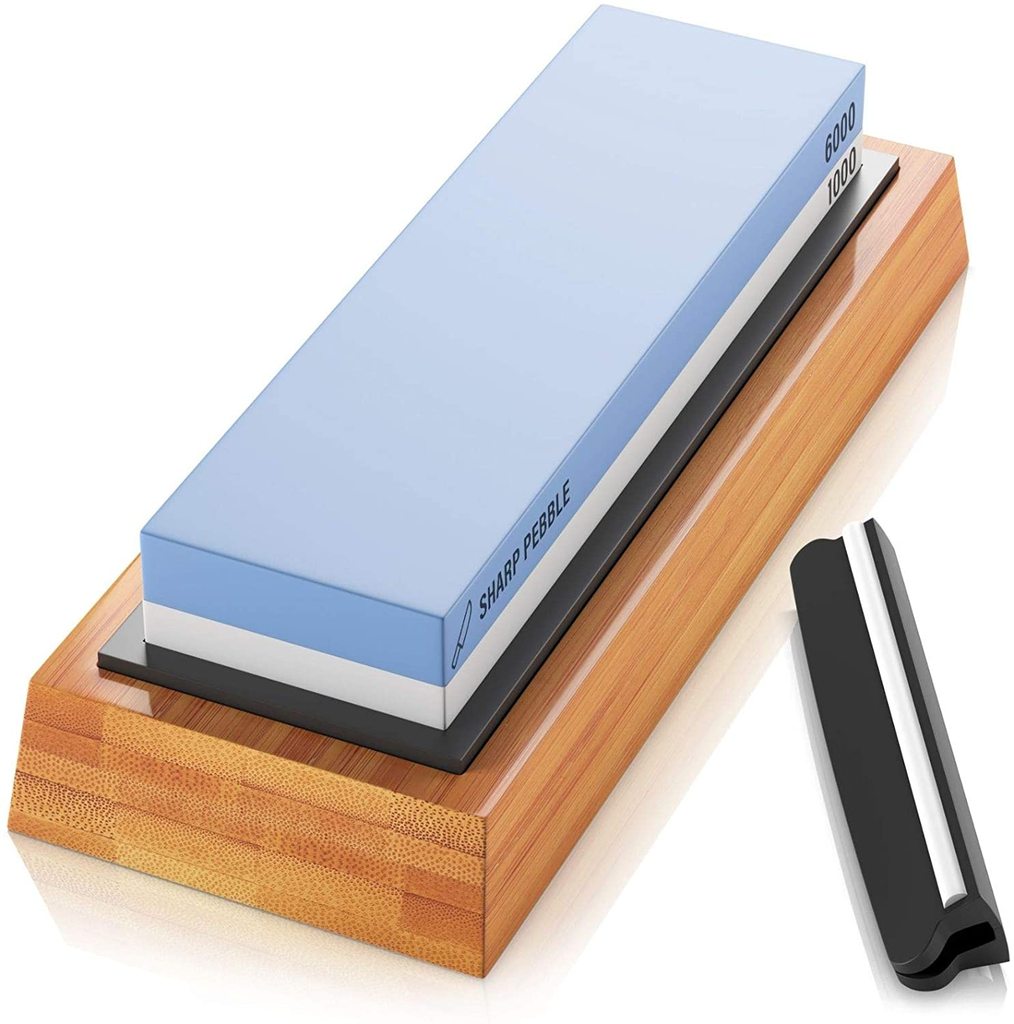
Whetstones are versatile and give the best control. They require some practice to hold angle and stroke evenly. I prefer a two-stone set: 1000 grit for shaping and 3000–6000 grit for finishing.
Honing rods (steels)
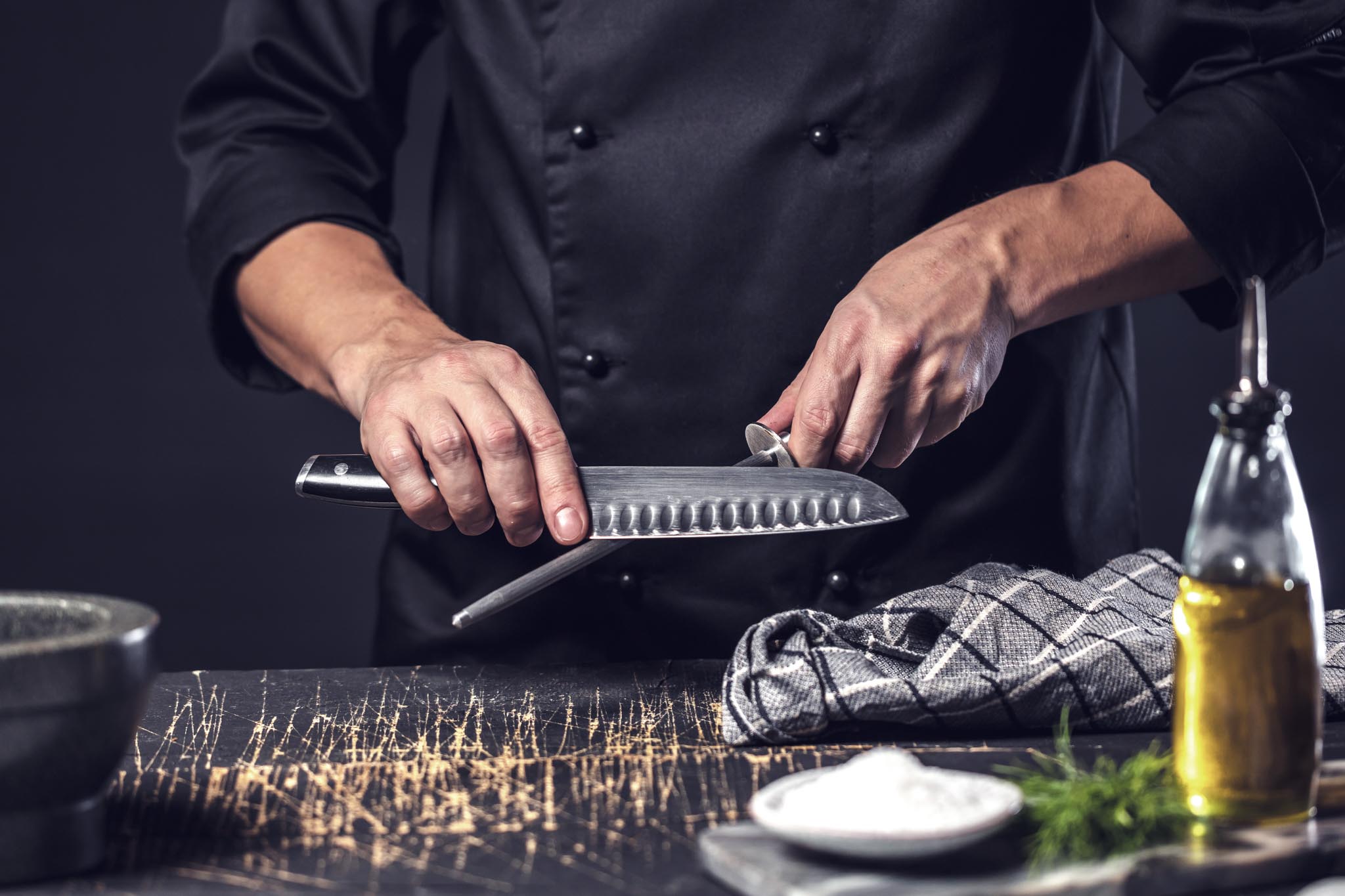
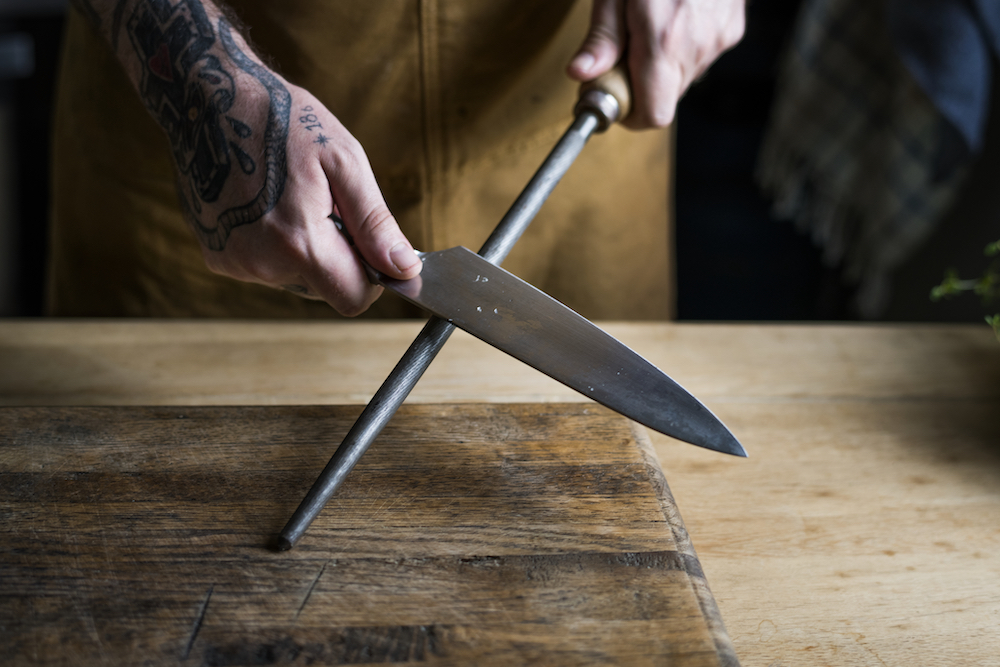
A honing rod realigns an edge; it does not remove much metal. Use it often between sharpenings to keep knives performing well.
Pull-through sharpeners
These are fast and easy for beginners. They use preset angles but remove more metal over time. Good for quick touch-ups.
Electric sharpeners
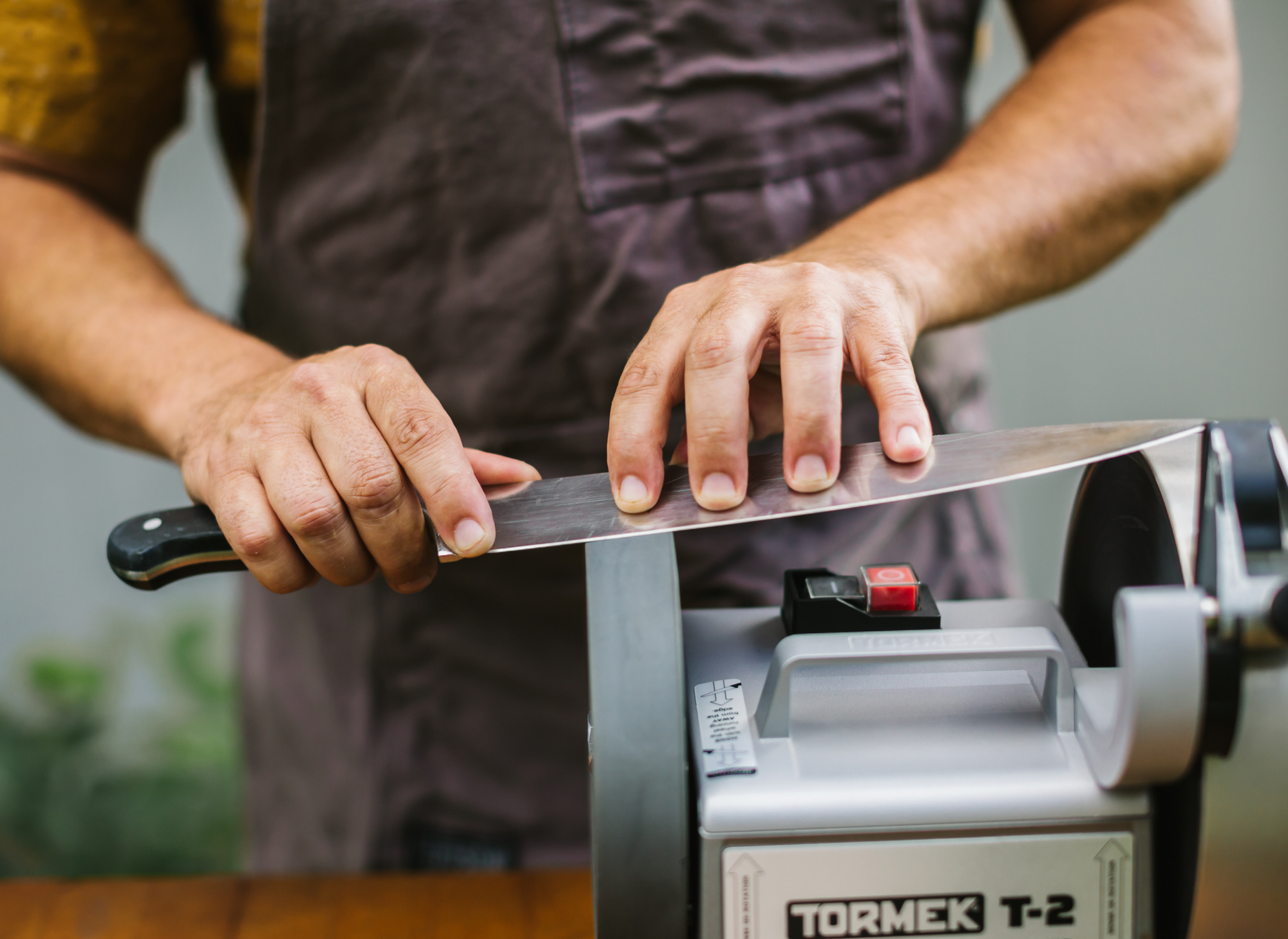
Electric units are convenient and consistent. They can be aggressive; use lower-speed or finer wheels to avoid removing too much metal.
Professional sharpening
Pros use machines and stropping to achieve great results. Use a pro for high-end knives or major reshaping.

Step-by-step: sharpening with a whetstone
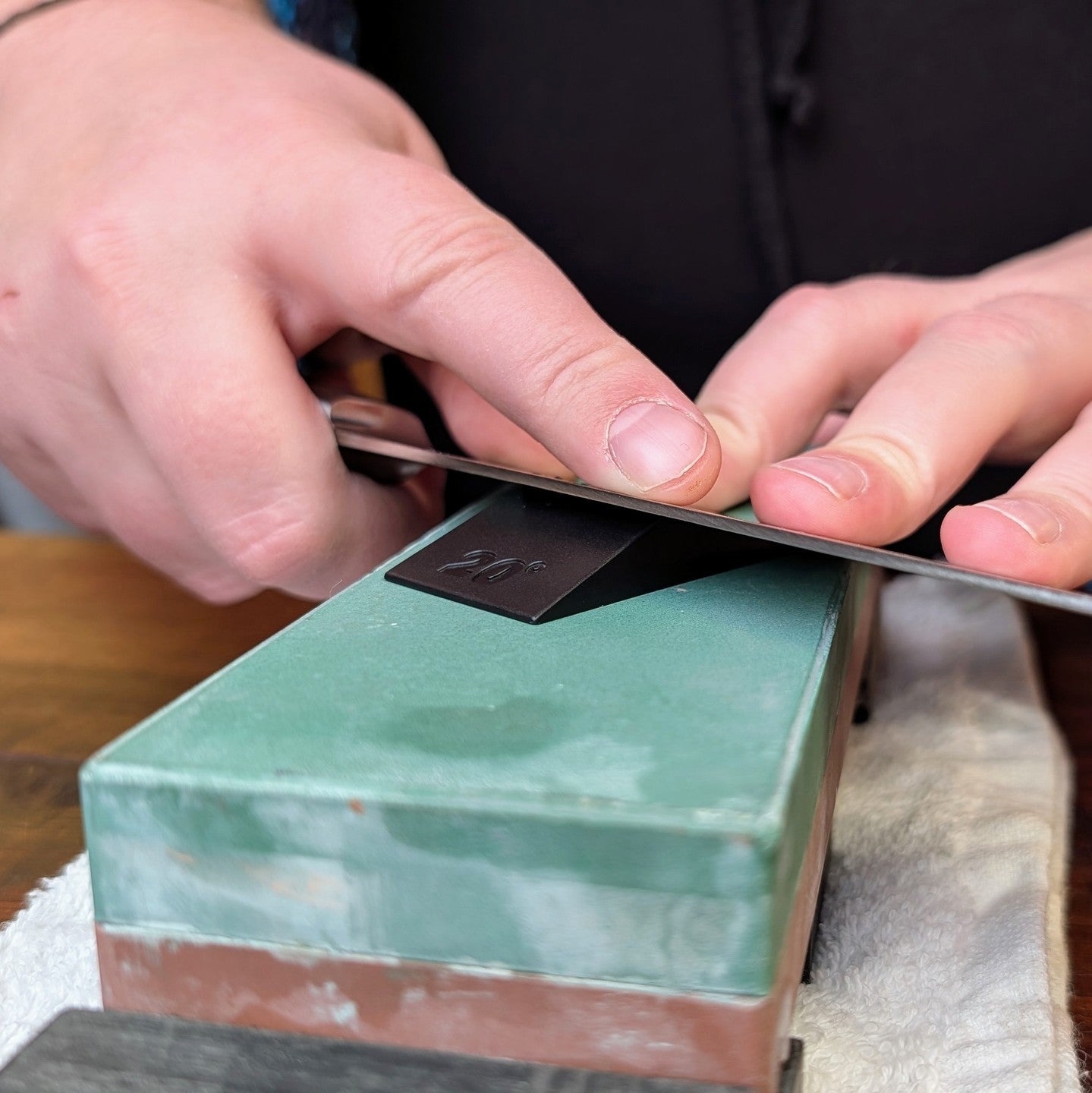
Sharpening on a whetstone is the best method for control and edge quality. Follow these steps slowly.
- Prepare the stone
- Soak a water stone if required or wet a hybrid stone until bubbles stop. Keep a towel nearby.
- Choose the angle
- Hold the knife at the desired bevel, usually 15–20 degrees for kitchen knives. A 15° angle is common for Japanese blades; 20° for Western.
- Start with the coarse side
- Push the blade across the stone from heel to tip. Use light, even pressure. Repeat 6–12 strokes per side.
- Check for a burr
- Feel the edge with a fingertip (careful) or use a fingernail to detect a burr along the opposite side.
- Switch to finer grit
- Move to the finer side of the stone. Repeat strokes to remove the burr and polish the edge.
- Stropping and finishing
- Use a leather strop with polishing compound or a fine ceramic rod for the final polish. Wipe the blade clean.
I learned to count strokes and maintain consistent pressure. At first my edges were uneven. Practice made my strokes even and my knives far sharper.

Choosing the right angle and grit for your knife
Match angle and grit to blade type and use. This preserves the edge and suits how you cut.
- For soft, thin blades and fine slicing: use 10–15 degrees and finish at 3000–8000 grit.
- For general kitchen use: use 15–20 degrees and a 1000–3000 grit finish.
- For heavy-duty outdoor blades: use 20–25 degrees with a finish at 1000–2000 grit.
A lower angle feels sharper but chips faster. A higher angle lasts longer but is less keen. Test a cut on paper or a tomato to judge sharpness.
Common mistakes and how to avoid them
Avoid these frequent errors to get better results fast.
- Rushing the process
- Quick strokes make uneven edges. Slow down and keep consistent strokes.
- Wrong angle
- Changing angles mid-stroke creates a rounded edge. Use an angle guide if needed.
- Overusing pull-throughs and wheels
- They can remove too much metal over time. Reserve them for occasional use.
- Not checking for a burr
- If you skip the burr check, you may never fully form the edge.
- Skipping maintenance
- Neglecting honing shortens the time between major sharpenings.
I once ruined a quality blade by using a coarse wheel for too long. That experience taught me to match tools to the task.

Choosing tools and stones: what to buy
Pick gear that fits your goals and budget. Here are practical choices.
- Starter kit
- 1000/3000 water stone, angle guide, and leather strop.
- Mid-range setup
- 400/1000/6000 stones, a ceramic rod, and a good towel.
- Professional
- Variety of stones up to 8000 grit, bench vise for stability, and stropping kit.
Buy stones made for kitchen use. Cheaper stones can crumble or be inconsistent. Spend more on a good 1000-grit and a polishing stone for long-term savings.
Maintenance schedule and tips
A simple routine keeps knives performing well and reduces major sharpening.
- Hone weekly
- Use a honing rod after several uses to realign the edge.
- Light sharpening
- Sharpen on a stone every 3–6 months for home cooks. More often for heavy use.
- Deep reshaping
- Reprofile or fix chips once or twice a year as needed.
- Clean and dry
- Always clean and dry knives after sharpening to prevent corrosion.
Keeping a log or marking dates can help you track when each knife needs attention.

Safety and care during sharpening
Sharp knives are safe when handled with respect. Follow these rules.
- Work on a stable surface
- Secure your stone on a damp towel or rubber base to prevent slipping.
- Keep hands clear
- Move fingers away from the cutting path during each stroke.
- Use protective gear
- Cut-resistant gloves can help until you gain confidence.
- Clean tools after sharpening
- Metal filings and compound can be hazardous if left on the blade.
I always put my tools in order before I start. A tidy bench reduces mistakes and accidents.
Frequently Asked Questions of knife sharpening
What is the best grit to sharpen a kitchen knife?
For routine sharpening, 1000 grit is a good starting point. Finish with 3000–6000 grit for a smoother edge.
How often should I sharpen my knives?
Most home cooks sharpen every 3–6 months and hone weekly. Frequency depends on use and cutting surfaces.
Can I sharpen serrated knives at home?
Serrated knives need special tools and techniques. You can use a tapered rod to touch up serrations, but deep work is best left to a pro.
Does honing sharpen a knife?
Honing realigns the edge and keeps it cutting between sharpenings. It does not remove significant metal like a stone does.
Will sharpening ruin my knife?
Sharpening removes metal, but done correctly it extends the knife’s life. Avoid aggressive grinding and maintain a moderate schedule.
Is it better to use an electric sharpener or stones?
Stones give more control and better edges. Electric sharpeners are faster but can remove more metal if misused.
Conclusion
Knife sharpening restores performance, improves safety, and saves money over time. Use the right tools, keep angles consistent, and follow a maintenance routine. Start with a simple whetstone setup and practice slow, even strokes. Try the steps here on one knife and make sharpening a habit. If this guide helped, try a sharpening session today, subscribe for updates, or leave a question below.

Maliha Akter is a kitchen knife reviewer and food preparation specialist with over 6 years of experience testing Japanese kitchen knives and everyday cooking tools. She focuses on performance, safety, durability, and real-world usability to help home cooks choose the right knives for efficient and enjoyable cooking.
Expertise:Japanese Knives • Vegetable Knives • Product Reviews • Kitchen Efficiency • Knife Care