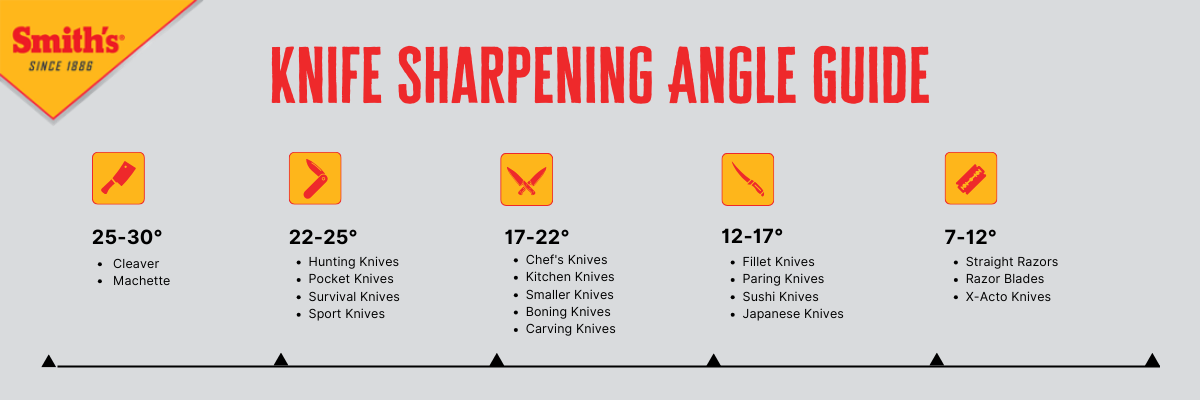
A knife sharpening angle chart shows the best degrees per side for each blade.
If you want sharp knives that last, the angle is everything. I have sharpened hundreds of blades for home cooks, pros, and outdoor users. In this guide, I break down the knife sharpening angle chart in plain English. You will learn the right angle for your knife, how to hold it, and how to keep that edge for longer. Read on and make the angle work for you.
What the angle chart shows and why it matters
A knife sharpening angle chart links knife types to the best angle per side. It helps you pick a sharpness level that fits your use. It also helps you avoid chips, rolls, and fast dulling.
Lower angles cut like lasers. They are also more fragile. Higher angles are tough and stable. They can take a beating but will not slice as thin. The knife sharpening angle chart keeps you in the sweet spot for your blade and job.
Source: reddit.com
Degrees per side vs inclusive angle
Angle terms can confuse people. Here is the simple take:
- Per side angle is the angle you hold on each side of the blade. A common pick is 15 degrees per side.
- Inclusive angle is both sides together. If you sharpen 15 degrees per side, the inclusive angle is 30 degrees.
- Most charts show per side angles. Check the label so you do not over-sharpen.
A clear knife sharpening angle chart will state per side. If you only see one number and it seems high, it may be inclusive.
Source: ethanchlebowski.com
The knife sharpening angle chart by knife type
Use these per side ranges as your base. Then tune for steel, use, and skill.
- Japanese chef knives and slicers: 12 to 15 degrees. Great for push cuts and fine prep. Hard steel holds it but can chip if abused.
- Western chef knives and santoku: 15 to 20 degrees. Good mix of sharp and tough. Works for most home cooks.
- Paring and fillet knives: 12 to 17 degrees. Choose lower for fine work. Go higher if you hit bones.
- Utility and EDC knives: 18 to 22 degrees. Tough enough for cardboard and rope.
- Cleavers and heavy choppers: 22 to 30 degrees. Built for impact and bone.
- Outdoor, bushcraft, and survival knives: 20 to 25 degrees. Strong edges for wood and camp tasks.
- Axes and hatchets: 25 to 35 degrees. Very robust for strikes.
Steel and use change the call. Harder steels can run lower angles. Softer steels need higher angles to stop rolling. A good knife sharpening angle chart covers these ranges so you can adapt.

Source: nobliecustomknives.com
How to pick your angle: simple rules that work
Start with the job. Then fit the steel and your skill.
- Cut soft food on clean boards. Use 12 to 15 degrees per side for fine slicing.
- Do mixed kitchen work. Use 15 to 20 degrees per side for balance and control.
- Cut tough stuff or hit bone. Use 20 to 25 degrees per side for strength.
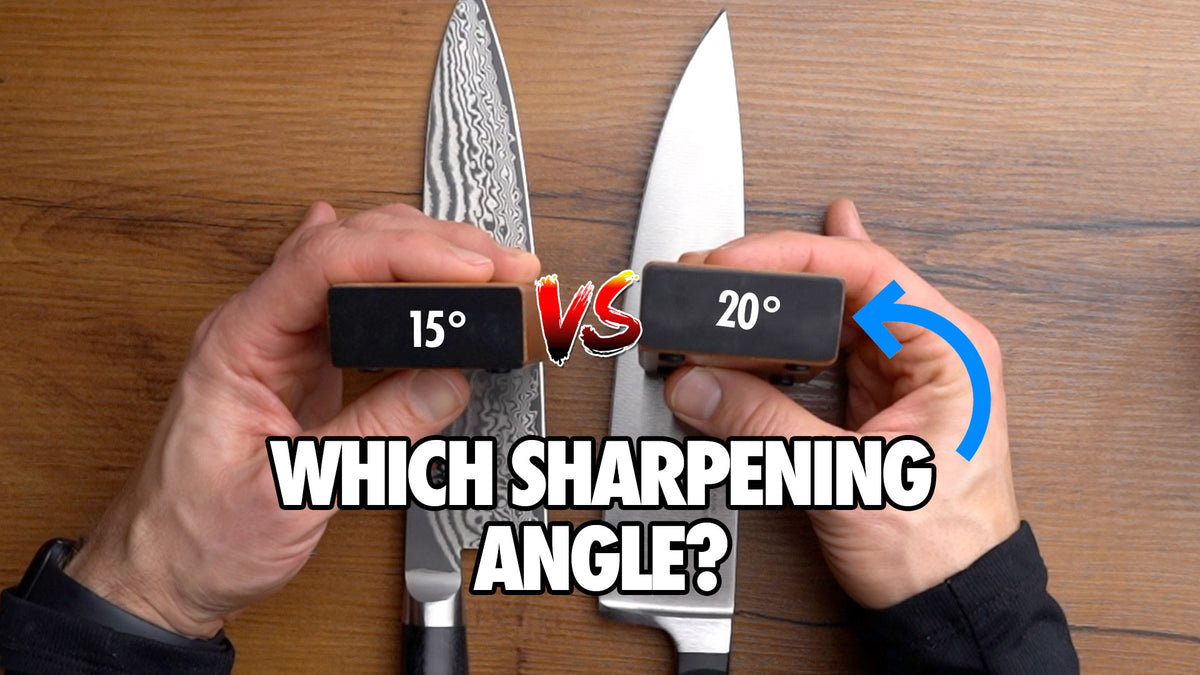
In my shop, line cooks who prep all day love 15 degrees per side on hard Japanese steel. Home cooks who hit plates or glass boards do far better at 18 degrees per side. The knife sharpening angle chart gives the map. Your habits choose the route.
Source: reddit.com
How to hold the angle every time: tools and tricks
Freehand is great, but consistency wins. Try these methods.
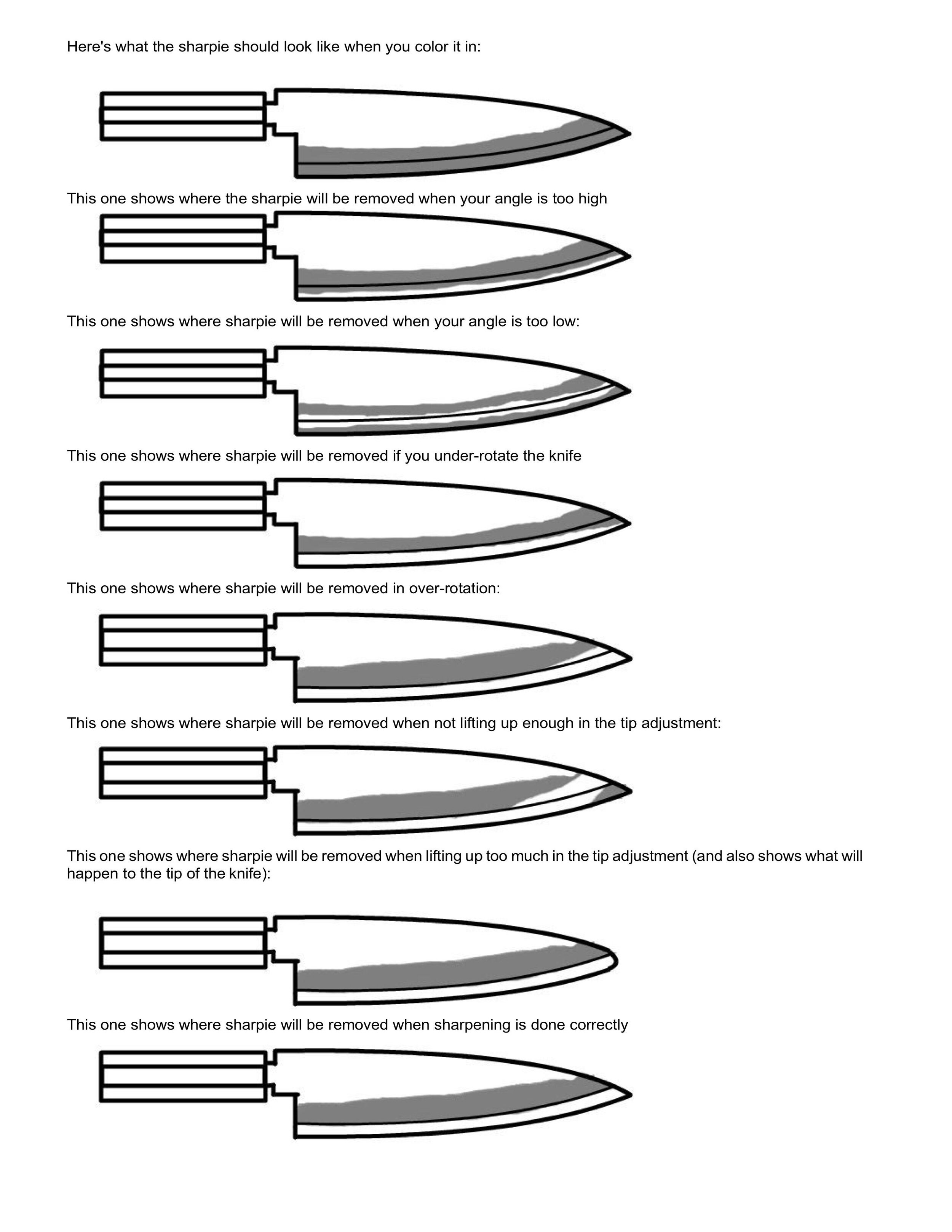
- Use the marker trick. Color the bevel with a marker. Make a few strokes. Adjust until you remove ink right at the edge.
- Stack coins under the spine. On a 1 inch wide blade, about 4 to 6 pennies sets 15 to 20 degrees. Add or remove coins to tweak.
- Use angle guides. Clip-on guides or wedges keep you steady as you learn.
- Use a smartphone inclinometer. Set the stone level. Rest the spine and aim for the target tilt. Move slow and safe.
- Count strokes and pressure. Keep strokes even on both sides. Use light pressure as you finish.
A knife sharpening angle chart helps you pick the number. These tools help you hit it.
Source: modernsurvivalblog.com
Step-by-step sharpening workflow using the angle chart
Follow this simple sequence. It works on stones, guided systems, or rods.
- Set the angle. Use the knife sharpening angle chart to pick per side degrees.
- Color the bevel. Match the angle until you erase the ink at the edge.
- Raise a burr on the first side. Use a coarse or medium grit. Keep the same angle.
- Switch sides. Raise a burr on the second side. Stay steady.
- Refine with lighter pressure. Chase a tiny, even burr until it almost vanishes.
- Progress grits. Keep the angle the same as you go finer.
- Deburr and finish. Add a small micro-bevel if you want more strength. Strop to clean the edge.
Log your angle and grit notes. Your own mini knife sharpening angle chart becomes gold over time.

Source: prosharpeningsupply.com
Micro-bevels, stropping, and edge life
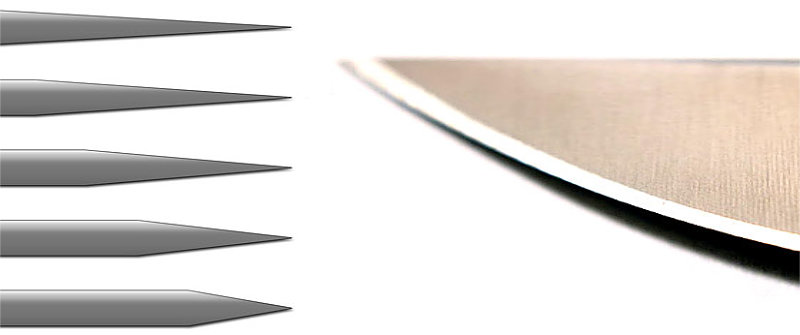
A micro-bevel is a small, steeper bevel at the very edge. It adds strength with little loss in bite.
- For a micro-bevel, go 2 to 3 degrees higher per side. Make 3 to 5 light strokes.
- For soft steel or hard use, micro-bevels boost edge life a lot.
- Strop on leather or balsa with fine compound. Use light strokes. Keep the same or slightly higher angle.
Research and shop tests agree. Clean deburring and a micro-bevel raise durability. The knife sharpening angle chart sets the base. The micro-bevel fine tunes it.
Source: tumblerware.com
Common mistakes with a knife sharpening angle chart and how to avoid them
Avoid these traps. They dull edges fast.
- Mixing per side and inclusive angles. Confirm your chart before you start.
- Changing angles mid-sharpen. Pick one and lock it in until you finish.
- Too much pressure. Heavy hands round the bevel and fold the edge.
- Skipping deburring. A wire edge feels sharp but fails in minutes.
- Using glass or stone boards. They wreck edges, no matter the angle.
If a knife keeps rolling, raise the angle by 2 degrees per side. If it chips, drop 1 to 2 degrees and go for a micro-bevel.

Source: nobliecustomknives.com
Care, testing, and maintenance schedule by angle
Keep the edge alive with quick care. Test often and touch up early.
- Test with paper, tomato skin, or a soft shaving pass on arm hair. No force should be needed.
- Touch up at the same angle on a fine stone or ceramic rod. Ten light strokes per side often does it.
- Resharpen fully when a touch up no longer restores the bite.
- 12 to 15 degrees per side. Touch up often. Full sharpen every 2 to 4 weeks for daily cooks.
- 15 to 20 degrees per side. Touch up weekly. Full sharpen every 4 to 8 weeks.
- 20 to 25 degrees per side. Touch up as needed. Full sharpen every 1 to 3 months.
Your boards, food, and steel change the timing. Track results in a simple notebook or on your knife sharpening angle chart.
Frequently Asked Questions of knife sharpening angle chart
What angle should I sharpen my chef’s knife?
Most home cooks do well at 15 to 20 degrees per side. Go lower for fine slicing and higher for toughness.
Is the angle on a knife sharpening angle chart per side or total?
Most charts list per side angles. If in doubt, check notes or ask the maker.
Do harder steels allow lower angles?
Often yes. Harder steels resist rolling, so 12 to 15 degrees per side can work. But they may chip if abused.
How do I measure the angle without tools?
Use the marker trick and coin stacks to set height. Keep strokes even and check your bevel often.
Should I use a micro-bevel every time?
Use it for soft steel or hard use. It adds edge life with little loss in sharpness.
Can I use the same angle on all knives?
You can, but it is not ideal. Follow the knife sharpening angle chart to match the knife and the job.
What grit should I finish with at my chosen angle?
Finish between 1000 and 3000 for bitey kitchen edges. Go 4000 to 8000 for push-cut finesse, then strop.
Conclusion
Angles decide how your knives cut, feel, and last. A clear knife sharpening angle chart removes guesswork and speeds up results. Pick the right per side angle, hold it steady, deburr well, and use a micro-bevel when needed.
Put this guide to work today. Choose one knife and set an angle. Log your steps and results. Want more tips like this? Subscribe, share your edge wins, or ask a question in the comments.

Emily Carter is a kitchen knife specialist with over 8 years of experience testing and reviewing Japanese kitchen knives. She focuses on blade performance, comfort, durability, and real-life cooking usability. Her goal is to help home cooks choose reliable, high-quality knives for everyday cooking.
Expertise: Japanese Knives, Vegetable Cutting, Product Testing