Start with a coarse grit, hold a steady angle, raise a burr, then refine.
If you want clean cuts and safer prep, you’re in the right place. I’ve spent years teaching home cooks and pros how to sharpen. This guide on knife sharpening for beginners strips out the confusion. You will learn what matters, what to skip, and how to get a razor edge at home.
Why a Sharp Knife Matters
A sharp knife slips less. It needs less force. That means fewer slips and fewer cuts. Food also looks better and stays fresh longer. Clean cuts bruise less and release less juice.
I have seen fear vanish once a dull knife gets sharp. Clients chop faster and smile more. The right edge builds trust in your hands. Knife sharpening for beginners starts with this win: safety and joy.

Source: youtube.com
Sharpening vs. Honing: Know the Difference
Sharpening removes steel to form a new edge. You use stones or machines for that. Honing straightens a bent edge. You use a rod for that. It does not remove much metal.
Think of honing like combing hair. Think of sharpening like getting a fresh cut. Do both at the right time. For knife sharpening for beginners, this simple split saves time and stress.

Source: loubiergourmet.com
Tools You Need
You do not need a lot. You need the right few.
- Whetstones. Grit 220–400 for repairs. Grit 800–1000 for dull edges. Grit 2000–3000 for daily polish. Grit 4000–8000 for fine finish.
- Honing rod. Ceramic or fine steel. Use it to keep the edge aligned.
- Angle guide. A clip or a wedge can help your first tries.
- Strop. Leather with or without compound to clean the edge.
- Stable base. A damp towel under your stone stops slips.
- Marker and coins. Mark the bevel. Use coins to set angle.
- Clean towel and water spray. Keep things neat and cool.
These tools cover all knife sharpening for beginners needs. Start simple. Add as you grow.

Source: youtube.com
How to Sharpen with a Whetstone Step by Step
Follow these steps. Keep your moves slow and steady.
- Prep the stone
- If it is a soak stone, soak it 10–15 minutes.
- If it is a splash stone, wet the surface only.
- Set up
- Place the stone on a damp towel.
- Keep a spray bottle close.
- Dry your hands for grip.
- Find your angle
- Western knives often like 15–20 degrees.
- Many Japanese knives like 10–15 degrees.
- Use the coin trick: two coins is near 15 degrees on a 2-inch blade. Three coins is near 20 degrees.
- Color the edge
- Use a marker on the bevel.
- Your strokes should erase the ink. This shows correct angle.
- Raise a burr
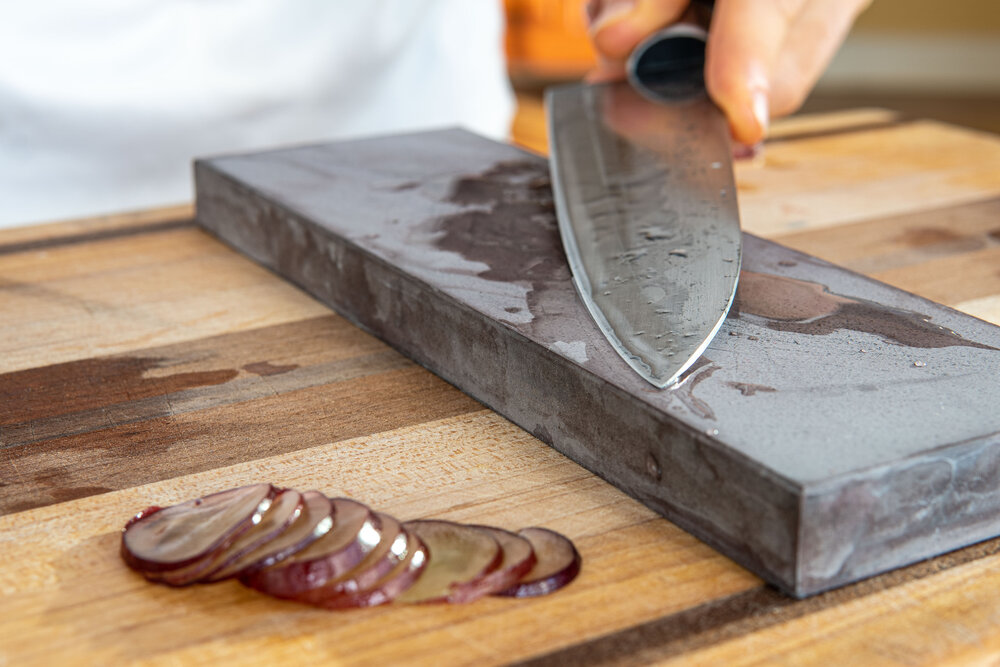
- Start on the coarse or medium stone (800–1000).
- Push the edge forward like you slice a thin layer off the stone.
- Use light to medium pressure.
- Work heel to tip. Then tip to heel.
- Do 10–15 strokes per side, then check for a burr.
- A burr feels like a tiny wire on the edge. Feel it with your finger from spine to edge.
- Switch sides and repeat
- Raise the burr on the other side.
- Keep the same angle. Keep it slow.
- Refine on a higher grit
- Move to 2000–3000. Use light pressure.
- Repeat your strokes. Aim for even scratch lines.
- You can go to 4000–8000 for a very fine edge.
- Deburr and strop
- Use very light edge-leading strokes, alternating sides.
- Strop 10–20 times per side on leather.
- This cleans the edge and boosts bite.
- Test the edge
- Slice paper. Cut a tomato skin with no force.
- If it snags, go back and clean the burr.
- Clean up
- Rinse and dry your knife.
- Wipe and flatten your stone as needed.
I teach this flow to all new cooks. It works. For knife sharpening for beginners, this is the core skill.
Source: ethanchlebowski.com
Other Methods for Beginners
Whetstones give the most control. Still, other tools can help.
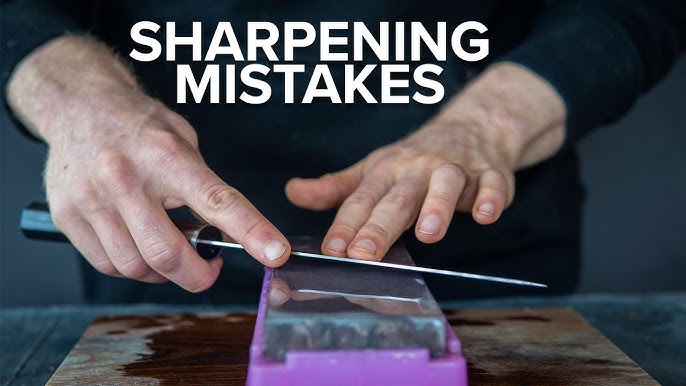
- Pull-through sharpeners. Fast and simple. Good in a pinch. They can remove more steel and leave a rough edge. Use gentle pressure only.
- Electric sharpeners. Quick and repeatable. Choose a unit with fixed angles and fine stages. Some can eat bolsters and tips if used wrong.
- Guided systems. Hold your angle for you. Great for first wins. Slower but very precise.
Pick what fits your time and budget. Knife sharpening for beginners should favor control over speed at first.
Source: youtube.com
Setting Angles the Easy Way
Angle drives sharpness and strength.
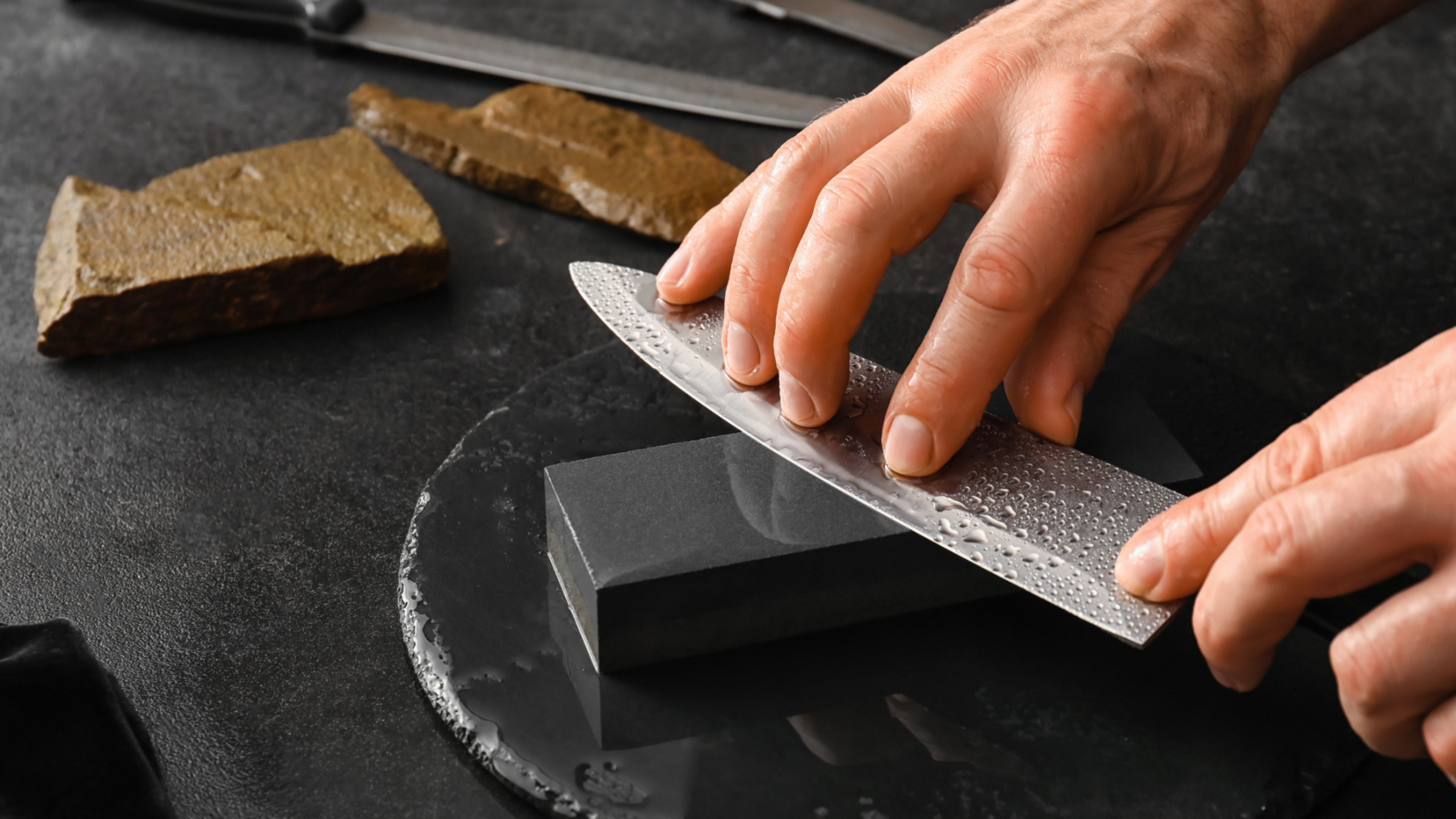
- Around 20 degrees per side for most Western chef knives. This gives a strong edge for heavy work.
- Around 15 degrees per side for many Japanese and thin blades. This gives a keen edge for fine cuts.
- Use the coin hack. Two coins near 15 degrees. Three coins near 20 degrees. Place them under the spine as a spacer.
Stay consistent more than perfect. A steady 17 degrees beats a shaky 15 every time. This simple trick helps with knife sharpening for beginners.
Source: mensjournal.com
Grit Guide and Sharpening Schedule
Match the grit to the task.
- 220–400 grit. Fix chips and reshape a blunt edge.
- 800–1000 grit. Build a working edge from dull.
- 2000–3000 grit. Daily polish for kitchen work.
- 4000–8000 grit. Push sharpness and refine for clean cuts.
How often to sharpen
- Hone once a week if you cook daily.
- Sharpen on stones every 2–8 weeks for home cooks.
- Heavy use needs more care. Watch for slipping cuts or torn food.
Use this plan to pace knife sharpening for beginners. Do less, but do it well.

Source: youtube.com
Common Mistakes and How to Avoid Them
Avoid these traps. They cost time and steel.
- No burr. If you skip the burr, the edge will fade fast. Stay longer on the first grit.
- Too much pressure. Heavy hands round the edge. Use light strokes, especially on fine stones.
- Changing angles. Lock your wrist. Move from the shoulder and elbow.
- Skipping grits. Big jumps leave deep scratches. Move in steps.
- Ignoring the tip and heel. Cover the whole edge with each pass.
- Not flattening stones. A hollow stone makes a hollow edge. Use a flattening plate often.
- Dirty blade and stone. Swarf builds up. Wipe and spray as you work.
I made all these mistakes early on. You can skip them. This list is gold for knife sharpening for beginners.

Source: knifemaking.com
Care, Storage, and Safety
Treat your knife well. It will stay sharp longer.
- Hand wash and dry at once. No dishwasher.
- Use a wood or soft plastic board. Glass and stone kill edges.
- Store on a magnetic strip or in a sheath. Do not toss in a drawer.
- Wipe your blade during prep. Acidic foods can stain and dull.
- Mind your fingers. Keep them curled. Move slow when you learn.
Good habits cut your sharpening time in half. They also make knife sharpening for beginners far less scary.
Troubleshooting: When Things Go Wrong
- Edge chips. Start at 220–400 grit. Grind past the chip. Then rebuild the edge.
- No edge near the heel. The bolster may block contact. Use shorter strokes. You may need a coarse grit to thin the heel area.
- Recurve forming. You lifted the heel. Flatten your stone and lower your stroke at the heel and tip.
- Wire edge keeps coming back. Deburr on a higher grit and strop. Use very light strokes and alternate sides.
- Soft steel feels gummy. Use a coarser stone and finish lower, like 2000–3000 grit.
Stay calm. Fix one issue at a time. This mindset is key in knife sharpening for beginners.
Frequently Asked Questions of knife sharpening for beginners
How do I know my knife is dull?
If it slips on a tomato or crushes herbs, it is dull. Paper should slice clean with no snag.
What angle should I use as a beginner?
Use about 15–20 degrees per side. Pick one angle and keep it steady.
How long does sharpening take?
A dull knife may take 10–20 minutes on stones. Touch-ups can take 2–5 minutes.
Do I need expensive stones?
No. One 1000 grit and one 3000 grit can do a lot. Add coarse and fine stones later.
Is honing the same as sharpening?
No. Honing straightens the edge. Sharpening removes steel to create a new edge.
How often should I sharpen at home?
Hone weekly and sharpen every 2–8 weeks. The more you cook, the more often you sharpen.
Can I sharpen serrated knives?
Use a rod that fits the serrations. Work tooth by tooth. Do this only when needed.
Conclusion
You now have a clear path to a sharp, safe edge. Start simple. Build a burr, keep a steady angle, and refine with care. Use this plan for knife sharpening for beginners and enjoy smoother prep from day one.
Pick one knife and one stone and try today. Share your results, ask questions, or subscribe for more sharpening tips and step-by-step guides.

Sophia Martinez is a culinary tools reviewer with 7+ years of experience analyzing kitchen knives and food prep tools. She specializes in practical testing, comparison reviews, and helping users improve kitchen efficiency through better equipment choices.
Expertise: Knife Reviews, Kitchen Tools, Meal Prep Optimization