Knife sharpening tools keep blades sharp, safe, and ready for precise cutting every time.
I have spent over a decade testing and teaching blade care to chefs, hunters, and home cooks. This guide explains knife sharpening tools in clear, usable steps. You will learn what tools exist, why they matter, how to choose them, and how to use them safely. Expect hands-on tips, mistakes to avoid, and recommendations from real use. Read on to gain confidence and keep your blades at peak performance.

Why sharp knives matter
Sharp knives make cutting safer and more efficient. A dull blade forces you to press harder. That causes slips and accidents. Sharp knives give clean cuts and save food quality. Proper knife sharpening tools extend blade life and reduce repair costs. Using the right tools also speeds prep time and improves results for chefs and home cooks.
Types of knife sharpening tools
Choosing the right knife sharpening tools depends on skill, knife type, and budget. Below are the most common tools and what each does.
Whetstones (waterstones)
Whetstones use abrasive grit to reshape and refine an edge. They come in coarse, medium, and fine grits. Water stones require soaking or wetting. They give a precise angle and long-lasting sharpness. They take practice but reward with professional results.
Diamond stones
Diamond stones are metal plates coated with diamond grit. They cut fast and stay flat. They work well for hard steels. No soaking is needed. They are durable and travel-friendly.
Honing rods (steel or ceramic)
Honing rods realign the blade edge. They do not remove much metal. Use a rod frequently to keep an edge between sharpenings. Ceramic rods also remove a small amount of metal for light touch-ups.
Electric sharpeners
Electric sharpeners use rotating abrasive wheels. They are fast and easy for beginners. Many models include angle guides. They can remove more metal than needed, so use them sparingly on high-quality knives.
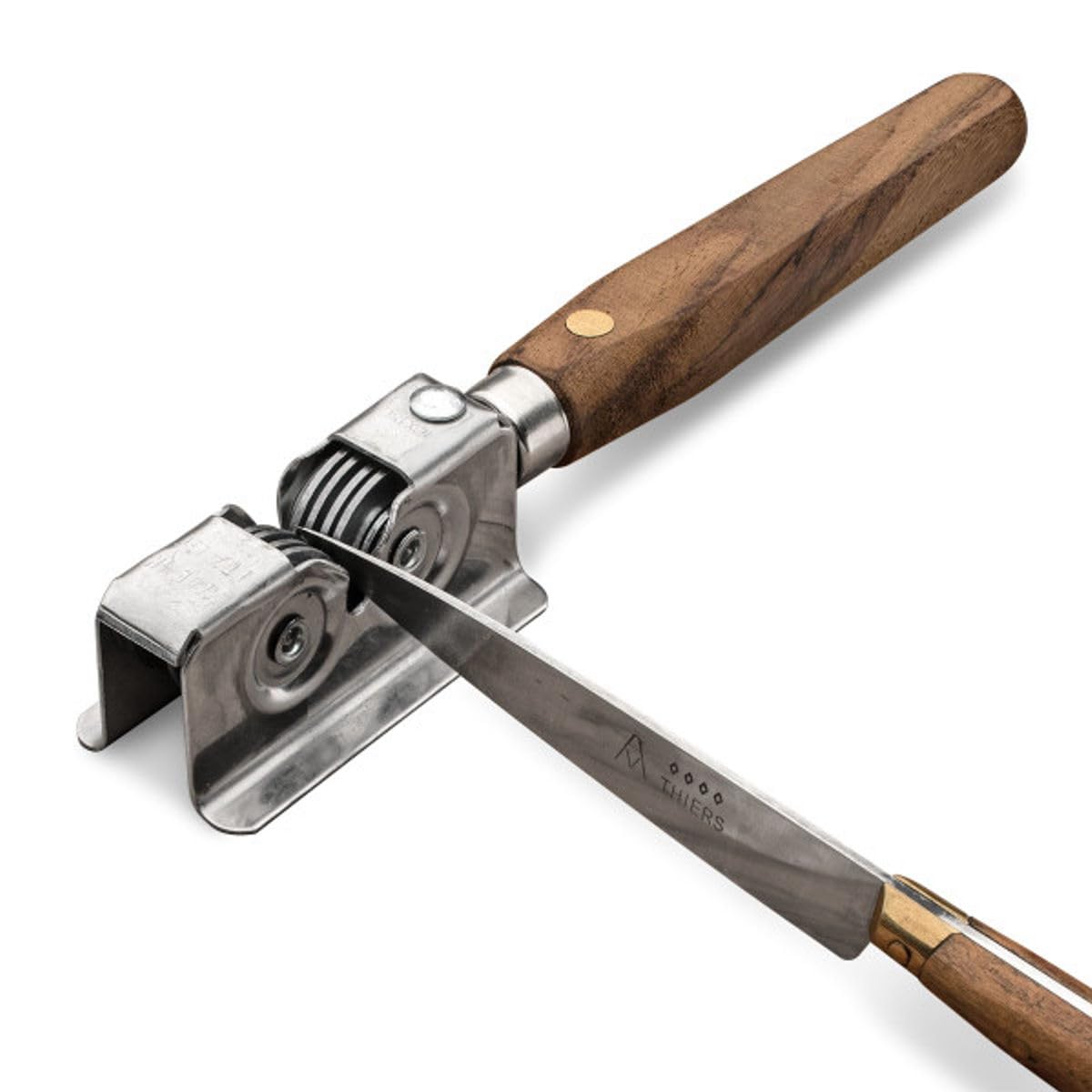
Pull-through sharpeners
Pull-through sharpeners guide the blade through fixed-angle slots. They are simple and quick. They work well for casual users but can shorten blade life if overused.
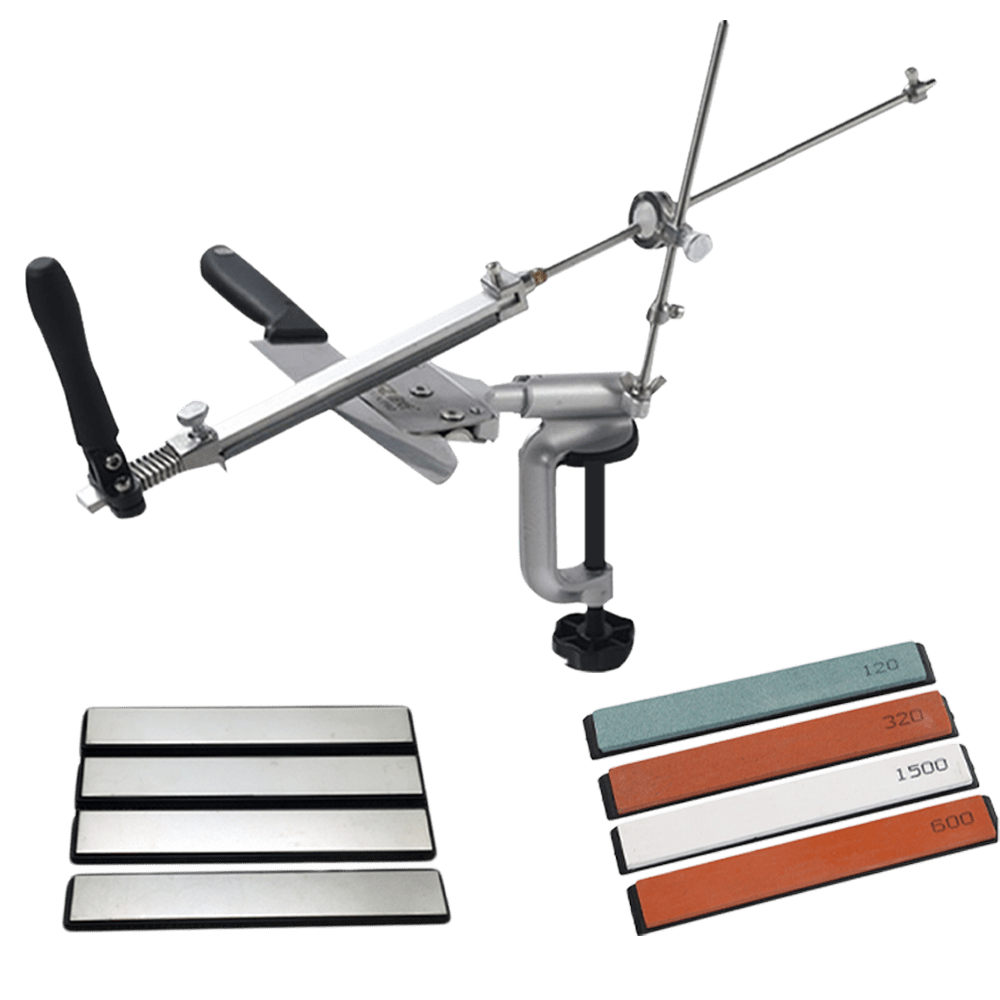
Guided sharpening systems
Guided systems clamp the knife and hold stones at fixed angles. They deliver repeatable results. They are slower but excellent for precise re-profiling.
Leather strops
Strops polish and remove the last burr after sharpening. They commonly use stropping compound. Strops give a razor-like finish and feel.
Ceramic rods and stones
Ceramic rods act like fine stones for touch-ups. Ceramic stones are fine grit and keep edges keen without heavy material removal.
Benefits and limitations overview:
- Whetstones: precise, skillful, slower.
- Diamond stones: fast, durable, less forgiving.
- Honing rods: quick maintenance, not a full sharpen.
- Electric: easy, fast, can over-grind.
- Pull-through: user-friendly, less control.
- Guided systems: accurate, bulky and pricier.
- Strops: finish, polishing only.
How to choose the right knife sharpening tools
Pick tools based on these clear factors.
- Blade steel and hardness. Hard steels favor diamond stones or fine whetstones.
- Intended use. Professional chefs may choose whetstones or guided systems. Home cooks often prefer honing rods and occasional whetstones.
- Skill level. Beginners benefit from guided systems or electric sharpeners.
- Budget. Start with an affordable whetstone or a reliable pull-through. Upgrade when you need more precision.
- Maintenance and space. Whetstones need flattening and space. Electric sharpeners need power and storage.
Practical combos:
- Beginner kitchen set: ceramic rod + medium whetstone.
- Home chef: waterstone 1000/6000 grit + leather strop.
- Professional/enthusiast: diamond stone + guided system + strop.
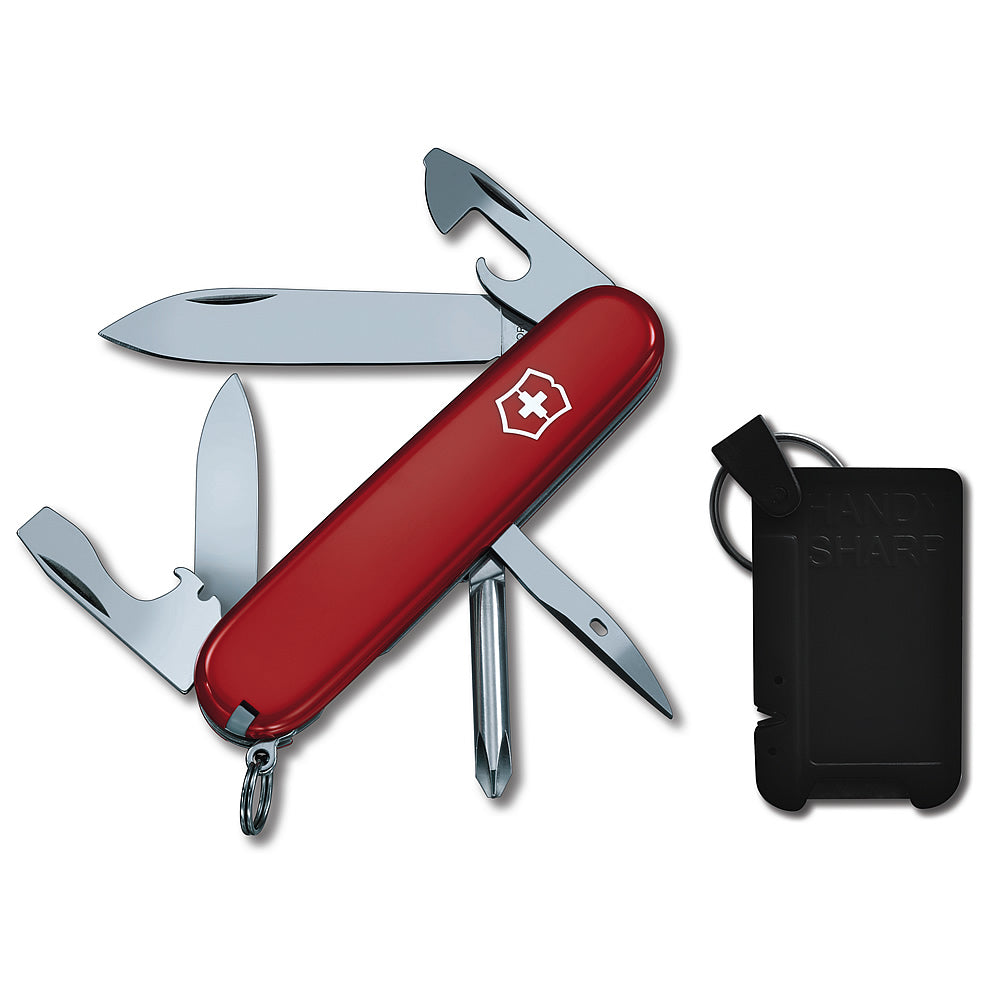
- Outdoor/hunting: small diamond stone + compact sharpener.

How to use common knife sharpening tools
Below are simple, safe steps for each major tool.
Using a whetstone
- Soak or wet the stone per manufacturer instructions.
- Hold knife at the chosen angle (commonly 15–20°).
- Slide the blade across the stone, heel to tip, with light, even pressure.
- Repeat on both sides until a burr forms and then disappears.
- Use a finer grit to refine the edge.
- Finish on a leather strop.
Using a diamond stone
- Keep the surface clean and flat.
- Use light pressure and move the blade across the diamond in a controlled sweep.
- Alternate sides frequently.
- Finish on a fine stone or strop for polish.
Using a honing rod
- Place rod tip on a stable surface at a slight angle.
- Draw the knife down and toward you from heel to tip.
- Alternate sides for 4–6 strokes each.
- Use every few uses to keep edge aligned.
Using an electric sharpener
- Clean the blade before sharpening.
- Follow angle guides and move slowly.
- Start with coarse stages if very dull.
- Finish with fine stages and strop if possible.
Using a pull-through sharpener
- Stabilize the sharpener on a flat surface.
- Insert the heel and pull through gently to the tip.
- Use one to three passes depending on dullness.
- Avoid heavy repeated passes to protect steel.
PAA-style quick Q&A
What angle should I use for kitchen knives?
Common angles are 15–20 degrees per side. Harder steels can take lower angles.
Can I use a honing rod instead of sharpening?
A honing rod realigns the edge but does not replace actual sharpening. Use it between full sharpening sessions.
How often should I sharpen my knives?
Sharpen based on use. For home cooks, every 3–6 months is common. Use a honing rod weekly.
Maintenance, safety, and lifespan of tools
Tool care keeps results consistent and safe.
- Clean stones and tools after use to remove metal grit.
- Flatten waterstones regularly using a lapping plate.
- Store diamond stones dry to prevent damage.
- Replace worn abrasive wheels when performance drops.
- Use protective gloves or a thumb guard when learning.
- Keep fingers away from the edge and stabilize the knife.
- Track how much metal you remove to avoid shortening blade life.
Safety tips:
- Work slowly when learning.
- Keep a steady stance and secure base for stones.
- Test sharpness with a tomato or paper, not your thumb.

Common mistakes and tips
Avoid these common errors and use my tips.
- Mistake: Using excessive pressure. Tip: Light, even strokes win.
- Mistake: Skipping finishing steps. Tip: Always strop or hone after sharpening.
- Mistake: Ignoring angle consistency. Tip: Use guides or practice with a marker.
- Mistake: Sharpening too often. Tip: Hone often; sharpen less frequently.
- Mistake: Using wrong grit sequence. Tip: Move progressively from coarse to fine.
Quick pro tips:
- Use a marker to track edge wear while learning.
- Keep a small travel diamond in your kit for trips.
- Log sharpening sessions for long-term blade health.
:max_bytes(150000):strip_icc()/faw-primary-knife-sharpeners-aug-24-nsimpson-89-1-617608fed6bf49e5831273cd2e7e0c69.jpeg "Knife Sharpening Tools: Top Picks And Easy Techniques 7")
Personal experience and recommendations
I started with a cheap pull-through and learned harsh lessons fast. I ruined one edge with too much force. After that I trained on a 1000/6000 whetstone and a diamond plate. Practice for 15–20 minutes a week. That made a huge difference.
My favorite setup for home cooking:
- 1000/6000 waterstone for periodic sharpening.
- Ceramic honing rod for daily alignment.
- Leather strop for finishing.
For outdoor gear I carry a small diamond stone and a compact sharpener. That keeps blades functional in the field.
Lessons learned:
- Invest in one good stone rather than many cheap tools.
- Learn to feel the burr; it guides you to a finished edge.
- Be patient; sharpening is a skill that pays back time and money.

Frequently Asked Questions of knife sharpening tools
What is the difference between honing and sharpening?
Honing realigns the blade edge without removing much metal. Sharpening removes material to form a new edge. Use honing often and sharpening when the edge dulls.
Are electric sharpeners bad for knives?
They are not inherently bad but can remove more metal than needed. Use electric sharpeners sparingly on quality knives and finish with a strop if possible.
How do I pick the right grit for my stone?
Start with a coarse grit for damaged edges, a medium grit for regular sharpening, and a fine grit for polishing. Common combos are 1000/6000 for kitchen knives.
Can I sharpen serrated knives with these tools?
Serrated knives need special care. Use a tapered diamond rod or take them to a professional. Do not use standard stones on serrations.
How long does it take to learn proper sharpening?
Basic competence can take a few hours of practice. Mastery takes months of regular use. Short, focused practice sessions speed learning.
Conclusion
Sharp blades make work easier, safer, and more enjoyable. Choosing the right knife sharpening tools depends on your knives, skill, and goals. Start small, practice regularly, and protect your edges with regular honing and stropping. Take action today: pick one reliable tool, practice on an old blade, and build skill step by step. Share your progress or questions below, or subscribe to get more hands-on sharpening tips.

Maliha Akter is a kitchen knife reviewer and food preparation specialist with over 6 years of experience testing Japanese kitchen knives and everyday cooking tools. She focuses on performance, safety, durability, and real-world usability to help home cooks choose the right knives for efficient and enjoyable cooking.
Expertise:Japanese Knives • Vegetable Knives • Product Reviews • Kitchen Efficiency • Knife Care