A quick paper test shows how well a blade slices paper and reveals real edge performance.
I have sharpened hundreds of blades and taught professionals to test edges. This article explains paper test knife sharpness clearly and practically. You will learn what the paper test measures, how to do it step by step, how to read results, and when the paper test is right for your knife. You will also get real-world tips from my hands-on experience to avoid common mistakes and keep blades reliably sharp.
What the paper test is and why it matters
The paper test is a simple way to check a knife's edge by slicing standard paper. It measures how cleanly and consistently a blade cuts a thin sheet. When done right, the paper test reveals edge bite, burrs, and micro-dulling that kitchen tasks will show later.
Paper test knife sharpness matters because it is fast, repeatable, and requires no special tools. It gives a practical read on cutting performance that correlates with real use. For cooks, woodworkers, and hobbyists, it’s a quick screening method before moving to tasks that require precise cuts.

How the paper test works and what it detects
The paper test relies on two basic mechanics: edge geometry and surface defects. A sharp knife has a thin, continuous edge. When that edge meets paper, it shears the fibers cleanly. If the edge is rolled, nicked, or dull, the cut will tear, drag, or fail to start.
Paper test knife sharpness typically exposes:
- Edge roll or burr, which causes snagging or tearing.
- Micro-chips, which make small catches along the cut.
- A blunt edge, which refuses to slice smoothly and frays the paper.
The test does not measure long-term edge retention, steel hardness, or bevel symmetry in depth. It is one part of a broader sharpening assessment.
How to perform a paper test: tools, setup, and steps
Materials you need:
- Standard office paper, not glossy or coated.
- A stable cutting surface.
- A firm grip on the knife and safe wrist posture.
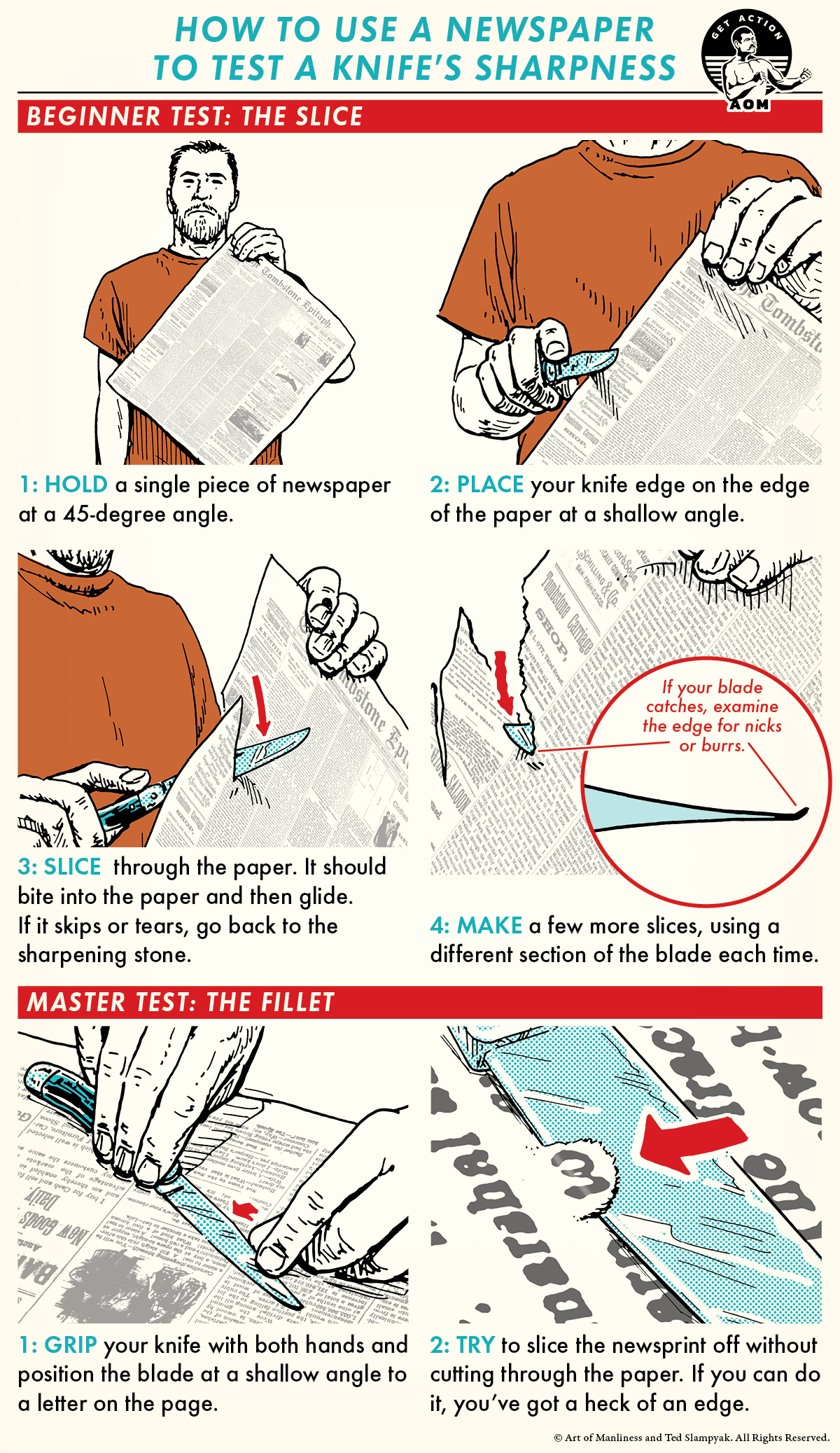
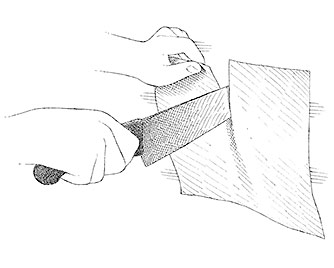
Step-by-step paper test for knife sharpness:
- Stand or sit with the paper held vertically by one corner. Keep your fingers clear.
- Hold the knife near the handle for control. Position the edge above the top corner of the paper.
- Use a smooth, downward slicing motion. Do not press hard. Let the blade’s edge do the work.
- Observe how the blade enters and exits the paper. Note tearing, dragging, or a clean slice.
Repeat the test with different angles and with the paper slightly bent to reveal weak points. A uniformly sharp knife will cut multiple ways with consistent ease.
People also ask
Q: Will any paper do for the paper test?
A: Use plain office paper. Coated or glossy paper can hide problems or slip and give false results.
Q: Should I drag or slice during the test?
A: Use a slicing motion. Dragging straight down can mask a dull edge and may be unsafe.
Q: How often should I paper-test a knife?
A: Test after sharpening and periodically during use or before critical tasks.
Interpreting paper test knife sharpness: examples and meaning
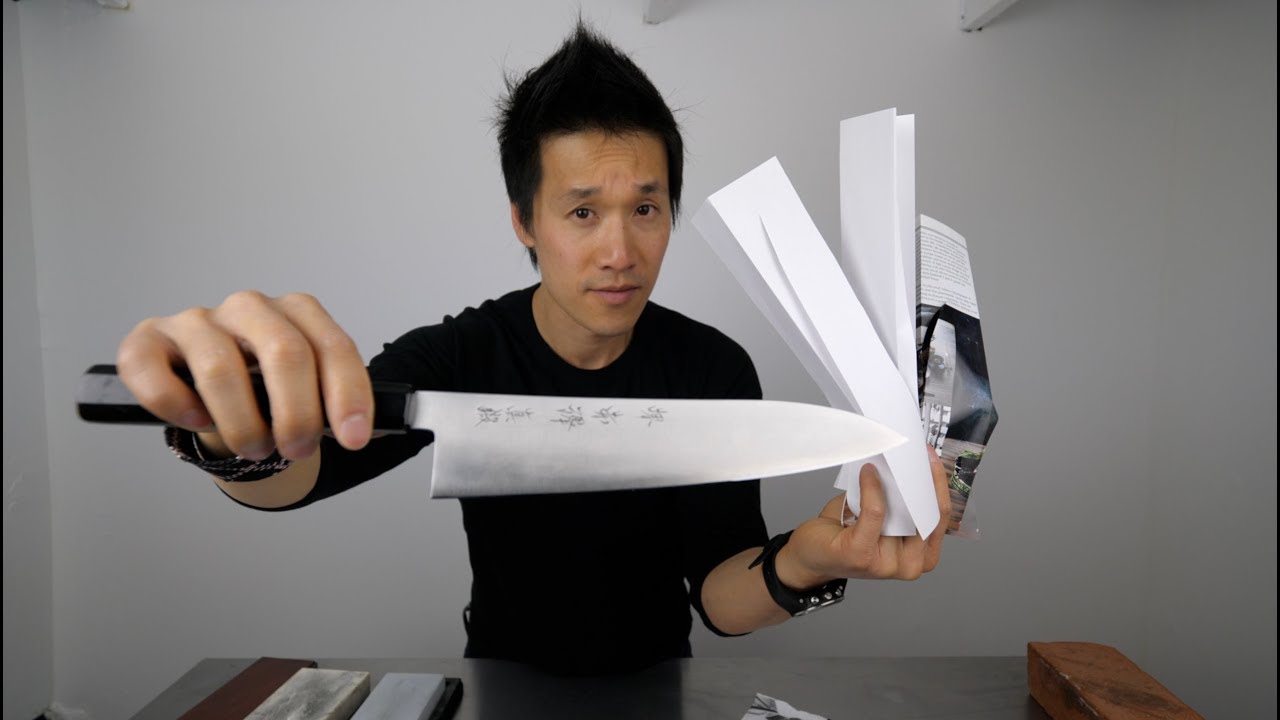
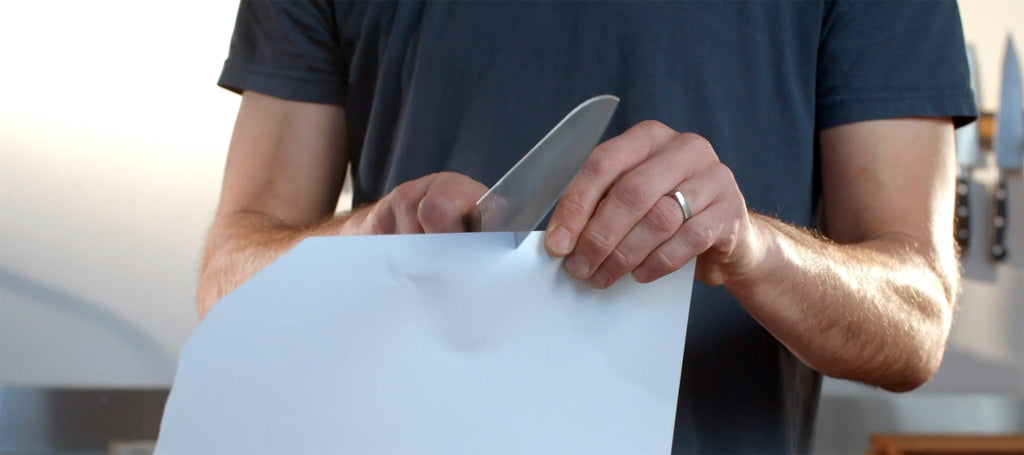
A clean, continuous slit means the edge is sharp and free of major defects. The paper will separate cleanly and hang evenly if you hold the two halves together.
Signs and what they mean:
- Clean entry and exit: Good sharpness and minimal burrs.
- Tear or jagged cut: Edge has nicks or roughness; reprofile or strop.
- Edge skips or fails to bite: The edge is rolled or blunt; hone or sharpen.
- Blade cuts but frays fibers: Edge may be thin but has a microscopic burr; stropping helps.
Use multiple passes and test different parts of the blade to find local weaknesses. A chef’s knife can be sharp near the tip but dull at the heel; the paper test points this out quickly.
Limitations of the paper test and when to use other methods
Limitations to know:
- It is subjective and influenced by technique.
- It does not quantify edge angle, micro-serrations, or hardness.
- It can give false positives on very thin or flexible blades.
When to use other tests:
- Use a cutting board and food tests for practical performance in cooking.
- Use a Rockwell or controlled laboratory test to measure hardness and edge retention.
- Use a microscope or loupe to inspect micro-chips and burrs for repair work.
Combine the paper test with a few reliable tasks to get a full picture of paper test knife sharpness and long-term blade behavior.

Tips to improve and maintain paper test knife sharpness
Practical tips I use and teach:
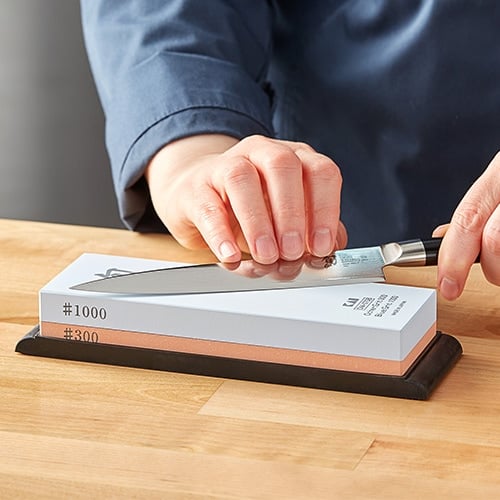
- Hone regularly with a fine ceramic rod or leather strop to maintain the edge between sharpenings.
- Use consistent sharpening angles when re-profiling. Small angle changes affect paper-test results.
- Avoid sawing on hard materials. Knives dull faster with bone, frozen food, or hard cutting boards.
- Store knives safely to prevent edge rolls from contact with other metal.
- Practice the paper test technique to reduce subjectivity. Repeatable motion gives reliable results.
Small daily habits keep an edge that passes the paper test repeatedly.
My experience: mistakes I made and lessons learned
I once judged an edge solely by feel and skipped the paper test. The knife looked sharp but tore paper at the tip. From that I learned to test the entire blade, not just the heel or center. I also learned to avoid coated papers that mask issues.
Lessons to apply:
- Test multiple places on the blade.
- Keep technique steady and practice with different paper orientations.
- Use paper testing as one check, not the only standard for paper test knife sharpness.
These simple corrections improved my results and saved time in the workshop and the kitchen.
Frequently Asked Questions of paper test knife sharpness
What is the easiest way to tell if my knife passes the paper test?
Hold a sheet of plain paper and slice smoothly from the corner; a clean slit without tearing means the knife passed.
Can the paper test damage my knife?
No. The test uses soft paper and is safe for the edge. Avoid cutting hard or metallic materials during tests.
Is the paper test accurate for serrated knives?
No. Serrated knives should be evaluated with food cutting tasks and visual inspection, not the paper test.
How often should I strop after a paper test shows a minor burr?
Strop for a few passes on leather with light pressure. Check again with paper; repeat until the edge cuts cleanly.
Can the paper test show differences between steels?
Not reliably. It shows cutting performance but does not measure hardness or long-term retention differences between steels.
Conclusion
A paper test is a fast, practical way to check paper test knife sharpness and spot edge problems before they affect work. Use it as a routine screen: test multiple blade sections, practice a steady technique, and combine the test with stropping and real-world cutting. Put these tips into practice today to keep blades reliable and save time on sharpening.
Try the paper test on your most-used knives now, share what you find, and subscribe or comment to learn more sharpening tips.

Maliha Akter is a kitchen knife reviewer and food preparation specialist with over 6 years of experience testing Japanese kitchen knives and everyday cooking tools. She focuses on performance, safety, durability, and real-world usability to help home cooks choose the right knives for efficient and enjoyable cooking.
Expertise:Japanese Knives • Vegetable Knives • Product Reviews • Kitchen Efficiency • Knife Care