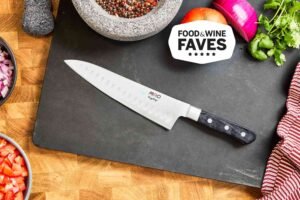
If you cook at home, you use a knife almost every day. But many home cooks do not know the parts of a kitchen knife or why they matter. That lack of knowledge can affect how you cut, how safe you are, and how long your knife lasts.
Here’s the good news: once you understand the anatomy of your knife, you will cut faster, safer, and with more control. In this guide, you’ll learn every key part, what it does, and how to use it like a pro.
No fluff. Just practical, kitchen tested advice
What Are the Parts of a Kitchen Knife?
A kitchen knife has two main sections:
- Blade
- Handle
Each section has smaller parts that affect balance, comfort, safety, and performance.
Let’s break them down clearly.
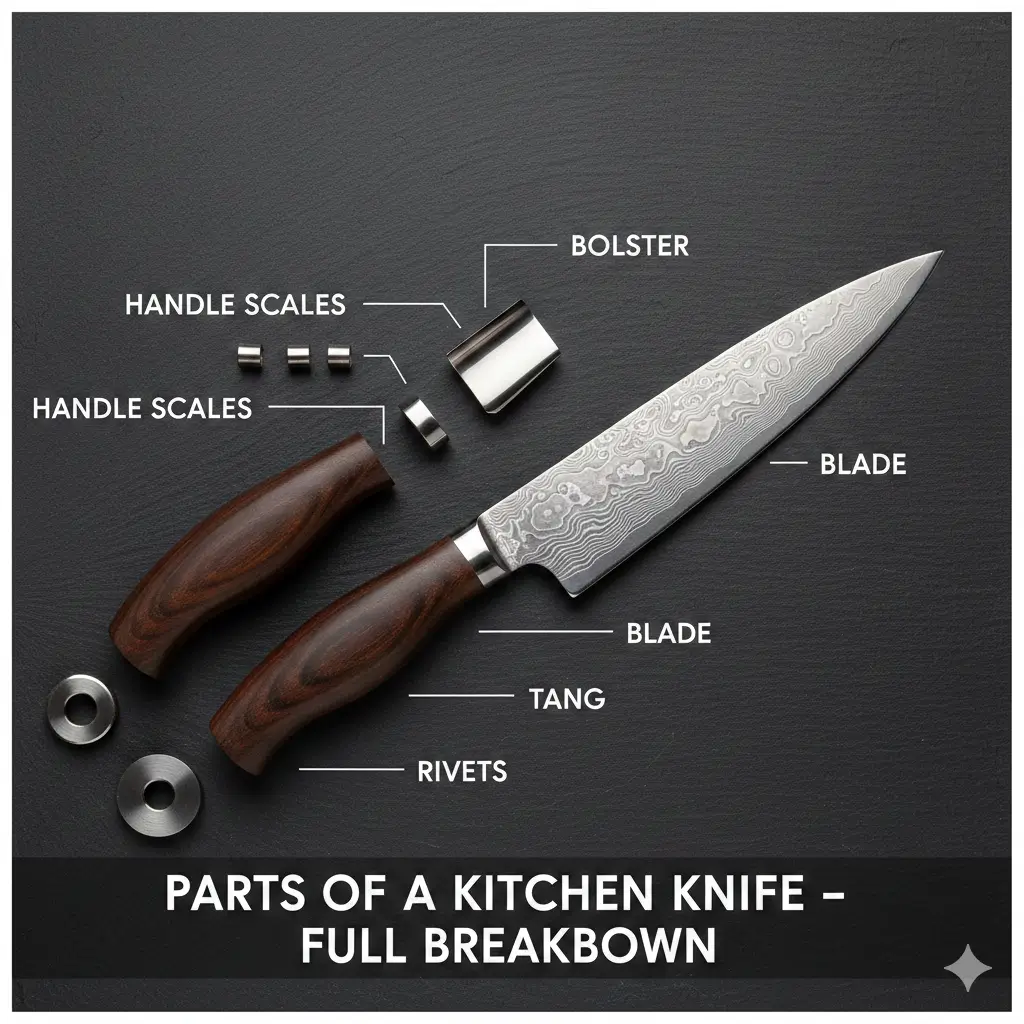
Parts of a Kitchen Knife (With Full Breakdown)
Tip
The tip is the front end of the blade.
What it does:
- Fine detail work
- Piercing food
- Scoring meat or pastry
Kitchen example:
Use the tip to remove strawberry stems or trim fat from chicken.
Point
The point is the very sharp end of the tip.
It is great for:
- Starting cuts
- Puncturing packaging
- Precision trimming
Blade Edge (Cutting Edge)
This is the sharp side of the blade.
This is the most important part of the knife.
It does:
- Slicing
- Chopping
- Dicing
- Mincing
A dull edge is unsafe. It forces you to use more pressure. That leads to slips.
Heel
The heel is the back part of the blade edge, closest to the handle.
It is thicker and stronger.
Use the heel for:
- Cutting tough vegetables (sweet potatoes)
- Breaking down large cuts of meat
- Hard squash
If you struggle to cut dense food, you are likely not using the heel.
Spine
The spine is the top, dull edge of the blade.
It adds:
- Strength
- Stability
- Weight
A thicker spine usually means a stronger knife. A thin spine gives better slicing precision.
Bolster
The bolster is the thick area between blade and handle (on many forged knives).
Why it matters:
- Adds balance
- Protects your fingers
- Improves grip
Stamped knives often do not have a full bolster.
Tang
The tang is the part of the blade that extends into the handle.
There are two main types:
| Type | Description | Best For |
|---|---|---|
| Full Tang | Blade runs through full handle | Balance & durability |
| Partial Tang | Blade goes partway in | Lightweight knives |
For serious home cooking, a full tang knife is more durable.
Handle
The handle is where you grip the knife.
Common materials:
- Wood
- Plastic
- Composite
- Stainless steel
Look for:
- Comfortable grip
- Non-slip surface
- Good balance
Rivets
Rivets hold the handle scales to the tang.
More rivets usually mean stronger construction.
Butt
The butt is the end of the handle.
It adds:
- Counterweight
- Balance
- Control
Some butts are slightly curved to prevent slipping.
Why Understanding Knife Parts Matters
Knowing the parts of a kitchen knife helps you:
- Choose the right knife
- Cut with better technique
- Stay safe
- Maintain your knife correctly
- Improve control and speed
Professional chefs pay attention to knife anatomy for a reason.
Step by Step: How to Use Knife Parts Properly
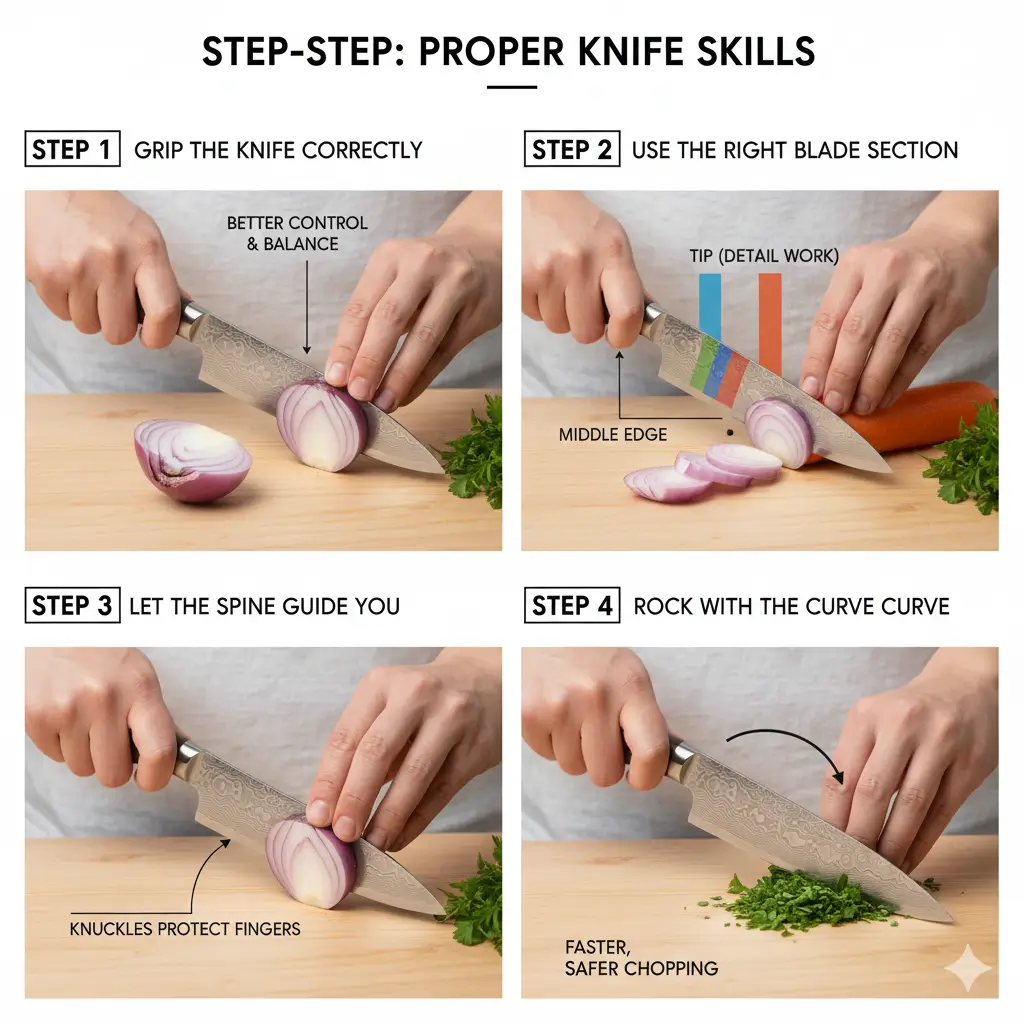
Step 1: Grip the Knife Correctly
Use a pinch grip:
- Thumb and index finger on blade (near bolster)
- Other fingers around handle
This gives:
- Better balance
- More control
- Less wrist strain
Step 2: Use the Right Blade Section
- Tip → detail work
- Middle edge → slicing
- Heel → heavy cuts
Many beginners use only the middle of the blade. That wears it unevenly.
Step 3: Let the Spine Guide You
Place your guiding hand knuckles against the blade side.
Keep fingertips tucked.
Your knuckles protect your fingers.
Step 4: Rock With the Curve
On chef’s knives, the curved belly allows a rocking motion.
- Keep tip on board
- Rock back and forth
This is faster and safer than straight up-and-down chopping.
Practical Tips From Real Kitchen Use
After years of cooking at home and testing knives, here’s what truly matters:
1. Balance Is Everything
A knife that feels balanced between blade and handle reduces fatigue.
Test it:
- Hold knife at bolster
- It should not tip forward or backward
2. Heel Saves Time
Use the heel for:
- Carrots
- Butternut squash
- Thick cuts
It prevents edge damage.
3. Avoid Using the Tip to Pry
Never use the tip to:
- Open cans
- Pry frozen food
You will bend it.
4. Spine Can Be Useful
The spine can:
- Crush garlic
- Scrape ingredients (if safe to do so)
But never hit it with metal.
Common Mistakes (And How to Avoid Them)
Mistake 1: Ignoring the Tang
Cheap knives often have weak tangs.
Fix: Choose full tang for daily cooking.
Mistake 2: Using the Wrong Blade Section
Using the tip for hard foods dulls it fast.
Fix: Use the heel for hard foods.
Mistake 3: Holding the Handle Too Far Back
This reduces control. Fix: Use pinch grip near bolster.
Mistake 4: Poor Maintenance
Even the best blade edge dulls.
Fix:
- Hone weekly
- Sharpen every few months
Safety Tips Every Home Cook Should Follow
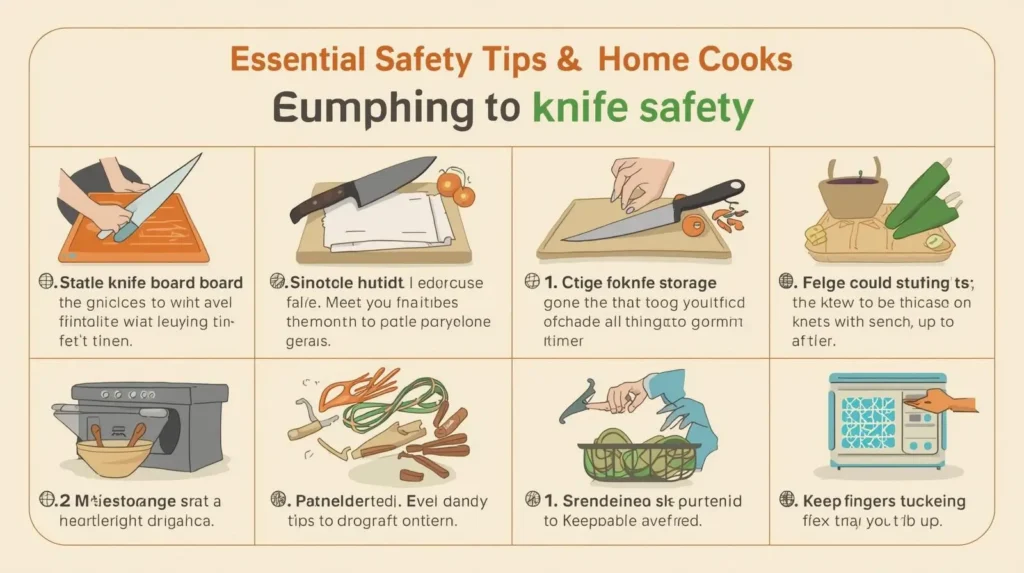
Knife injuries happen fast. Here’s how to stay safe:
- Always cut on a stable board
- Use a damp towel under board
- Keep blade edge sharp
- Store knives properly
- Never catch a falling knife
- Keep fingers tucked
A sharp knife is safer than a dull one.
Expert Recommendations
If you cook often in the USA, here’s what to look for:
Best All-Purpose Knife Design
- 8-inch chef’s knife
- Full tang
- Moderate bolster
- Balanced weight
- Comfortable handle
Good Materials
- High-carbon stainless steel
- Pakkawood or textured composite handles
What to Avoid
- Hollow plastic handles
- Extremely thin tang
- Poor balance
Invest once. Maintain well. It will last years.
Frequently Asked Questions (FAQ)
What are the main parts of a kitchen knife?
Blade, edge, tip, heel, spine, bolster, tang, handle, rivets, and butt.
What is the most important part of a kitchen knife?
The cutting edge. It affects performance and safety.
What is a full tang knife?
A knife where the blade extends through the entire handle.
Why does the bolster matter?
It adds balance and protects fingers.
Can I use the spine to crush garlic?
Yes. Use the flat side safely.
How often should I sharpen the blade edge?
Every 2–6 months depending on use.
What part should I use to cut hard vegetables?
Use the heel.
Why does my knife feel unbalanced?
It may lack proper tang design or weight distribution.
Does handle material matter?
Yes. It affects grip, comfort, and safety.
Final Thoughts on the Parts of a Kitchen Knife
Understanding the parts of a kitchen knife changes how you cook.
When you know:
- Where the heel works best
- Why the tang matters
- How the bolster protects you
- How the edge should be maintained
You gain control and confidence.
A knife is not just a blade with a handle. It is a precision tool. When you respect each part, it works better, lasts longer, and keeps you safe.
If you cook even three times a week, take a moment today:
- Check your tang
- Test your balance
- Sharpen your edge
- Adjust your grip
Small changes. Big difference.
Now tell me — are you using the heel enough, or are you overworking the middle of your blade?

Emily Carter is a kitchen knife specialist with over 8 years of experience testing and reviewing Japanese kitchen knives. She focuses on blade performance, comfort, durability, and real-life cooking usability. Her goal is to help home cooks choose reliable, high-quality knives for everyday cooking.
Expertise: Japanese Knives, Vegetable Cutting, Product Testing