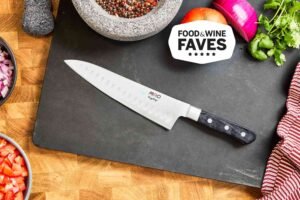
A professional knife guide helps you pick, use, and care for knives like a pro.
I have spent years testing knives in busy kitchens and at home. This professional knife guide distills that experience into clear steps and honest advice. Read on to learn how to choose the best blade, sharpen it right, and use it safely. By the end you will know which knife fits your work, how to keep it sharp, and how to avoid common mistakes.

Understanding professional knives
A professional knife guide begins with clear definitions. A chef's knife is a multiuse blade. A paring knife is small and precise. A boning knife is thin and flexible. Knowing terms helps you pick the right tool.
Parts matter. Blade, bolster, tang, handle, and tip all matter for function. Blade steel and hardness shape edge retention and ease of sharpening. Handle shape and balance affect comfort and control.
Materials vary. High-carbon stainless steels hold edges well. Powdered steels offer high hardness and long edge life. Laminated steels add core hardness with softer outer layers for toughness.
This professional knife guide uses these details to help you match blade, material, and design to your needs. Learn to read specs and test feel before you buy.

Choosing the right knife for the job
This part of the professional knife guide helps you narrow choices fast. Choose by task, not by trend. Pick knives that fit the food you prepare most.
Common knife types and uses
- Chef's knife — Best for chopping, slicing, and daily prep.
- Santoku — Great for thin slices and quick chopping.
- Paring knife — Best for peeling and small tasks.
- Bread knife — Serrated blade for crusty loaves.
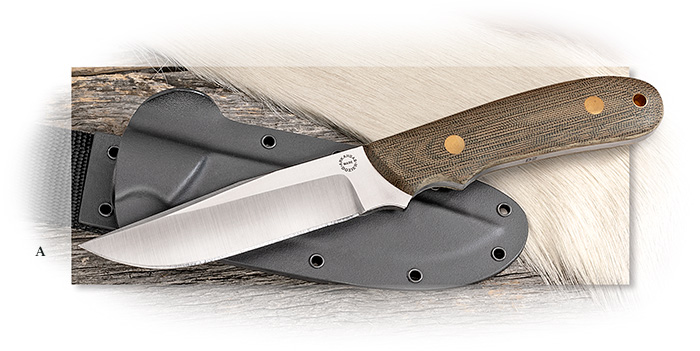
- Boning knife — For separating meat and trimming fat.
Sizing and balance
- Blade length — 6 to 12 inches is common. 8-inch chef knives suit most cooks.
- Weight and balance — Heavier blades can cut with less force. Lighter knives offer more control.
- Handle fit — Try the grip in person. Comfort reduces fatigue.
Blade grind and edge
- Full flat grind — Fast slicing and thin cuts.
- Hollow or Granton edge — Reduces food sticking.
- Rockwell hardness rating — Higher ratings mean longer edge retention but harder sharpening.
This professional knife guide stresses fit over fashion. Test in hand if you can. If you cannot, read specs closely.
Knife care and maintenance
Good care keeps your knife sharp and safe. This professional knife guide covers daily and long-term upkeep. Clean, dry, sharpen, and store properly.
Daily care
- Wash by hand with warm water and mild soap. Dry immediately.
- Avoid dishwashers. Heat and detergent damage steel and handles.
- Use a wood or plastic cutting board. Hard surfaces dull blades.
Sharpening and honing
- Hone often to realign the edge. Use a honing rod before each use.
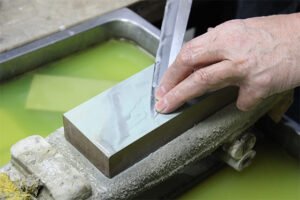
- Sharpen with stones or systems when the blade dulls. Start coarse, finish fine.
- Professional sharpening every few months depends on use. High-use knives need more frequent attention.
Storage and safety
- Use a knife block, magnetic strip, or blade guards. Loose drawers damage edges and risk cuts.
- Store knives away from children and in a dry spot to avoid rust.
Answer: How often should you sharpen? Hone daily and sharpen on stones when you notice resistance or poor cuts. Frequency varies by use and steel.
This professional knife guide helps you save money by preserving edges. Simple routines extend blade life and improve results.

Safety and essential knife skills
A strong professional knife guide teaches safe moves. Safety improves speed and confidence. Learn grips, stances, and common cuts.
Basic grips
- Pinch grip — Thumb and forefinger pinch the blade near the bolster. This gives control.
- Handle grip — Wrap fingers around the handle for light work or long moves.
Cutting techniques
- Rock-chop — Tip stays on board for chopping herbs and veggies.
- Push cut — Use the edge to slice forward for meats and fruits.
- Pull cut — Pull blade toward you for precise slices.
Hand placement and posture
- Use the claw with the guiding hand. Fingers tuck back to avoid cuts.
- Keep wrists neutral and shoulders relaxed. This reduces strain.
Common mistakes to avoid
- Using dull knives — This forces more pressure and raises injury risk.
- Cutting on glass or stone — These surfaces dull blades fast.
- Dropping knives — Keep a clear work area and never catch a falling blade.
This professional knife guide emphasizes practice. Start slow. Practice simple cuts until they feel natural.

Professional knife sets versus single knives
This professional knife guide helps you decide what to buy first. A set looks neat. A single great knife can be smarter.
Benefits of buying a set
- Cohesive design and matching handles.
- Often lower cost per knife.
- Good starter kits for new cooks.
Benefits of single knives
- You can choose best-in-class for key tasks.
- Easier to fit your workflow.
- Upgrading one blade at a time saves money.
How to prioritize purchases
- Invest in one high-quality chef's knife first.
- Add a paring and serrated knife next.
- Fill gaps with specialty knives like boning or cleaver.
This professional knife guide recommends depth over breadth. Buy what you will use daily and upgrade as needed.

Buying guide and budgeting tips
This section of the professional knife guide helps you spend wisely. Set a budget, but avoid the cheapest options. You want value.
Where to buy
- Reputable kitchen stores let you hold knives before buying.
- Specialty shops offer sharpening and service.
- Online retailers are fine if return policy is clear.
Price versus performance
- Entry-level good knives start around the mid-range price.
- Mid-range often gives the best value for home cooks.
- High-end blades bring long edge life and finer finishes.
What to test in store
- Balance and weight in hand.
- Tip and spine thickness.
- How the handle fits your grip.
Warranty and service
- Look for lifetime or long warranties.
- Check if the maker offers sharpening or repair.
This professional knife guide advises patience. Try several knives and compare. A small extra spend now can save money later.

My experience and testing notes
I have used many blades in busy kitchens and at home. I tested knives for balance, edge retention, and feel. I keep notes on each blade I test.
What worked
- Knives with a true pinch grip felt more precise.
- Powdered steels held edges longer in heavy use.
- Thinner blades excelled at fine slicing.
What failed
- Heavy full-tang knives caused fatigue for long prep.
- Poorly attached handles loosened in weeks.
- Overly hard steels chipped when misused.
Lessons learned
- Sharpening skill matters as much as the steel.
- Invest time to learn a steady stroke on a stone.
- Keep a service plan for expensive blades.
This professional knife guide shares these tests so you make smarter choices. I recommend starting with one trusted chef's knife and learning to care for it.
Frequently Asked Questions of professional knife guide
What is the best first knife to buy?
A chef's knife around 8 inches is the best starter. It covers most tasks and helps you learn basic skills quickly.
How do I sharpen a professional knife at home?
Use a whetstone or a guided system. Start with a coarse grit and finish with a fine grit while keeping a steady angle.
Can I use a professional knife for everyday home cooking?
Yes. Many professional knives work well at home. Match the knife to your food and comfort level.
How often should I replace a knife?
With proper care, a good knife can last decades. Replace it only if the blade chips, the tang fails, or the handle is unsafe.
Are expensive knives always better?
Not always. Higher price can mean better steel or craft. But fit and maintenance often matter more than price alone.
Conclusion
This professional knife guide gives clear steps to choose, maintain, and use knives like a pro. Start with a well-balanced chef's knife. Learn safe grips, hone often, and sharpen correctly. Make small investments in quality and service. Try one change today: test a pinch grip and hone before your next prep. Leave a comment about your favorite knife or subscribe for more hands-on tips.

Maliha Akter is a kitchen knife reviewer and food preparation specialist with over 6 years of experience testing Japanese kitchen knives and everyday cooking tools. She focuses on performance, safety, durability, and real-world usability to help home cooks choose the right knives for efficient and enjoyable cooking.
Expertise:Japanese Knives • Vegetable Knives • Product Reviews • Kitchen Efficiency • Knife Care