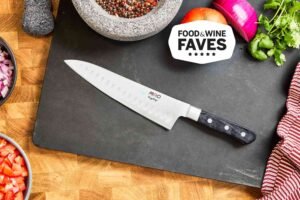
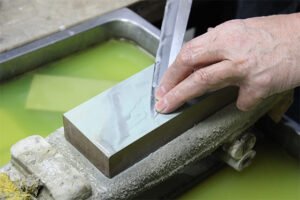
A santoku knife guide helps you pick, use, and care for this versatile Japanese all-purpose blade.
I’ve spent years testing kitchen knives and teaching home cooks proper knife skills. This santoku knife guide pulls together my hands-on experience, sharp facts, and clear advice so you can choose the right santoku, learn how to use it safely, and keep it performing for years. Read on for practical tips, buying guidance, and simple techniques you can apply today.
:max_bytes(150000):strip_icc()/sea-santoku-knives-3-grace-kelly-aa17c0172e5746db82b4441f44d14216.jpg "Santoku Knife Guide: Choose, Use, And Care 1")
What is a santoku knife? Clear definition and purpose
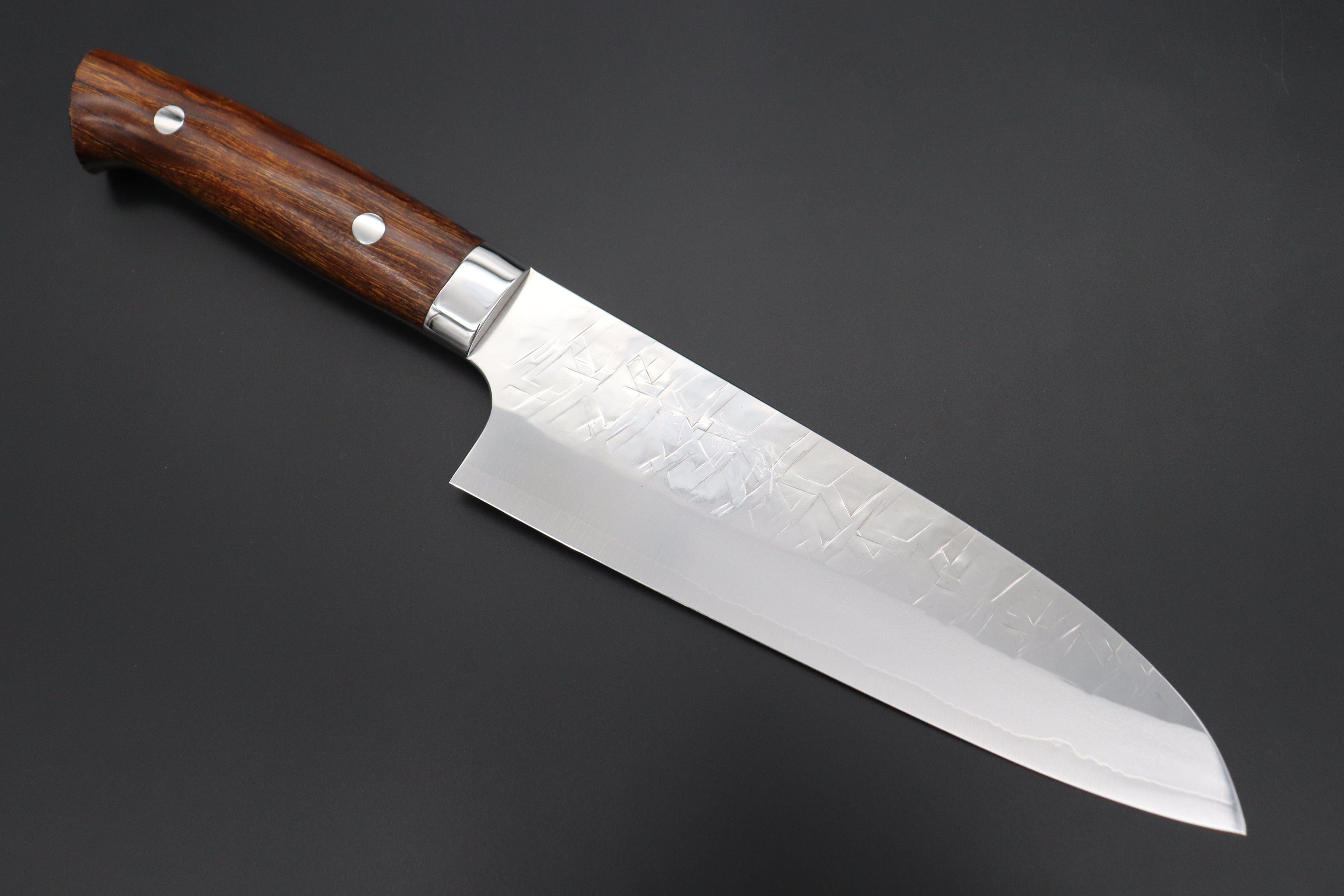
A santoku knife is a Japanese-style, all-purpose kitchen knife. It typically has a flat edge, a sheepsfoot blade shape, and a length from 5 to 8 inches. The word santoku loosely means "three virtues" or "three uses," referring to slicing, dicing, and mincing.
A santoku knife guide should explain the blade geometry, common uses, and how it compares to other knives. Santoku knives excel at fast, precise work for vegetables, fish, and boneless meats. They are lighter and shorter than many Western chef's knives, which makes them easy to handle for everyday tasks.

Key design features that matter in a santoku knife
Understanding design helps you pick the right tool. This santoku knife guide breaks down core features.
- Blade shape
- Flat or slightly curved edge for short rocking and push cuts.
- Rounded sheepsfoot tip reduces piercing but gives control.
- Blade length
- 5–6 inches: compact, great for small kitchens and fine detail.
- 7–8 inches: versatile for larger prep and bigger vegetables.
- Edge type
- Double-bevel (common) for ambidextrous use.
- Single-bevel (traditional) for specialized precision cuts.
- Granton or hollow edge
- Shallow grooves reduce sticking for thin slices.
- Handle design and balance
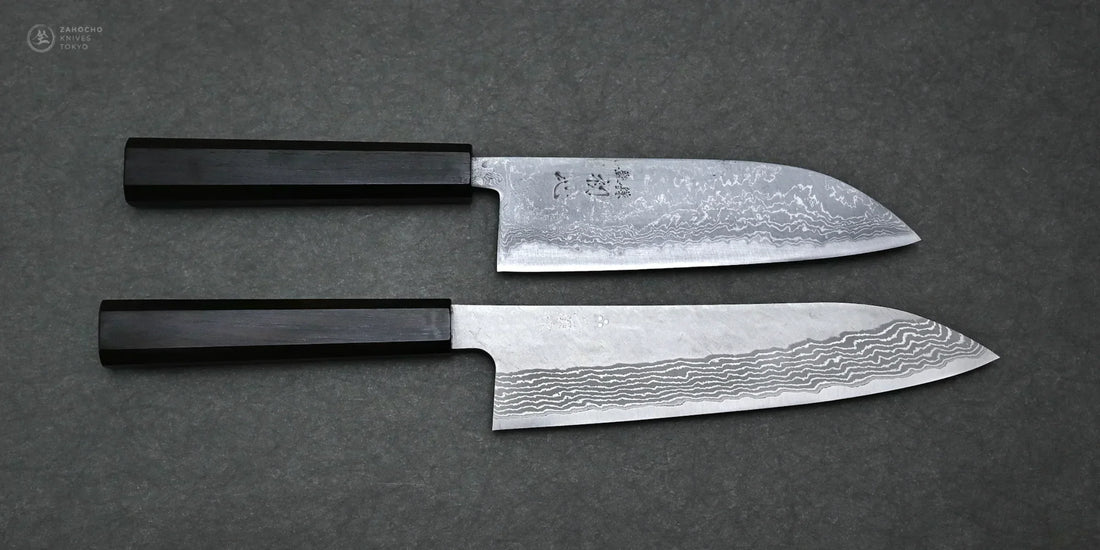
– Western handles provide a palm grip; Japanese handles are lighter and often octagonal.- Good balance reduces wrist fatigue.
These design points should shape your choice when using this santoku knife guide to buy or evaluate knives.

Santoku knife materials: steels and construction
The steel and construction affect sharpness, edge retention, and maintenance. This santoku knife guide outlines common options.
- High-carbon stainless steel
- Good balance of sharpness and corrosion resistance.
- Easier to maintain for home cooks.
- Hard carbon steels
- Take a very sharp edge and maintain it long.
- Prone to rust and require careful care.
- Powder metallurgy and VG-10 / AUS series
- Offer high wear resistance and consistent performance.
- Forged vs stamped
- Forged blades usually have more heft, better balance, and a full tang.
- Stamped blades are lighter and more affordable.
Choosing the right steel depends on how much care you’ll give the blade and how often you use it. In my experience, a high-carbon stainless santoku is ideal for most home cooks.

How a santoku compares to a chef’s knife
Many shoppers ask whether to buy a santoku or a chef’s knife. This santoku knife guide explains the differences.
- Blade profile
- Santoku: flatter edge, shorter rocker motion.
- Chef’s knife: more curve, better for rocking.
- Weight and balance
- Santoku: lighter and more nimble.
- Chef’s knife: heavier, gives force on large cuts.
- Best uses
- Santoku: vegetables, thin slicing, precision tasks.
- Chef’s knife: large meats, heavy tasks, versatile use.
- Handling and grip
- Santoku favors a push-cut and pinch grip; chef’s knife allows more rocking action.
If you cook mainly vegetables and prefer quick slicing, the santoku often feels faster and less tiring. For heavier butchery or frequent rocking cuts, a chef’s knife may suit you better.
How to choose the right santoku: a step-by-step buying guide
Use this santoku knife guide checklist when shopping.
- Decide blade length
- Small kitchen: 5–6 inches.
- Regular prep: 7 inches.
- Pick the steel type
- Low maintenance: stainless steel.
- Greater edge: high-carbon or powdered steel (be ready to care for it).
- Check handle comfort and security
- Hold the knife—grip should feel natural.
- Look for full tang or secure rivets for durability.
- Inspect edge and finish
- Sharp out of the box is a plus.
- Smooth spine and no wobble between blade and handle.
- Consider price vs warranty
- Mid-range santoku knives often hit the best balance of quality and value.
- Look for a warranty and good after-sales sharpening support.
I test knives by slicing a tomato, chopping an onion, and filleting a small fish. A good santoku performs well on all three. If possible, try that in-store or check demo videos.

Proper technique: how to use a santoku knife safely and efficiently
A santoku knife guide must teach technique. Here are simple steps.
- Hold the blade
- Use a pinch grip near the bolster for control.
- Stance and hand placement
- Keep the guide hand curled and use fingertips to steady the food.
- Cutting motions
- Use a forward push and slight downward motion; minimal rocking is needed.
- Common cuts to practice
- Julienne: thin vegetable sticks.
- Brunoise: finely diced bits.
- Thin fish fillets: precise slicing.
Practice with a soft vegetable like zucchini, then move to harder items. I improved control by repeating three short sessions a week for two months—consistency matters.
Care, sharpening, and maintenance
A santoku knife guide is incomplete without care instructions.
- Daily care
- Wash by hand with mild soap and dry immediately.
- Avoid dishwasher and cutting on hard surfaces like stone.
- Honing
- Use a ceramic or steel rod before each use to align the edge.
- Sharpening
- Use whetstones for best results. 1000–6000 grit progression works well.
- Electric sharpeners can work but risk removing more metal.
- Storage
- Use a magnetic strip, knife block, or blade guards to protect the edge.
A rule I learned: sharpen less often and hone more. Frequent honing keeps the edge usable and reduces the need for aggressive sharpening.

Common mistakes and how to avoid them
Avoid these traps many cooks fall into when using a santoku knife.
- Cutting on hard surfaces
- Use wood or plastic boards to protect the edge.
- Neglecting regular honing
- The blade dulls faster if not aligned often.
- Using for bones or frozen food
- Santoku blades are not designed for heavy prying or bone work.
- Storing loosely in a drawer
- This dulls the edge and risks injury.
I once ruined a favorite santoku by trying to split a chicken bone. That day taught me to keep a cleaver for heavy-duty tasks.

Buying tips, price ranges, and recommended brands
This santoku knife guide helps set realistic expectations.
- Price tiers
- Budget: $30–$70 — decent stamped blades for light use.
- Mid-range: $70–$200 — forged blades, good steels, long-lasting.
- Premium: $200+ — high-end steels, handcrafted, superior performance.
- What to prioritize
- Steel quality, fit-and-finish, and balance over flashy packaging.
- Try before buying
- If buying online, select retailers with good return policies.
From personal testing, a mid-range santoku often delivers the best value for most cooks. Save for a quality blade rather than buying multiple cheap knives.
Real-life examples and recipes to practice with a santoku
Practice builds skill and confidence. Use this santoku knife guide to apply techniques.
- Vegetable prep
- Make a stir-fry: julienne carrots and bell peppers for even cooking.
- Fish
- Thinly slice salmon for sashimi-style salads.
- Aromatics
- Fine mince garlic and ginger for sauces.
I recommend starting with a simple miso-glazed salmon recipe. The santoku shines slicing fish and chopping scallions for garnish. Small wins like this speed skill growth.
Limitations and realistic expectations
Honesty builds trust. This santoku knife guide clarifies limits.
- Not for heavy bone work or prying
- Shorter blade limits reach on very large vegetables
- Some steels need more maintenance than others
Knowing what a santoku does well and where it struggles makes your kitchen work flow smoother and safer.
Frequently Asked Questions of santoku knife guide
What is the ideal length for a santoku knife?
Most home cooks find 7 inches ideal for balance between control and cutting area. Shorter blades fit small kitchens; longer blades increase reach.
Can a santoku replace a chef’s knife?
Yes for many cooks focused on vegetables and fish, but a chef’s knife may be better for heavy meat work and rocking cuts. Many kitchens keep both.
How often should I sharpen my santoku knife?
Sharpen lightly every few months with regular honing in between. Frequency depends on use and steel type.
Are santoku knives good for left-handed users?
Most modern santoku knives are double-beveled and suitable for left- and right-handed users. Single-bevel traditional knives suit one side only.
Can I put a santoku in the dishwasher?
No. Dishwasher detergents and heat can damage the blade and handle. Hand wash and dry immediately to preserve the edge.
Conclusion
This santoku knife guide gives you the tools to choose, use, and care for a santoku with confidence. Learn the blade’s strengths, practice simple cuts, and prioritize proper maintenance. Start by testing a 7-inch high-carbon stainless santoku if you want a reliable, low-maintenance daily knife. Try one focused session of practice each week and keep honing—your speed and precision will improve fast.
Take action: pick a santoku that fits your hand, practice basic cuts on vegetables, and share your progress in the comments or subscribe for more knife and kitchen tips.

Maliha Akter is a kitchen knife reviewer and food preparation specialist with over 6 years of experience testing Japanese kitchen knives and everyday cooking tools. She focuses on performance, safety, durability, and real-world usability to help home cooks choose the right knives for efficient and enjoyable cooking.
Expertise:Japanese Knives • Vegetable Knives • Product Reviews • Kitchen Efficiency • Knife Care