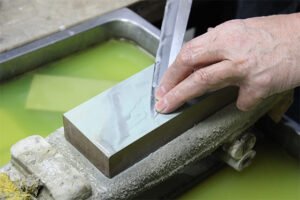
Single bevel edges excel at precise cuts; double bevel edges are more versatile and easier to maintain.
I have spent years testing blades in kitchens and workshops. I know the strengths and limits of single bevel vs double bevel. This article breaks down the geometry, uses, sharpening, pros and cons, and real-life tips. Read on to make a clear, confident choice for knives, chisels, or plane irons.

Understanding single bevel and double bevel
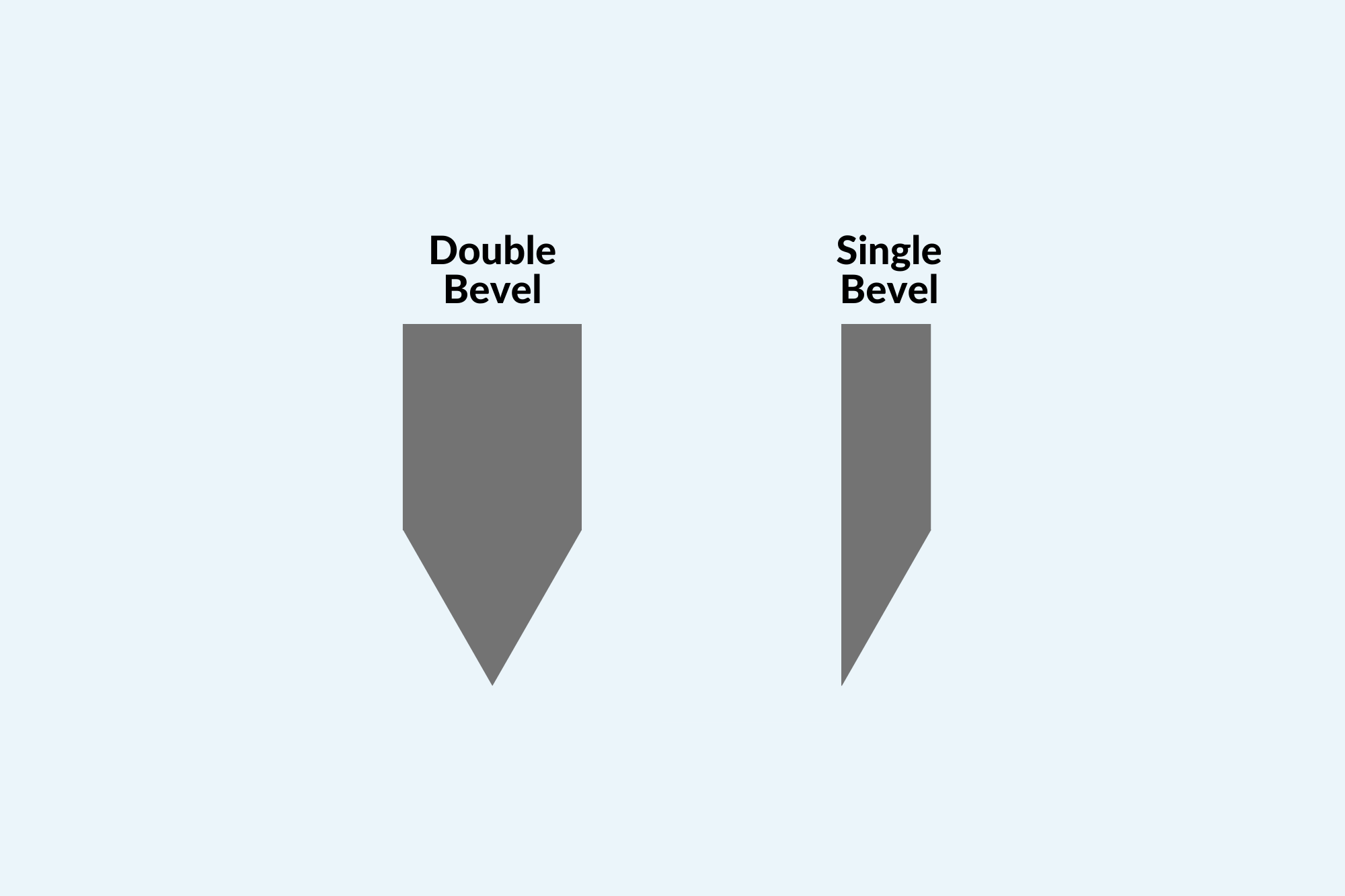
A single bevel blade has one flat face and one angled face. A double bevel blade has two angled faces that meet at the edge. The difference is simple geometry, but it changes how the tool cuts, how it feels, and how you sharpen it.
Single bevel vs double bevel matters for precision, ease of use, and maintenance. If you work with fine sushi, joinery, or certain woodworking cuts, single bevel geometry often wins. For general cooking, camping, or hobby work, double bevel geometry is usually the smarter pick.
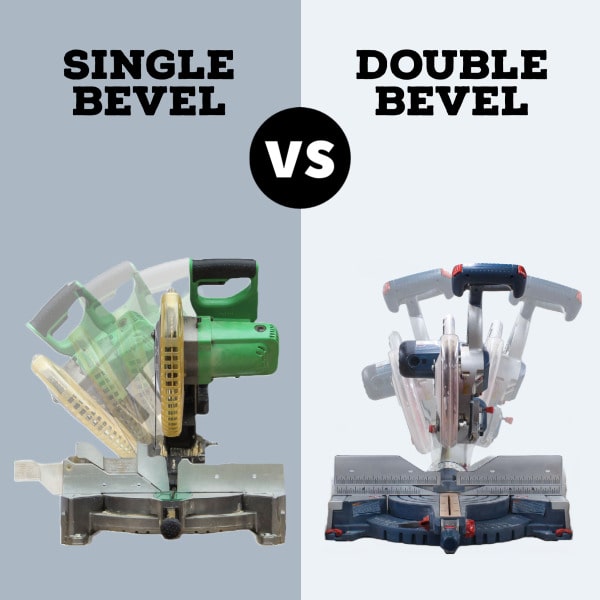
Key differences between single bevel vs double bevel
Edge geometry and profile
- Single bevel: One side flat, the other side ground to an angle. This creates a chisel-like edge.
- Double bevel: Both sides ground to the edge at equal or near-equal angles.
Cutting behavior
- Single bevel: Pulls toward the flat side. It slices cleanly and can make very thin cuts.
- Double bevel: Cuts in a straighter line and balances left-right forces.
Sharpening and maintenance
- Single bevel: Requires precise, one-sided sharpening and often a finishing bevel.
- Double bevel: Easier to sharpen symmetrically on stones or systems.
Handedness and skill
- Single bevel: Often made for right- or left-handed users. It rewards skill.
- Double bevel: Ambidextrous and user-friendly for most people.
Materials and edge angles
- Single bevel: Often uses acute angles for thin cuts. This can reduce edge strength.
- Double bevel: Can use slightly steeper angles for durability without losing much sharpness.
Single bevel vs double bevel should be evaluated by the task. Precision work benefits from single bevel. Daily, heavy, or ambidextrous use benefits from double bevel.

Practical uses and applications
Kitchen knives
- Single bevel: Traditional Japanese yanagiba and usuba knives. Best for sashimi and thin veg cuts.
- Double bevel: Western chef knives and santoku knives. Great for varied kitchen tasks.
Woodworking and tools
- Single bevel: Chisels and plane blades where a one-sided cut or clearance is needed.
- Double bevel: General-purpose chisels and carving tools that need balanced strikes.
Hobby and outdoor gear
- Single bevel: Rare except in specialty blades.
- Double bevel: Most pocket knives, axes, and survival blades use double bevel.
Surgical and craft tools
- Single bevel: Some scalpels and edge tools for precise slicing.
- Double bevel: Utility scalpels and multipurpose blades.
When you weigh single bevel vs double bevel, focus on the task and your skill. Choose single bevel for specialized accuracy and double bevel for flexibility.

Advantages and disadvantages
Advantages of single bevel
- High precision for slicing thin layers.
- Cleaner cuts in soft or layered materials.
- Easier to create a very acute edge profile.
Disadvantages of single bevel
- More skill needed to use and maintain.
- Tends to favor one hand orientation.
- Edge can be weaker at very acute angles.
Advantages of double bevel
- User-friendly and ambidextrous.
- Easier to sharpen evenly.
- Stronger edge options for tough use.
Disadvantages of double bevel
- Slightly less specialized in ultra-fine slicing.
- Might cause slightly more friction in some thin-slicing tasks.
Compare single bevel vs double bevel by listing advantages and limits. Then match them to how you plan to use the blade.

Choosing the right bevel for your needs
Ask these quick questions
- What do you cut most often?
- Do you want low maintenance or a high-skill tool?
- Are you right- or left-handed?
- Do you value thin precision or durability?
Choose single bevel if
- You need the cleanest possible slices.
- You can invest time in sharpening and technique.
- You work consistently with one hand orientation.
Choose double bevel if
- You want a practical, low-friction daily blade.
- You plan to share tools or use both hands.
- You prefer easier maintenance.
Matching bevel to material
- Soft layered food and thin wood benefit from single bevel.
- Dense meat, rope, and outdoor tasks favor double bevel.
Single bevel vs double bevel is ultimately about fit. Pick the edge that fits your habits and the materials you cut.
Sharpening and maintenance tips
Sharpening single bevel blades
- Use stones or systems that let you control one face precisely.
- Maintain the primary angle on the beveled side and keep the flat face flat.
- Add a micro-bevel for durability if you use the blade often.
Sharpening double bevel blades
- Keep both sides balanced.
- Use alternating strokes or guided angles to stay even.
- Hone frequently for daily-use knives to avoid heavy grinding.
Maintenance tips for both
- Use appropriate angle ranges: 10–15° per side for fine kitchen edges, 15–25° per side for durable use.
- Hone regularly and stone sparingly.
- Store blades to avoid nicks and corrosion.
PAA-style question: How hard is it to switch between single bevel vs double bevel sharpening?
- Answer: Single bevel sharpening is harder because you must respect the flat side and the one-sided angle. Double bevel sharpening is easier and more forgiving.
PAA-style question: Can you convert a single bevel blade to double bevel?
- Answer: Yes, but it requires removing material and careful angle work. This can change balance and performance.
Single bevel vs double bevel sharpening differs in technique. Invest time learning the correct method for your blade.

My experience and lessons learned
I have used both in kitchens and workshops. Single bevel blades gave me incredibly thin sashimi slices. They also forced me to learn controlled strokes. Double bevel knives saved time on busy nights. They stayed reliable and needed less touch-up.
Lessons learned
- Start with double bevel if you are a casual user. It is forgiving.
- If you want precision, train on a single bevel blade slowly.
- Invest in good stones. A cheap stone makes both types harder to maintain.
Mistakes to avoid
- Grinding a single bevel without preserving the flat face.
- Using too acute an angle on double bevel blades for heavy tasks.
Single bevel vs double bevel is not about better or worse. It is about fit, skill, and intent. Choose and practice accordingly.

Frequently Asked Questions of single bevel vs double bevel
What is the main advantage of single bevel blades?
Single bevel blades give cleaner, thinner slices and excel at precision cuts. They are favored in tasks that need a razor-thin edge.
Are double bevel knives easier to sharpen?
Yes. Double bevel knives are easier to sharpen because you only balance two symmetric faces. They work well with basic stones and guided systems.
Can a left-handed user use a right-handed single bevel knife?
They can, but the knife will pull and cut slightly off-line. It is better to use a left-handed single bevel or a double bevel knife.
Which bevel is better for woodworking chisels?
Single bevel chisels are common for precise joinery where clearance is needed. Double bevel chisels are good for general work and ambidextrous use.
Does single bevel last longer than double bevel?
Not necessarily. Edge life depends on angle, steel, and use. Single bevel may be more acute and thus may dull faster, but it can be easier to strop to a fine edge.
Is it expensive to maintain single bevel blades?
Maintenance can be more time-consuming and require skill, but cost depends on tools. Good stones and practice reduce long-term cost.
Conclusion
Choosing between single bevel vs double bevel comes down to purpose and skill. Single bevel offers precision and thin cuts. Double bevel offers versatility and ease of care. Test a blade type on real tasks. Practice sharpening and keep a simple maintenance routine. Pick the blade that matches your work, then commit to learning its care.
Try one type first. Share your experience, subscribe for more guides, or leave a comment about your preferred bevel and why.

Maliha Akter is a kitchen knife reviewer and food preparation specialist with over 6 years of experience testing Japanese kitchen knives and everyday cooking tools. She focuses on performance, safety, durability, and real-world usability to help home cooks choose the right knives for efficient and enjoyable cooking.
Expertise:Japanese Knives • Vegetable Knives • Product Reviews • Kitchen Efficiency • Knife Care