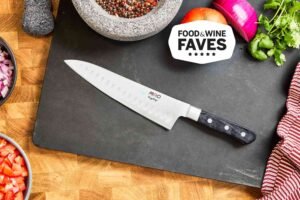
A bunka knife is a versatile Japanese chef’s knife with a sharp k-tip.
If you have ever wondered what is a bunka knife, you are in the right place. I have used these blades for years in both home and pro kitchens. In this guide, I will unpack what is a bunka knife, why it stands out, and how to choose, use, and care for one with confidence. You will get real tips, clear examples, and expert insight so you can decide if a bunka belongs in your kit.
What is a bunka knife?
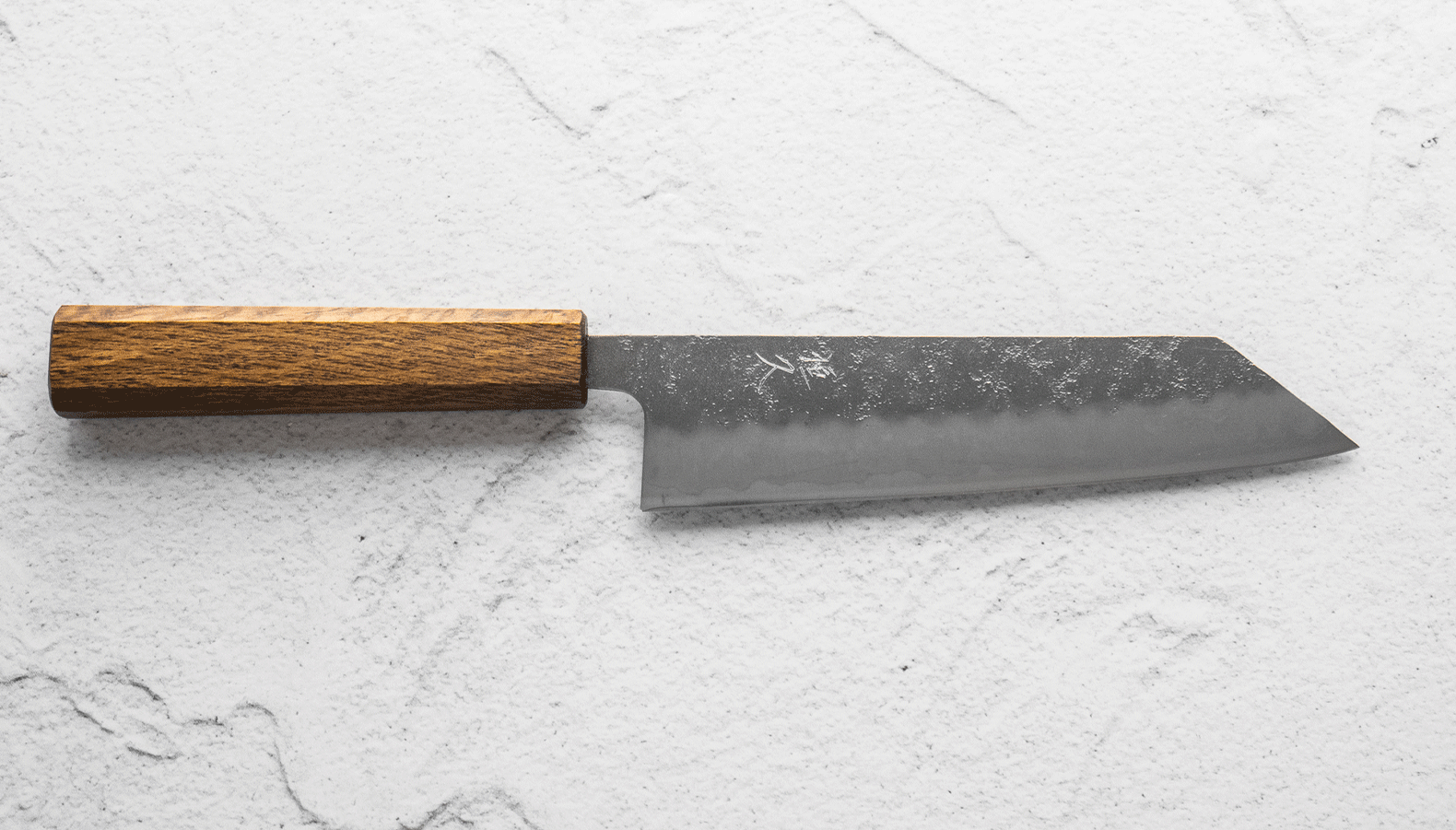
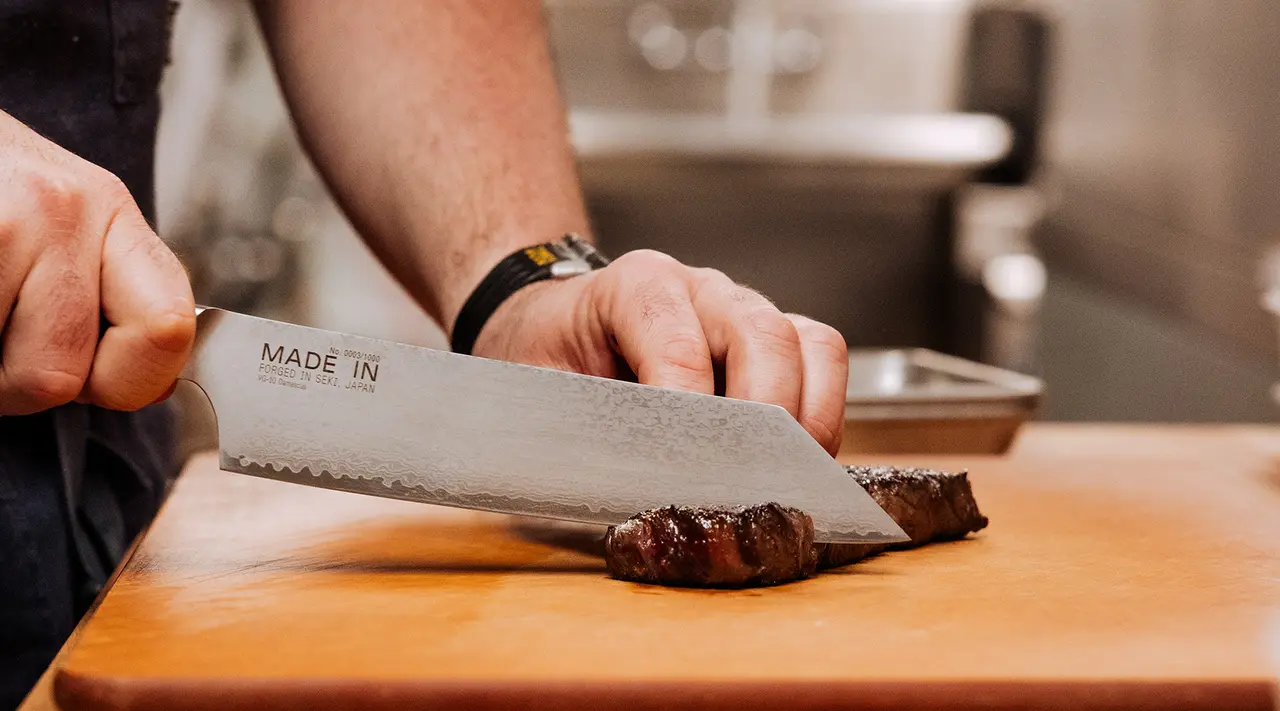
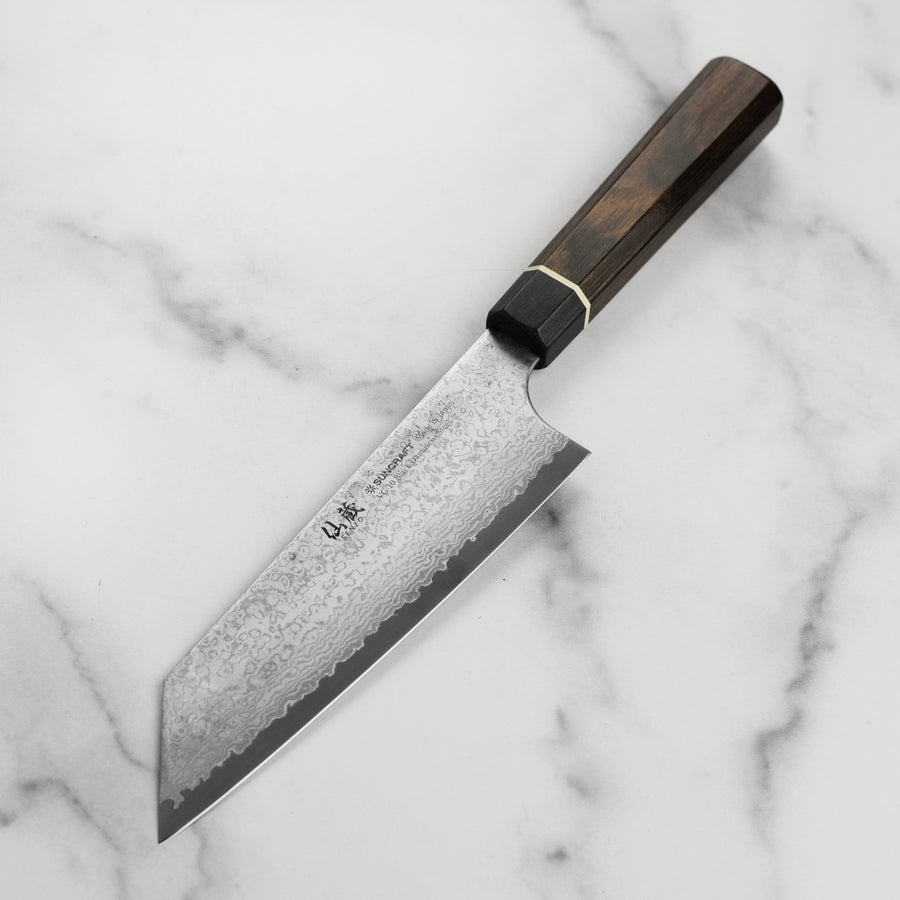
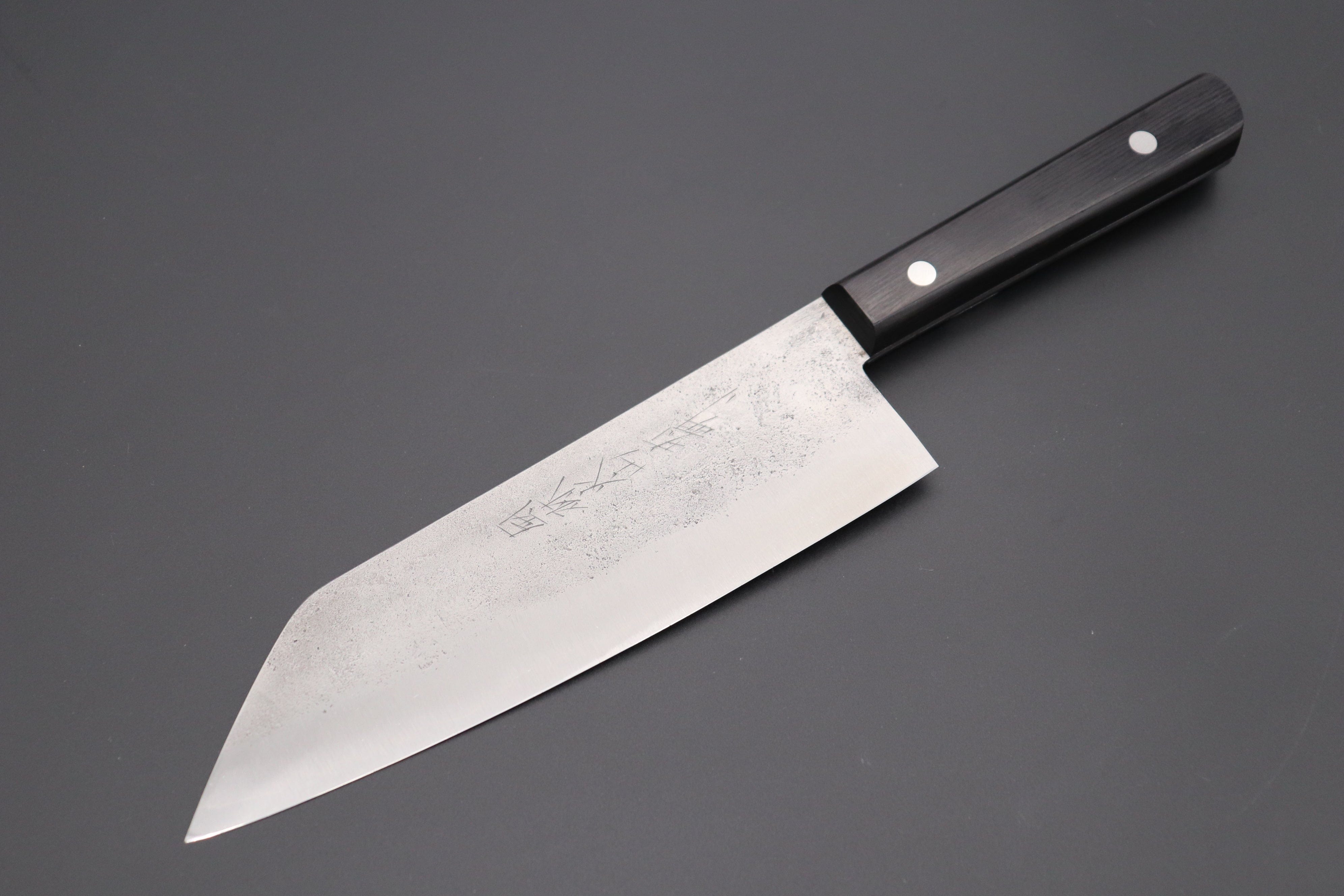
If you are asking what is a bunka knife, think of it as a nimble, all-purpose Japanese knife. It has a wide blade for chopping and a kiritsuke-style pointed tip for detail work. Most bunka blades are 165 to 180 mm long. The profile is flat toward the heel, with a gentle curve near the tip.
The signature detail is the k-tip, also called a reverse tanto tip. It gives crisp control for tasks like scoring fish skin, trimming sinew, or dicing small aromatics. When people ask what is a bunka knife good for, the short answer is almost everything on a cutting board.
I often tell students that what is a bunka knife, in practice, is a bridge between a santoku and a gyuto. It offers the width of a veggie blade and the tip control of a petty. That mix makes it a smart first Japanese knife for many cooks.

Anatomy and design features
A bunka packs a lot of function into a compact form. Key parts include:
- Blade height: Tall enough to guide your knuckles and scoop ingredients with ease.
- K-tip: A clipped point for fine cuts, venting slits, and precise scoring.
- Edge profile: Flatter toward the heel for push cuts; a light belly for short rocks.
- Spine and taper: Often thinner at the tip for finesse; more meat at the heel for power.
- Handle: Either a wa-handle (octagonal or oval wood) or a Western yo-handle with rivets.
Most bunka knives use a double-bevel edge. A common angle is 12 to 15 degrees per side. Typical hardness ranges from HRC 60 to 63 in quality steels, which supports a keen edge and long life. These specs can vary by maker, but they align with modern Japanese cutlery norms.
Bunka vs santoku vs gyuto vs nakiri
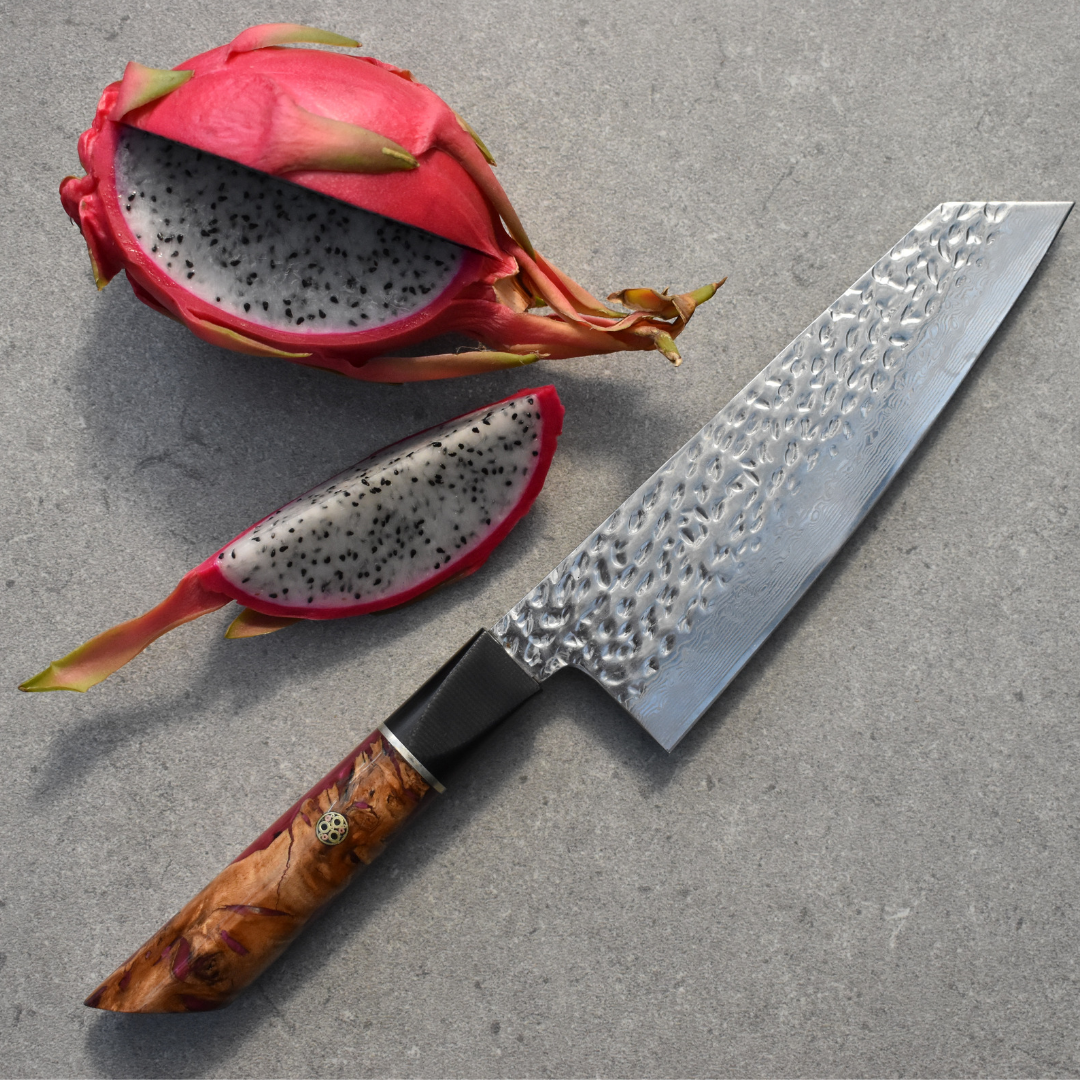
People often ask what is a bunka knife compared with a santoku. The bunka has a pointed k-tip, while a santoku has a rounded, sheep’s-foot tip. That point adds accuracy for detail tasks. The santoku is great for straight chops, but the bunka adds more finesse.
How does it compare with a gyuto? A gyuto is longer and more curved. It excels at rocking and big prep sessions. A bunka is shorter and easier to control in tight spaces.
Then there is the nakiri. It is a veggie specialist with a flat, square tip. It is superb for push chopping. But it lacks the bunka’s sharp point, which you will miss for precision work.
Best uses and cutting techniques
A bunka shines with everyday prep. Here is how I use it:
- Push cutting vegetables: Carrots, onions, and peppers fall into clean stacks.
- Tip work: Score tomatoes, devein shrimp, or trim silver skin with ease.
- Fine dicing: Garlic and shallots become even cubes without bruising.
- Light rocking: The slight belly handles herbs and scallions.
Practice safe habits. Keep your guiding hand tucked with knuckles forward. Use the flat of the blade to scoop, not the edge. If you wonder what is a bunka knife ideal for at dinner time, it is that all-in-one tool for soup, salad, and a quick stir-fry.
Steel, heat treat, and maintenance
The steel matters a lot. Common choices include:
- Stainless: VG-10, AUS-10, and SG2/R2. These resist rust and hold great edges.
- Carbon: Blue (Aogami) and White (Shirogami) steels. These get very sharp but can patina or rust.
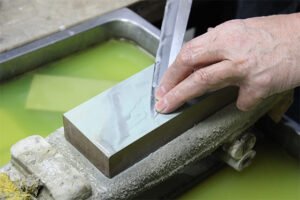
Look for a sound heat treat and a hardness around HRC 60 to 62 for home use. It gives a crisp edge without being too brittle. For sharpening, a 1000 grit stone sets the edge, and 3000 to 6000 refines it. Keep a 15-degree angle per side and use light pressure.
After you learn what is a bunka knife and how it is built, care becomes simple. Wipe and dry after use. Do not leave it wet. Store it in a saya, edge guard, or on a magnet that will not scratch the blade.

How to choose the right bunka knife
Here is my simple checklist:
- Size: 165 mm is nimble. 180 mm gives more range.
- Steel: Choose stainless for low care, carbon for max bite.
- Handle: Wa-handles feel light and nimble. Yo-handles feel secure and familiar.
- Grind and balance: Look for even bevels and a neutral or slightly forward balance.
- Budget: Good entry models start around $80 to $150. Mid-tier runs $150 to $300. High-end artisan work can exceed $300.
When you ask what is a bunka knife you should buy first, pick one that fits your main tasks. If you prep lots of veg and do detail work, a 165 mm stainless bunka is an easy win.

Real-world experiences and tips
My first bunka was a 165 mm stainless model. I bought it to test what is a bunka knife like in a crowded line kitchen. It became my go-to for tight stations. The tip saved time when trimming and scoring. The flat heel crushed bulk prep.
Mistakes to avoid:
- Do not rock it like a long Western chef’s knife. Use push cuts instead.
- Do not twist the tip in hard squash. Use the heel or a heavier blade.
- Do not cut on glass or stone. Use a wood or quality plastic board.
Practical tips:
- Strop the edge on leather once a week to keep it singing.
- Thin the blade every few months if food starts to wedge.
- If you are still wondering what is a bunka knife best suited for, try a week of only-bunka cooking. You will learn fast.
Care, storage, and sharpening
Daily care:
- Wash by hand with mild soap, then dry right away.
- Wipe between acidic foods to reduce patina and taste transfer.
- Use a soft towel and avoid hitting faucets or sinks.
Sharpening steps:
- Set the edge on a 1000 grit stone with light strokes.
- Refine on 3000 to 6000 grit to polish and improve bite.
- Deburr with edge-leading passes and a few light strops.
Storage:
- Use a wooden saya or edge guard to protect the blade.
- Keep it on a clean magnetic strip with the spine facing the magnet.
- Do not toss it in a drawer.
After you learn what is a bunka knife and how to maintain it, the blade will reward you with years of clean cuts and stable edges.

Frequently Asked Questions of What is a bunka knife
What is a bunka knife in simple terms?
It is a Japanese all-purpose knife with a pointed k-tip. It blends the best of a veggie knife and a small chef’s knife.
Is a bunka knife good for beginners?
Yes, it is user-friendly and very versatile. The blade height guides your hand, and the tip gives great control.
What foods are best for a bunka knife?
Vegetables, herbs, boneless meats, and fish are ideal. The k-tip helps with detail work like trimming and scoring.
How often should I sharpen a bunka knife?
For home cooks, every 4 to 8 weeks is common. Touch up with a strop or fine stone between full sessions.
Is a bunka better than a santoku?
It depends on your style. A bunka’s pointed tip adds precision, while a santoku favors straight chopping.
Conclusion
A bunka knife brings speed, control, and ease to daily prep. You now know what is a bunka knife, how it differs from other blades, and how to choose one that fits your skills and kitchen. With a few simple care habits, it will stay sharp and ready for every meal.
If you are curious, test a bunka for one week and note the time you save. Ready to go deeper? Explore more guides, subscribe for new knife tips, or drop a question so I can help you pick your perfect bunka.
Sophia Martinez is a culinary tools reviewer with 7+ years of experience analyzing kitchen knives and food prep tools. She specializes in practical testing, comparison reviews, and helping users improve kitchen efficiency through better equipment choices.
Expertise: Knife Reviews, Kitchen Tools, Meal Prep Optimization