A whetstone grit chart shows stone grit ranges and the right progression for sharpening.
I have used and tested sharpening stones for over a decade. I wrote this guide to explain the whetstone grit chart clearly. You will learn how grit works, which grits match each tool, and practical steps to sharpen well. I combine hands-on tips and simple science to make the whetstone grit chart easy to use.
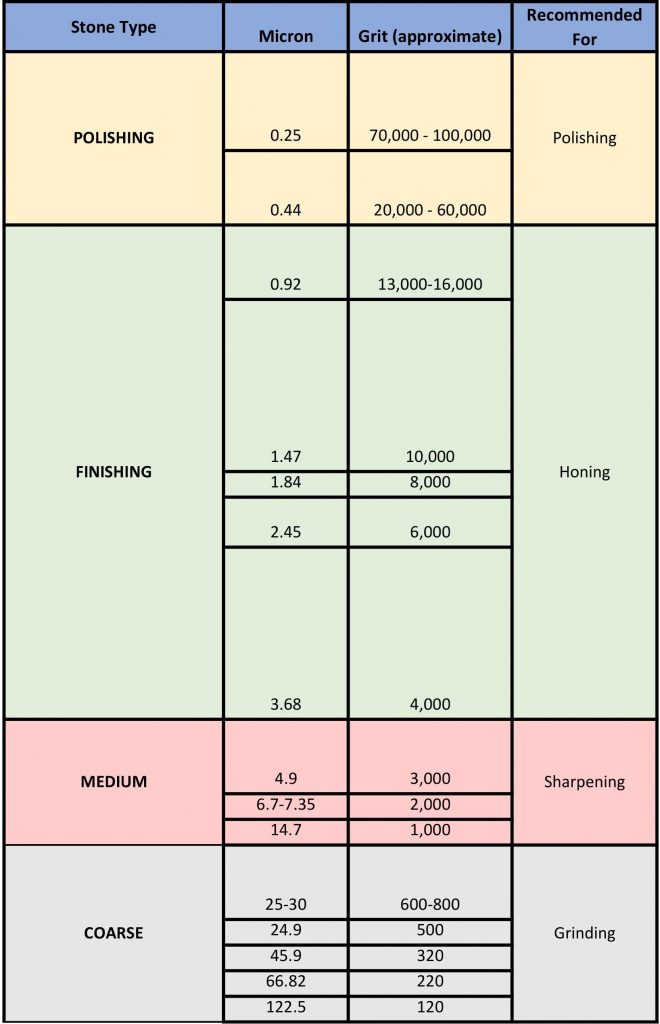
What is a whetstone grit chart?
A whetstone grit chart maps grit numbers to the abrasive size and purpose. It helps you pick the right stone for repair, sharpening, or polishing. The chart groups grits into coarse, medium, fine, and ultra-fine ranges. This makes the process predictable and repeatable.
Why the chart matters:
- It saves time when choosing stones.
- It reduces risk of over-grinding a blade.
- It improves edge consistency and finish.
I’ve followed grit charts in kitchen, woodworking, and outdoor tool work. Those charts cut confusion and trimmed my learning curve.

Understanding grit ranges and what they do
Grit numbers tell you how rough or smooth a stone is. Lower numbers are coarse. Higher numbers are fine. The common ranges are:
- 120–400 grit: Repair and heavy re-profiling.
- 600–1000 grit: Basic sharpening and edge formation.
- 2000–4000 grit: Refining the edge and improving bite.
- 5000–10000+ grit: Polishing and razor edges.
A clear whetstone grit chart will list exact uses for each band. Use coarse grits for chips. Use medium grits to set the bevel. Use fine and ultra-fine grits to polish and reduce burrs.
PAA-style question: What grit sharpens a dull knife quickly?
- 600–1000 grit is a good starting point to restore a dull kitchen knife. Follow with higher grits to refine the edge.
PAA-style question: Can I sharpen with only one grit?
- Yes, but the finish will be limited. Using a whetstone grit chart helps you choose a progression for a better edge and faster results.

How to use a whetstone grit chart: step-by-step
Follow this simple workflow that mirrors the chart logic:
- Inspect the blade for chips or heavy wear.
- Consult the whetstone grit chart to pick a starting grit.
- Start with coarse if you need material removal. Start with medium if only dull.
- Move to finer grits in stages to remove burrs and polish.
- Test the edge and stop when you reach the desired sharpness.
Practical tips I use:
- Always keep a consistent angle between blade and stone.
- Use light pressure on fine grits.
- Clean stones between grits to avoid cross-contamination.
This workflow reflects the typical whetstone grit chart progression used by professionals.
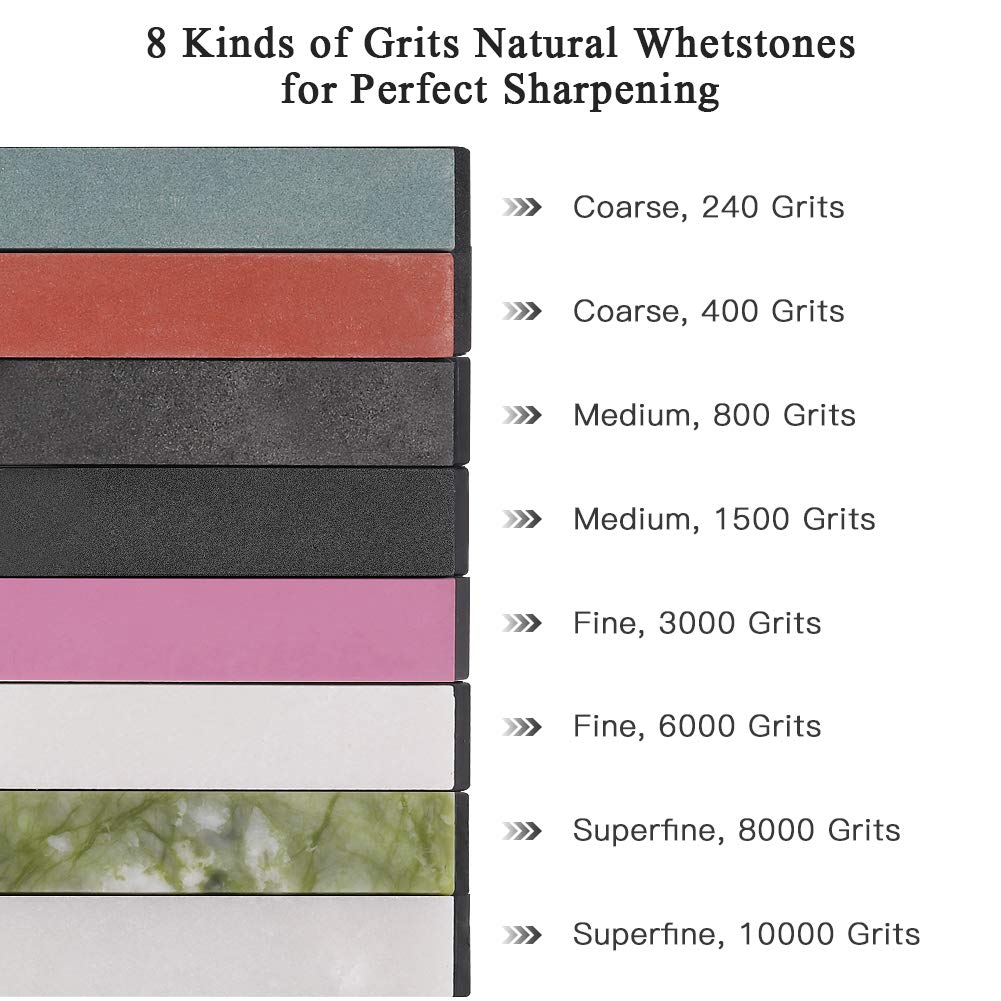
Matching tools and blades to grit according to the whetstone grit chart
Different blades need different grits. Use this cheat sheet based on my experience:
- Kitchen knives: 400–1000 to restore, 3000–8000 to refine and polish.
- Pocket knives: 600–2000 for daily touch-ups, 3000+ for a fine edge.
- Woodworking planes and chisels: 400–1000 to set the bevel, 4000+ to polish.
- Straight razors: 3000–10000+ for a shave-ready mirror edge.
- Outdoor tools (machetes, hatchets): 120–400 for reshaping, 1000–3000 to sharpen.
A whetstone grit chart helps match the right grit to the tool’s steel and use case. Hard steels often benefit from higher, finer grit finishing.
 progressions and real examples”
style=”max-width: 100%; height: auto; border: 2px solid black; border-radius: 10px; display: block; margin: 0 auto;”
loading=”lazy”
/>
Sample grit progressions and real examples
Examples that follow a typical whetstone grit chart:
- Heavily chipped chef’s knife:
- 240 grit to re-profile and remove chips.
- 600 grit to refine bevel.
- 3000 grit to polish.
- 8000 grit for mirror finish.
- Everyday pocket knife:
- 600 grit to restore edge.
- 2000 grit to refine.
- 5000 grit for a sharp finish.
- Chisel for fine joinery:
- 400 grit to set bevel.
- 4000 grit to polish and remove burr.
I once re-profiled a 15-year-old chisel set using a whetstone grit chart. Following a clear progression saved hours. The chisels cut like new after consistent steps.

Caring for stones and following the grit chart reliably
Stone care keeps the chart accurate. A worn stone can mislead you on grit performance.
- Flatten stones regularly with a lapping plate or flattening stone.
- Clean stones after each session with water and a brush.
- Store dry stones in a cool, stable place.
- Label stones with their grit to avoid confusion.
My mistake: I once used a clogged 1000 grit thinking it was 4000. The finish suffered. Labeling and flattening prevented repeats.

Common mistakes to avoid when using a whetstone grit chart
Watch out for these pitfalls:
- Skipping grits and expecting a polished edge quickly.
- Using the wrong stone for the steel hardness.
- Applying too much pressure on fine grits.
- Forgetting to remove the burr between stages.
Avoid these errors and the whetstone grit chart will guide you to reliable results.

People also ask: quick answers
How often should I move up grit according to a whetstone grit chart?
Move up when the previous grit has removed the prior burr and the bevel looks even. That usually takes a few minutes per grit for most knives.
Can a whetstone grit chart help with different types of steel?
Yes. Use the chart as a base, then adjust timing and grit selection for hard or soft steels. Hard steels often need longer on finer grits.
Is water or oil better when following a whetstone grit chart?
Use water with waterstones and oil with traditional oilstones. Match lubricant to the stone type shown on the chart.
[No CodeImg here]
Frequently Asked Questions of whetstone grit chart
What is the difference between coarse and fine grits?
Coarse grits remove material fast and fix chips. Fine grits polish and refine the edge for smooth cutting.
How do I read grit numbers on a whetstone grit chart?
Lower numbers equal bigger abrasive particles and faster removal. Higher numbers equal smaller particles and finer polish.
Do all whetstone grit charts use the same numbering?
Most charts follow standard grit conventions, but some brands label differently. Verify with the manufacturer or test stones to be sure.
Can I use a whetstone grit chart for sharpening serrated knives?
Serrations need specialized care. Use the chart to choose grits but use tapered stones or rods sized to each serration.
How long does each grit stage take?
Times vary by blade and wear. Expect 1–10 minutes per stage for kitchen knives, more for heavy damage.
Conclusion
A whetstone grit chart turns guesswork into a clear plan. Use it to pick grits, follow progressions, and match stones to tools. Start with inspection, follow the chart, and refine with finer grits. Keep stones clean and flat. If you sharpen regularly, label stones and keep a simple kit that mirrors a trustworthy whetstone grit chart. Try one guided session today, and share your results or questions below to learn faster.

Maliha Akter is a kitchen knife reviewer and food preparation specialist with over 6 years of experience testing Japanese kitchen knives and everyday cooking tools. She focuses on performance, safety, durability, and real-world usability to help home cooks choose the right knives for efficient and enjoyable cooking.
Expertise:Japanese Knives • Vegetable Knives • Product Reviews • Kitchen Efficiency • Knife Care