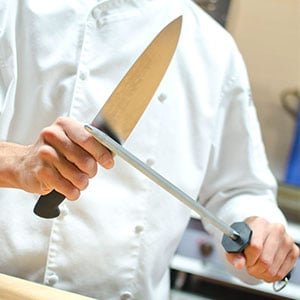
You can sharpen knives without a stone using common tools and simple techniques.
I have sharpened hundreds of kitchen and pocket knives without a whetstone. I write from hands-on experience as a cook and gear tester. This guide covers safe, practical, and proven ways to do knife sharpening without stone. You will learn methods, step-by-step instructions, safety tips, and common mistakes. Read on to get sharp results even when you do knife sharpening without stone.

Why choose knife sharpening without stone?
A stone is ideal for many users. Still, you may need to do knife sharpening without stone when you travel, cook outdoors, or lack tools. Some methods are fast and safe. They keep edges usable between full sharpens. I explain trade-offs so you pick the right option.

Source: amazon.com
Common tools for knife sharpening without stone
You can use many everyday items to restore an edge. Each tool works for certain jobs and blade types. I tested these over years and note what works best.
- Honing rod or sharpening steel — Best for small touch-ups and aligning the edge.
- Ceramic mug or plate rim — Good for quick, light sharpening.
- Leather strop with compound — Great for polishing and refining edges.
- Sandpaper on flat glass — Effective for rebuilding a dull edge.
- Pull-through sharpeners and guided systems — Fast and easy for beginners.
- Files and diamond-coated rods — Work well on very dull steel or outdoor blades.
- Electric sharpeners and bench grinders — Quick, but aggressive and need skill.
Source: echefknife.com
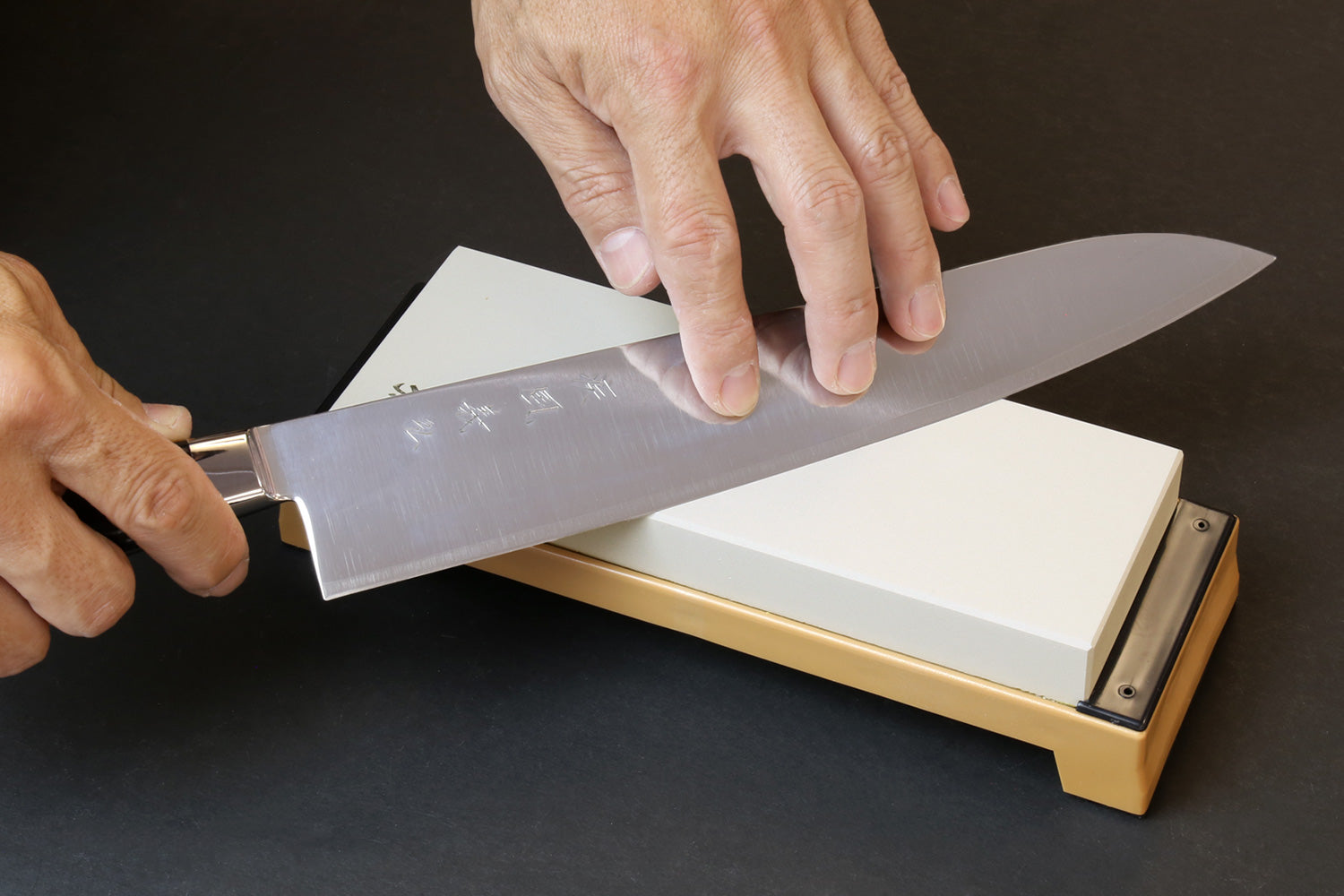
How each method works and when to use it
Understanding how each tool affects metal helps you choose. I describe simple physics and practical use.
- Honing rod — Realigns the micro-bevel. Use often for maintenance. Not for reshaping damaged edges.
- Ceramic rim — Abrasive ceramic removes tiny amounts of metal. Use for mild sharpening.
- Leather strop — Polishes the edge and removes burrs. Best after any abrasive step.
- Sandpaper — Removes metal quickly. Good for reshaping or fixing chips.
- Pull-through — Uses fixed angles. Good for home cooks who want fast results.
- File or diamond rod — Aggressive material removal. Use on thick, damaged knives.
- Electric sharpener — Controlled speed and angle. Use with care to avoid overheating.

Source: seidoknives.com
Step-by-step: Honing rod (quick maintenance)
This is the simplest non-stone method for knife sharpening without stone. It keeps an edge aligned and ready.
- Hold the rod vertically with its tip on a board.
- Place the knife at about 15–20 degrees on the rod.
- Swipe the blade down and across the rod in one smooth motion.
- Do 5–10 strokes per side. Alternate sides.
- Finish with light strokes and test on paper.
Tips
- Use consistent angle and light pressure.
- Hone often. It prevents heavy sharpening later.

Source: webstaurantstore.com
Step-by-step: Ceramic mug or plate rim
A ceramic rim works like a small stone. I used this on a weekend trip with good results.
- Turn a ceramic mug upside down. Find the unglazed ring.
- Hold the blade at 15–20 degrees to the rim.
- Drag the edge across the rim from heel to tip.
- Repeat 6–10 times per side.
- Strop on leather or use a cloth to remove burrs.
Tips
- Avoid glazed areas. They are slippery and uneven.
- Keep strokes smooth and even.

Source: amazon.com
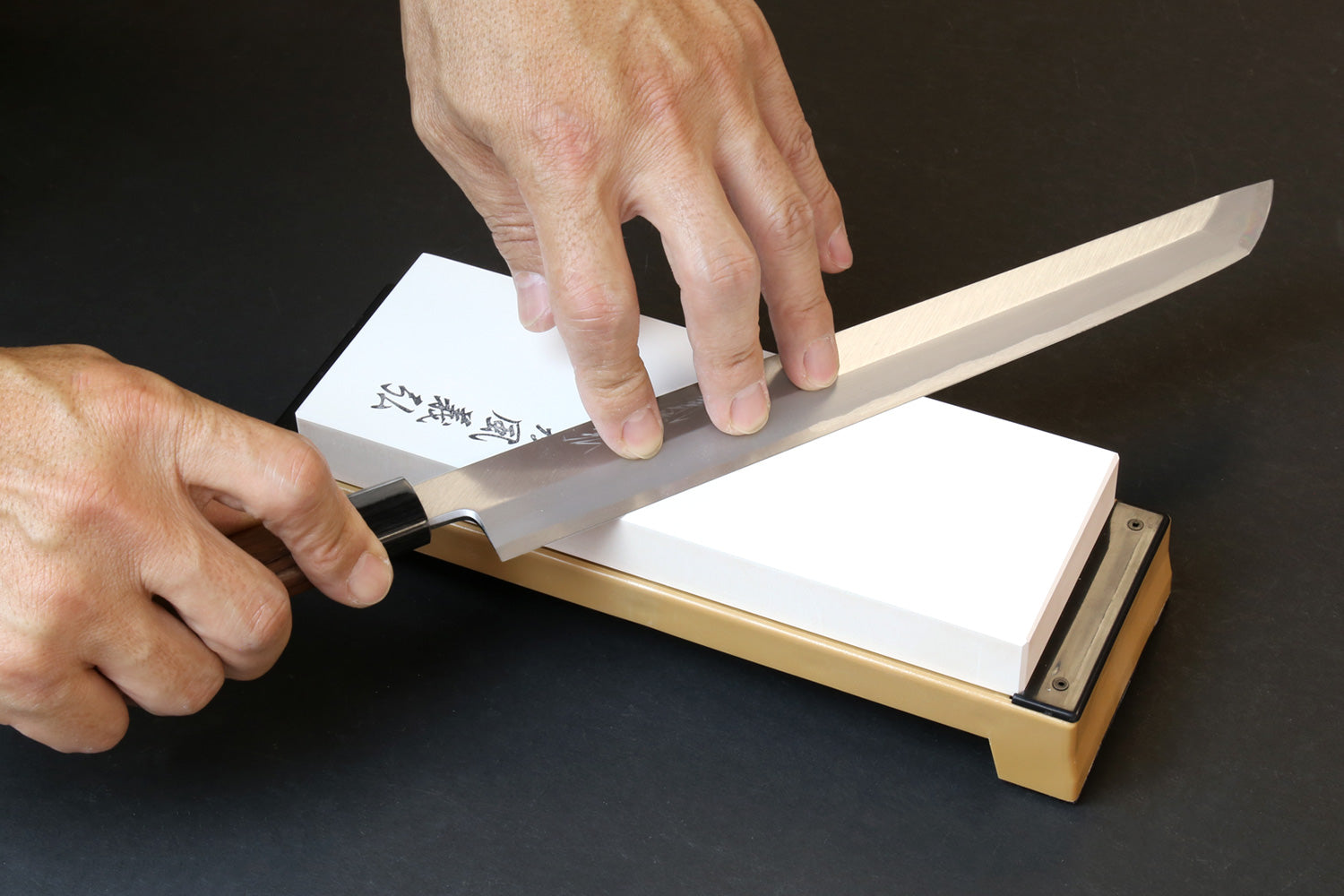
Step-by-step: Sandpaper on glass (reshaping)
Sandpaper forces more metal removal. It is my go-to when a blade is very dull or nicked.
- Stick sandpaper (400–1000 grit) onto a flat glass plate.
- Hold the knife at the target angle (12–20 degrees).
- Push the blade away from you across the paper, heel to tip.
- Do 10–30 strokes per side, checking the edge.
- Progress to finer grit to polish.
Tips
- Work dry. Use light, even strokes.
- Use protective gloves to avoid cuts.
Source: echefknife.com
Step-by-step: Leather strop for finishing
Stropping polishes and removes the remaining burr. It makes the blade feel razor-sharp.
- Apply stropping compound to leather.
- Hold the blade flat and drag it away from the edge.
- Do 10–20 passes per side with light pressure.
- Check the edge on paper for smoothness.
Tips
- Do not pull the edge across leather toward the cutting edge.
- Strop after any abrasive step for best results.
Safety and common mistakes when doing knife sharpening without stone
Safety keeps you cutting, not injured. These mistakes are common and avoidable.
- Rushing — Leads to slips and uneven edges.
- Wrong angle — Makes a weak or blunt edge.
- Too much pressure — Removes too much metal.
- Skipping stropping — Leaves a burr that reduces cutting performance.
- Heating the blade — Overheating can change temper and weaken steel.
Practice slowly. Wear a cut-resistant glove if you are nervous. Keep hands away from the edge.
Maintenance and care after sharpening without stone
Proper care prolongs edge life. Follow these simple steps.
- Clean the blade after sharpening to remove metal dust.
- Dry and oil carbon steel blades to prevent rust.
- Store knives in blocks or sheaths to protect edges.
- Hone regularly to delay heavy sharpening.
Personal experience, tips, and lessons learned
I sharpened knives without stone during trips and in busy kitchens. These lessons kept my blades usable.
- Keep a small strop in your kit. It saves time.
- A ceramic mug is a great backup tool.
- Sandpaper on glass beats a dull blade fast, but needs care.
- Avoid electric sharpeners on high-end knives unless you know how to use them.
- Practice on an old kitchen knife before working on a prized blade.
Quick PAA-style questions
What tools work best for knife sharpening without stone?
Ceramic mugs, honing rods, sandpaper, leather strops, and pull-through sharpeners all work well depending on the task.
Can I get a razor edge without a stone?
Yes. Using progressive abrasives and finishing with a strop can create a very sharp edge without a stone.
Is it safe to use a grinder instead of a stone?
Grinders can reshape edges quickly but risk overheating. Use low pressure and cool the blade often.
Frequently Asked Questions of knife sharpening without stone
How often should I use a honing rod?
Use a honing rod before or after each use if you cook daily. It maintains the edge and reduces the need for heavy sharpening.
Can I repair chips without a stone?
Small chips can be fixed with sandpaper or a diamond file. Deeper chips may need a proper sharpening stone or professional service.
Will a pull-through sharpener ruin my knife?
Properly used pull-through sharpeners work fine for many knives. Cheap or aggressive models can remove too much metal over time.
What angle should I use when doing knife sharpening without stone?
Most kitchen knives do well at 15–20 degrees per side. Keep the angle consistent for the best edge.
Can I strop a serrated knife when doing knife sharpening without stone?
You can strop serrations lightly, but full sharpening of serrated edges usually needs specialized tools or pro service.
Conclusion
You can achieve reliable results with knife sharpening without stone using simple tools and safe steps. Start with a honing rod or ceramic rim for quick fixes. Use sandpaper and a strop when you need to rebuild an edge. Practice slowly and keep safety first. Try one method today and test the edge on paper. If this guide helped, subscribe, share your experience, or leave a comment about your favorite non-stone method.
Maliha Khatun has spent 5 years hands-on testing Japanese knives for everyday home cooks. She has evaluated over 60 blades across nakiri, santoku, gyuto, and petty categories — scoring each on edge retention, steel quality, handle comfort, and value for money. She writes to help home cooks buy the right knife without the guesswork.
Expertise:Japanese Knives • Vegetable Knives • Product Reviews • Kitchen Efficiency • Knife Care
Leave a Reply