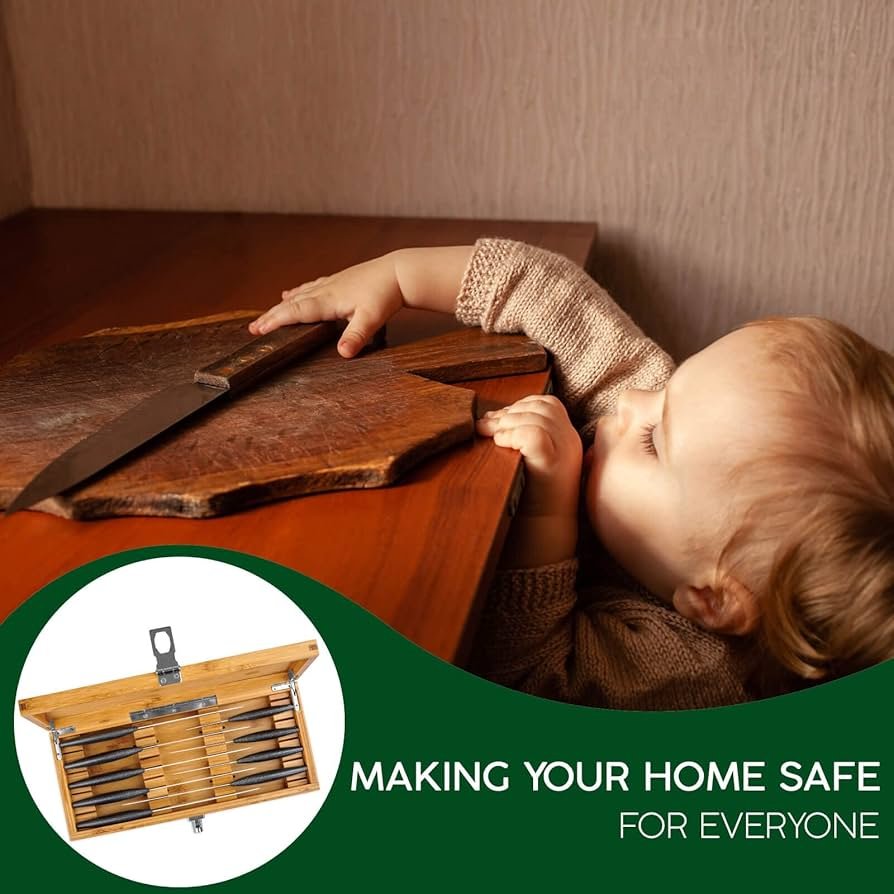
A knife drawer organizer significantly reduces cuts and improves kitchen safety and order.
I have worked with kitchen designers and tested storage solutions for years. In this guide I explain knife drawer organizer safety clearly and practically. You will learn why proper organizers matter, how to choose the right system, how to install and maintain it safely, and real-world tips I learned from hands-on use. Read on to make your kitchen safer, neater, and easier to use.
Why knife drawer organizer safety matters
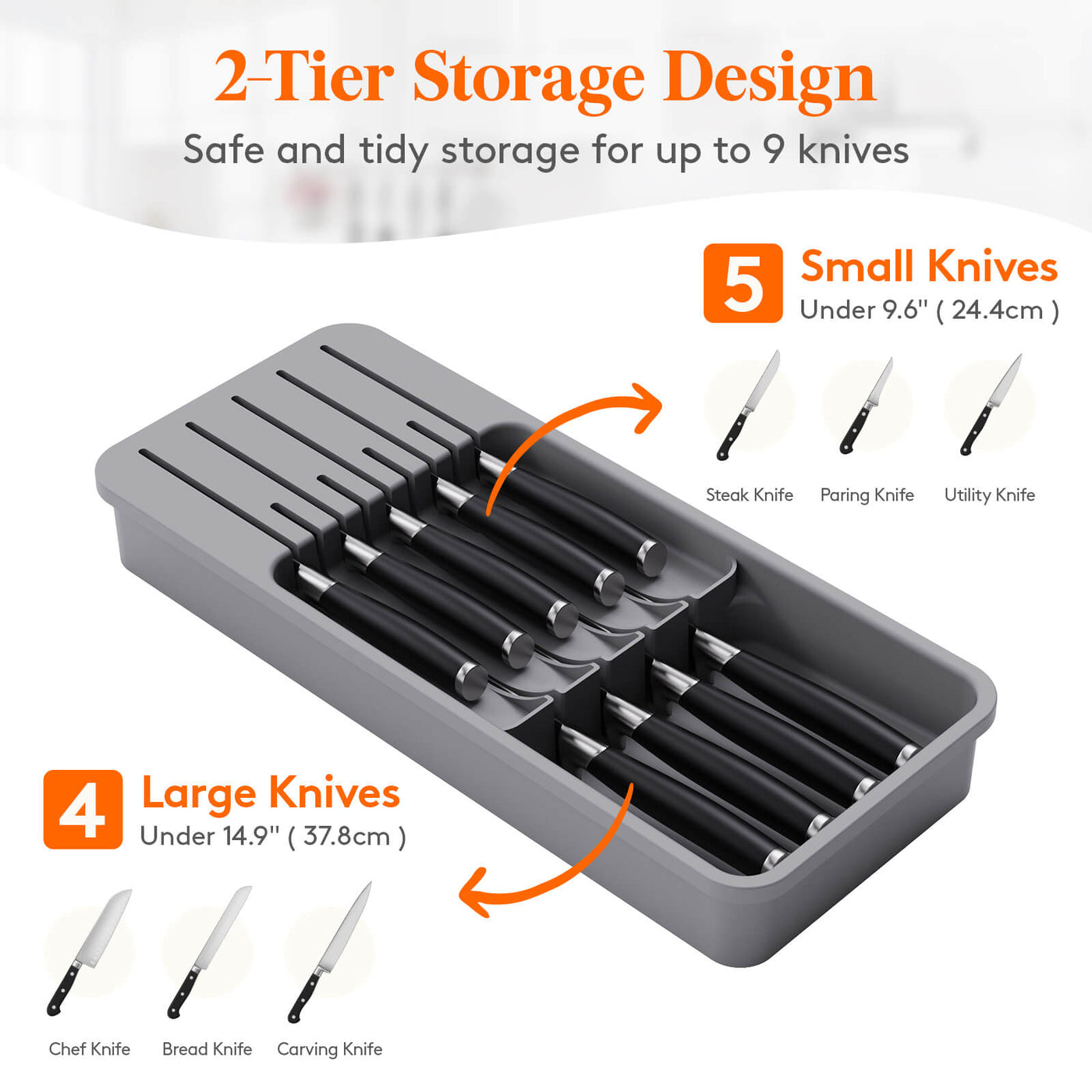
Knife drawer organizer safety prevents accidental cuts and protects your knives. Storing blades loosely in a drawer is a leading cause of hand injuries during routine kitchen tasks. A dedicated organizer keeps blades separated, covered, and accessible. It also prolongs blade life by preventing contact with other utensils.
From my experience fitting dozens of drawers, the right organizer reduces injuries and speeds cooking prep. It also helps maintain a clean visual flow in a busy kitchen. Prioritizing knife drawer organizer safety is a small change that yields big returns in safety and convenience.

Definitions and basic concepts
Knife drawer organizer safety refers to designs and practices that secure knives inside a drawer to reduce injury risk and blade damage. Key concepts include:
- Safe separation: keeping blades from touching other objects and each other.
- Secure positioning: preventing sliding during drawer movement.
- Blade protection: using sheaths or slots that cover sharp edges.
- Accessibility control: easy reach for adults, difficult for children.
These concepts guide every choice from materials to drawer placement. Good knife drawer organizer safety is simple to implement and low cost when compared to the risk of injury or dulling expensive knives.
Types of knife drawer organizers and their safety profiles
Different organizers offer varied safety benefits and trade-offs. Choose based on your drawer size, knife collection, and safety needs.
Foam or felt inlays
- Pros: inexpensive, custom-cut slots, gentle on blades.
- Cons: can trap moisture if not dried, may require replacement over time.
Hard plastic or molded trays
- Pros: durable, easy to clean, stable placement.
- Cons: hard contact can dull knives over long term if slots are tight.
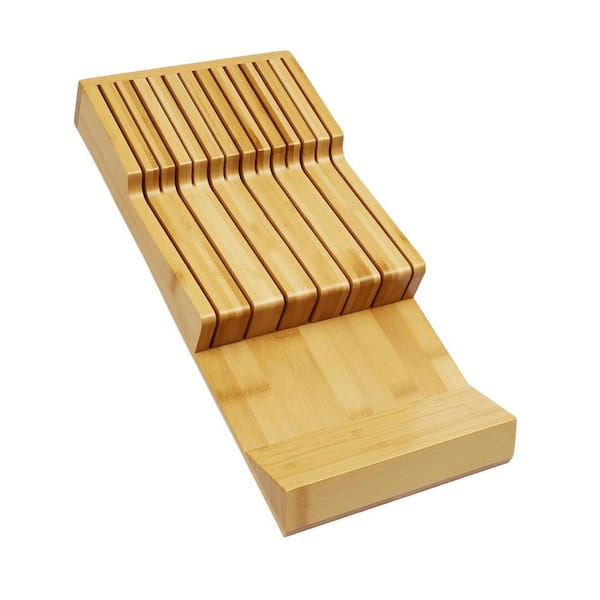
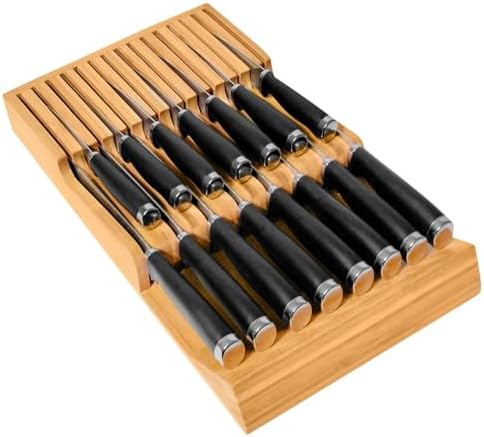
Wood slotted trays
- Pros: natural look, gentler on steel, stable storage.
- Cons: wood can absorb moisture and odor if not finished.
In-drawer magnetic strips
- Pros: secure hold, quick access for frequently used knives.
- Cons: risk of blade edge contact if magnets not fully embedded; not ideal for very thin blades.
Individual blade guards or sheaths inside a generic tray
- Pros: most blade protection, flexible configuration.
- Cons: extra step to sheath each knife before storing.
When picking an organizer, prioritize options that prevent blade-to-blade contact and secure knives during drawer movement for effective knife drawer organizer safety.

Installation and safe use: step-by-step
Follow these steps to maximize knife drawer organizer safety.
- Measure and plan
- Measure drawer depth, width, and height. Note hinge intrusions and drawer liners.
- Choose the right organizer
- Match slot sizes to your knives. Leave a little extra room for thicker handles.
- Prepare the drawer
- Clean and dry the drawer. Add a non-slip liner for stability.
- Install securely
* Anchor or trim the organizer so it does not shift. Use adhesive pads or screws where appropriate. - Load knives safely
- Insert blades into slots away from your fingers. Store heavier knives near the back to prevent tipping forward.
- Label or arrange by use
- Keep frequently used knives at the front. Store specialty knives in a separate section.
These steps reduce the chance of cuts when reaching into drawers and keep knives in stable, predictable positions. Consistency builds safe habits.
Maintenance, cleaning, and long-term safety
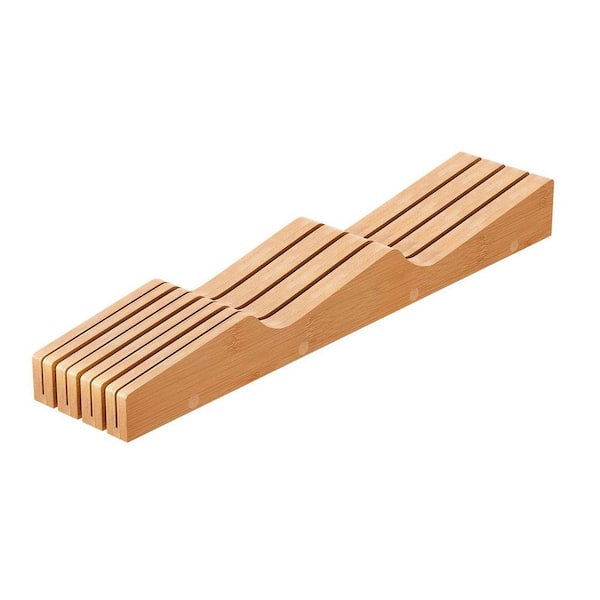
Routine care keeps your organizer safe and hygienic.
- Clean regularly
- Remove knives and wash the organizer per material instructions. Dry completely before replacing knives.
- Inspect for wear
- Look for cracks, loose parts, or worn slots that could expose blades.
- Replace liners or foam
- Replace absorbent materials when stained or smelly to avoid bacterial growth.
- Rotate knives
- Move knives occasionally to avoid wear in one slot. This maintains fit and prevents wobble.
Well-maintained organizers support knife drawer organizer safety and kitchen hygiene. In my experience, a simple monthly check prevents most issues.

Child and pet safety strategies
Protecting children and pets is a core part of knife drawer organizer safety.
- Store out of reach
- Place knife drawers in higher cabinets when possible or in drawers with child locks.
- Use drawer locks
- Install mechanical locks that require a key or hidden release.
- Add visual deterrents
- Keep knives out of sight and avoid leaving drawers half open.
- Educate family members
- Teach safe drawer behavior: close fully, use two hands, and ask an adult for help.
I once learned the hard way that a new family member can reach unexpected places. Adding a simple drawer lock solved that problem immediately.

Limitations and trade-offs
No solution is perfect. Be aware of common trade-offs when optimizing knife drawer organizer safety.
- Durability vs. gentleness
- Hard materials last longer but may cause edge wear.
- Cost vs. customization
- Custom inserts cost more but fit better and improve safety.
- Convenience vs. security
- Individual sheaths add protection but add time to store knives.
Recognize these trade-offs. Choose the balance that suits your daily habits and risk tolerance.



People also ask
How do I make a knife drawer safer quickly?
Use individual blade guards and place a non-slip liner. Add a simple drawer latch for child safety.
Will storing knives in a drawer dull them faster?
If blades rub against other metal or hard surfaces, yes. Use slots or sheaths to minimize contact and reduce dulling.
Are magnetic drawer organizers safe?
They can be safe if the magnet is properly embedded and knives cannot contact each other. Test stability before regular use.
Frequently Asked Questions of knife drawer organizer safety
What is the safest way to store knives in a drawer?
The safest way uses individual slots or sheaths that fully cover the blade and prevent contact. Secure the organizer to prevent sliding.
Can knife drawer organizers be cleaned in a dishwasher?
Most molded plastic trays are dishwasher-safe, but wood and foam inlays are not. Always follow the product instructions for cleaning.
How tall should knife slots be for safe storage?
Slots should cover the blade fully and allow easy insertion. Leave 1/4 to 1/2 inch of clearance at the handle for grip.
Are magnetic in-drawer organizers better than slotted trays?
They are better for quick access but require proper magnet embedding to avoid edge damage. Choose based on your knife types and habits.
How can I childproof a knife drawer effectively?
Install a childproof latch, keep knives in sheaths, and store the drawer out of common reach. Combine methods for best safety.
Should I line the drawer under the organizer?
Yes. A non-slip liner keeps the organizer from shifting and reduces noise. Replace liners when they wear.
Conclusion
Knife drawer organizer safety protects people and knives with small, practical steps. Choose an organizer that separates and covers blades, install it securely, and keep it clean. Use locks or higher placement for child and pet safety.
Start today by measuring your drawer and picking a solution that fits your knives and habits. Try one change this week install a molded tray, add blade guards, or add a latch and notice the immediate improvement in safety and confidence. Share your experience or ask a question below to learn more.

Maliha Khatun has spent 5 years hands-on testing Japanese knives for everyday home cooks. She has evaluated over 60 blades across nakiri, santoku, gyuto, and petty categories — scoring each on edge retention, steel quality, handle comfort, and value for money. She writes to help home cooks buy the right knife without the guesswork.
Expertise:Japanese Knives • Vegetable Knives • Product Reviews • Kitchen Efficiency • Knife Care
Leave a Reply