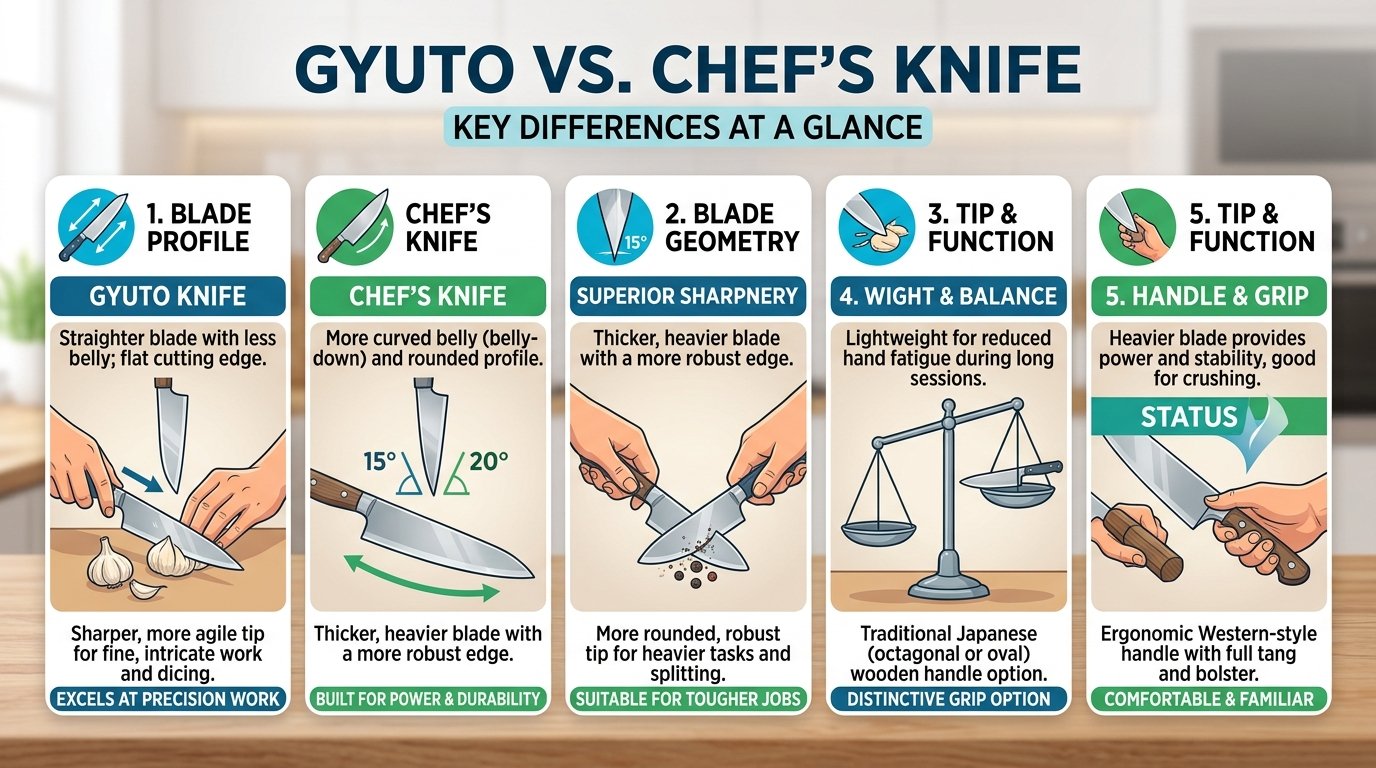
Gyuto and chef knife differ mainly in profile, edge angle, and preferred cutting style.
I have spent years testing knives in home and professional kitchens. This guide compares gyuto vs chef knife with clear, practical advice. You will learn design differences, cutting performance, sharpening needs, and which knife fits your cooking style. Read on for easy-to-follow tips, real-world tests, and buying guidance to make a confident choice.

Understanding the Gyuto and the Western Chef Knife
Gyuto is the Japanese take on the multipurpose chef knife. It evolved from traditional Japanese swords and was adapted for modern kitchens. The Western chef knife grew from European butcher and cook knives. It became the go-to tool in western kitchens.
Core role for both is the same. Both perform slicing, dicing, chopping, and mincing. The differences show up in blade shape, angle, and weight. Those differences affect control, speed, and edge retention.
When discussing gyuto vs chef knife, think of one as lean and fast and the other as solid and forgiving. That simple view helps pick the right tool.

Key Differences: Design, Blade Geometry, and Performance
Blade profile
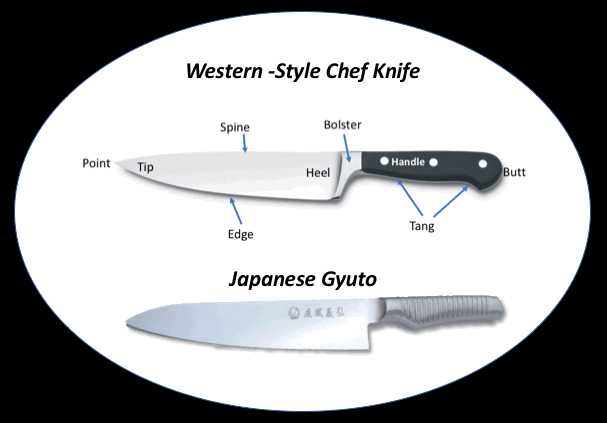
- Gyuto: slimmer belly, longer tip-to-heel curve for fine slicing and rocking.
- Western chef knife: fuller belly with a rounder curve built for heavy chopping and rocking.
Edge angle and sharpness
- Gyuto: typically 15 degrees per side or single-beveled; sharper and stays keen for slicing.
- Western chef knife: often 20 degrees per side; more durable and tolerant of rough use.
Weight and balance
- Gyuto: lighter and tip-focused for agile cuts.
- Western chef knife: heavier, offers power for cutting dense items and bones.
Cutting style impact
- Gyuto excels at thin, precise cuts, julienne, and fine work.
- Western chef knife excels at smashing, heavy chopping, and versatile home use.
When you compare gyuto vs chef knife, consider what you cook and how you cut. For precise prep, gyuto often wins. For heavy day-to-day use, a western chef knife is reliable.

Materials and Construction
Steel types
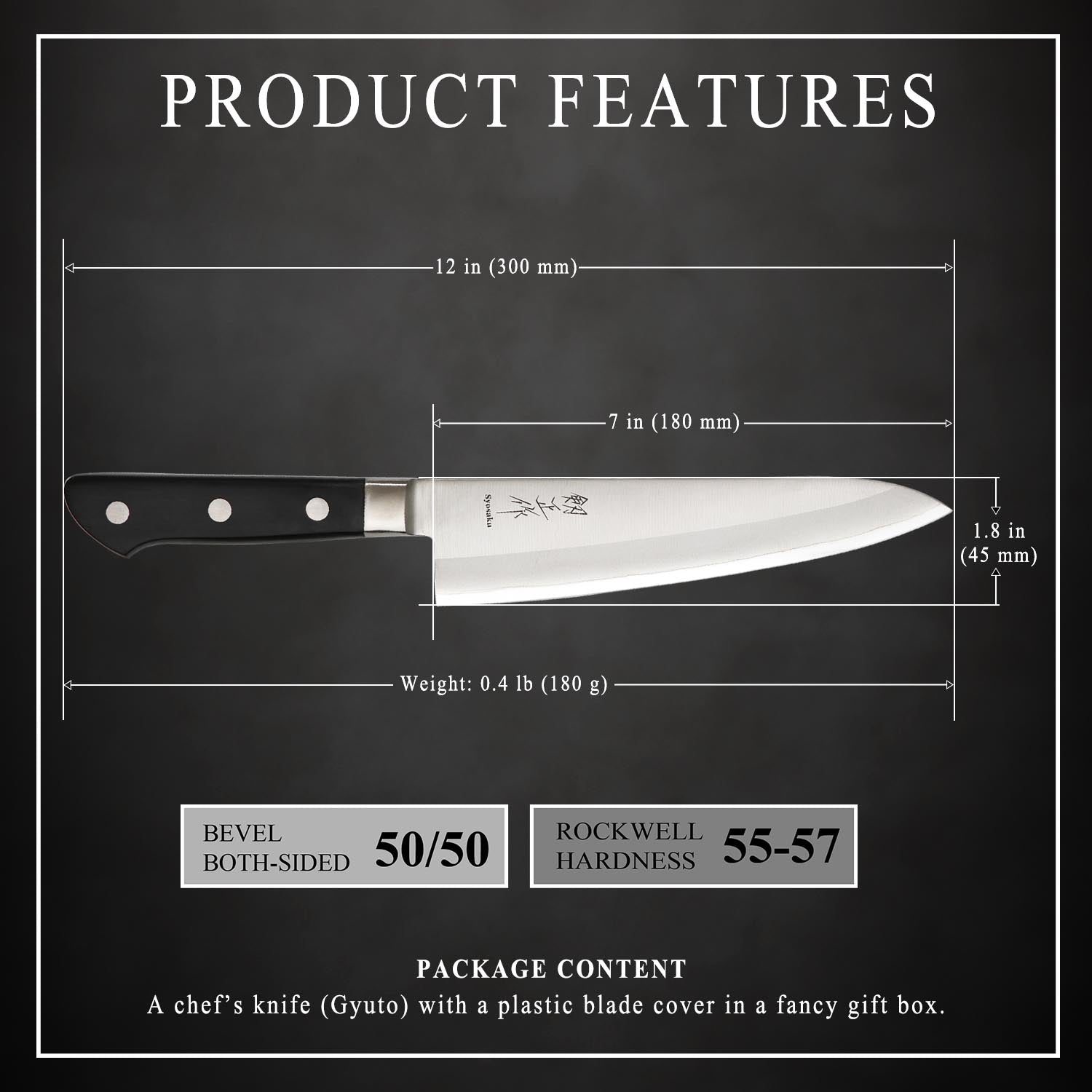
- Gyuto: often high-carbon or stainless steels with higher hardness (HRC 60+). This gives excellent edge retention but can be brittle.
- Western chef knife: often stainless steels with moderate hardness (HRC 52–58). This balances toughness and corrosion resistance.
Blade construction
- Gyuto: can be monosteel or clad (san mai) for a hard core and softer outer layers.
- Western chef knife: commonly forged or stamped and may be full-tang for strength.
Handle styles
- Gyuto: frequently uses wa-style or hybrid handles that are light and offer a nimble grip.
- Western chef knife: usually uses heavier, ergonomic handles with rivets.
When thinking about gyuto vs chef knife, remember steel and build dictate maintenance. Harder gyuto steels cut better but need more careful sharpening. Western steels are easier to care for.
How Each Knife Performs in Common Tasks
Slicing meat
- Gyuto: superior for thin, even slices and sashimi-style cuts.
- Western chef knife: great for larger cuts, roasts, and heavier slicing.
Vegetable prep
- Gyuto: ideal for fine julienne, thin cuts, and delicate herbs.
- Western chef knife: fast for chopping root vegetables and big batches.
Hard or dense items
- Gyuto: less suited for bones and frozen items due to hardness and risk of chipping.
- Western chef knife: stronger edge geometry for tougher jobs.
Speed and rhythm
- Gyuto: encourages smooth, precise motions.
- Western chef knife: supports aggressive, rhythmic chopping.
These performance notes help when deciding gyuto vs chef knife for your kitchen tasks. Choose based on the foods you prepare most.

Choosing Between Gyuto vs Chef Knife: Who Should Use Which
Pick a gyuto if:
- You value precision, thin slicing, and a lighter, nimble knife.
- You cook a lot of fish, fine vegetables, or plated foods.
- You like sharpening and maintaining a sharper edge.
Pick a western chef knife if:
- You need a tough, all-around tool for many kitchen chores.
- You prefer lower maintenance and a heavier feel.
- You work with dense vegetables, large cuts of meat, or occasional bone work.
Consider a two-knife setup for balance. Many cooks keep a gyuto for prep and a western chef knife for heavy tasks. That strategy gets the best of both worlds in real kitchens.

Care, Sharpening, and Maintenance
Sharpening frequency
- Gyuto: sharpen more often to maintain the acute edge.
- Western chef knife: sharpen less frequently due to tougher edge geometry.
Sharpening methods
- Use water stones for gyuto to control angle and finish.
- Use whetstones or guided systems for western knives if you prefer consistency.
Daily care
- Hand wash both knives and dry immediately.
- Avoid dishwashers and hard surfaces like ceramic or glass.
Storage
- Use a magnetic strip or knife block.
- Store blades separately to prevent nicks.
When weighing gyuto vs chef knife, be honest about care time. If you do not want frequent sharpening, a western chef knife may suit you better.

My Personal Experience and Practical Tips
I have used gyuto and western chef knives in restaurants and at home. I found gyuto best for prep that needs finesse. I used the western chef knife for high-volume chopping and heavy-duty prep.
Lessons learned
- Do not force a gyuto into jobs it was not made for. It can chip.
- Match the blade to your grip and cutting motion. Comfort matters more than brand.
- Try before you buy when possible; weight and balance feel different in hand.
Common mistakes to avoid
- Buying the sharpest blade without considering maintenance.
- Using a gyuto to pry or cut frozen bones.
- Forgetting to strop or hone regularly to reduce sharpening frequency.
Practical tip
- If you can only own one knife, choose the one that fits most of your meals. For diverse cooking, a western chef knife gives safe flexibility. For precision and speed, choose a gyuto.
Frequently Asked Questions of gyuto vs chef knife
What is the main difference between a gyuto and a chef knife?
The main difference is blade geometry and angle. Gyuto is lighter and sharper with a thinner edge, while a chef knife is heavier and more robust.
Which is better for home cooks, gyuto or chef knife?
For most home cooks, a western chef knife is more forgiving and versatile. However, home cooks who value precision may prefer a gyuto.
Can a gyuto replace a chef knife?
Yes, a gyuto can replace a chef knife for many tasks, but it may not handle heavy chopping or bone work well. Consider a second knife for tougher jobs.
How often should I sharpen a gyuto compared to a chef knife?
Sharpen a gyuto more often due to its harder, sharper edge. A western chef knife holds a usable edge longer and needs less frequent sharpening.
Are gyuto knives harder to maintain?
They can be because they use harder steels and finer edges. Good sharpening skills and gentle use reduce maintenance challenges.
Conclusion
Gyuto vs chef knife comes down to how you cook. Gyuto favors precision, speed, and fine slices. Western chef knives favor toughness, versatility, and simple care. Pick based on food types, cutting style, and how much time you will spend on maintenance. Try both styles if possible, and match feel and balance to your hand.
Choose one with confidence. Test in-store, read reviews, and start with a mid-range model to learn. Share your experience, subscribe for updates, or leave a comment about which knife you prefer and why.
Maliha Khatun has spent 5 years hands-on testing Japanese knives for everyday home cooks. She has evaluated over 60 blades across nakiri, santoku, gyuto, and petty categories — scoring each on edge retention, steel quality, handle comfort, and value for money. She writes to help home cooks buy the right knife without the guesswork.
Expertise:Japanese Knives • Vegetable Knives • Product Reviews • Kitchen Efficiency • Knife Care
Leave a Reply