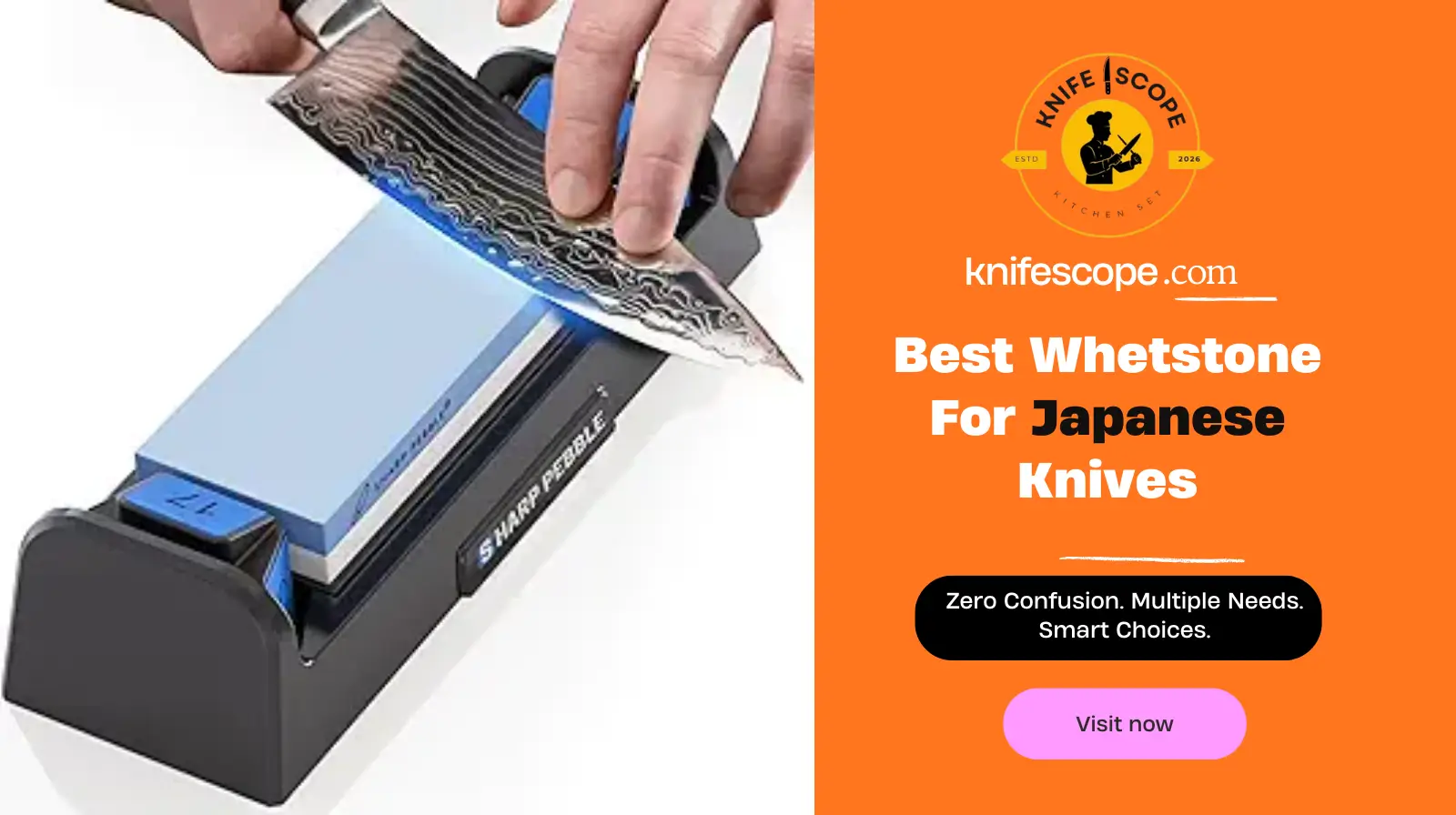
A 1000-grit splash-and-go like Shapton Glass 1000 suits most Japanese knives.
If you want a razor edge without fuss, you’re in the right place. I’ve sharpened Japanese knives daily for years, and I’ll break down the best whetstone for japanese knives based on steel, skill, and budget. You’ll get clear picks, simple steps, and real-world tips you can trust.
What Makes Japanese Knives Different (and Why Stone Choice Matters)
Japanese knives are hard, thin, and precise. Many sit between 60–65 HRC, which means they hold a sharp edge longer but can chip if you use the wrong stone or bad technique. The right stone grabs hard steel, forms a burr fast, and leaves a clean, stable edge.
Water stones pair best with Japanese knives. They cut fast, feel smooth, and let you control the edge. Oil stones are slower on hard steels and can load up. For most cooks, the best whetstone for japanese knives is a medium grit that balances speed and control.

Grit and Stone Types Explained
Think in three stages:
- Coarse (220–500 grit): For chips, rolls, and major repairs. Fast but scratchy.
- Medium (800–2000 grit): Your workhorse. Builds the edge, sets the angle, forms the burr.
- Fine (3000–8000 grit): Refines and polishes. Boosts push-cutting and food release.
Soaking vs splash-and-go:
- Soakers: Stones like King and Cerax. Soak 10–15 minutes. Great feedback, softer feel, more slurry.
- Splash-and-go: Shapton Glass/Kuromaku and Naniwa Pro (Chosera). No soak. Harder, fast, cleaner edges.
Synthetic vs natural:
- Synthetic: Predictable, fast, consistent. Best for most users.
- Natural: Lovely polish and bite blend. More nuance and cost.
Stone hardness matters:
- Softer stones give great feedback and mud. They can dish faster.
- Hard stones cut clean and flat. They demand a steadier hand.
For most home and pro cooks, a medium stone is the best whetstone for japanese knives. It hits the sweet spot of speed, control, and edge quality.
The Best Whetstone for Japanese Knives: Top Picks by Use Case
Here are tested picks that work on common steels like VG-10, Aogami (Blue), Shirogami (White), SG2/R2, and even ZDP-189. I’ve used these stones in my shop and home kitchen.
Best overall (one-stone setup)
- Shapton Glass 1000: Splash-and-go, fast on hard steel, minimal dish, crisp edges. For many cooks, this is the best whetstone for japanese knives.
Best budget starter
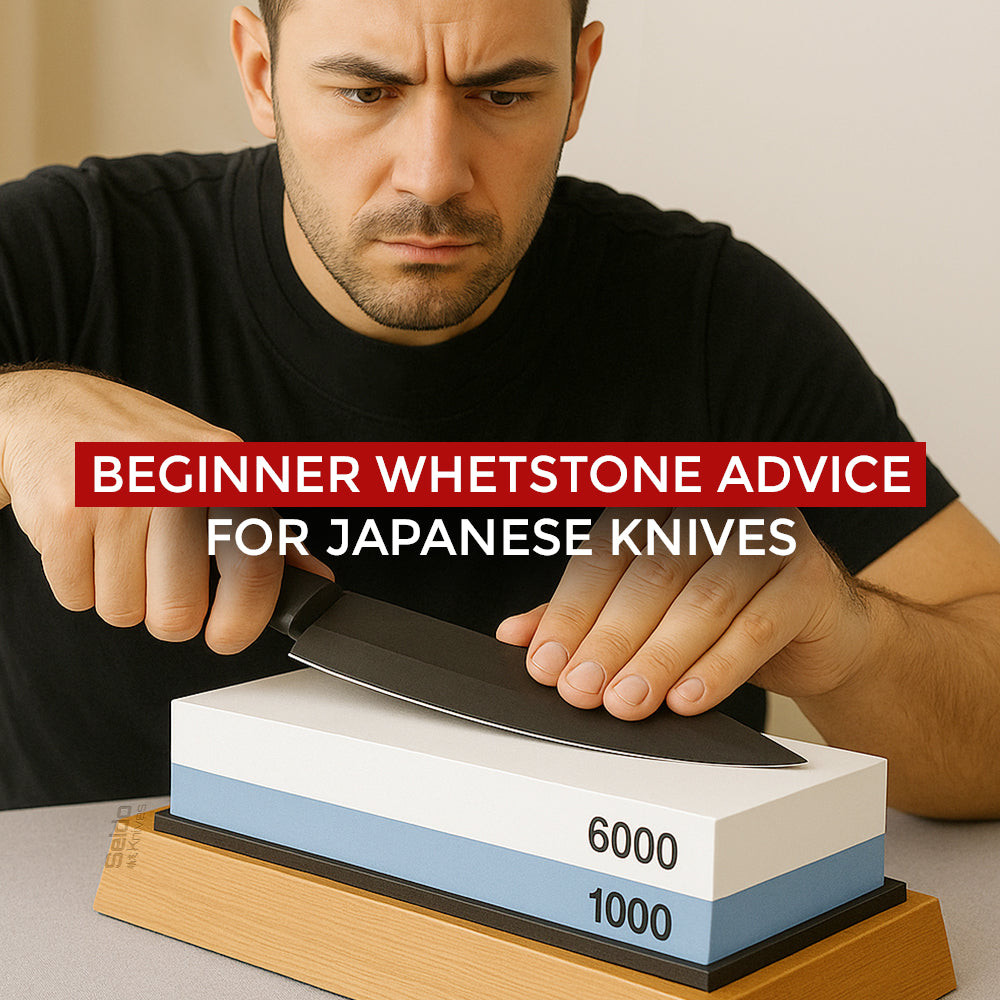
- King 1000/6000 combo: Soaker with classic feedback. The 1000 is gentle, the 6000 gives a glossy finish. Add a flattening plate early.
Best mid-price daily driver
- Suehiro Cerax 1000: Creamy feel, strong bite, generous slurry. Great for White and Blue steels.
Best pro workhorse
- Naniwa Professional (Chosera) 1000: Dense, fast, and forgiving. Forms a stable burr with clean scratch pattern.
Best for hard powdered steels (SG2, ZDP-189)
- Shapton Glass 2000 or 3000: Cuts tough alloys without skating. Leaves a refined bite that lasts.
Best coarse for repairs
- Shapton Glass 500 or Naniwa Pro 400: Quick, flat, and predictable. Pairs well with a 1000 follow-up.
Best finishing feel for slicing
- Arashiyama 6000 (synthetic): Gentle polish with bite. Lovely on carbon steel gyutos and petty knives.
Best natural taste (advanced users)
- Aoto (blue mid-grit) followed by a fine Awasedo: Smooth kasumi on wide bevels and a refined, sticky edge.
If you want a simple kit, try this:
- Naniwa Pro 400 + Naniwa Pro 1000 + Shapton Glass 3000. This set is a strong answer to the question “what’s the best whetstone for japanese knives for most kitchens?”
How to Choose the Best Whetstone for Japanese Knives for Your Setup
Match the stone to your knives, not just your budget.
By steel type
- VG-10, White, Blue: Medium stones around 1000 grit work great. Finish at 3000–6000 for clean push cuts.
- SG2/R2, ZDP-189: Use harder, faster stones. Shapton Glass 1000–3000 shines here.
- Single-bevel blades: You’ll want larger stones and a mid-grit that makes steady mud for wide bevels.
By knife style
- Gyuto/chef: 1000 as daily driver, 3000–6000 as finisher.
- Nakiri/santoku: Same as gyuto. Keep edges crisp for clean veg cuts.
- Yanagiba/sujihiki: Lean into finer polish. A smooth 3000–6000 boosts glide.
By skill level
- Beginner: One medium stone is enough. Shapton Glass 1000 or Cerax 1000.
- Intermediate: Add a coarse and a fine.
- Advanced: Add naturals or tune grit jumps for the edge feel you love.
By size and support
- Aim for at least 210 x 70 mm. Bigger is easier to learn on.
- Get a stone holder and a damp towel for grip and safety.
- Always own a flattening tool. An Atoma 140 or a proper lapping plate keeps stones true.
If you only buy one stone today, a 1000 grit splash-and-go is still the best whetstone for japanese knives for most cooks.

Step-by-Step: Sharpening a Japanese Knife on a Whetstone
Set up
- Secure the stone. Keep a spray bottle handy. Clean, bright light helps.
- Mark the edge with a Sharpie to track contact.
Find your angle
- Double bevel: 12–15 degrees per side.
- Single bevel: Use the wide bevel as your guide and keep it flat.
- Start on 1000 grit. Light to moderate pressure. Stroke heel to tip, then tip to heel.
- Work until you raise a burr along the full edge. Flip and repeat.
- Use short strokes on trouble spots. Keep the stone wet but not flooded.
Refine and deburr
- Lighter pressure halves, then feather-light. This cleans the scratch pattern.
- Raise the spine a hair to add a micro-bevel. Two or three strokes per side.
- Move to 3000–6000 if you want more polish and glide.
Confirm and clean
- Test on paper or a tomato skin. It should bite without tearing.
- Rinse the knife. Dry it at once, especially carbon steel.
This basic flow is the backbone behind choosing the best whetstone for japanese knives.
Care, Flattening, and Safety
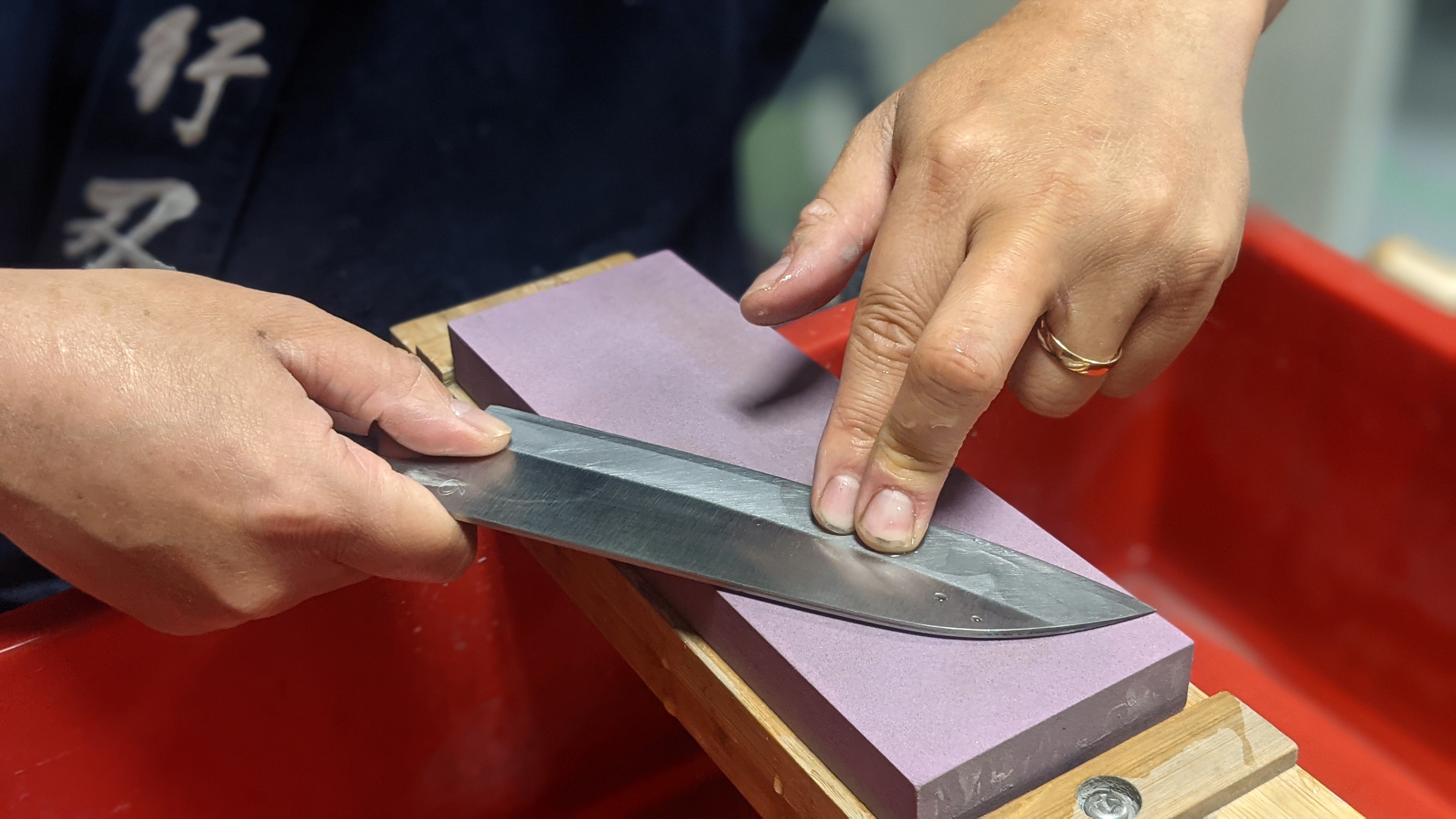
Flatten often. A dished stone rounds your edge. Use a diamond plate like Atoma 140 or a dedicated lapping stone. Draw a pencil grid on the stone, lap until the grid is gone, and you’re flat.
Soak soakers, not splash-and-go. Read the maker’s guide. Never store stones in water. Let them dry in the open, out of sun.
Keep it safe. Use a sturdy base. Keep fingers above the spine. Move slow. A sharp knife is safer, but respect it.
Avoid cross-contamination. Rinse carbon blades fast. Wipe and dry after each session to prevent rust.
Good care protects your investment and gets the most from the best whetstone for japanese knives.

Common Mistakes and How to Avoid Them
- Skipping flattening: You’ll chase your angle and create a wire edge. Flatten early and often.
- Too much pressure: You dig, scratch, and roll. Let the stone do the work.
- Chasing polish too soon: If the 1000 doesn’t have a clean burr, the 6000 can’t save it.
- Angle drift: Use short sets, count strokes, and check with a marker.
- No deburring plan: Add a tiny micro-bevel and use light trailing strokes.
- Wrong stone for hard steels: Some soft soakers skate. A harder medium is the best whetstone for japanese knives with SG2 or ZDP-189.

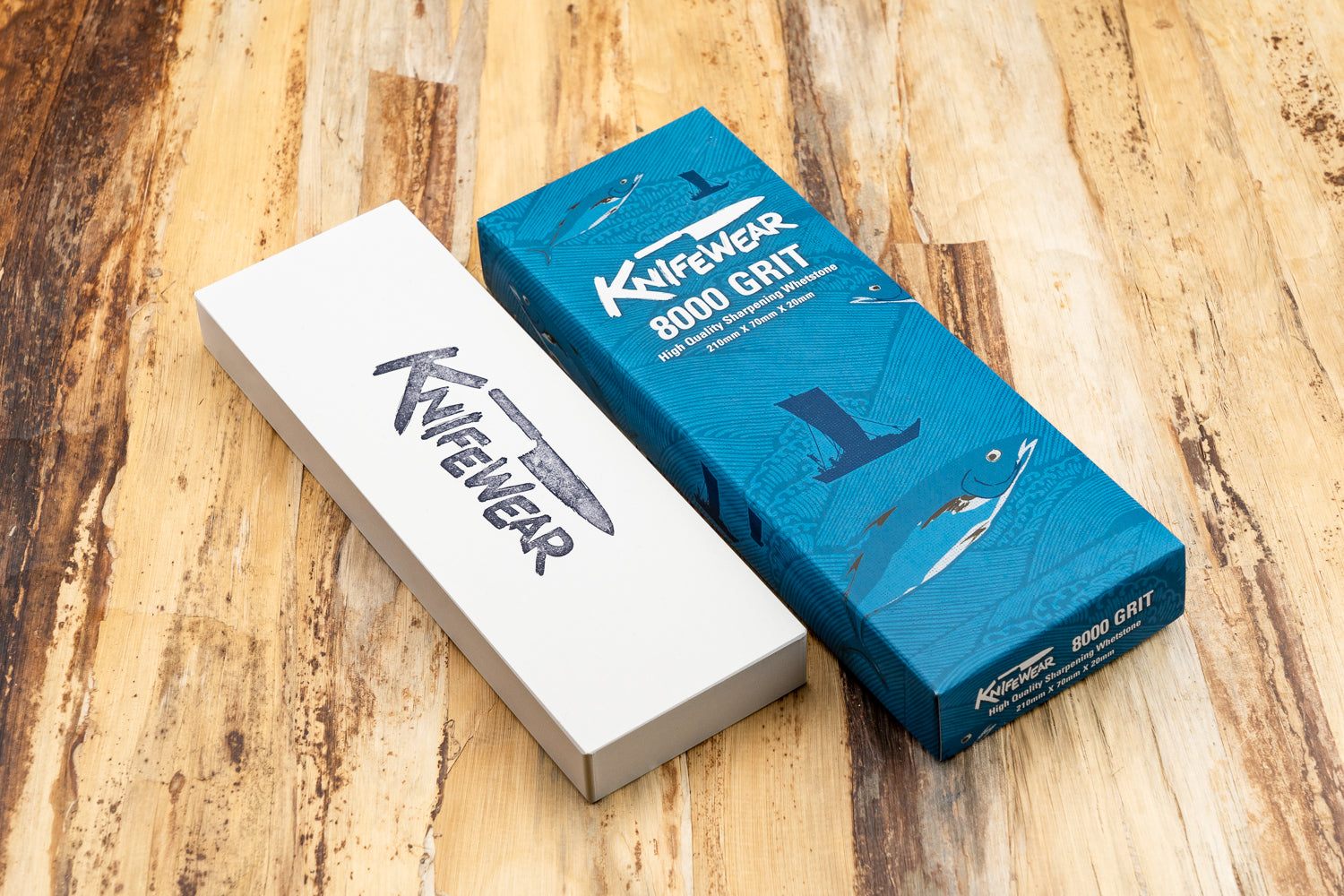
Source: knifewear.com
Real-World Notes From My Bench
When I sharpen VG-10 gyutos, I reach for a Cerax 1000 to set the edge. It gives a gentle mud that helps me feel the burr. Then I touch up on a 3000 for a neat, bitey finish.
On Aogami Super, Shapton Glass 1000 is faster and stays flat. It builds a crisp, lasting edge that resists micro-chipping. For single-bevel blades, I use a wide stone and slow strokes. That keeps the wide bevel even and clean.
I once over-polished a nakiri to 8000. It slid on tomatoes but lacked bite on onions. The fix was simple: drop back to 3000, add a light micro-bevel, and the knife sang. Lessons like this shape how I judge the best whetstone for japanese knives in real kitchens.
If you’re unsure where to start, pick one medium stone and learn it well. Mastery of one stone beats owning five you don’t understand.

Budget and Buying Guide: What You Actually Need
Starter kit (value focus)
- King 1000/6000 combo
- Basic stone holder
- Inexpensive flattening plate
Why it works: Gentle, affordable, and teaches control. A smart way to find your best whetstone for japanese knives without overspending.
Enthusiast kit (balanced)
- Shapton Glass 500 + 1000 + 3000
- Atoma 140 for flattening
Why it works: Fast, clean, and precise. Great for hard steels and busy kitchens.
Pro kit (heavy use)
- Naniwa Pro 400 + 1000 + Shapton Glass 4000 or 6000
- Quality holder and stable base
Why it works: Speed, feedback, and low maintenance. Ideal if you sharpen every week.
One-stone path
- Shapton Glass 1000 or Naniwa Pro 1000
Why it works: Simple, sharp, and enough for most cooking. This is still my top answer when people ask for the best whetstone for japanese knives.
Frequently Asked Questions of best whetstone for japanese knives
What grit is best for everyday sharpening?
A 1000 grit is the sweet spot for most Japanese knives. It shapes the edge, builds a burr, and gives a clean cut without over-polishing.
Do I need a soaking stone or splash-and-go?
You can use either. Soakers like King feel creamy, while splash-and-go like Shapton Glass are fast and low fuss.
How often should I sharpen?
For home cooks, every 4–8 weeks is common. Honing on a loaded strop or a few light passes on the 3000 between full sessions helps.
Can I use oil on a water stone?
Do not use oil on water stones. Oil clogs the pores and ruins the stone’s cutting action.
What angle should I use for a gyuto?
Aim for 12–15 degrees per side. Keep it steady and add a tiny micro-bevel to boost edge life.
How do I stop my stone from dishing?
Flatten often with a diamond plate like an Atoma 140. Draw a pencil grid and lap until the grid is gone.
Is an 8000 grit necessary?
Not for most cooks. A 3000–6000 finish gives great bite and glide; 8000 is for special tasks or show polish.
Conclusion
The right stone makes sharpening simple, quick, and repeatable. For most cooks, a single 1000 grit water stone is the best whetstone for japanese knives, with a 3000–6000 as a nice add-on. Pick one stone, learn the feel, and let your results guide your next buy.
Put your first edge on the stone this week. Note your angle, lighten your touch, and enjoy the jump in performance. Want more guides and hands-on tips? Subscribe, ask a question, or share your current setup—I’m happy to help you find your best whetstone for japanese knives.
Maliha Khatun has spent 5 years hands-on testing Japanese knives for everyday home cooks. She has evaluated over 60 blades across nakiri, santoku, gyuto, and petty categories — scoring each on edge retention, steel quality, handle comfort, and value for money. She writes to help home cooks buy the right knife without the guesswork.
Expertise:Japanese Knives • Vegetable Knives • Product Reviews • Kitchen Efficiency • Knife Care
Leave a Reply