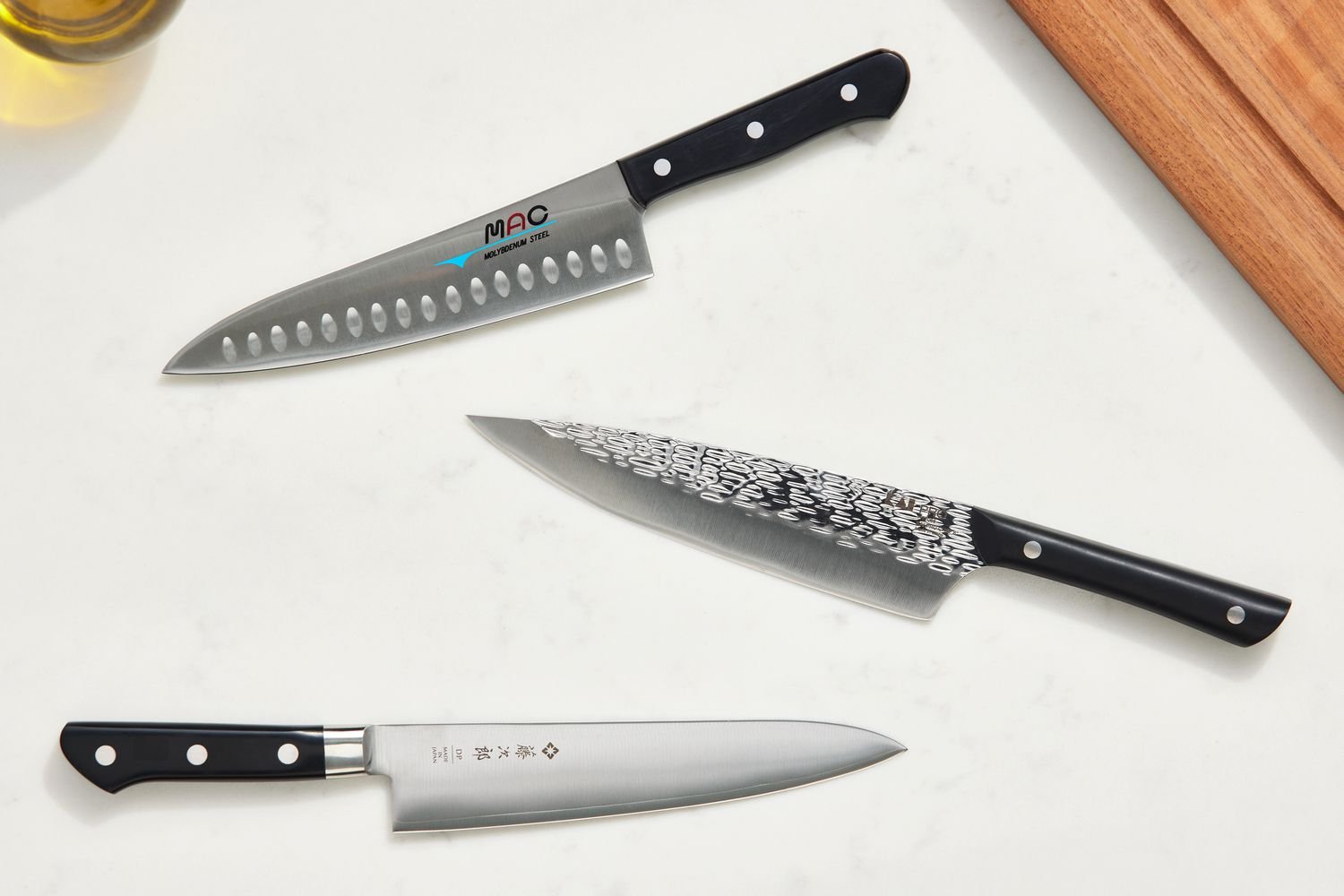
Western knives are robust and versatile; Japanese knives prioritize thin, razor-sharp edges and precision.
I have cooked professionally and tested dozens of blades, so I know the practical differences between western vs japanese knives. This guide breaks down design, steel, sharpening, care, and real-world performance so you can pick the right knife with confidence. Read on for clear comparisons, hands-on tips, and rules I learned the hard way.

Blade design and geometry
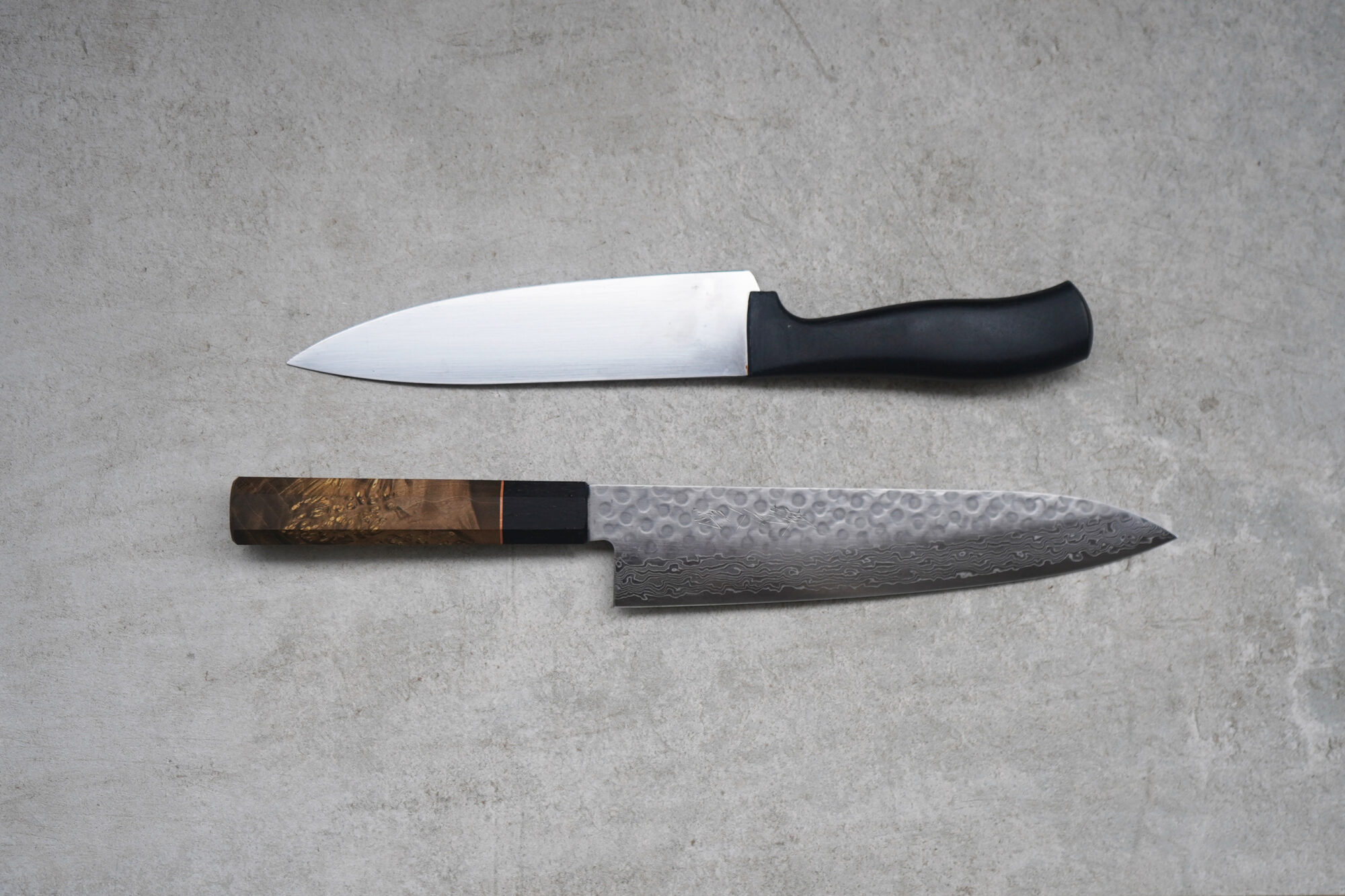
Blade shape and geometry are the first visible differences in the western vs japanese knives debate. Western knives often have thicker blades, a more pronounced curve for rocking, and a heavier profile. Japanese knives commonly use thinner blades, straighter edges, and higher-tip control for slicing and push cuts.
Key design contrasts
- Western — heavier spine, fuller belly for rocking cuts and chopping.
- Japanese — thinner spine, straighter edge for clean slices and precision cuts.
- Hybrid models — blend western durability with japanese geometry for versatile performance.
Why geometry matters
- Thicker blades resist chipping and can handle bones and hard vegetables.
- Thinner blades slice cleanly and retain a sharper bite for longer cutting strings and thin slices.
Experience note: I learned to adjust my motion with each style. With western knives I used a gentle rocking motion; with Japanese knives I used push-slice techniques for clean, paper-thin cuts.

Steel types and hardness
One of the biggest technical differences in western vs japanese knives is the steel chemistry and hardness. Western knives typically use stainless or carbon steels with tempering that favors toughness over extreme hardness. Japanese knives often use harder steels with higher carbon content and specialized heat treatment.
Typical ranges
- Western steels — lower hardness (approx. HRC 52–58), emphasis on toughness and stain resistance.
- Japanese steels — higher hardness (approx. HRC 58–66), emphasis on edge retention and sharpness.
- Powder metallurgy and modern alloys — found in both styles, offering a mix of hardness and corrosion resistance.
Implications for use
- Harder japanese steels hold a keen edge longer but need careful handling to avoid chips.
- Softer western steels are easier to sharpen and more forgiving with heavy use.
Trust signal: Brands use different heat treatments and alloy mixes. This affects how often you must sharpen and how the blade tolerates knocks and moisture.
:max_bytes(150000):strip_icc()/Web_1500-SEA-GroupShot-RussellKilgore-331-8006598b9f5345c6bf404caea0f0c9c2.jpg "Western Vs Japanese Knives: Choose The Right Knife 4")
Edge angle and sharpening
Edge angle and sharpening practice highlight practical differences between western vs japanese knives. Japanese knives frequently arrive with acute angles, often 15 degrees per side or less. Western knives more commonly use 20 degrees per side or more.
Practical points
- Sharper angle — better slicing and less tear when cutting soft foods.
- Wider angle — stronger edge for heavy-duty tasks and less prone to rolling.
Sharpening tips
- Maintain the blade's original angle to preserve performance.
- Use stones for japanese knives and stones or rods for western knives depending on steel.
- Hone often; sharpen less frequently if you maintain the edge with honing.
Personal tip: I once ruined a japanese blade by forcing it through bone. The thin edge chipped; after that I kept a separate, sturdier western cleaver for bones.
Handles, balance, and ergonomics
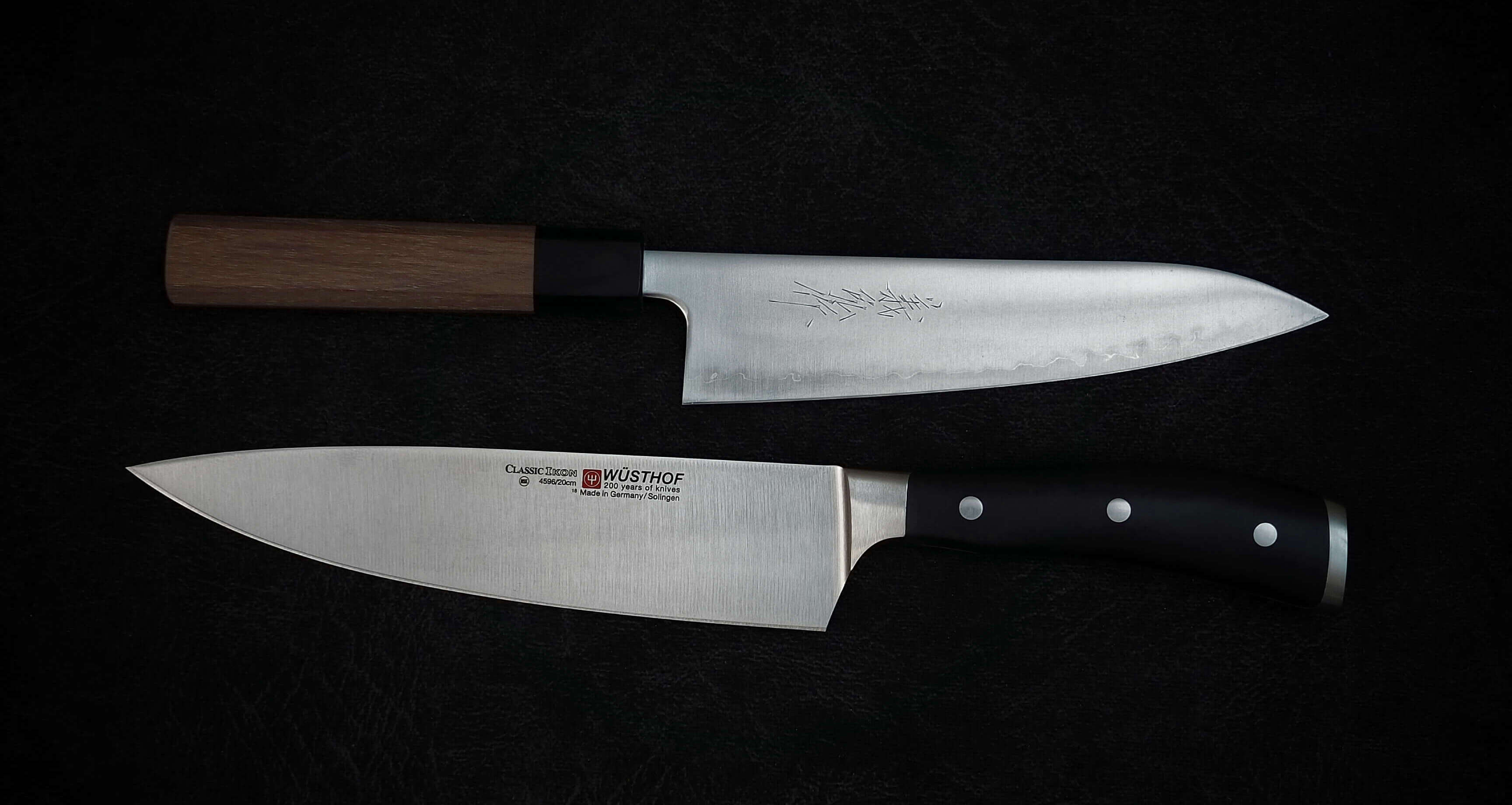
Handle style and balance affect comfort and control when comparing western vs japanese knives. Western handles are often larger and shaped for a secure pinch grip. Japanese handles can be lighter, sometimes octagonal or D-shaped, which shifts the balance closer to the blade.
What to expect
- Western handles — full tang, heavy bolster, good for long cuts and heavy work.
- Japanese handles — lighter, sometimes single-piece construction, precise feel for delicate tasks.
- Balance — choose a blade-handle combo that suits your grip strength and cutting style.
Ergonomic advice
- Test the grip in person when possible.
- Consider hand size and dominant cutting technique before buying.

Performance and use cases
Deciding between western vs japanese knives comes down to what you cook and how you cook. Each style excels at different tasks.
Best uses for western knives
- Chopping and rock-cutting large vegetables.
- Tasks requiring strength, like cutting through dense squash or poultry bones (with a cleaver).
Best uses for japanese knives
- Precise slicing of fish and delicate proteins.
- Producing uniform vegetable cuts and paper-thin garnishes.
Everyday kitchen workflow
- Many cooks keep one of each: a western chef's knife for bulk tasks and a japanese gyuto or santoku for fine work.
- Consider a hybrid if you want one knife to handle most jobs.
Care and maintenance
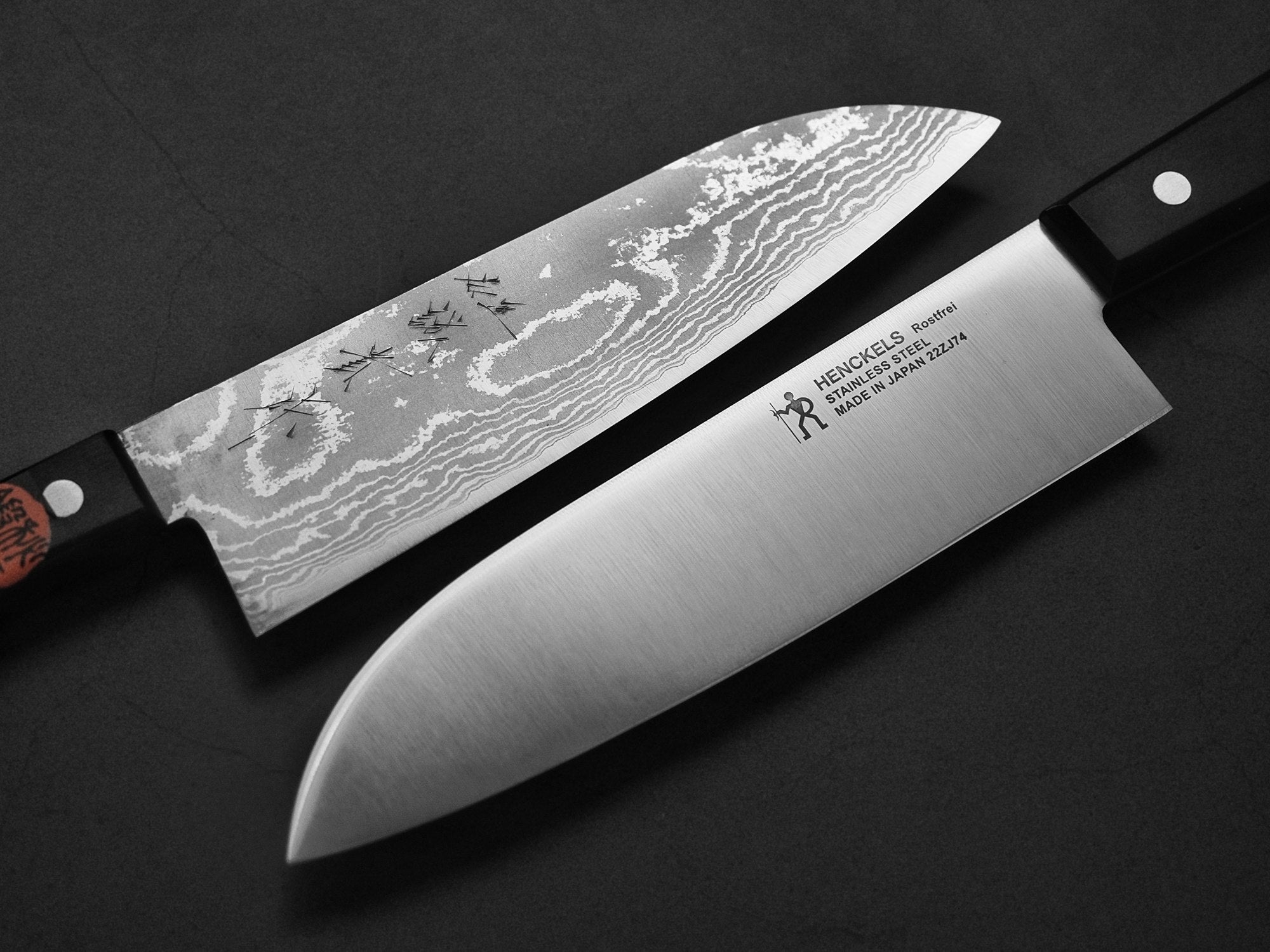
Care routines differ because of steel choices and blade profiles when comparing western vs japanese knives. Japanese high-carbon steels are often more reactive and need extra protection against rust. Western stainless steels handle moisture and dish contact better.
Care checklist
- Dry knives immediately after washing to prevent spots or stains.
- Store in a block, magnetic strip, or knife sleeve to protect edges.
- Hone frequently; sharpen on quality stones when needed.
Maintenance frequency
- Japanese high-hardness blades may need less frequent sharpening but require gentler handling and occasional oiling.
- Western knives may need sharpening more often but can tolerate rougher use.
Personal routine: I hone my knives before each session and sharpen them on a stone every few months. This routine kept both my western and japanese knives reliably sharp for years.
Price and value
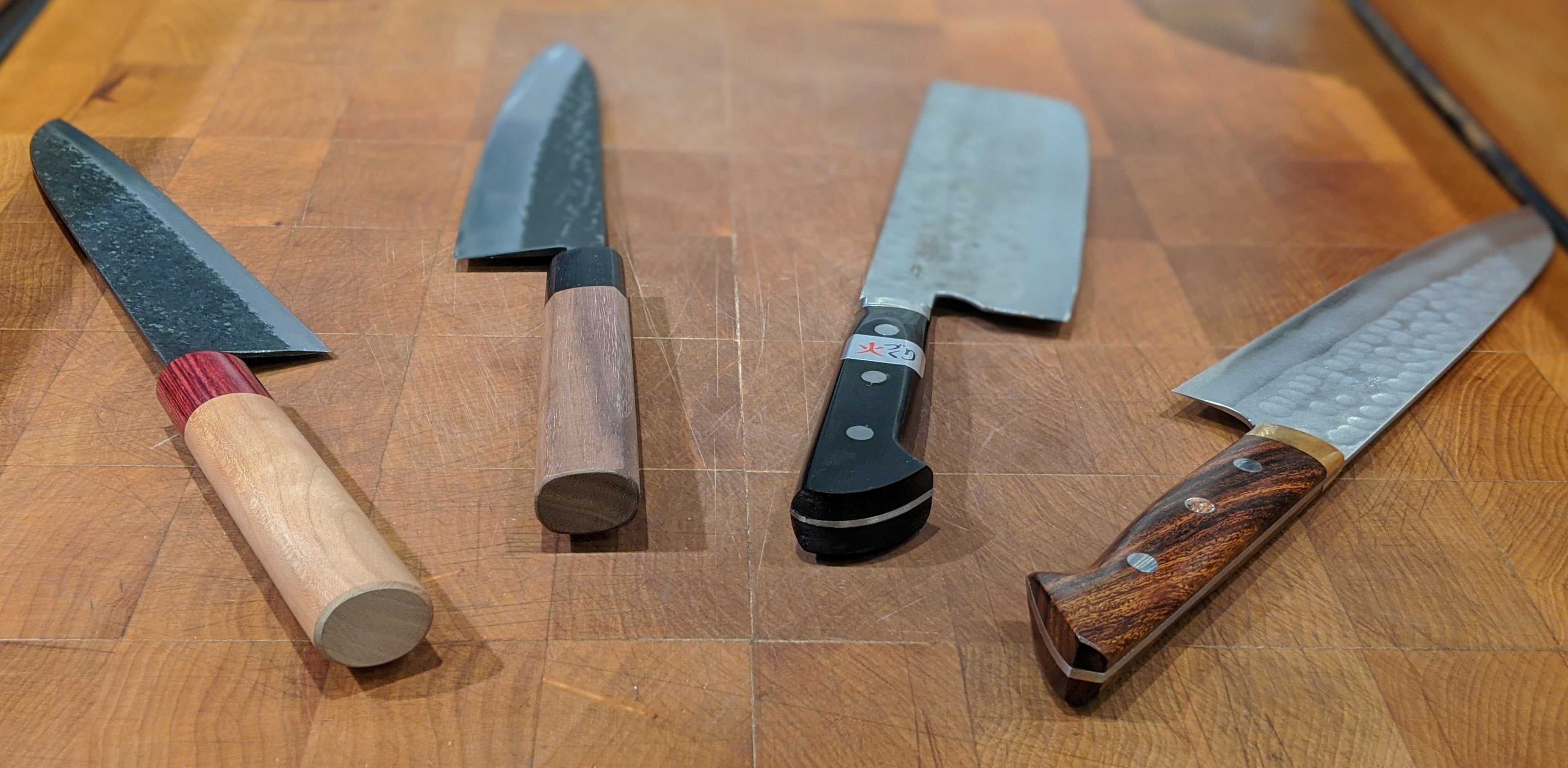
Price often reflects materials, craftsmanship, and brand reputation in the western vs japanese knives market. Handmade or forged japanese knives with premium steels can be costly. Quality western knives also command high prices for forged construction and specialized alloys.
Value factors
- Steel quality — higher-end alloys and powder steels cost more.
- Craftsmanship — hand-forged blades and complex heat treatment add value.
- Intended use — specialty knives like yanagiba or nakiri may be worth a premium for professionals.
Buying tips
- Spend more on the blade steel and geometry than on decorative handles.
- Consider resale and long-term sharpening costs when evaluating value.

How to choose: which knife fits you?
Choosing between western vs japanese knives means matching tools to your habits, food, and kitchen style. Ask practical questions about what you cook and how you like to cut.
Decision steps
- Identify main tasks — heavy chopping or precise slicing.
- Try grips and test weight and balance in person if possible.
- Decide on maintenance commitment — do you want to sharpen weekly or monthly?
My recommended setups
- Beginner home cook — start with a good-quality western chef's knife for versatility.
- Home cook focused on fish and veg — add a japanese santoku or gyuto for precise cuts.
- Enthusiast or pro — build a small set: western chef's knife, japanese slicer, and a sturdy cleaver.
Personal insight: After years cooking, I settled on a hybrid gyuto for most work and kept a western cleaver for heavy-duty tasks. That combo covered 95% of my kitchen needs.
Frequently Asked Questions of western vs japanese knives
What is the main difference between western vs japanese knives?
The main difference lies in blade geometry and steel. Western knives emphasize toughness and a wider edge, while japanese knives emphasize hardness and a thinner edge for precision.
Are japanese knives harder to maintain than western knives?
Yes, many japanese knives use harder steels that can rust or chip if not cared for. They need gentler use, immediate drying, and occasional oiling.
Can I use a japanese knife for chopping bones?
No, you should avoid chopping bones with most japanese knives because their thin edges can chip. Use a western-style cleaver or a heavy-duty knife for bones.
Which knife type stays sharp longer, western or japanese?
Japanese knives often hold a sharper edge longer due to harder steel, but they can chip more easily. Western knives may dull sooner but are easier to re-sharpen and more robust.
Should a home cook own both styles?
Owning both styles covers most tasks: a western chef's knife for heavy work and a japanese knife for fine slicing is a practical setup. This combination gives flexibility and optimal performance.
Conclusion
Western vs japanese knives each offer clear strengths: western knives bring durability and versatility, while japanese knives bring razor-sharp precision and refined slicing. Choose based on the foods you prepare, how you cut them, and how much maintenance you’re willing to do. Try knives in person, start with one reliable blade, and add specialty pieces as your skills grow. Take action today: test a blade, practice your sharpening, and subscribe or comment below to share your favorite knife experiences.
Maliha Khatun has spent 5 years hands-on testing Japanese knives for everyday home cooks. She has evaluated over 60 blades across nakiri, santoku, gyuto, and petty categories — scoring each on edge retention, steel quality, handle comfort, and value for money. She writes to help home cooks buy the right knife without the guesswork.
Expertise:Japanese Knives • Vegetable Knives • Product Reviews • Kitchen Efficiency • Knife Care
Leave a Reply