
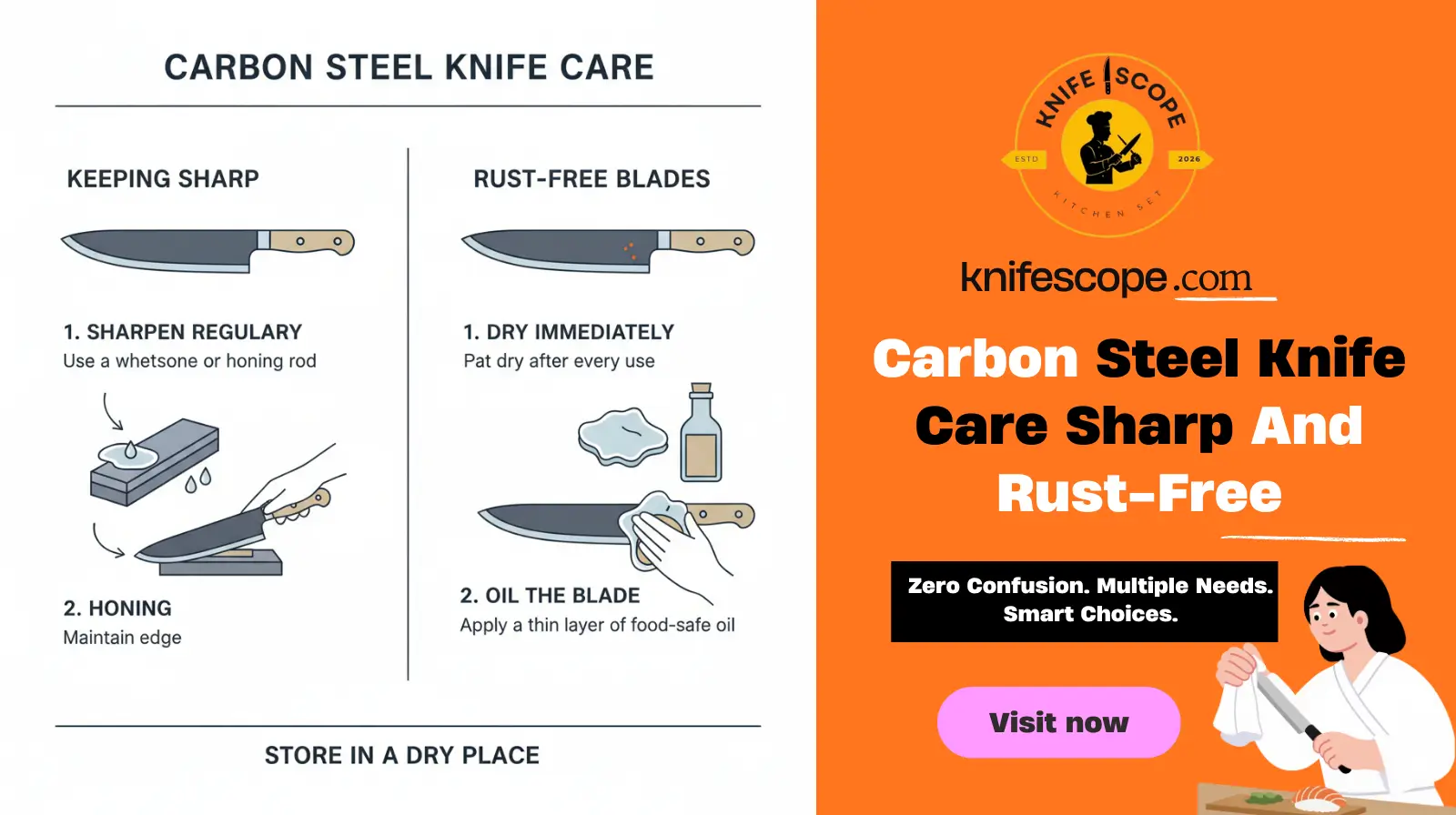
White steel (Shirogami) is a very pure carbon steel that gets extremely sharp and is easy to sharpen. Blue steel (Aogami) is white steel with small additions of chromium and tungsten, which improve wear resistance and toughness, so it holds an edge longer. Both are carbon steels and will rust if not cared for.
White and blue steel are the two classic carbon steels in traditional Japanese knives. Both are made by Hitachi Metals (now Proterial) under the Yasugi Specialty Steel (YSS) brand. This blue steel vs white steel guide compares their composition, sharpness, edge retention, sharpening, and care so you can pick the right one.

Blue steel vs white steel at a glance
| White steel (Shirogami) | Blue steel (Aogami) | |
|---|---|---|
| Type | High-purity carbon steel | Carbon steel with chromium and tungsten |
| Common grades | White #1, White #2 | Blue #1, Blue #2, Blue Super |
| Sharpness | Excellent, very fine edge | Excellent |
| Edge retention | Good | Better |
| Ease of sharpening | Easiest | Easy to moderate |
| Rust resistance | Low (reactive) | Low (slightly better, still reactive) |
| Typical price | Lower | Higher |

What is white steel (Shirogami)?
White steel is a simple carbon steel made with very low levels of impurities such as phosphorus and sulfur. That purity lets it take a very keen, refined edge. It sharpens quickly on whetstones and is a favorite for traditional single-bevel knives like yanagiba and usuba.
- White #2: The most common grade, with an average of about 1.1% carbon. Slightly more forgiving and less prone to chipping than White #1.
- White #1: Higher carbon, about 1.3% on average. Can be hardened further for a keener edge, but is more brittle.
What is blue steel (Aogami)?
Blue steel starts from white steel and adds small amounts of chromium and tungsten. These additions improve wear resistance and toughness, so the edge lasts longer and holds its cutting ability as it wears.
- Blue #2: About 1.1% carbon on average. A popular, well-balanced choice for everyday knives and debas.
- Blue #1: About 1.3% carbon. Harder and more wear resistant, a bit more effort to sharpen.
- Blue Super (Aogami Super): About 1.45% carbon with additional alloying. Long edge life, but harder to sharpen and less forgiving.

Sharpness and edge retention
Both steels get extremely sharp. White steel is often described as taking the crispest, most refined edge, which is why many traditional sushi and vegetable knives use it. Blue steel’s chromium and tungsten help it resist wear, so it stays sharp longer in daily use and keeps cutting well even as the edge dulls.
The heat treatment and edge geometry a smith chooses matter as much as the steel grade. A well-made White #2 knife can outperform a poorly made Blue Super knife. For more on what affects edge life, see our knife edge retention guide.
Sharpening
White steel is one of the easiest steels to sharpen. It responds quickly to whetstones and is a good choice if you are learning. Blue #2 is still easy to sharpen, while Blue #1 and Blue Super take more time because of their higher wear resistance. Standard water stones work for all of them. New to stones? Start with how to use a whetstone.

Rust and care
White and blue steel are both carbon steels, not stainless. They will rust or stain if left wet, and they react with acidic foods. Blue steel’s small chromium content does not make it stainless. Over time, both develop a gray or blue patina that helps protect the surface.
- Wipe the blade dry during and right after use.
- Wash by hand, never in the dishwasher.
- Apply a thin coat of food-safe oil before storing for long periods.
- Remove light rust promptly with a gentle rust eraser or fine abrasive.
Our guides to carbon steel knife care and how to force a patina on a carbon steel knife go into more detail.
Blue steel vs white steel: which should you choose?
Choose white steel if you:
- Want the keenest possible edge and enjoy sharpening.
- Are learning to sharpen on whetstones.
- Are buying a traditional single-bevel knife such as a yanagiba or usuba.
Choose blue steel if you:
- Want a carbon steel edge that lasts longer between sharpenings.
- Need a bit more toughness, for example in a deba or an everyday gyuto.
- Do not mind slightly more time on the stones for Blue #1 or Blue Super.
If you do not want to manage rust at all, a stainless steel may suit you better. Compare options in carbon steel vs stainless steel knives and our guide to the best steel for Japanese knives.

Frequently asked questions
Is blue steel better than white steel?
Not overall. Blue steel holds an edge longer and is a bit tougher. White steel takes a very refined edge and is easier to sharpen. The better choice depends on how you cook and sharpen.
Is Aogami the same as blue steel?
Yes. Aogami is the Japanese name for blue steel, and Shirogami is the Japanese name for white steel. The names come from the colored paper used to label the steel.
Does blue steel rust?
Yes. Blue steel contains a small amount of chromium but is still a carbon steel. Keep it dry and clean like white steel.
Which is easier to sharpen, Blue #2 or White #2?
White #2 is slightly easier and faster to sharpen. Blue #2 is still considered easy compared with most stainless and powder steels.
What is Blue Super steel?
Blue Super is the highest-carbon grade in the blue steel family. It offers long edge retention but takes more effort to sharpen and is less forgiving of rough use.
Conclusion
White steel and blue steel are both excellent Japanese carbon steels. White steel gives a crisp edge and is the easiest to sharpen. Blue steel adds chromium and tungsten for longer edge life and more toughness. Both need to be kept dry. Choose the one that matches your sharpening habits, then look closely at the smith’s heat treatment and blade geometry.
Composition figures are average values for Hitachi Metals (Proterial) grades as listed by Sakai Ichimonji Mitsuhide.
Maliha Khatun has spent 5 years hands-on testing Japanese knives for everyday home cooks. She has evaluated over 60 blades across nakiri, santoku, gyuto, and petty categories — scoring each on edge retention, steel quality, handle comfort, and value for money. She writes to help home cooks buy the right knife without the guesswork.
Expertise:Japanese Knives • Vegetable Knives • Product Reviews • Kitchen Efficiency • Knife Care