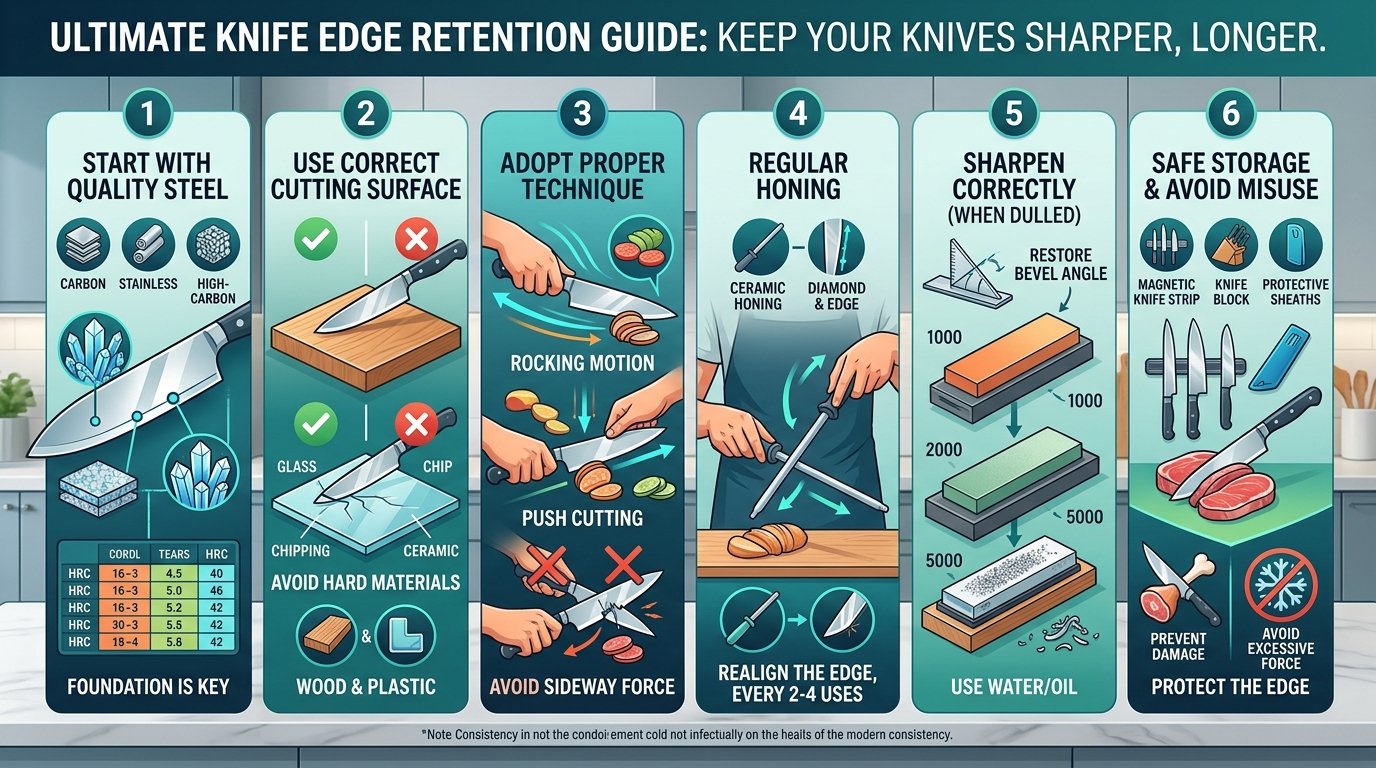
Knife edge retention depends on steel, heat treatment, geometry, and maintenance.
As an experienced knife maker and tester, I wrote this knife edge retention guide to help you understand what keeps a blade sharp longest and how to choose, use, and maintain knives for top performance. This guide mixes hands-on experience, lab-style testing insight, and clear, actionable advice so you can make smarter choices about steels, grinds, sharpening routines, and real-world tradeoffs.

What knife edge retention is and why it matters
Edge retention is how long a blade keeps a usable edge under real use. This knife edge retention guide explains both the science and the practical implications for cooks, outdoorspeople, tradespeople, and collectors.
Good edge retention reduces sharpening time, improves safety, and saves money over a knife’s life. Poor retention forces frequent sharpening and can ruin tasks that require a clean cut, like food prep or precision work. Knowing what affects retention helps you pick the right tool for the job and maintain it efficiently.

Key factors that determine knife edge retention
Edge life comes from a mix of material, geometry, and care. This knife edge retention guide breaks those elements down so you can prioritize what matters most.
- Steel chemistry: Carbon content, alloying elements (chromium, vanadium, molybdenum, cobalt), and powder metallurgy refine wear resistance and toughness.
- Heat treatment: Proper hardening and tempering control hardness (HRC) and microstructure for the best tradeoff between wear resistance and brittleness.
- Hardness (HRC): Higher HRC often increases edge life but can lower toughness; typical production knives sit between 56–64 HRC.
- Microstructure: Carbide size and distribution (fine carbides in PM steels) help resist abrasive wear.
- Edge geometry: Thin, acute edges cut better but chip more easily; thicker or convex edges last longer under abuse.
- Surface finish and coatings: Polished edges and wear-resistant coatings reduce friction and slow abrasion.
- Use case and technique: Cutting hard, abrasive materials or twisting cuts wears edges faster than controlled slicing.
- Maintenance regime: Stropping, honing, and periodic sharpening determine how often a full re-edge is needed.

Common edge geometries and their retention profiles
Geometry is as important as steel. This knife edge retention guide covers common grinds and how they affect wear and durability.
- Flat grind: Balanced cutting and retention for general work; easy to resharpen and maintain.
- Hollow grind: Very keen initial bite but thinner edges wear faster; good for slicing tasks.
- Convex grind: Rounded profile increases strength and edge retention, ideal for heavy or repeated cuts.
- Scandi/Single bevel: Thin behind the edge; great for woodwork and outdoor use with easy maintenance.
- V-bevel with microbevel: Main bevel for strength plus small microbevel to protect the very edge and improve retention.
- Chisel grind: One-sided edge useful for precision cuts; edge retention depends on use direction and maintenance.
Pick geometry to match use: slicing-focused tasks prefer thin grinds; heavy-duty tasks benefit from convex or thicker edge shapes.

Materials, heat treatment, and hardness explained
Understanding steel and heat treatment is central to this knife edge retention guide. The right steel plus correct heat treatment gives predictable edge life.
- Stainless vs carbon: Stainless steels offer corrosion resistance but can vary widely in wear properties. High-carbon steels often return better edge feel and easier sharpening but may need care to avoid rust.
- Powder metallurgy (PM) steels: PM steels have finer carbides and often outperform conventional steels in edge retention.
- Alloy choices: Vanadium refines carbides; molybdenum and chromium add toughness and corrosion resistance.
- Hardness (HRC): Higher HRC generally improves wear resistance but increases risk of chipping in impact use. Aim for a balance: 58–62 HRC for daily knives, 60–64 HRC for high-end slicers or collectors.
- Heat-treatment nuance: Tempering curve, quench medium, and cryogenic treatments can all change the final microstructure and retention.
When assessing a knife, ask about steel grade and reported heat-treatment hardness. That info predicts likely edge life and resharpening needs.
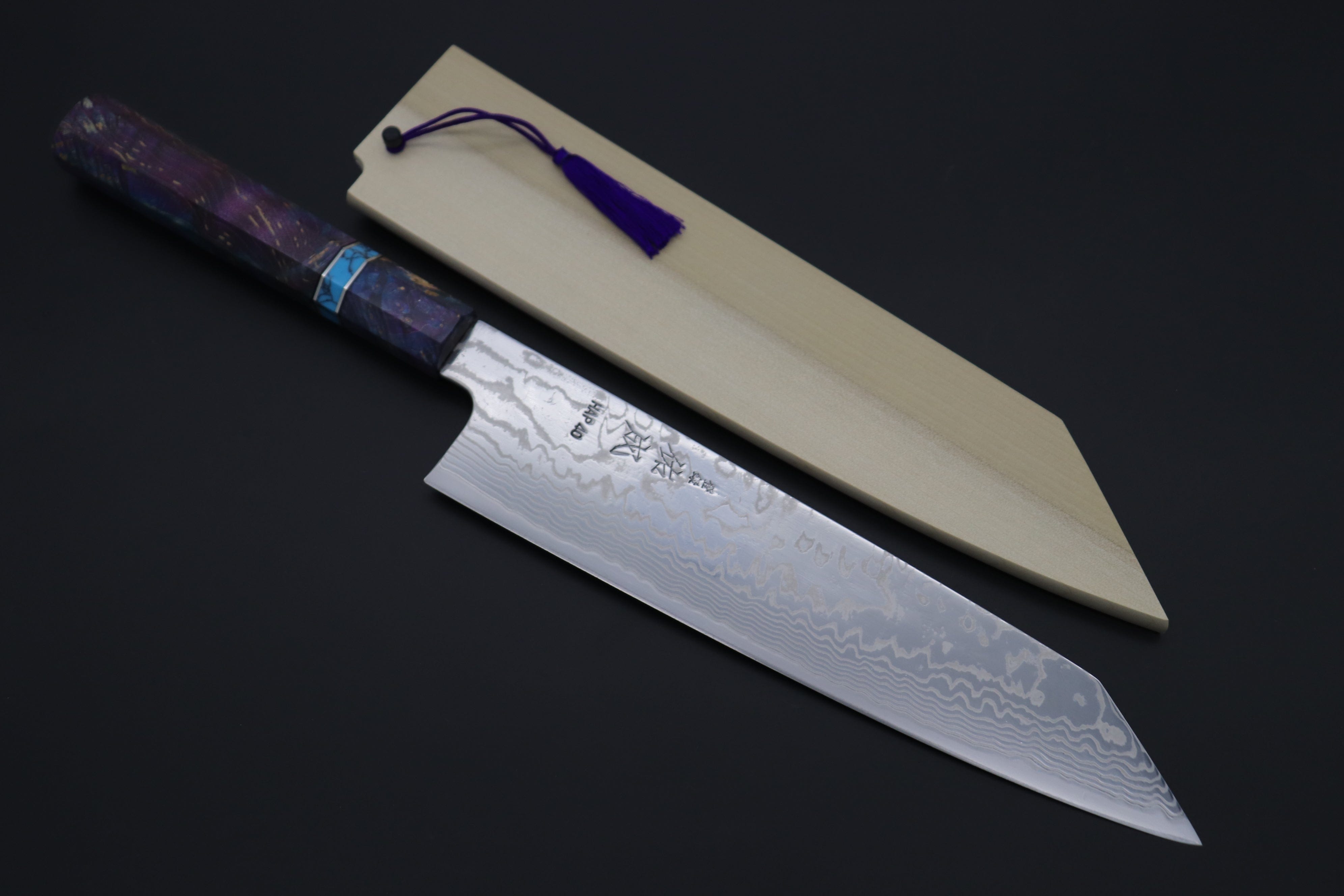
Measuring edge retention: tests and practical methods
This knife edge retention guide outlines how professionals measure edge life and how you can test a blade at home.
- Standard lab tests: Controlled abrasion tests (cycles of cutting standard media) quantify wear. Results often reported as number of cuts before performance drops.
- CATRA-style tests: Use standardized cords or ropes to measure edge loss under consistent conditions.
- Real-world tests: Repeated cutting of cardboard, rope, or food to gauge usable edge life for your use case.
- Home test method: Time or count cuts on a set material, then test slicing of paper or tomato to feel edge degradation.
PAA: How is edge retention measured?
Edge retention is measured by counting cuts or time until a blade no longer performs a defined task (for example, slicing paper or a tomato cleanly). Lab tests use standardized materials and instruments to compare steels under controlled conditions.
PAA: Does higher HRC always mean better edge retention?
Not always. Higher HRC tends to increase wear resistance, but it can make the edge more brittle and prone to chipping for impact or twist forces. The right HRC balances wear and toughness for the intended use.

Sharpening, stropping, and maintenance to maximize retention
A blade’s edge life depends on upkeep. This knife edge retention guide covers routines that extend edge life and reduce full re-sharpening frequency.
- Daily care: Wipe and dry blades after use to prevent corrosion; store in a sheath or block.
- Honing vs sharpening: Honing (rod) realigns a rolled edge; sharpening removes material to restore geometry. Use honing often and sharpening rarely.
- Grinding and angle control: Maintain consistent bevel angles. Small microbevels protect the primary edge and improve retention.
- Stones and abrasives: Coarse stones reshape, medium stones refine, and fine stones polish the edge. Use progression for efficient sharpening.
- Stropping: Leather strops or compound remove burrs and polish the edge to improve cutting feel and apparent retention.
- Frequency: Hone weekly or before heavy tasks. Resharpen as needed based on performance tests — not after a set time.
Practical tip: I typically strop daily on kitchen knives and only reprofile or sharpen once every few months, depending on use.

Real-world tests, case studies, and lessons from experience
Hands-on testing gave me clear patterns that shape this knife edge retention guide.
- Field tests: I compared three kitchen knives—high-carbon, stainless, and PM steel—by timing how many onion and cardboard cuts they did before dulling. The PM steel lasted longest in abrasive cardboard tests; high-carbon felt sharper for food but needed more frequent stropping.
- Mistakes to avoid: Grinding too thin for heavy tasks, using ceramic rods aggressively, and neglecting heat-treatment questions when buying budget knives.
- Lessons learned: Match geometry to purpose, accept tradeoffs, and prioritize maintenance habits over chasing “forever sharp” steels.
Personal story: Once I took a thin hollow-ground blade camping and used it to cut frozen fish bones. It chipped badly. After that, I switched that knife to light-duty slicing and used a convex-bladed fixed knife for heavier camp chores. That simple match of grind to task solved recurring edge problems.

Choosing the right knife for your needs
This knife edge retention guide helps you pick a knife that fits your routine and will hold an edge affordably.
- For chefs and home cooks: Pick a balanced steel with 58–62 HRC and a flat or slight convex grind for mixed tasks.
- For outdoors and bushcraft: Choose a tougher grind (convex or thicker flat) and steel with good toughness; expect more frequent sharpening if steel is very hard.
- For everyday carry (EDC): PM steels with high wear resistance and a durable edge geometry work well if you can maintain the blade.
- For collectors or slicers: High-hardness steels and fine grinds provide top edge retention but require careful care and tools for sharpening.
Match steel and grind to the use case. That prevents disappointment and reduces maintenance time.

Frequently Asked Questions of knife edge retention guide
What is the best steel for edge retention?
Best steel depends on tradeoffs. PM and high-vanadium steels often give top wear resistance, while balanced alloy steels give good edge life with easier maintenance.
How often should I sharpen to maximize retention?
Sharpen only when performance drops. Hone or strop frequently. Regular light maintenance keeps overall material removal low and extends long-term retention.
Can coatings improve edge retention?
Coatings reduce friction and corrosion but do not replace good steel or heat treatment. They can help in abrasive environments but won’t prevent mechanical chipping.
Does angle affect edge life?
Yes. Wider angles increase durability and retention under abuse; acute angles cut better but wear faster. Use angle to match the task.
How do I test edge retention at home?
Pick a repeatable material like cardboard or rope, count cuts until performance drops, and document conditions. Compare blades with the same method for a fair measure.
Conclusion
This knife edge retention guide gives clear, practical steps to understand, test, and improve how long a knife stays sharp. Focus on the right steel, correct heat treatment, purposeful edge geometry, and a simple maintenance routine to get the best real-world edge life. Start by matching a knife’s grind and steel to your tasks, commit to short stropping sessions, and track performance with simple tests—small habits bring big results. Try one change this week: adjust your bevel angle or add a quick strop before use, then note how many cuts you gain—share your results or questions below.
Maliha Khatun has spent 5 years hands-on testing Japanese knives for everyday home cooks. She has evaluated over 60 blades across nakiri, santoku, gyuto, and petty categories — scoring each on edge retention, steel quality, handle comfort, and value for money. She writes to help home cooks buy the right knife without the guesswork.
Expertise:Japanese Knives • Vegetable Knives • Product Reviews • Kitchen Efficiency • Knife Care
Leave a Reply