Gyuto is a longer all‑rounder; Santoku is shorter, great for veg.
If you are weighing santoku knife vs gyuto, you are in the right place. I have cooked in busy pro kitchens and calm home setups, and I know how each knife feels in the hand. This guide breaks down santoku knife vs gyuto with clear facts and real use. Read on to choose with confidence, not guesswork.
Santoku and Gyuto at a Glance
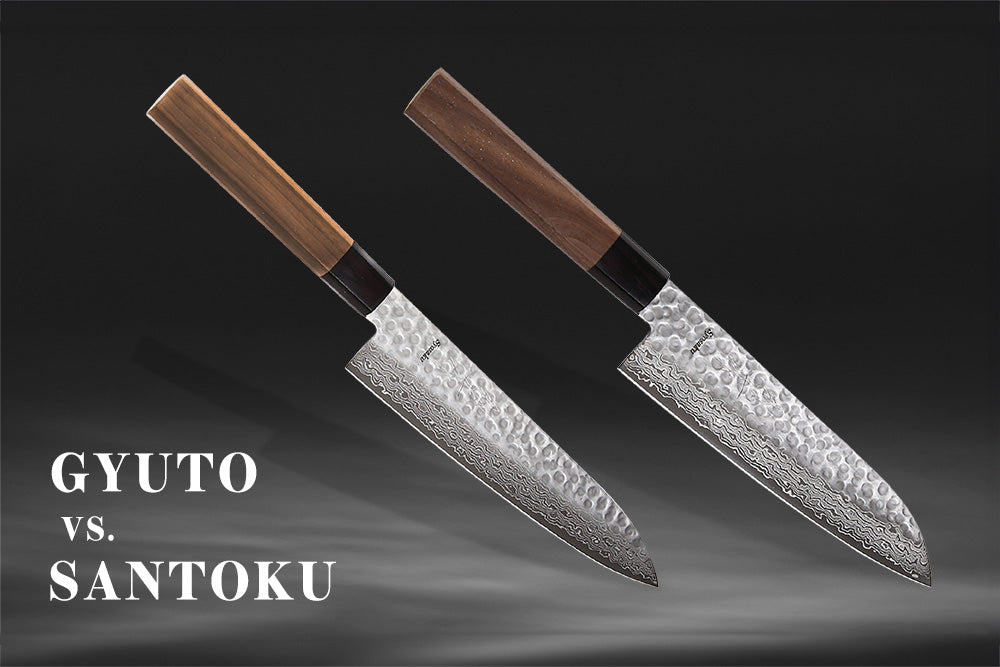
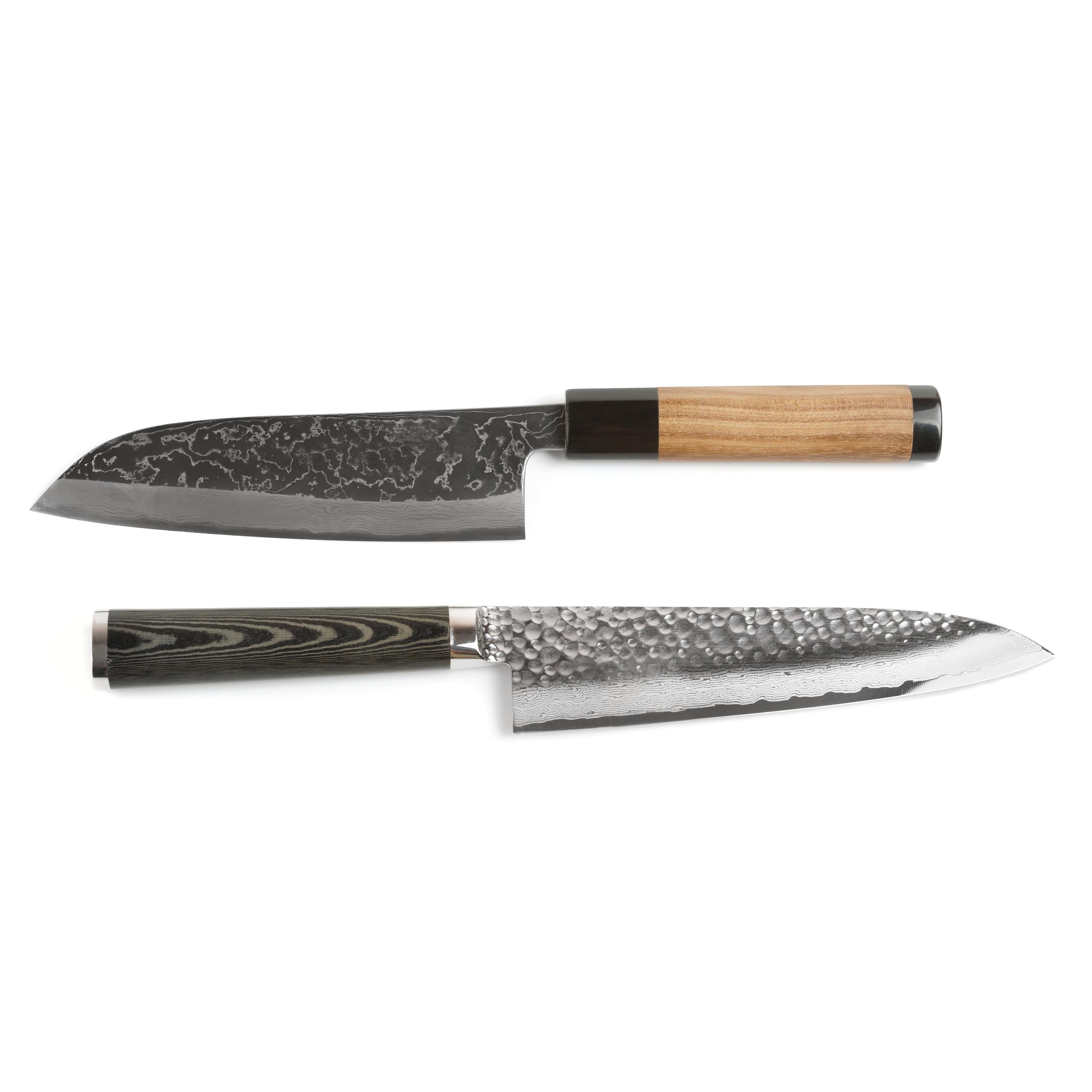
Santoku knife vs gyuto comes down to shape, length, and style in use. The santoku means three virtues. It slices, dices, and minces with ease. It has a flat edge and a soft, rounded tip. Common lengths run 165 to 180 mm, so it feels nimble on a board.
The gyuto is the Japanese take on a chef’s knife. It has a pointed tip and a bit more curve in the edge. Most common sizes are 210 to 240 mm. It handles big tasks and small ones without fuss.
Think of santoku as quick and compact. Think of gyuto as long, smooth, and versatile. Both are great. The right one depends on your board space, your style, and your menu.

Blade Shape and Geometry
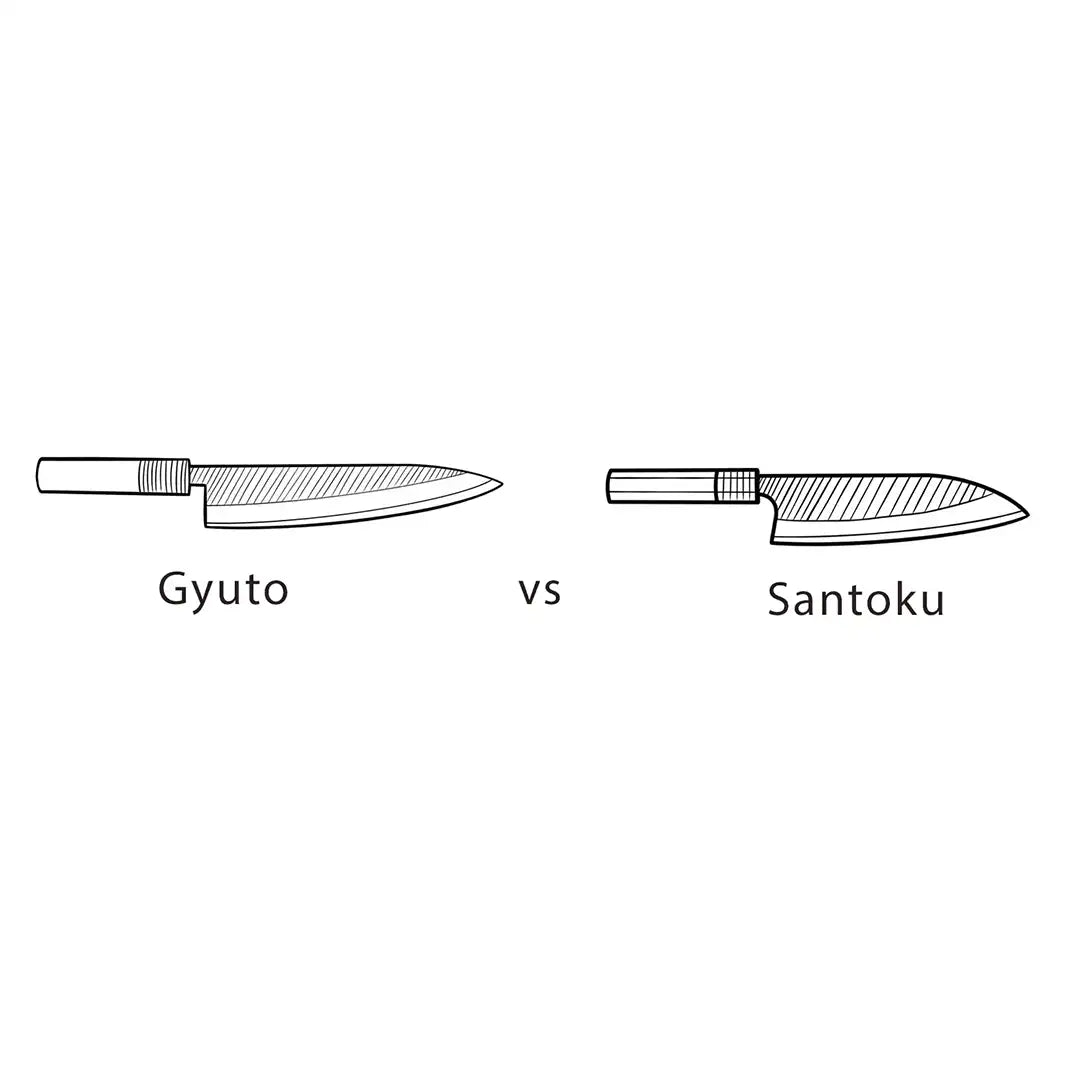
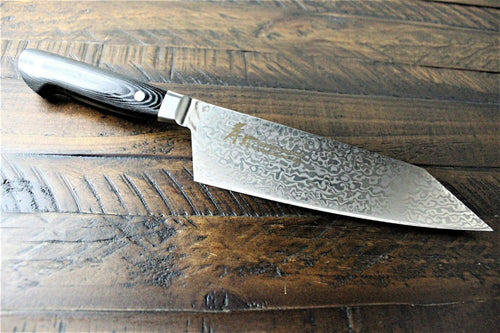
Blade shape decides how the knife moves on the board. That is the heart of santoku knife vs gyuto. The santoku has a flatter edge, so it loves push cuts and straight chops. The sheepsfoot tip is safe and steady for fine work. Many santoku blades are taller, which gives nice knuckle room and straight cuts.
The gyuto has more belly near the tip. This lets you rock chop with ease. The spine often tapers toward the tip, which helps with detail cuts. A thin, keen edge glides through onions, herbs, and meat.
Food release matters too. Santoku blades sometimes add dimples to reduce sticking. Gyuto blades rely on thin grinds and convex faces for clean release. In my tests, a sharp gyuto with a gentle convex grind releases onions the best.
Cutting Performance and Techniques
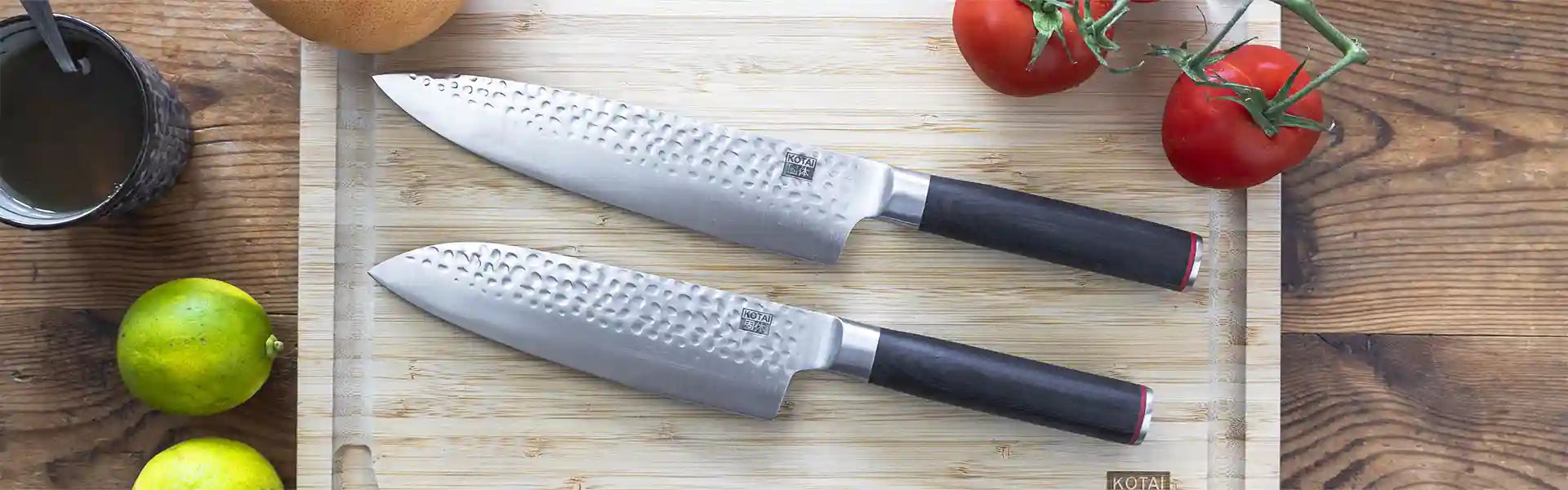
How a blade meets food shows the real santoku knife vs gyuto story. Each shines with certain moves and tasks.
Use a santoku when:
- You like push cuts and chop cuts.
- You prep lots of veg, tofu, and fruit.
- You want a safer, rounded tip.
- Your board space is tight.
Use a gyuto when:
- You rock chop herbs and garlic a lot.
- You break down larger veg or melons.
- You trim proteins, slice roasts, or portion fish.
- You want one knife to do almost everything.
Real life tip: I reach for a 180 mm santoku for fast weeknight stir-fry prep. It crushes carrots, cabbage, and green onions with neat, flat cuts. On weekends, my 240 mm gyuto wins. It carves steak clean and also handles a big pile of herbs in one pass.

Steel, Hardness, and Edge Life
Steel choice shapes edge life, care, and feel. This is key in any santoku knife vs gyuto talk. Many santoku sold to home cooks use softer stainless. That puts them around 58 to 60 HRC. They are tougher, chip less, and sharpen fast. Edge life is solid for daily use.
Gyuto knives often come in harder steels. You may see 60 to 63 HRC in stainless or semi-stainless. Powder steels like SG2 and carbon steels like Blue or White can push even higher. Harder means longer edge life and more bite. It also means you must avoid hard boards and bone.
Carbon steel takes a scary sharp edge. It also can rust. Wipe it dry after use. Stainless is low fuss, but may not reach the same peak bite. Choose what fits your habits.
Size, Weight, and Ergonomics
Hand feel often decides santoku knife vs gyuto for many cooks. Santoku at 165 to 180 mm feels light and quick. The tall blade gives room for your knuckles. It suits small hands and small boards.
Gyuto sizes from 210 to 240 mm cover most tasks. A 210 mm gyuto fits tight spaces yet keeps range. A 240 mm gyuto offers long, smooth slices and fewer strokes. Handle shapes vary. Western handles fill the palm. Wa handles (octagonal or D) feel nimble and shift balance forward.
Test before you buy if you can. Grip the knife. Pinch the blade at the heel. Make three slow air cuts. If it tracks straight and feels calm, that is a good sign.
Care, Sharpening, and Safety
Care is part of the santoku knife vs gyuto choice too. Harder edges like lower angles. Aim for 12 to 15 degrees per side for hard steel. Softer steel does well at 15 to 20 degrees per side. Use water stones if you can. A fine ceramic rod is good for light touch-ups. Avoid aggressive steel rods with very hard steels.
Use end-grain wood or soft rubber boards. Never glass or stone. Hand wash, dry at once, and store in a sheath or on a safe rack. Do not twist the edge in hard foods. If you hit a bone, stop and reset your cut. Small habits save your edge for months.

Price, Brands, and Value Buys
Your budget can guide santoku knife vs gyuto picks. Entry-level stainless blades start near 40 to 80 dollars. They give honest work and are easy to care for. Mid-tier knives in better steel run 100 to 200 dollars. They hold an edge longer and feel nicer in hand.
Premium and artisan blades can reach 250 to 400 dollars or more. These bring superb grinds, perfect tips, and top steels. They shine if you cook a lot and love sharp tools. You do not need a custom blade to cook well. But a well-made gyuto or santoku will make you smile each time you prep.
Which Should You Buy? Real-World Scenarios
You want a simple read on santoku knife vs gyuto. Use these quick guides.
Pick a santoku if:
- You prep lots of veg and want fast, straight cuts.
- You have a small board or small kitchen.
- You prefer push cutting over rock chopping.
- You like a safer, rounded tip.
Pick a gyuto if:
- You want one main knife for all tasks.
- You rock chop herbs and garlic often.
- You slice proteins and roasts on weekends.
- You want more reach and fewer strokes per cut.
My rule: New cooks often bond with a santoku first. Once your skills grow, a 210 or 240 mm gyuto becomes your daily driver.

My Hands-On Lessons and Mistakes
Here is my honest take on santoku knife vs gyuto from years at the board. I once forced a short santoku to slice a big brisket. The ragged, many-stroke cut told me I was wrong. A 240 mm gyuto made that job smooth and clean.
I also chipped a hard steel gyuto on a cheap bamboo board. Lesson learned. I swapped to end-grain wood and the edge lasted much longer. Last tip. If you hate sharpening, start with a mid-hard stainless santoku. It forgives more and still cuts great.
A Simple In-Store or At-Home Test
A quick test can settle santoku knife vs gyuto for you.
Do this:
- Pinch grip and check balance. The knife should not tip or fight you.
- Paper test. A good edge will slice a hanging sheet with no tear.
- Onion test. Trim top and tail, then halve. Make even slices. Watch for wedge or stick.
- Herb test. Rock or push cut parsley. Note speed, control, and bruise level.
- Tomato test. Try a slow, no-pressure slice. The blade should bite and glide.
If one knife passes all five with ease, you have your match.
Frequently Asked Questions of santoku knife vs gyuto
What is the main difference between a santoku and a gyuto?
A santoku is shorter with a flatter edge and a rounded tip. A gyuto is longer with a pointed tip and a curve for rocking.
Can a santoku replace a chef’s knife?
Yes, for many home tasks. It handles veg and small proteins well, but long slices are harder.
Is a gyuto good for beginners?
Yes, a 210 mm gyuto is friendly and versatile. It covers most prep and grows with your skills.
Which is better for small hands?
A 165 or 180 mm santoku often feels ideal. It is lighter and needs less board space.
Are these knives dishwasher safe?
No. Wash by hand, dry right away, and store safely. Dishwashers can damage edges and handles.
What edge angle should I use?
Hard steel likes 12 to 15 degrees per side. Softer steel does well at 15 to 20 degrees per side.
Can a gyuto mince herbs as well as a santoku?
Yes. The gyuto’s curve helps with rock chopping. Keep the tip down and move in a smooth arc.
Conclusion
Both knives are winners. The santoku brings speed, safety, and clean push cuts. The gyuto offers reach, balance, and near-total range. Think about your board size, your cutting style, and what you cook most. Then pick the blade that fits your real life.
Take action today. Try the five-step test with santoku knife vs gyuto if you can. Or borrow a friend’s knife for a week. When a knife feels right, you will cook more and smile more. If this helped, share it, subscribe for more guides, or leave a comment with your pick.
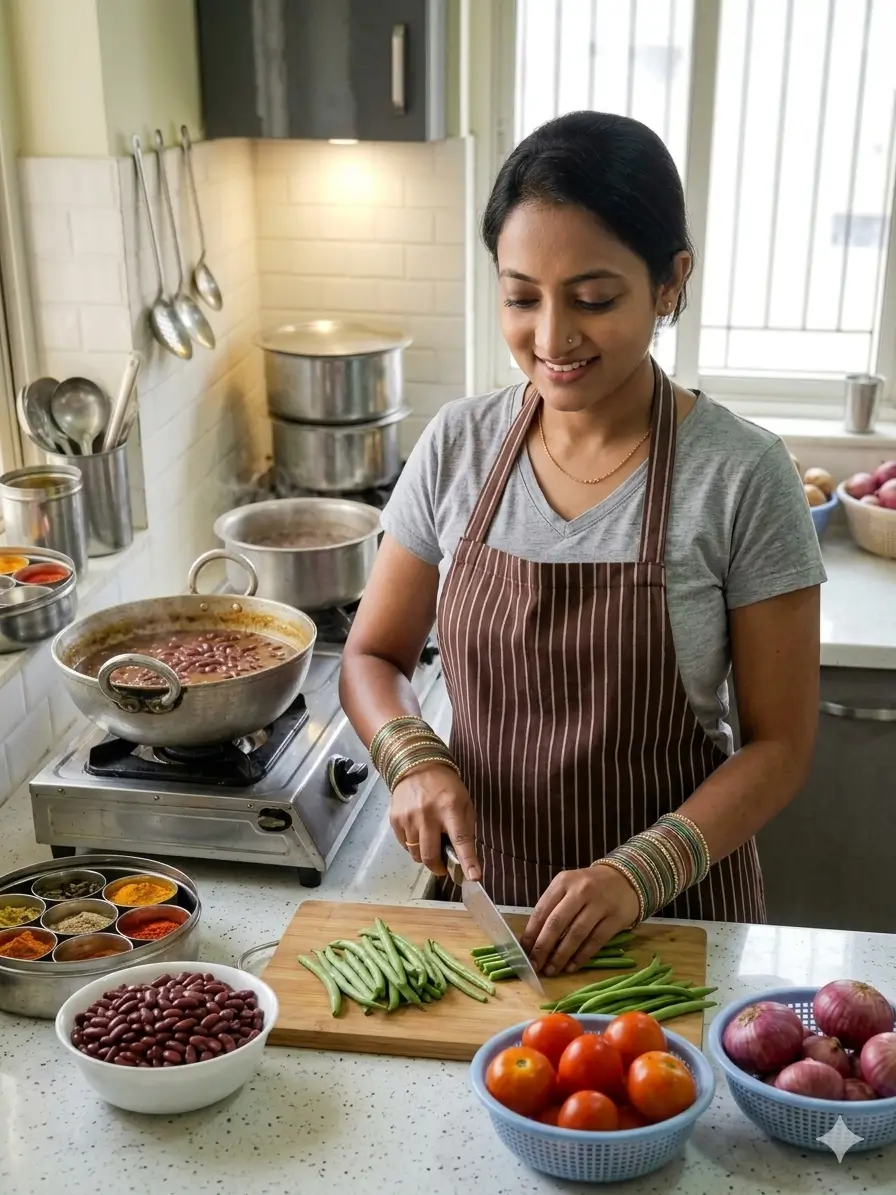
Maliha Khatun has spent 5 years hands-on testing Japanese knives for everyday home cooks. She has evaluated over 60 blades across nakiri, santoku, gyuto, and petty categories — scoring each on edge retention, steel quality, handle comfort, and value for money. She writes to help home cooks buy the right knife without the guesswork.
Expertise:Japanese Knives • Vegetable Knives • Product Reviews • Kitchen Efficiency • Knife Care
Leave a Reply