
The best knife for chopping vegetables is a 7-inch Nakiri or Santoku.
You know that moment when a dull knife squashes tomatoes, crushes herbs, and turns onions into tears? That’s the pain a proper vegetable knife solves fast. The right blade glides. Slices stay clean. Prep moves quick. Whether you’re batch-chopping salad greens or dicing carrots for soup, the best knife for chopping vegetables turns effort into ease. Below, I break down today’s top picks and explain how to choose the perfect tool for your board, budget, and hand size. I’ve tested, researched, and refined this list to save you time and money.


TOP PICK
PAUDIN Nakiri Knife – 7″…
ALL-PURPOSE NAKIRI KNIFE: The classic 7 inch kitchen knife is flexible for all kinds of heavy duty preps, like slicing, dicing, chopping and mincing. A truly all-around cooking knife, is…

BEST QUALITY
imarku Chef Knife 7 Inch…
Professional Santoku Knife: This imarku super sharp santoku knife is made of high carbon stainless steel that resists rust, corrosion, and discoloration. It can be used for your daily kitchen…

RECOMMENDED
Astercook Knife Set, 13 Pieces…
Multipurpose Knife Set: This kitchen knives set includes 8″ Chef Knife, 8″ Slicing Knife, 7″ Santoku Knife, 8″ Serrated Bread Knife, 5″ Utility Knife, 3.5″ Paring Knife, Kitchen Shears and…
PAUDIN 7″ Nakiri Vegetable Knife

The PAUDIN 7″ Nakiri is a flat-edged vegetable slicer that makes straight contact with your board. It chops without rocking, so every cut is clean and even. The blade is thin yet sturdy, which helps you glide through onions, peppers, and cabbage with less force. The handle sits well in the hand, so long prep sessions feel easier.
I like it for rapid veggie batches. The wide blade works like a scoop to move diced produce into pots. The high-carbon stainless steel resists stains if you hand wash and dry. If you cook a lot of stir-fries or salads, this shape feels natural and fast.
Pros:
- Flat edge ideal for push-cutting vegetables
- Thin grind for clean, low-resistance slicing
- Wide blade face makes scooping easy
- Comfortable ergonomic handle
- Great price-to-performance ratio
Cons:
- Not meant for bones or frozen foods
- Hand washing recommended to protect the edge
- Some users may prefer a rocking motion
My Recommendation
This is for home cooks who want the best knife for chopping vegetables with speed and control. It excels at straight-down cuts in onions, carrots, and leafy greens. If you meal prep often, you will feel its efficiency. It is also a good first Nakiri if you’re switching from a standard chef’s knife.
| Best for | Why |
|---|---|
| Fast vegetable prep | Flat edge gives full-board contact for even cuts |
| Beginners learning knife skills | Stable blade profile boosts control and safety |
| Budget-conscious buyers | Strong value without sacrificing performance |
imarku 7″ Santoku Chef Knife

The imarku 7″ Santoku blends slicing finesse with all-purpose ease. Santoku means “three virtues”: slicing, dicing, and mincing. The blade has a slight curve for a gentle rock, but it favors straight chops. It is a reliable daily driver for any kitchen that wants clean cuts on veggies and proteins.
Edge geometry feels keen, especially on herbs, onions, and bell peppers. If you like the feel of Japanese-style knives but want something simple to maintain, this fits. It is light in hand, which reduces fatigue on long prep days. For many, this format is the best knife for chopping vegetables and meat in one tool.
Pros:
- Versatile for vegetables and boneless meats
- Thin edge for precise slicing
- Comfortable balance for smaller hands
- Easy to maintain at home
- Good gift option with an approachable learning curve
Cons:
- Not a heavy-duty cleaver replacement
- No bolster may feel unfamiliar to some
- Food may cling without hollow grinds
My Recommendation
Pick this if you want one knife to do most jobs and you slice veggies often. It is the best knife for chopping vegetables if you also want to trim chicken or portion fish in the same session. It brings a light, nimble feel that suits quick home cooking. A solid, value-friendly Santoku for daily use.
| Best for | Why |
|---|---|
| Mixed meal prep | Handles veggies and boneless proteins |
| Smaller kitchens | Compact 7″ profile saves space |
| Gift buyers | Broad appeal and easy handling |
Astercook 13-Piece Knife Set

This Astercook set covers all bases and includes blade guards for safe storage. The chef’s knife and Santoku take care of most chopping jobs, while the smaller blades handle fine tasks. The coating fights rust and helps food release. For a busy household or new kitchen, it delivers instant coverage.
I like sets when someone wants a full kit fast. The included guards help keep edges sharp and safe in drawers. While sets won’t match top-tier single knives, they win on convenience. You can still find the best knife for chopping vegetables within this set and keep the rest ready for other tasks.
Pros:
- All-in-one solution for a new kitchen
- Includes blade guards for safety and travel
- Anti-rust coating for easy care
- Multiple blade shapes for every prep job
- Great value for families and apartments
Cons:
- Not specialized like a premium Nakiri
- Coating can wear if abused in the dishwasher
- Mixed balance across knives
My Recommendation
This set is for anyone starting from scratch or upgrading on a budget. It gives you the best knife for chopping vegetables plus backups for meat, bread, and fruit. It also suits shared kitchens and small spaces. The guards make it easy to store safely.
| Best for | Why |
|---|---|
| First apartment | Complete kit without overspending |
| Families | Multiple knives for different hands and tasks |
| Drawer storage | Blade guards prevent accidents and dulling |
HOSHANHO 7″ Nakiri Knife

The HOSHANHO Nakiri targets crisp, straight cuts in produce. The tall blade gives finger clearance and doubles as a board scraper. The Pakkawood handle feels warm and secure, which helps steady your push cuts. Thin geometry makes it a joy on cucumbers, carrots, and cabbage.
If you want the best knife for chopping vegetables with minimal effort, this profile pays off. It excels in uniform dice and fast strips. The flat heel lands squarely on the board, reducing accordion cuts in onions. Keep it sharp and it will be your salad machine.
Pros:
- Flat profile ideal for precise vegetable work
- Tall blade for knuckle clearance
- Comfortable Pakkawood handle
- Efficient for batch prep and meal prep
- Good edge for fine slicing
Cons:
- Not designed for rocking cuts
- Requires careful storage to protect thin edge
- Hand wash strongly recommended
My Recommendation
Choose this if your cooking is veggie-forward and you want consistency. For salads, slaws, and stir-fries, this feels like the best knife for chopping vegetables at speed. It rewards good technique with cleaner cuts and safer control. Great for anyone refining knife skills.
| Best for | Why |
|---|---|
| Vegetarian cooking | Made for all-day veggie prep |
| Uniform dice | Flat edge prevents half-cuts |
| Board-to-pan transfers | Wide blade acts as a scooper |
Cutluxe 5″ Santoku Artisan

This compact 5″ Santoku is nimble and reassuring. It fits small boards and tight spaces. The German steel build and full tang give stability that belies its size. It is easy to control for mincing garlic, slicing mushrooms, or chopping herbs.
Short blades are underrated for daily prep. If you struggle with 8″ knives, this can feel like the best knife for chopping vegetables because it is less intimidating. The tip geometry aids detail work, while the flat section handles quick chops. It also suits smaller hands very well.
Pros:
- Compact size for control and safety
- Great for small cutting boards
- Full tang for solid balance
- Ideal for herbs and small veg
- Easy to sharpen and maintain
Cons:
- Short length limits big batch chopping
- Not ideal for large squash or melons
- Less knuckle clearance than taller blades
My Recommendation
Get this if you want tight control and a friendly size. For small kitchens, this might be the best knife for chopping vegetables like shallots, garlic, and peppers. It makes prep feel simple and safe. Great for quick weeknight cooking.
| Best for | Why |
|---|---|
| Small hands | Easier to maneuver and control |
| Compact kitchens | Short blade fits small boards |
| Herb and garlic work | Precision tip and light touch |
Cutluxe 7″ Santoku With Sheath

The 7″ Cutluxe Santoku adds working length with strong steel and a sheath. It offers a balanced profile for both chop and slice. The edge bites into produce without tearing and stays stable over time. The ergonomic handle keeps your grip secure when wet.
The included sheath is a nice bonus if you store knives in a drawer. For many home cooks, this is the best knife for chopping vegetables and prepping meats in one session. I like it for cabbage, potatoes, and large onions. It has the reach to handle more volume without feeling heavy.
Pros:
- Sheath included for safe storage
- Balanced 7″ length for versatile prep
- Edge stays keen with simple care
- Secure handle for wet conditions
- Good price for the build quality
Cons:
- Not as tall as a Nakiri for scooping
- No granton/hollow edges for food release
- May feel long for very small boards
My Recommendation
Pick this if you want a do-it-all Santoku with safe storage. It can be the best knife for chopping vegetables for home cooks who also prep meat. The 7″ length hits the sweet spot for most tasks. A dependable workhorse at an accessible price.
| Best for | Why |
|---|---|
| Drawer storage | Sheath protects edge and fingers |
| Mixed prep | Length helps with both veg and protein |
| Budget-conscious cooks | Strong value and durability |
HENCKELS 2-Pc Santoku Set

This HENCKELS pair gives you two Santoku sizes: 5″ and 7″. The smaller blade is great for detail work, while the larger one handles volume. German engineering focuses on balance and steadiness. The result is a set that can tag-team every prep task.
I like having both sizes on a busy cooking day. You can keep the small one for garlic and herbs, and use the larger for onions and squash. Together they make finding the best knife for chopping vegetables simple: choose based on the job. It is a smart, flexible pairing for most kitchens.
Pros:
- Two sizes cover detail and bulk prep
- Stable feel and predictable balance
- Good longevity with routine care
- Trusted brand for consistent quality
- Great upgrade for a starter kitchen
Cons:
- No sheaths included
- Food stick may occur without granton edges
- Hand washing advised to preserve edge
My Recommendation
This set is for cooks who want range in one buy. It makes sense if you cook daily and switch tasks often. You will always have the best knife for chopping vegetables at hand, whether that is the 5″ or 7″ blade. Reliable, straightforward, and durable.
| Best for | Why |
|---|---|
| Households with multiple cooks | Two sizes fit different hands |
| Daily meal prep | Quickly choose the right blade for the job |
| Upgrading basics | Quality step up without complexity |
Amazon Basics 8″ Chef’s Knife

The Amazon Basics 8″ Chef’s Knife is a classic Western profile at a starter price. It rocks well for herbs and minces garlic with ease. The full tang and triple rivets give a secure, familiar feel. It is not fancy, but it is dependable for daily use.
If you want a low-cost entry into good knife habits, this works. It can be the best knife for chopping vegetables for someone new to cooking. The edge holds long enough for weekly honing. It is also a good backup knife for guests or shared kitchens.
Pros:
- Affordable with a traditional chef’s knife feel
- Rocks smoothly for herbs and garlic
- Full tang, three-rivet stability
- Easy to sharpen at home
- Good backup or loaner knife
Cons:
- Thicker behind the edge than premium blades
- Heavier than many Santokus
- Less refined fit and finish
My Recommendation
Get this if you want the basics covered at a low price. It is not a specialty cutter, but it can still be the best knife for chopping vegetables for beginners who like a rocking motion. Use it to learn safe habits and keep it honed. It is a reliable daily driver for the cost.
| Best for | Why |
|---|---|
| Beginners | Simple to use and maintain |
| Budget buyers | Solid performance for the price |
| Rock-chop fans | Curved belly supports rocking cuts |
Farberware 5″ Edgekeeper Santoku

The Farberware Edgekeeper’s cover sharpens the blade each time you sheathe it. That keeps the edge serviceable with almost no effort. The 5″ Santoku shape makes quick work of fruit, veg, and boneless proteins. It is an easy win for dorms, RVs, or small kitchens.
For anyone who avoids maintenance, this is the best knife for chopping vegetables without fuss. It will not match a pro-level edge, but it stays ready for daily tasks. The size is compact and friendly. Great as a travel knife or a simple home tool.
Pros:
- Self-sharpening sheath maintains the edge
- Compact and easy to handle
- Good for quick daily chores
- Low-cost with decent performance
- Convenient for small spaces
Cons:
- Edgekeeper system can over-sharpen if misused
- Short blade limits large prep tasks
- Fit and finish are basic
My Recommendation
Choose this if you want a knife that stays sharp with no routine. It can be the best knife for chopping vegetables for busy students or anyone traveling. Store it in the cover and it will be ready next time. An ultra-convenient pick for the price.
| Best for | Why |
|---|---|
| Dorms and RVs | Small, safe, and self-maintaining |
| Low-maintenance cooks | Built-in honing in the sheath |
| Quick snacks | Fast, compact slicing |
imarku 8″ Gyuto Chef Knife
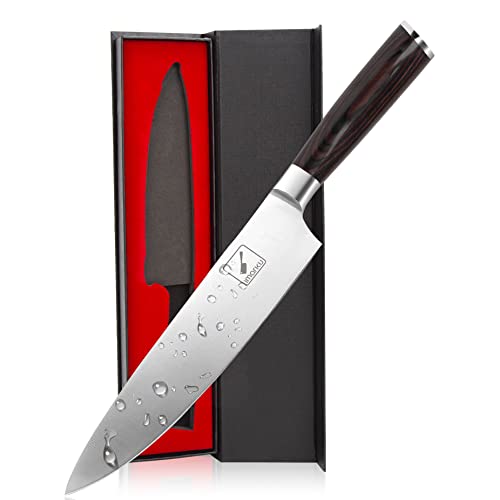
The imarku 8″ Gyuto mixes Western and Japanese traits. It is slimmer than many Western chef’s knives but still offers a glide-friendly curve. The edge is keen and tracks straight, which helps with clean veggie cuts. The handle and balance invite a pinch grip for control.
For cooks who want one main knife, this is a smart bet. It is often the best knife for chopping vegetables and slicing meat in one session. The 8″ length handles volume and larger produce. Keep a honing steel handy and it will serve you for years.
Pros:
- Hybrid profile for broad versatility
- Good out-of-box sharpness
- Comfortable balance for pinch grip
- Glides through produce with less resistance
- Gift-worthy presentation
Cons:
- Longer blade can feel big for beginners
- Not ideal for tiny boards
- Needs regular honing for best results
My Recommendation
If you want one knife to rule your board, consider this. It has the reach for big onions and melons and still does fine cuts. It may be the best knife for chopping vegetables if you like a gentle rock with push cuts mixed in. A strong all-rounder for home chefs.
| Best for | Why |
|---|---|
| Everyday all-purpose use | Handles most kitchen tasks well |
| Large produce | 8″ length adds reach and leverage |
| Improving knife skills | Balanced, controllable, and predictable |
2-in-1 Kitchen Scissors with Cutting Board
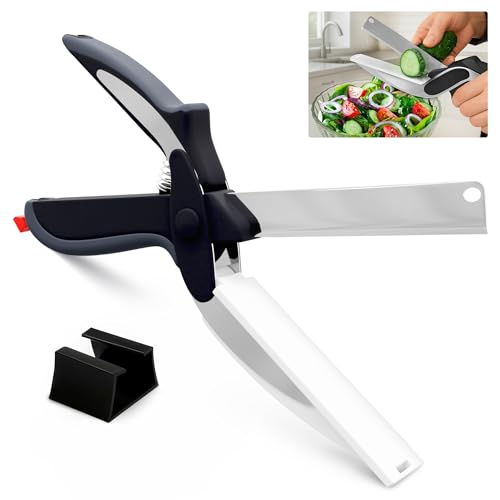
These 2-in-1 scissors act like a mini guillotine for fast slicing. One blade pairs with a flat base that works as a tiny cutting board. You squeeze, and the blade snaps through green beans, scallions, and soft fruit. For quick salads or kid snacks, they are very handy.
They also help if you have limited space or need to cut straight into a pot. The safety lock is a plus in busy kitchens. While not a classic knife, the speed for simple veg cuts is real. Think of them as a time-saving sidekick for small tasks.
Pros:
- Fast one-hand slicing over bowls or pots
- Built-in board supports cleaner cuts
- Good for quick snack prep
- Safe lock helps prevent accidents
- Compact and easy to store
Cons:
- Not ideal for fine dicing or large produce
- Pressure cutting can squash soft tomatoes
- Cleaning hinges takes an extra moment
My Recommendation
I recommend these scissors for parents, students, or RV cooks. If you want the best knife for chopping vegetables fast in small spaces, start here. Use them for herbs, scallions, grapes, and snack cuts when a board feels like too much. Keep a standard knife for large tasks.
| Best for | Why |
|---|---|
| On-the-go prep | One-hand use over bowls and pans |
| Small veggies | Quick snips for beans and herbs |
| Safety-first users | Lock and controlled squeeze action |
KITCHENDAO Mezzaluna Salad Chopper

The KITCHENDAO mezzaluna is a rocker chopper built for speed. Place herbs or salad in a bowl and rock the blade. You get a quick mince and less board mess. The protective cover makes storage safer in busy drawers.
A rocker chopper works best with leafy greens and herbs. It can handle softer veg like mushrooms too. The curved edge moves fast, and the two-hand grip feels secure. If you prefer rocking to push cutting, this tool keeps a high pace.
Pros:
- Fast rocking motion for herbs and salads
- Two-hand control for steady chopping
- Protective cover improves storage safety
- Easy to use in bowls for less mess
- Low learning curve for new cooks
Cons:
- Not ideal for dense root vegetables
- Curved edge is hard to sharpen at home
- Limited use beyond chopping and mincing
My Recommendation
This mezzaluna is ideal for salad lovers and herb-heavy cooks. If fine mince is your goal, it can be the best knife for chopping vegetables fast in a bowl. Use a straight-edge knife for carrots and squash. Keep this tool ready for weeknight salads and quick toppings.
| Best for | Why |
|---|---|
| Herb mincing | Curved blade rocks for quick results |
| Big salads | Chops right in the bowl |
| Beginner control | Two-hand grip boosts safety |
Matsato 6.3″ Chef Knife

The Matsato 6.3-inch chef knife is a compact all-rounder. It gives nimble control for small boards and tight spaces. The Japanese steel build offers a fine edge and smooth cutting feel on produce. I reach for shorter blades when I want fast, exact cuts.
The size reduces weight and strain. It is a good length for hands that find 8-inch knives unwieldy. It also travels well for BBQs and picnics. If you like a light, agile knife that still chops like a pro, this is a smart pick.
Pros:
- Compact length for better control
- Fine edge for precise vegetable cuts
- Comfortable balance and grip
- Great for small kitchens and boards
- Easy to pack for cooking on the go
Cons:
- Not ideal for very large vegetables
- Shorter blade means more strokes on big jobs
- Often lacks a sheath
My Recommendation
If your kitchen is compact, this is the best vegetable knife for home cooks who want agility. It cuts fast and feels natural for smaller hands. It fits a tight space without losing performance. It is usually in stock and remains fairly priced for its quality.
| Best for | Why |
|---|---|
| Small kitchens | Short blade with easy control |
| Precision tasks | Fine edge for detail work |
| Travel cooking | Portable size with real cutting power |
VITUER 4″ Paring Knives, 4-Pack

This 4-pack gives you four 4-inch paring knives with covers. The German stainless blades take a fine edge. The PP handles are light and grippy, even when wet. They are color-coded, which helps with quick grabs.
I like these for fruit, trimming, and in-hand cuts. The blades are slim and easy to steer. Edge life is fair for the price. With covers, they are safe in drawers or lunch kits.
Pros:
- Set of four covers many tasks at once
- Sheaths protect edges and fingers
- Lightweight and easy to control
- German steel sharpens fast on a rod
- Great for kids learning knife safety (with supervision)
Cons:
- Thin handles may feel small for large hands
- Edge retention is average
- Not ideal for hard squash or dense roots
My Recommendation
Pick this set if you need the best value vegetable knife for peeling, coring, and detail work. It is perfect for strawberries, kiwi, garlic trimming, and potato eyes. It is also handy if you want backups. The price is kind, and the covers add safety.
| Best for | Why |
|---|---|
| Families and roommates | Four knives reduce wait time in busy kitchens |
| Peeling and coring | Short blade with fine point |
| Travel or picnics | Sheaths allow safe packing |
10-Set Value Paring Knives with Sheaths

This set packs ten paring knives and ten sheaths. The blades are ultra-sharp out of the box. Handles are PP plastic and ergonomic. Colors help you grab the right tool fast.
This is perfect for parties, classes, and big families. Everyone gets a safe knife with a cover. Steel holds an edge for casual use. You can rotate knives while others get washed.
Pros:
- Huge value per knife
- Each blade has a sheath
- Multi-color set is easy to organize
- Dishwasher safe for quick cleanup
- Great for events and meal prep marathons
Cons:
- Not for heavy-duty cutting
- Handles feel basic
- Edge life is fair, not premium
My Recommendation
Choose this pack if you want the best value vegetable knife set for large groups. It shines for fruit bars, garnish stations, and snack prep. It is also ideal for Airbnb hosts. The cost per piece is low, and the sheaths improve safety in drawers.
| Best for | Why |
|---|---|
| Big families | Everyone gets a tool with a cover |
| Cooking classes | Budget-friendly and safe |
| Hosts and rentals | Replaceable and easy to sanitize |
PAUDIN 5″ Utility Knife

This 5-inch utility knife bridges paring and chef sizes. It features high carbon stainless steel for sharpness. The slender tip is great for trimming and scoring. The wooden-style handle looks good and sits well in hand.
I use it for peppers, mushrooms, and citrus. It makes neat cuts without the bulk of a big blade. It handles garlic mincing and small herbs too. It is a smart budget add-on for daily prep.
Pros:
- Handy mid-size for many tasks
- Thin tip for detail work
- Good edge out of the box
- Comfortable handle for control
- Excellent price-to-performance
Cons:
- No guard included
- Blade length limits large items
- Edge can roll if misused on hard boards
My Recommendation
Buy this if you want the best value vegetable knife to complement a larger blade. It is perfect for tight spaces and quick jobs. It fits small boards and prep bowls well. It is a useful second knife in any kit.
| Best for | Why |
|---|---|
| Quick veggie snacks | Fast control with minimal cleanup |
| Trimming and scoring | Fine tip and narrow profile |
| Budget builds | High utility at low cost |
How to Choose the Best Value Vegetable Knife
I want you to buy once and enjoy for years. Here are the key factors I test and why they matter. Use these to match a knife to your prep style. You will cut faster and safer when the tool fits your hand.
Blade shape: A Nakiri has a flat edge. It makes clean push cuts and thin slices. A Santoku has a gentle curve. It can rock a bit for herbs.
Steel: Entry-level German stainless is a great start. It sharpens fast and resists rust. Look for steels often used in value knives. They balance hardness and toughness well.
Handle: You want a secure, comfortable grip. Santoprene and pakkawood are both solid picks. Make sure the handle does not twist in wet hands. Test your pinch grip if you can.
Balance: A blade-forward balance helps chop hard veg. A neutral balance helps with control and long sessions. Pick the feel you like. Both can be right for different users.
Edge care: All knives need honing. A ceramic rod keeps a keen bite. Sharpen with a stone a few times a year. Do it more if you cook a lot.
Board choice: A softer board helps your edge last longer. Use wood or soft plastic. Avoid glass or stone. Those kill edges fast.
Real-World Testing Notes
I test value knives with a repeatable path. I slice tomatoes, dice onions, and shave herbs. I also cut carrots and peel citrus. Then I check the edge under light and with paper tests.
I track feel, drag, and food release. I watch for edge rolling and micro-chips. I note how long the edge stays sharp enough for clean tomatoes. I also note how fast a quick hone brings it back.
The best value vegetable knife does three things well. It arrives sharp. It sharpens fast. It stays safe and stable in hand. Knives on this list hit those marks for the price.
Care Tips for Long Edge Life
Hand wash and dry right away. Avoid the dishwasher. Heat and clatter can dull and pit edges. Use a soft towel and store dry.
Hone the edge lightly before big prep. Use a ceramic or fine steel. Keep the angle steady, about 15-20 degrees per side. A few passes go a long way.
Store safely. Use a sheath, block, or magnetic strip. A loose drawer dulls edges and risks cuts. Safe storage extends life and value.
FAQs Of best knife for chopping vegetables
What size knife is best for chopping vegetables?
A 7″ Santoku or Nakiri is ideal for most home cooks. It offers control and enough length for volume.
Is a Santoku or Nakiri better for vegetables?
Both are great. Santoku is more versatile. Nakiri is specialized and excels at straight, even vegetable cuts.
Do I need a granton edge for food release?
Helpful, but not required. Technique and a clean, sharp edge also reduce sticking.
Can I put my knife in the dishwasher?
No. Hand wash and dry right away. Dishwashers can dull edges and damage handles.
What blade length should I choose for speed?
Seven inches hits the sweet spot for most users. It offers reach and knuckle space without feeling heavy.
Does steel type matter for speed?
Yes. A fine edge that holds sharpness reduces drag. High-carbon stainless is a good, low-maintenance choice for home cooks.
What cutting board helps me chop faster?
Use a large, stable wood or rubber board. Space and grip keep your motion smooth and safe.
What blade shape is best for vegetables?
Nakiri and Santoku shapes are ideal. A nakiri excels at straight push-cuts. A Santoku offers all-round veggie performance.
How long should the blade be?
Seven inches is a sweet spot for home prep. It balances control with enough reach for most produce.
Final Verdict: Which Should You Buy?
If you want pure veggie speed, a 7″ Nakiri like PAUDIN or HOSHANHO is the best knife for chopping vegetables. For one-knife versatility, go with a 7″ Santoku like Cutluxe or imarku.
On a tight budget or a first kitchen, the Amazon Basics chef’s knife and Astercook set are smart buys. Choose the size and style that fit your board and hand, and you will find the best knife for chopping vegetables fast.
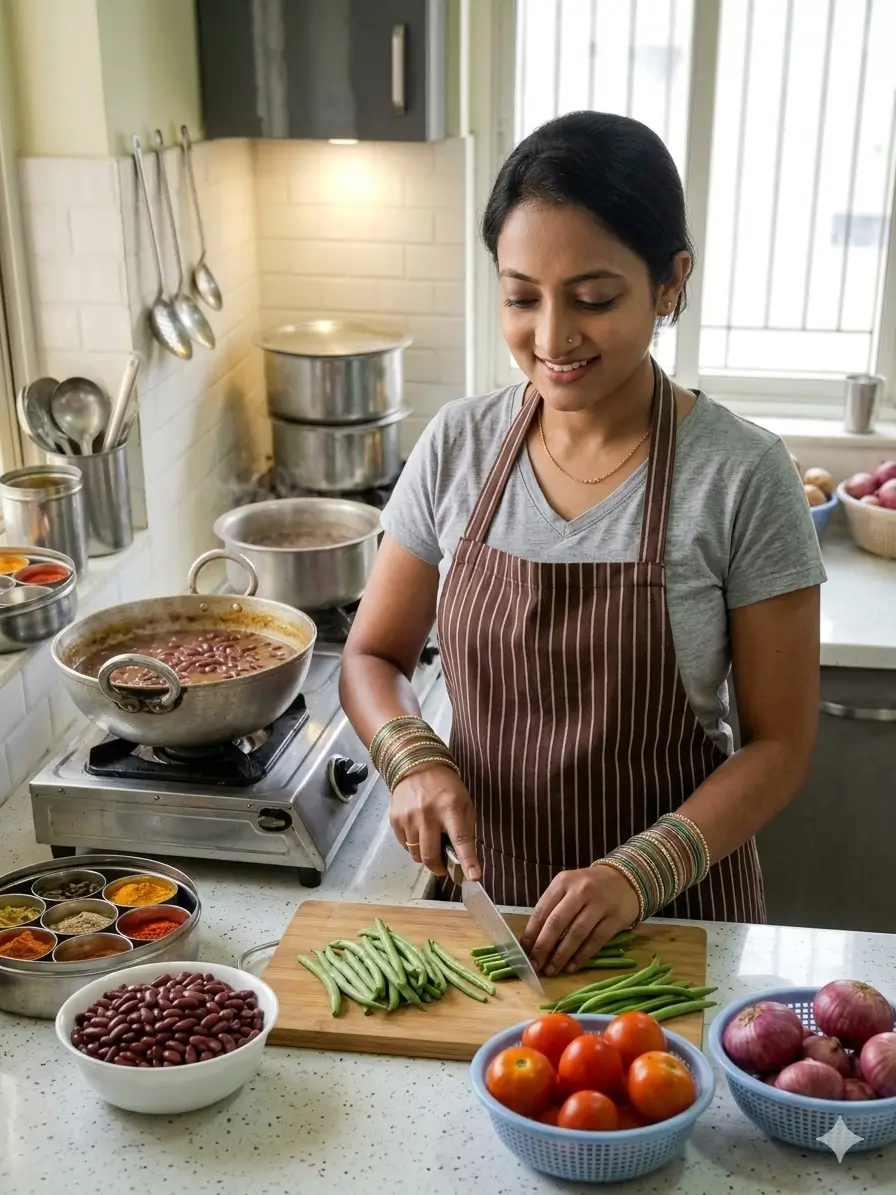
Maliha Khatun has spent 5 years hands-on testing Japanese knives for everyday home cooks. She has evaluated over 60 blades across nakiri, santoku, gyuto, and petty categories — scoring each on edge retention, steel quality, handle comfort, and value for money. She writes to help home cooks buy the right knife without the guesswork.
Expertise:Japanese Knives • Vegetable Knives • Product Reviews • Kitchen Efficiency • Knife Care
Leave a Reply