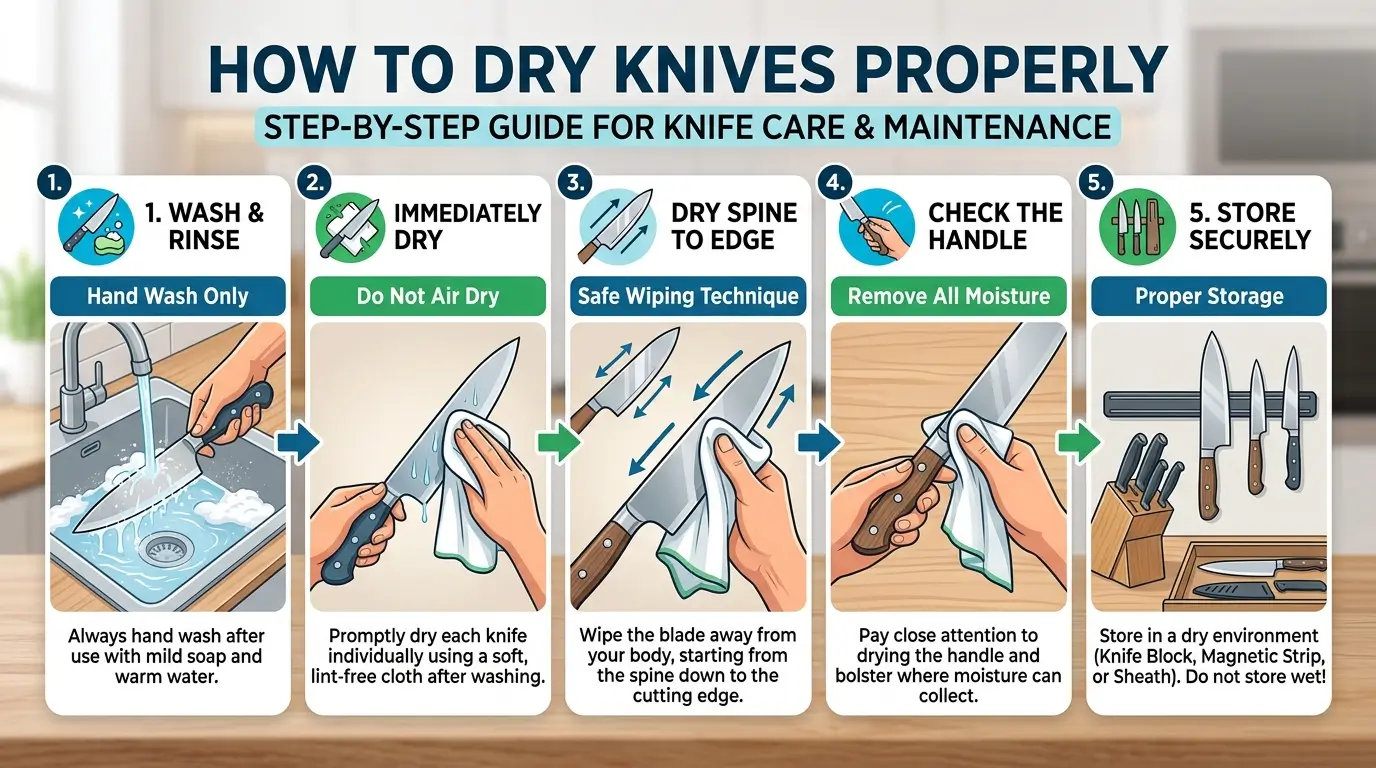
Wipe blades dry immediately with a soft cloth, then air-dry upright to prevent rust and stains.
I have spent over a decade cooking, sharpening, and caring for knives in home and professional kitchens. In this guide I explain exactly how to dry knives properly, why it matters, and how to make drying quick, safe, and reliable. You will get step-by-step methods, material-specific tips, common mistakes to avoid, and real-world advice you can use tonight.

Why drying knives properly matters
Drying knives properly stops rust, water spots, and bacterial growth. A wet blade shortens a knife's life and risks damage to handles and edges.
Drying also helps maintain sharpness. Even stainless steel needs care to look and work its best. Proper drying keeps your knives safe and hygienic, which matters every time you cook.

Basic principles of how to dry knives properly
Follow these simple rules when you dry knives properly:
- Clean first: Wash with warm water and mild soap to remove food and oils.
- Dry immediately: Remove water right after washing to prevent corrosion.
- Use the right cloth: Soft, absorbent towels work best to avoid scratches.
- Air position: Let blades stand or hang so air reaches both sides.
Repeat these steps regularly and you will protect the blade, handle, and edge. The core idea is act fast and use gentle tools.

Step-by-step guide: how to dry knives properly
- Rinse and inspect the blade right after washing. Look for food trapped at the bolster or handle joint.
- Shake off excess water over the sink. This reduces drips and mess.
- Lay a clean, dry towel on the counter. Use a second towel if you have one.
- Hold the handle with your non-dominant hand. Wipe the blade from spine to edge in one smooth pass. Work from heel to tip.
- Flip the blade and repeat on the other side. Wipe the handle and tang as well.
- Stand the knife upright in a drying rack or on a clean towel so both sides air for a few minutes. Avoid laying blades flat where water can pool.
- Store when fully dry in a block, magnetic strip, or sheath. Do not store while damp.
These steps show exactly how to dry knives properly while keeping safety and blade shape in mind.

Tools and materials for drying knives properly
Use small, effective tools you likely already own:
- Microfiber or cotton tea towels: Highly absorbent and soft on steel.
- Dedicated knife cloth: Thinner, lint-free, for fine edges.
- Drying rack with slots: Lets knives stand upright safely.
- Knife sheaths or blade guards: Protect edges while stored.
- Dish gloves: Optional for safety if you feel unsure.
Avoid abrasive pads or rough cloth. Those can scratch or nick the blade and make drying harder.

Drying by blade material and handle type
Different materials need different care when you dry knives properly.
Stainless steel blades
Stainless is forgiving but not invincible. Dry quickly to avoid water spots and mineral stains.
Carbon steel blades
Carbon steel rusts fast. Wipe blade dry, then apply a thin oil layer when storing to prevent oxidation.
Coated and nonstick blades
Pat dry gently. Do not scrub coatings; use soft cloths and avoid strong chemicals that strip coatings.
Wooden handles
Wood swells or cracks with moisture. Dry the handle thoroughly and avoid long soaking. Treat with food-grade oil periodically.
Synthetic handles (plastic, G-10)
Dry normally. These handles are stable but can trap water at tang joints—check seams and dry well.
Common mistakes and how to avoid them
Here are frequent errors and how to fix them:
- Leaving knives to air-dry flat on the counter. This traps moisture and causes rust.
- Using rough towels or steel wool. These scratch and dull the edge.
- Storing knives damp in drawers. This multiplies corrosion and bacteria risk.
- Wiping edge-to-handle repeatedly across the same spot. This can dull the edge. Wipe spine-to-edge once per side.
- Using the dishwasher and then not drying properly. Dishwashers heat and blast water; dry knives by hand after washing.
Avoiding these mistakes is central to learning how to dry knives properly.

Storing and maintaining knives after drying
Once you dry knives properly, store them to protect the edge and speed future drying.
- Use a knife block or magnetic strip for air circulation.
- Keep blade guards for travel and drawer storage.
- Reapply light oil to carbon steel or high-carbon stainless blades occasionally.
- Clean and dry storage surfaces regularly to avoid trapped moisture.
Routine checks help catch corrosion early and keep knives ready for use.

Personal experience and real-life tips
From years in busy kitchens, I learned small habits that make a big difference:
- I keep two towels near the sink: one for washing, one for drying. It halves downtime.
- After events, I set knives upright on a rack for five minutes before sheathing them.
- I once lost a favorite carbon-steel chef's knife to rust because I stored it damp. Since then I always oil carbon steel after drying.
- When teaching novices, I emphasize a single calm wipe per side. Fast, repeated scrubbing causes slips and cuts.
These tips come from hands-on work and help you master how to dry knives properly with little fuss.
Short answers to common quick questions (PAA-style)
Can I dry knives with a paper towel?
Yes. Paper towels work in a pinch, but they can leave lint and are less gentle than microfiber. Use a soft towel when possible.
Is it safe to air-dry knives on a counter?
Not ideal. Lay knives flat lines up water pockets. A vertical rack is safer for drying both sides.
How long should I let a knife air-dry?
A few minutes is usually enough after towel drying. Ensure no damp spots remain before storage.
Frequently Asked Questions of how to dry knives properly
How soon should I dry a knife after washing?
Dry immediately after washing. Leaving a wet blade for minutes increases the risk of rust and stains.
Can I use the dishwasher and then dry knives?
Avoid dishwashers for quality knives. If you do use one, always towel-dry immediately after the cycle to prevent spotting and corrosion.
What towel material is best for drying knives?
Microfiber or soft cotton towels are best. They absorb water well and are gentle on the edge.
How do I dry a knife with a wooden handle?
Wipe both blade and handle dry. Let the knife sit upright for a few minutes so the handle can fully air-dry before storage.
Should I oil a knife after drying?
Oiling is recommended for carbon steel and helpful for long-term storage. Use a light food-grade oil and a thin coat.
Conclusion
Drying knives properly is a quick habit that protects blades, handles, and your health. Wipe each knife once per side with a soft towel, let it air briefly upright, and store only when fully dry. Start using the step-by-step method tonight and you will notice fewer stains, less rust, and sharper knives over time. Try these tips, share your results, or ask a question below — and consider subscribing for more kitchen-care guides.

Maliha Khatun has spent 5 years hands-on testing Japanese knives for everyday home cooks. She has evaluated over 60 blades across nakiri, santoku, gyuto, and petty categories — scoring each on edge retention, steel quality, handle comfort, and value for money. She writes to help home cooks buy the right knife without the guesswork.
Expertise:Japanese Knives • Vegetable Knives • Product Reviews • Kitchen Efficiency • Knife Care
Leave a Reply