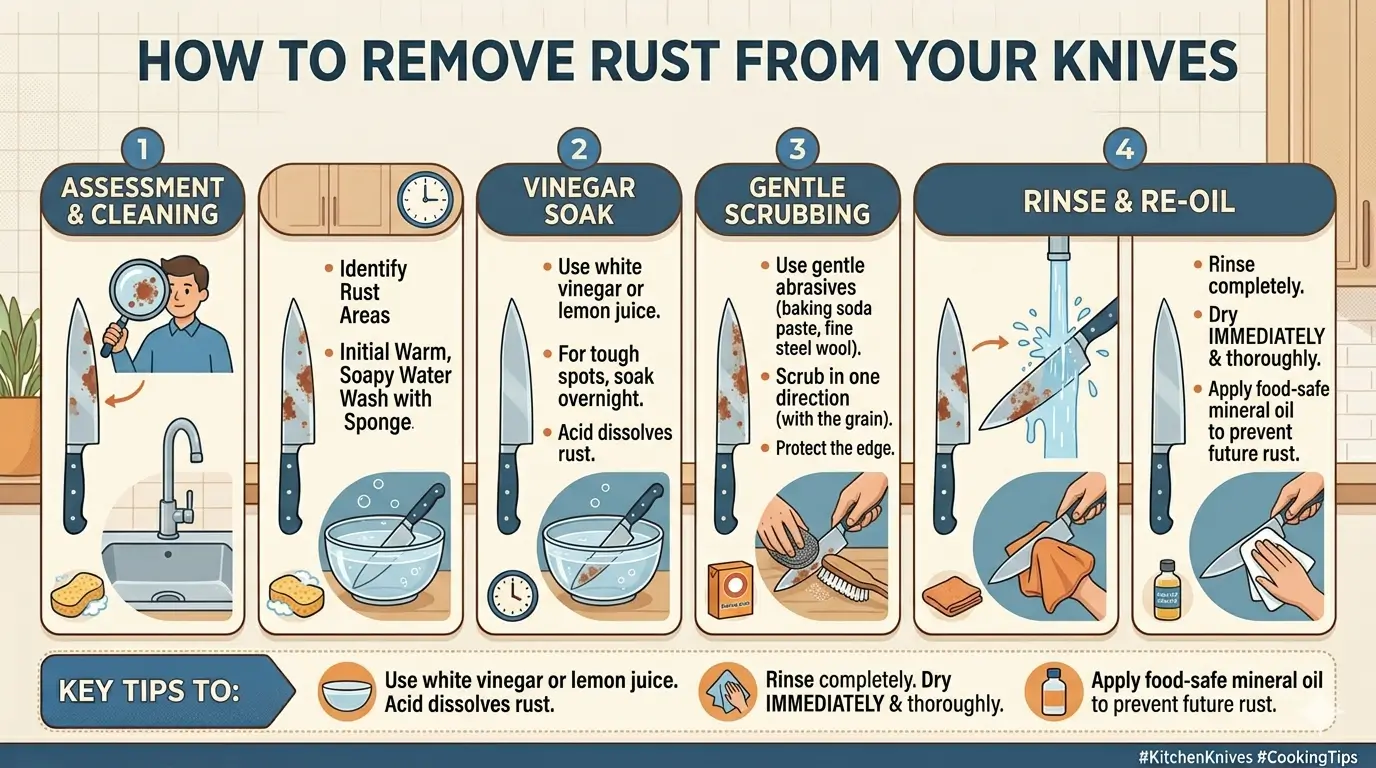
Use gentle abrasives, acidic cleaners, and oil then store dry to stop rust.
I have restored dozens of knives at home and in a professional kitchen. This guide on how to remove rust from knife shows clear, safe, and tested steps. You will learn why knives rust, when to use mild vs. strong methods, and how to keep blades clean long term. Read on for proven tips, simple tools, and real-life lessons that make rust removal easy and reliable.
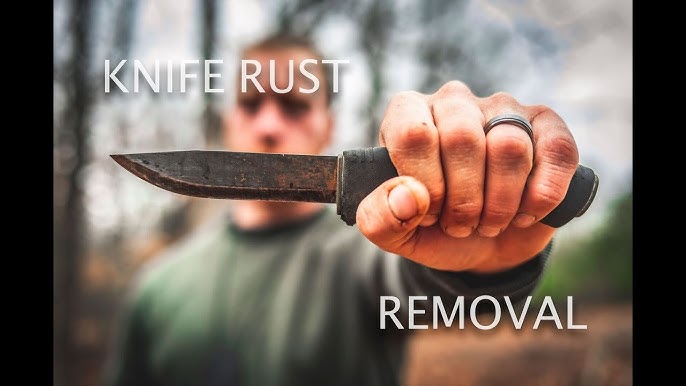
Why knives rust and what to expect
Rust forms when iron meets oxygen and water. Steel in many knives contains iron. That iron can oxidize and turn into rust. Rust weakens the blade, makes cuts unsafe, and looks bad. Knowing why rust forms helps you pick the best way to fix it.
Common causes of rust on knives:
- Leaving a wet knife in a sink or a damp drawer.
- Cutting acidic foods and not cleaning the blade.
- Low-grade steel or damaged protective coatings.
- Salt exposure or long storage in humid areas.
What you should expect:
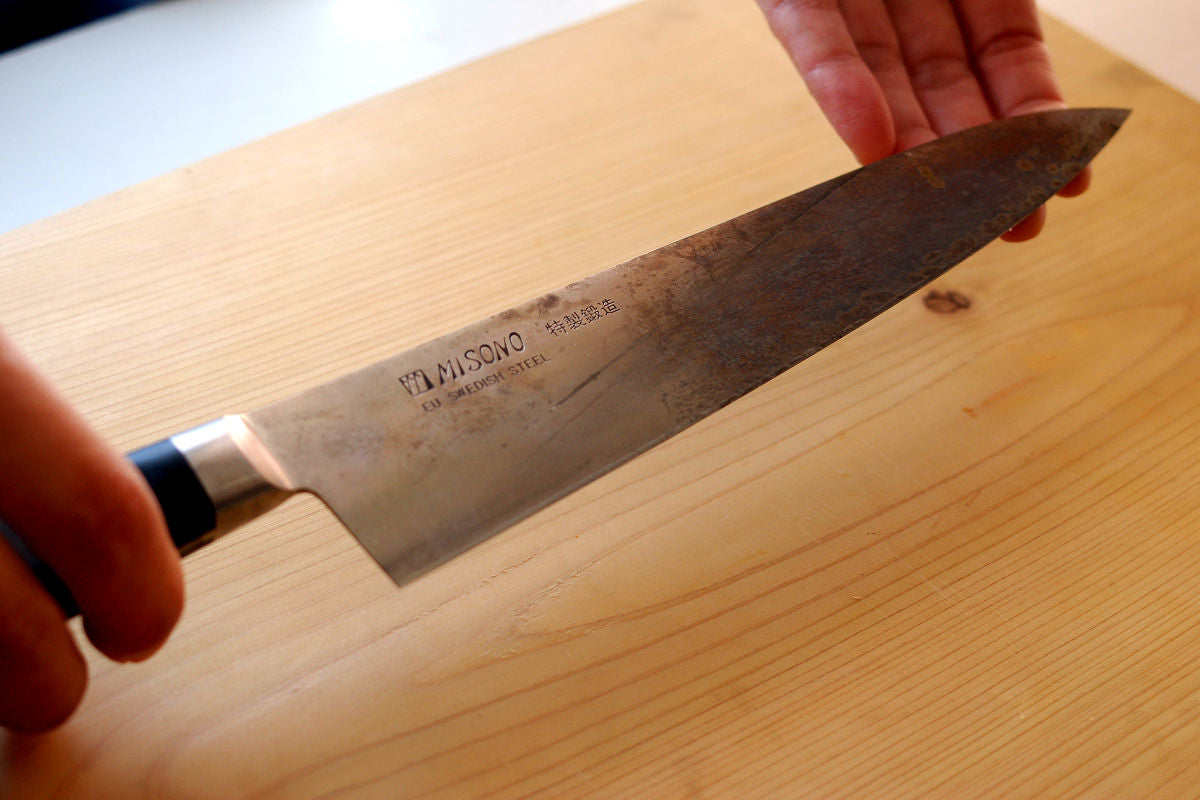
- Light surface rust can come off easily.
- Deep pitting may leave small pits you can’t fully erase.
- Some finishes require special care to avoid damage.

Source: knafs.com
Tools and materials you need
Use safe, common items. Most jobs use tools you likely have at home.
- Soft cloths and paper towels.
- Warm water and mild dish soap.
- White vinegar and lemon juice for mild acid cleaning.
- Baking soda for a mild abrasive paste.
- Non‑scratch scrub pads or fine steel wool (0000 grade).
- Metal polish or rust remover for stubborn spots.
- Food-safe oil (mineral oil) to protect the blade.
- Gloves and eye protection for safety.
Optional useful items:
- Knife sharpening stones or a leather strop.
- A toothbrush or cotton swabs for tight spots.
- A rust eraser block for small scale rust.

Source: youtube.com
Step-by-step: how to remove rust from knife — light surface rust
This method is for small brown spots and light discoloration.
Steps:
- Clean the blade with warm soapy water. Dry it well.
- Soak a paper towel in white vinegar. Wrap it around the rust spot for 5–10 minutes.
- Rub gently with a soft cloth or 0000 steel wool. Work with the grain.
- Rinse and dry. Apply a thin coat of mineral oil.
Why it works:
- Vinegar dissolves rust ions. Gentle abrasion lifts loose oxide.
- Oil restores a barrier to stop new rust.
Source: globalkitchenjapan.com
Step-by-step: how to remove rust from knife — medium rust and staining
For more stubborn rust or light pitting.
Steps:
- Make a paste from baking soda and water. Spread on rusted areas.
- Let sit 10–20 minutes. Scrub with a toothbrush or fine steel wool.
- For stubborn spots, follow with a vinegar soak for 5 minutes.
- Rinse, dry, and oil the blade.
Tips:
- Always rub with the grain. This limits scratches.
- Test in a small area if the knife has a special coating.

Source: globalkitchenjapan.com
Step-by-step: how to remove rust from knife — heavy rust and pitting
When rust is thick or blade shows pitting.
Steps:
- Wear gloves and eye protection.
- Use a commercial rust remover or a rust eraser per instructions.
- Use 0000 steel wool or a fine abrasive pad. Work gently and evenly.
- If pits remain, light hone and polish the area on a sharpening stone.
- Wash, dry, and apply protective oil.
Limitations:
- Deep pits may never vanish; you can only smooth and stabilize them.
- Aggressive abrasion removes metal. Take care not to change the blade profile.

Source: youtube.com
Preventing rust after you remove it
Prevention is easier than repair. Follow simple habits to avoid repeat rust.
Daily habits:
- Wash and dry knives right after use.
- Never leave knives in the sink overnight.
- Wipe blades with a thin coat of mineral oil if not used for days.
Storage tips:
- Use a knife block, magnetic strip, or sheath that stays dry.
- Use silica gel packs in drawers in humid climates.
Care routine:
- Reapply oil monthly if you live in a humid area.
- Keep blades sharp; a sharp blade needs less force and resists damage better.

Source: imarku.net
Safety and handling when removing rust
Rust removal can cut or irritate skin. Be safe and work slow.
Safety rules:
- Always work away from your body.
- Use protective gloves and eye protection for heavy rust removal.
- Keep fingers off the edge when scrubbing.
- Secure the knife on a non-slip mat while you work.
Source: reddit.com
Maintenance, sharpening, and finishing touches
After rust removal, tune the blade and protect it for long life.
Steps:
- Hone or sharpen the edge if needed.
- Polish the blade to remove fine scratches.
- Apply a food-safe oil or wax on carbon steel blades.
- Check the handle and tighten any loose pins or screws.
Professional care:
- For valuable knives, consider professional sharpening and polishing after rust removal.
- Ask a pro if you fear reshaping or losing value.

Source: co.uk
Personal experience and lessons learned
I have removed rust from kitchen knives, pocket knives, and chef sets. Early on, I scrubbed too hard and altered edges. I learned to use gentle methods first. Start with vinegar or baking soda. Move to stronger tools only if needed. A thin coat of mineral oil after cleaning stopped rust from returning on many blades.
Common mistakes I avoid now:
- Leaving a wet blade to dry on a towel that stays damp.
- Using coarse steel wool that gouges the metal.
- Skipping oil after cleaning.
PAA-style questions
Q: Will vinegar damage my blade?
A: Short vinegar soaks on steel are fine. Long or repeated exposure can pit some steels. Rinse and neutralize after use.
Q: Can I use WD-40 to remove rust?
A: WD-40 can loosen light rust and displace moisture. It is not a full cleaning step; follow with soap, rinse, and oil.
Q: How often should I oil my knives?
A: In humid climates, oil monthly. In dry homes, every two to three months is fine.
Frequently Asked Questions of how to remove rust from knife
How long should I soak a knife in vinegar to remove rust?
Soak for 5 to 15 minutes for light rust. Check often. Rinse and dry right after to avoid overexposure.
Will lemon juice work as a rust remover?
Yes. Lemon juice is mildly acidic and works like vinegar. Use it for small spots and rinse well after treatment.
Can I use a wire brush on a knife?
Avoid wire brushes on finished blades. They are too aggressive and will scratch and damage the steel. Use 0000 steel wool instead.
Is rust on a knife dangerous to health?
Small rust bits are not usually toxic but they can harbor bacteria. Clean the blade thoroughly before food use, or re-sharpen if the edge is compromised.
How to restore a pocket knife with heavy surface rust?
Disassemble if possible. Use a commercial rust remover or a rust eraser for heavy rust. Polish, reassemble, and oil pivot points and the blade.
Conclusion
You can remove rust from a knife safely with simple tools and calm technique. Start with mild methods like vinegar or baking soda. Move to stronger abrasives only when needed. Dry and oil the blade to stop rust from returning. Small daily habits prevent most rust problems.
Try a gentle clean today. Test one method on a small spot and keep a care routine. If you found this guide helpful, share your experience below or subscribe for more practical knife care tips.

Maliha Khatun has spent 5 years hands-on testing Japanese knives for everyday home cooks. She has evaluated over 60 blades across nakiri, santoku, gyuto, and petty categories — scoring each on edge retention, steel quality, handle comfort, and value for money. She writes to help home cooks buy the right knife without the guesswork.
Expertise:Japanese Knives • Vegetable Knives • Product Reviews • Kitchen Efficiency • Knife Care
Leave a Reply