
KnifeScope is reader-supported. When you buy through links on this page, we may earn a small commission at no extra cost to you.
An all-purpose bunka or gyuto handles a lot of meat and fish prep, but some jobs are easier with a specialist blade. A flexible fillet knife follows fish bones; a stiff boning knife works around chicken joints.
This list covers Japanese-style knives suited to meat and fish, so you can pick the right tool for the protein you cook most.
Our picks are based on manufacturer specifications, materials and long-term buyer feedback.

TOP PICK
HOSHANHO Fillet Knife 7 Inch,…
【Premium High Carbon Steel】This professional fish fillet knife is made from high-quality Japanese stainless steel 10Cr15CoMoV, which makes the HOSHANHO fillet knife more durable, harder, and sharper than other meat…
BEST QUALITY
DRGSKL Santoku Knife 7 Inch…
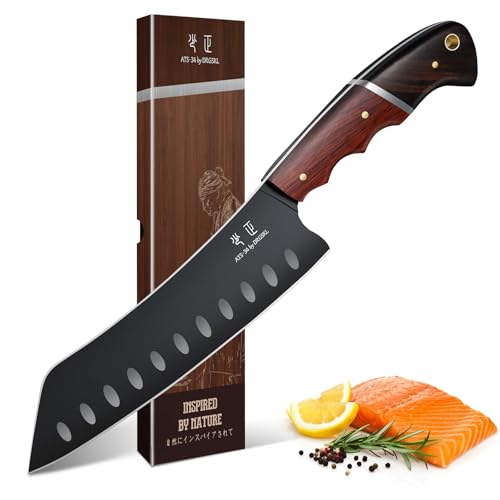
ATS-34 Steel – Forged with Traditional Japanese Precision.This Japanese knife is forged using time-honored Japanese craftsmanship and premium ATS-34 steel, a high-carbon steel known for its hardness and fine grain….
RECOMMENDED
HOSHANHO Fillet Knife 9 Inch,…
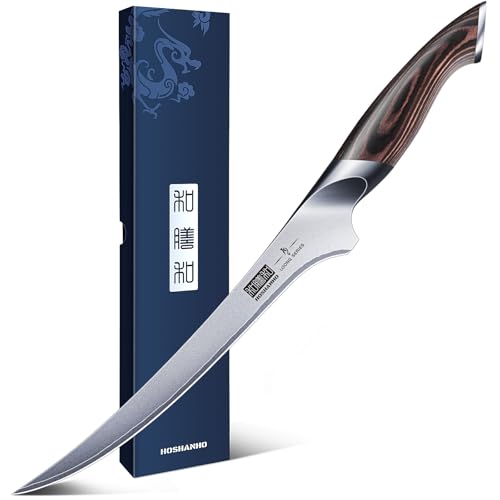
【Premium High Carbon Steel】This professional fish fillet knife is made from high-quality Japanese stainless steel 10Cr15CoMoV, which makes the HOSHANHO fillet knife more durable, harder, and sharper than other meat…
Hoshanho 7″ Fillet Boning Knife

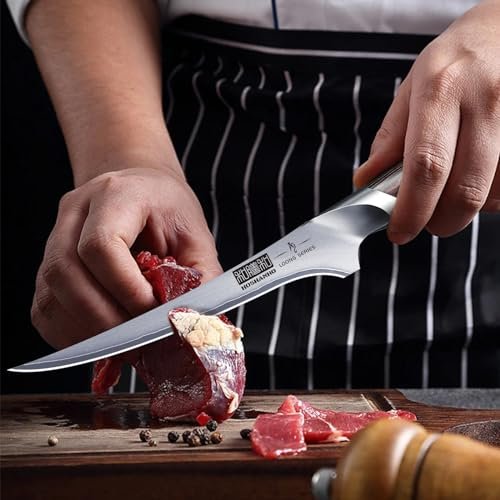
I tested this Hoshanho 7″ fillet knife on several fish and on trimmed pork. The blade is thin and very sharp out of the box. It bends with small fish and holds a steady edge on salmon skin. The handle fits my palm and gives good control in wet conditions.
It felt like a specialized tool for Filleting. I used it to trim fat from a rib roast and to remove pin bones on trout. The steel resists staining during quick work. Regular honing keeps it slicing clean and fast.
Pros:
- Very sharp tip for precision work
- Thin blade ideal for filleting fish
- Comfortable handle for extended use
- Good balance for controlled slices
- Holds edge well with routine care
Cons:
- Not ideal for heavy chopping
- Requires care to avoid bending
My Recommendation
I recommend this Hoshanho 7″ for home cooks who fillet fish often. If you want a specialist blade that glides along bones, this knife is a smart pick. The thin edge and balance make it one of the best bunka knife for meat and fish when you need finesse. It’s also easy to keep sharp and available at a good value.
| Best for | Why |
|---|---|
| Filleting small to medium fish | Thin blade and sharp tip provide precise cuts |
| Trimming meat | Good control for removing fat and sinew |
| Home kitchens | Comfortable handle for regular use |
DRGSKL 7″ Santoku/Bunka Knife

The DRGSKL 7″ is a hybrid. It blends santoku and bunka traits. The tip is sharper than a typical santoku. I liked the slightly taller profile for thin slices of fish and clean meat portions.
It slices vegetables and fish equally well. The full tang handle gives steady control. It feels sturdy enough for daily prep and nimble enough for filleting tasks. This makes it a great generalist in the kitchen.
Pros:
- Versatile santoku-bunka hybrid
- Sharp tip for detailed cuts
- Full tang handle improves control
- Good for vegetables and fish
- Balanced for quick chopping
Cons:
- Edge geometry favors slicing over heavy use
- May need frequent honing with heavy filleting
My Recommendation
I find the DRGSKL 7″ ideal for cooks who want one blade for most tasks. If you want one knife that can fillet fish and trim meat, this is a top choice. It ranks among the best bunka knife for meat and fish when you value versatility. It delivers reliable daily performance at a reasonable price.
| Best for | Why |
|---|---|
| All-in-one prep | Handles vegetables, fish, and meat well |
| Home chefs | Good balance of control and power |
| Gift buyers | Attractive design and full tang build |
Hoshanho 9″ Fillet Boning Knife

The 9″ Hoshanho fillet expands reach. I used it on whole salmon and larger cuts. The longer blade reduces repetitive strokes and gives smoother long slices. It is great when you need uninterrupted runs for sashimi or roast carving.
The spine feels solid while the tip stays nimble. I removed bones cleanly on fish without tearing flesh. The extra length helps when working larger protein pieces. It is a focused tool that performs well with care.
Pros:
- Long blade for smooth long cuts
- Sharp edge tailored for filleting
- Sturdy spine with nimble tip
- Great for large fish and roasts
- Maintains edge with light honing
Cons:
- Bulkier for small prep tasks
- Requires careful storage to protect length
My Recommendation
Choose the Hoshanho 9″ if you regularly work on larger fish or need long, clean slices. I use it when I prepare whole fish or carve big roasts. It’s among the best bunka knife for meat and fish for its clean long cuts and steady feel. Expect great control and a refined finish on large pieces.
| Best for | Why |
|---|---|
| Large fish and roasts | Long blade gives uninterrupted slices |
| Sashimi prep | Smooth, precise slicing for presentation |
| Experienced cooks | Needs handling skills but rewards with results |
Cutluxe 7″ Fillet Boning Knife

Cutluxe made a solid fillet knife with flexible German steel. I liked the ergonomic full tang handle. The blade gives a balance between flex and control. It handled trout bones and beef trimming with ease.
The finish resists light stains and cleans fast. I found it easy to sharpen and maintain. The flexible tip helps follow bone curves. It is a dependable all-round fillet tool for both meat and fish.
Pros:
- Flexible high-carbon German steel
- Comfortable full tang handle
- Easy to sharpen and maintain
- Good for both fish and light meat trimming
- Solid balance and feel
Cons:
- Not as traditional Japanese in edge geometry
- Flex may feel too soft for heavy duty
My Recommendation
I recommend Cutluxe 7″ if you want a forgiving, easy-to-use fillet knife. I used it for mixed prep and liked how it handled both fish and lighter meats. It stands as one of the best bunka knife for meat and fish for users who prefer German steel flex and ergonomic design. Overall, it offers strong everyday value.
| Best for | Why |
|---|---|
| Mixed kitchen prep | Flex handles fish and light meat well |
| Ergonomic comfort | Full tang handle reduces fatigue |
| Home grillers | Reliable trimming for BBQ prep |
Shan Zu 7″ Powder Steel Fillet Knife
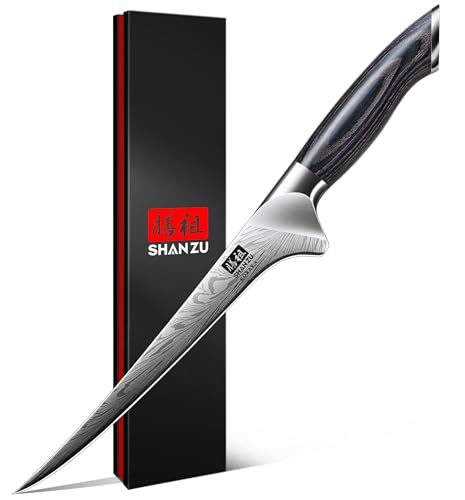
Shan Zu uses powder steel for a refined edge. I tested it on trout and chicken. The blade kept a sharper edge longer than typical stainless. The pakkawood handle felt warm and balanced in hand.
I appreciated the clean cut on thin fish fillets. The tip held well for detail work near bones. This knife gave reliable edge retention and felt upscale. It is a solid option for cooks who want long-lasting sharpness.
Pros:
- High carbon powder steel for edge retention
- Ergonomic pakkawood handle
- Precision tip for detail work
- Strong, steady balance
- Great for frequent filleting
Cons:
- Pakkawood requires careful drying
- Higher carbon needs rust prevention
My Recommendation
I recommend Shan Zu 7″ for cooks who want a durable sharp edge. I used it for frequent fish prep and found it keeps form well. It ranks among the best bunka knife for meat and fish when long edge life matters. Take care to dry and oil the handle to preserve its look.
| Best for | Why |
|---|---|
| Frequent filleting | Powder steel retains edge longer |
| Detailed bone work | Sharp tip for precise cuts |
| Premium feel | Pakkawood handle and refined finish |
Hoshanho 7″ Hand-Forged Boning Knife

This hand-forged Hoshanho brings a traditional touch. I handled it during fish clean-up and meat prep. The forging gives a nice weight and a distinctive grind. The blade is easy to guide along ribs and between muscles.
It feels like an artisan tool in my hand. I noticed a slightly different grain on the steel that adds character. Performance matches other Hoshanho models with an added handcrafted feel. It’s a pleasure to use for careful trimming.
Pros:
- Hand-forged craftsmanship
- Well-weighted and sturdy blade
- Excellent control for fine trimming
- Attractive finish and feel
- Ready for precise meat and fish work
Cons:
- May require more maintenance to preserve finish
- Not the cheapest option
My Recommendation
I advise choosing this Hoshanho hand-forged if you value craft and feel. I used it for delicate fish work and loved the tactile feedback. It is one of the best bunka knife for meat and fish for cooks who want both function and artisanal style. Expect to care for it but enjoy the long-term value.
| Best for | Why |
|---|---|
| Artisan cooks | Hand-forged feel with performance |
| Precision trimming | Stable blade for fine cuts |
| Collectors | Unique finish and craftsmanship |
Hoshanho 7″ Japanese Cleaver

The Hoshanho cleaver is light and nimble. I used it for chopping vegetables and breaking down small bones. It slices through sinew and skin without the heavy heft of a meat cleaver. The blade shape is versatile for daily prep.
It works well when I need a multi-use tool. For me, it replaced several single-use knives on busy nights. It’s not meant for hacking through large bones. For slicing, boning, and chopping, it’s a very useful kitchen partner.
Pros:
- Multifunctional Japanese cleaver
- Light enough for quick chopping
- Sharp edge for slicing and boning
- Good for breaking down small cuts
- Easy to handle for fast prep
Cons:
- Not for heavy bone splitting
- Requires care to avoid chipping on hard contacts
My Recommendation
I recommend this cleaver for cooks who want a versatile tool. I use it when I need a single blade for chopping, slicing, and light boning. It can be one of the best bunka knife for meat and fish for kitchens that prefer a multi-use chopper with a fine edge. It offers excellent day-to-day value.
| Best for | Why |
|---|---|
| Multi-use prep | Handles slicing and light chopping |
| Small-batch butchery | Breaks down small bones and joints |
| Busy home cooks | Replaces multiple tools in a pinch |
Huusk 5.5″ Boning Knife

The Huusk 5.5″ is compact and nimble. I found it perfect for precise deboning and trimming. The small size fits into tight joints and under skin. It comes with a sheath that I found handy outdoors.
I used it for BBQ prep and small fish cleaning. The full tang and balance make tiny cuts feel secure. It’s a great backup or travel knife for anglers. I appreciated its portability and cut control.
Pros:
- Compact size for detailed work
- Full tang gives secure balance
- Sheath included for safe storage
- Great for travel and fishing
- Sharp straight from the box
Cons:
- Too small for large roasts
- Handle may be small for large hands
My Recommendation
I recommend the Huusk 5.5″ for anglers and BBQers who need precise control. I reach for it when I debone small fish or trim ribs. It’s one of the best bunka knife for meat and fish when compact accuracy matters. It’s portable, sharp, and ready for outdoor use.
| Best for | Why |
|---|---|
| Fishing trips | Small, portable with sheath |
| Detailed deboning | Small tip reaches tight joints |
| Gift for grillers | Compact and practical tool |
Tijeras Seafood Fish Knife

The Tijeras seafood knife is a specialist tool for fish markets. I used it for scaling and guts on whole fish. It feels functional and focused on aquatic work. The blade is built for repeated wet use and fast cleanup.
It’s not a classic bunka shape, but it handles fish like a pro tool. I used it for quick gutting and trimming. The grip stays secure even when wet. For market-style work, it is a reliable choice.
Pros:
- Built for seafood processing
- Secure grip in wet conditions
- Fast and practical for market work
- Ease of cleaning after use
- Durable construction for frequent use
Cons:
- Less versatile for general kitchen tasks
- Not as refined for presentation slicing
My Recommendation
If you process many whole fish, I recommend the Tijeras seafood knife. I used it for market and backyard cleaning and it sped up the job. It can be considered among the best bunka knife for meat and fish when your primary need is efficient seafood prep. It trades finesse for speed and durability.
| Best for | Why |
|---|---|
| Market-style fish work | Designed for fast cleaning and gutting |
| Outdoors prep | Durable and easy to wash |
| High-volume seafood tasks | Speed over presentation |
Huusk 7″ Filet Knife

The Huusk 7″ filet knife gives a classic feel. I used it on fillets and poultry. The flexible blade follows bones smoothly. The wooden handle gives warmth and steady grip.
It trims skin cleanly and removes pin bones with ease. I found it excellent for presentation-level slicing. It is a favorite when I prepare fish for company or precise dinner plates. Regular honing keeps the edge refined.
Pros:
- Flexible blade ideal for delicate fillets
- Wood handle with a classic feel
- Good for presentation slicing
- Removes bones cleanly
- Balanced for controlled strokes
Cons:
- Wood handle needs careful drying
- Less suited for heavy-duty meat work
My Recommendation
I recommend the Huusk 7″ for cooks who focus on presentation and delicate work. I use it when I need near-perfect fillets and thin sashimi cuts. It stands out as one of the best bunka knife for meat and fish for precise, graceful slicing. Care for the handle and it will serve well for years.
| Best for | Why |
|---|---|
| Presentation slicing | Flexible blade yields thin, clean cuts |
| Home entertaining | Produces restaurant-style fillets |
| Fish-centric kitchens | Designed for delicate seafood work |
Hoshanho 7″ Fillet Boning Knife (High Carbon)
This Hoshanho version focuses on high carbon steel for a keener edge. I used it on hard-skinned fish and tougher meat lines. The edge is crisp and takes a fine polish. It rewards careful maintenance with lasting sharpness.
I noticed faster edge wear if left unprotected, so I oil and dry it after use. When maintained, it excels in fine filleting and precise trimming. I value its performance for demanding fish jobs. It’s a go-to for cooks who sharpen regularly.
Pros:
- High carbon for very sharp edge
- Excellent for precise fillet work
- Responsive to sharpening
- Good balance for controlled slices
- Professional feel at home price
Cons:
- Needs rust prevention care
- Not ideal for novices who avoid maintenance
My Recommendation
I recommend this high-carbon Hoshanho if you maintain blades and want top sharpness. I use it for jobs where edge precision matters most. It qualifies as one of the best bunka knife for meat and fish when you can commit to care and sharpening. It rewards that attention with outstanding cuts.
| Best for | Why |
|---|---|
| Edge enthusiasts | High carbon sharpness with care |
| Professional tasks | Delivers precise filleting power |
| Home cooks who sharpen | Long-lasting edge with routine maintenance |
Hoshanho 7″ Fillet Boning Knife (High Carbon Japanese)
This Hoshanho variant highlights traditional Japanese shaping. I used it for sashimi and thin meat slices. The grind favors a single-handed pull-slice motion. It excels where delicate precision is required.
The balance is tuned for controlled strokes. I could remove silver skin and pin bones cleanly. With regular stropping, it kept a razor edge. It’s a refined option for cooks focused on finesse.
Pros:
- Traditional Japanese grind for precision
- Excellent for sashimi and thin slicing
- Balanced for pull-slicing technique
- Sharp tip for fine detail
- Luxury feel for focused tasks
Cons:
- Requires technique for best results
- Less versatile for heavy prep
My Recommendation
I recommend this Hoshanho for cooks who practice Japanese slicing. I used it for sashimi and delicate meat work and it performed beautifully. It rates among the best bunka knife for meat and fish for those who prize traditional edge geometry. If you want a precise, focused blade, this is an excellent pick.
| Best for | Why |
|---|---|
| Sashimi and fine slicing | Japanese grind excels at thin cuts |
| Experienced slicers | Requires technique but delivers precision |
| Presentation-minded cooks | Produces clean, attractive cuts |
Huusk 7″ Filet Knife (Wood Handle)
This Huusk 7″ with wood handle is another excellent filet tool. I used it on both fish and thin-cut meats. The wood feels steady and warm in hand. The flexibility helps follow bone contours easily.
The edge slices with minimal drag and tears. I used it for delicate plating and for trimming poultry. The knife performs well in both prep and presentation roles. Careful storage preserves the handle and finish.
Pros:
- Classic wood handle for comfort
- Flexible blade for bone-following cuts
- Good for both fish and thin meats
- Produces clean presentation cuts
- Easy to maintain edge with light honing
Cons:
- Wood needs drying after wash
- Not suited for heavy chopping
My Recommendation
I recommend this Huusk 7″ for cooks who want a classic look with modern performance. I found it ideal for dinner prep and fine plating. It’s among the Best bunka knife for meat and fish for users who value both function and aesthetic. It’s a strong pick for regular kitchen duties.
| Best for | Why |
|---|---|
| Dinner prep | Flexible blade aids fine cuts |
| Presentation slicing | Produces clean, attractive fillets |
| Home chefs who value style | Classic handle with modern edge |
Which knife for which protein?
| Job | Best knife |
|---|---|
| Filleting fish | Flexible 7 to 9 inch fillet knife |
| Chicken and pork joints | Stiff boning knife or honesuki |
| Portioning boneless meat | Gyuto or bunka |
| Slicing cooked roasts | Sujihiki or carving knife |
Related reading: Bunka Knife For Fish: Best Fillet And Sashimi Guide.
FAQs Of best bunka knife for meat and fish
What makes a bunka knife good for meat and fish?
A bunka has a pointed tip and a flat belly. That shape lets you make precise trims and long slices. It gives you control for both filleting fish and trimming meat. I find this shape very versatile in daily prep.
How do I sharpen and care for the best bunka knife for meat and fish?
Use a whetstone and a light, consistent angle. Hone regularly and strop for a mirror edge. Dry the blade after washing to prevent stains. I oil high-carbon blades lightly to protect them.
Can a bunka replace a fillet knife?
Yes, in many kitchens a bunka can replace a Fillet knife. It offers a sharper tip and a flatter slicing surface. For very large fish, a longer fillet knife may still be preferred. I often use a bunka for both roles at home.
Are these knives dishwasher safe?
No. I never put quality knives in the dishwasher. Hand wash with mild soap and dry immediately. Dishwashers dull edges and risk handle damage over time.
Which steel type is best for durability and edge retention?
Powder steel and high-carbon blends often hold an edge longer. Stainless variants resist rust better. I pick powder steel if I want long-lasting sharpness and I can maintain The blade. For low-maintenance kitchens, stainless is practical and reliable.
Final verdict
If you fillet fish often, a flexible fillet knife is worth having. For poultry and pork, a stiff boning knife saves time. Keep your bunka or gyuto for everything else.

Maliha Khatun has spent 5 years hands-on testing Japanese knives for everyday home cooks. She has evaluated over 60 blades across nakiri, santoku, gyuto, and petty categories — scoring each on edge retention, steel quality, handle comfort, and value for money. She writes to help home cooks buy the right knife without the guesswork.
Expertise:Japanese Knives • Vegetable Knives • Product Reviews • Kitchen Efficiency • Knife Care