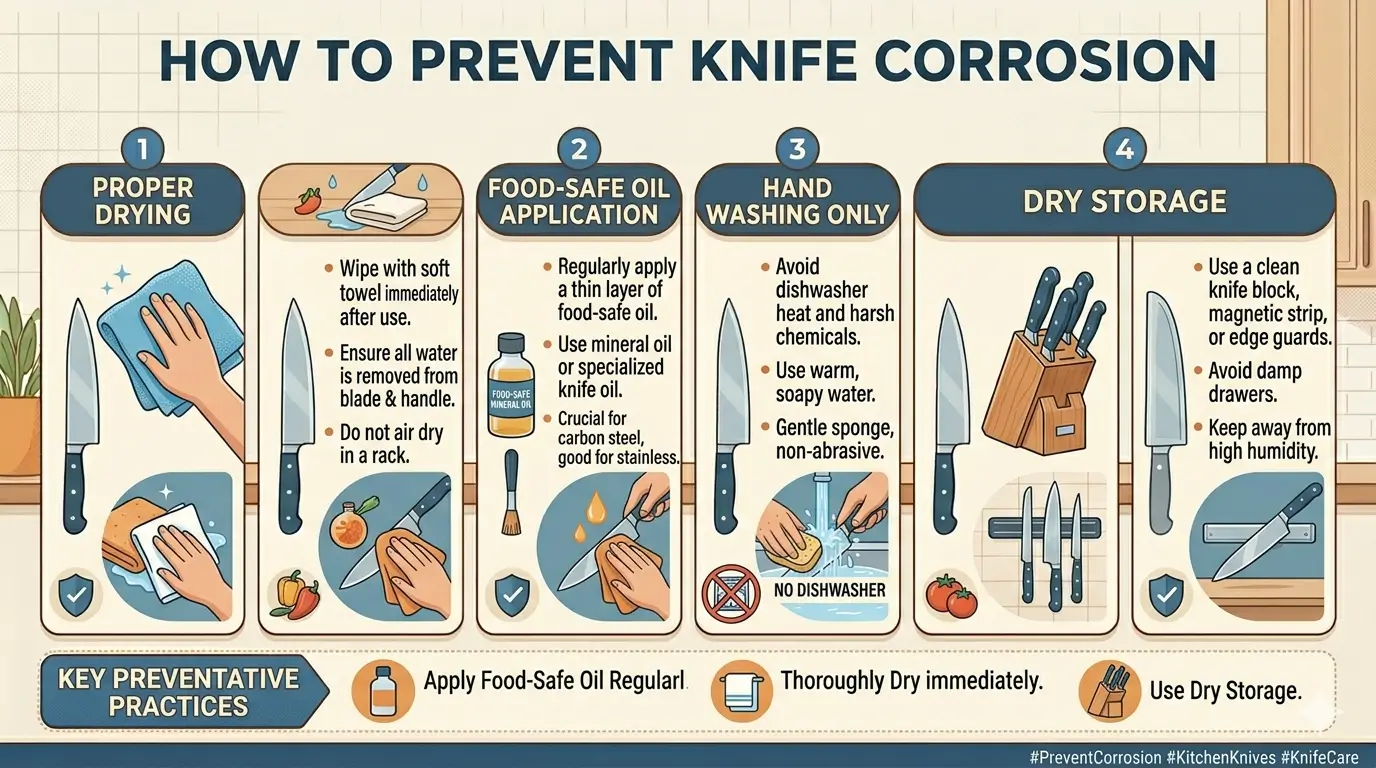
Regular cleaning, drying, and light oiling are the easiest, most effective knife corrosion prevention steps.
I have spent years restoring and caring for knives in kitchens and workshops. I know which methods stop rust and which cause long-term damage. This guide on knife corrosion prevention covers causes, materials, step-by-step care, field tips, and a simple maintenance plan you can use today. Read on to protect your knives and keep edges sharp, safe, and corrosion-free.

Why knives corrode
Knife corrosion happens when metal reacts with water, oxygen, salt, or acids. Moisture on a blade starts a chemical change that forms rust or pits. Surface scratches and microscopic crevices speed the process. Salt, sweat, and food acids make corrosion worse and faster. Knowing why corrosion starts helps you prevent it.
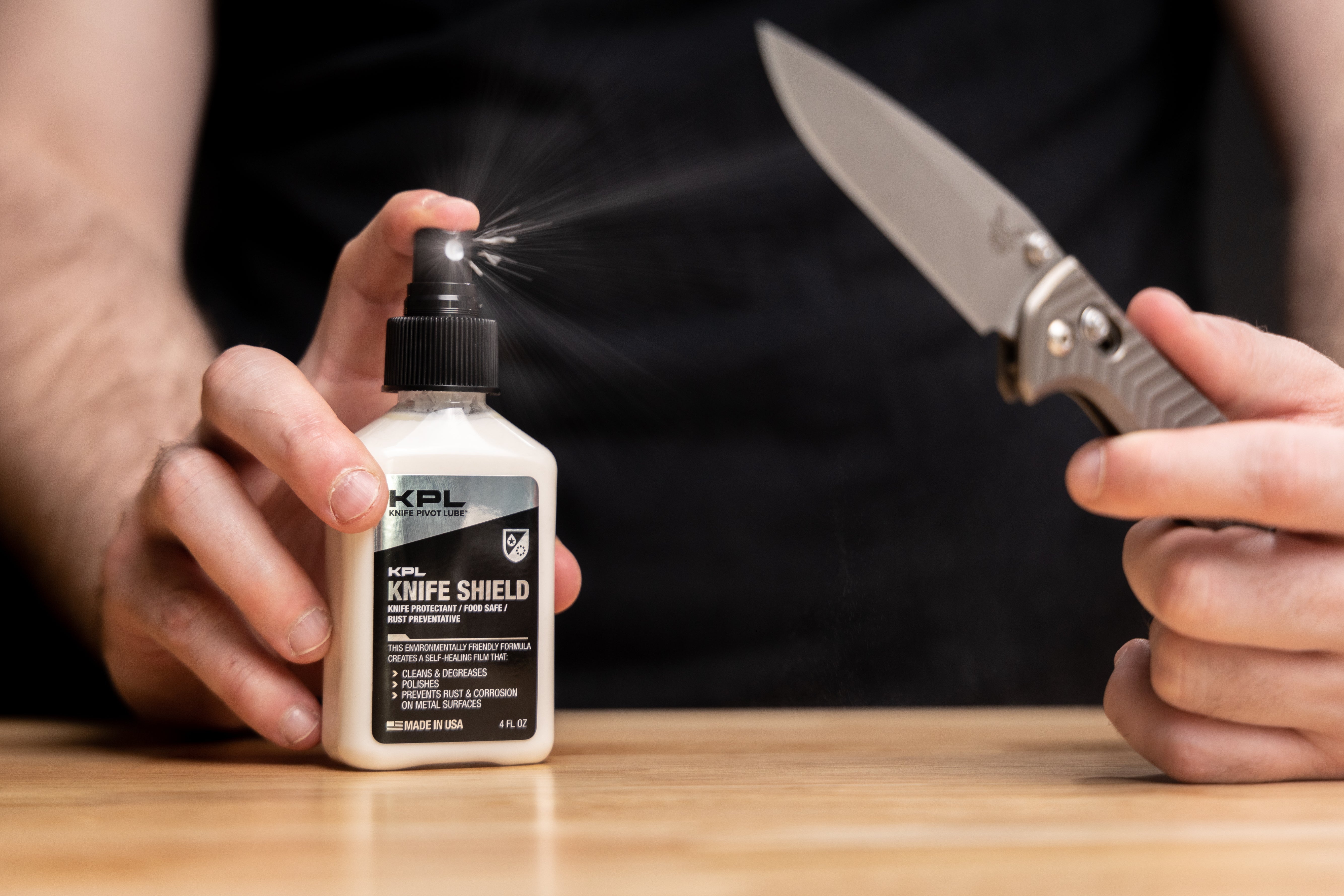
Source: knifepivotlube.com
Types of corrosion that affect knives
- General corrosion: Uniform surface weakening across the blade. It slowly removes metal and dulls finish.
- Pitting corrosion: Small holes or pits form. Pitting is hard to stop once it begins.
- Crevice corrosion: Occurs in tight joins like handle rivets or sheath seams.
- Galvanic corrosion: Happens when two different metals touch in the presence of an electrolyte, like saltwater.
- Stress corrosion cracking: Rare in knives but possible under stress and corrosive environments.
Understanding these types helps tailor knife corrosion prevention for your exact use case.

Source: youtube.com
Materials and coatings: what resists corrosion
- Stainless steel: Good corrosion resistance due to chromium. Not invulnerable; can still pit or stain.
- High-carbon steel: Easier to sharpen and stronger edge, but prone to rust without protection.
- Titanium: Very corrosion resistant and light. More expensive and harder to sharpen.
- Ceramic: Corrosion-proof but brittle and not suitable for all jobs.
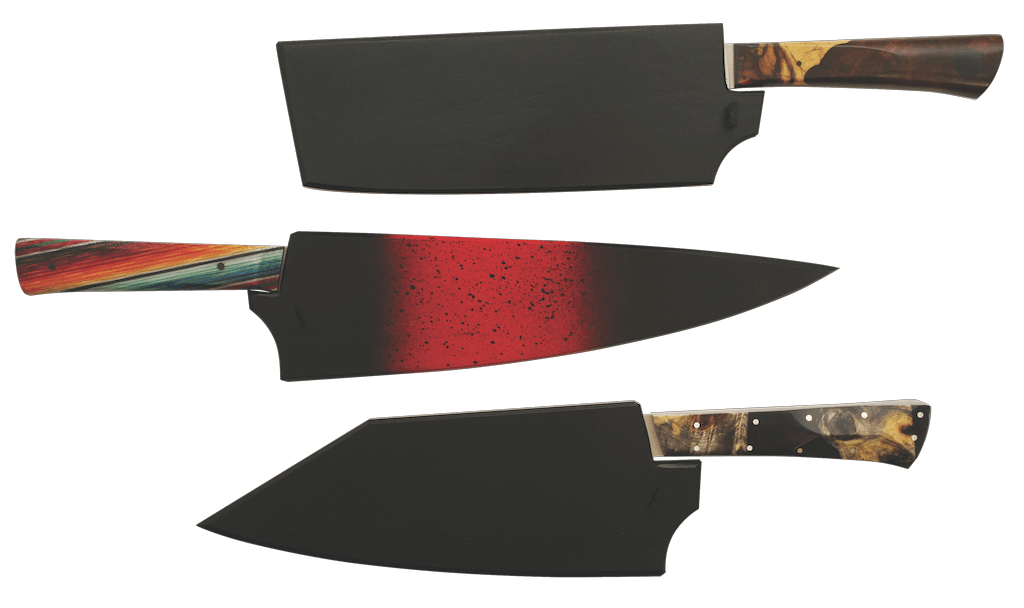
- Coatings: DLC, Cerakote, phosphate, and parkerizing add protection. Coatings can chip, so maintenance still matters.
Choosing the right material is the first step in knife corrosion prevention. Match the blade metal to your environment and maintenance willingness.
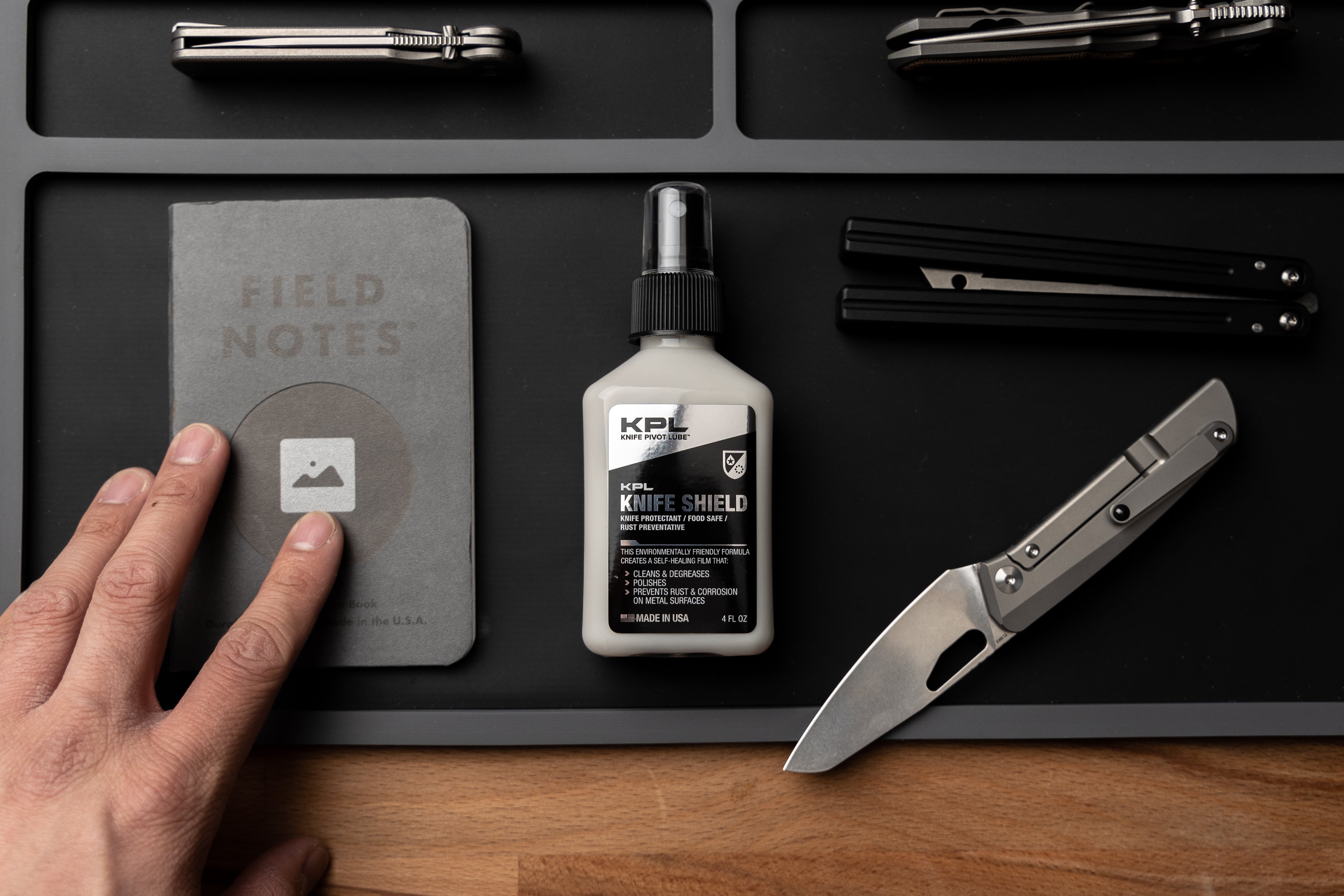
Source: knifepivotlube.com
Practical steps for knife corrosion prevention
Daily care matters more than rare deep cleaning. Follow these steps.
- Clean after each use
- Rinse or wipe blade to remove salt, acids, and food residue. Use mild soap and water for kitchen knives.
- Dry immediately
- Pat dry with a soft towel. Air drying leaves moisture in joints and can cause corrosion.
- Oil light coats
- Apply a thin film of mineral oil or food-safe blade oil on steel. Avoid vegetable oils; they can go rancid.
- Use proper storage
- Store knives in dry places. Use blocks, magnetic strips, or sheaths that breathe.
- Avoid the dishwasher
- Dishwashers trap moisture and expose blades to detergents and heat that remove protective layers.
- Use desiccants
- Silica packs in storage drawers reduce humidity and slow corrosion.
- Inspect regularly
- Look at edges, spine, pivot screws, and handle junctions for early signs of rust.
These steps form a simple routine for knife corrosion prevention.
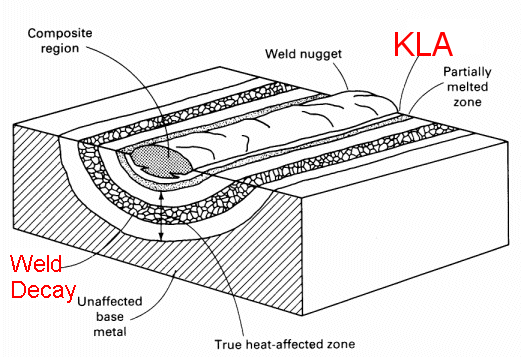
Source: corrosionclinic.com
Safe rust removal and restoration
If rust appears, remove it quickly but gently.
- Soft abrasives: Use non-woven pads or very fine steel wool for light surface rust. Move along the blade, not across the edge.
- Baking soda paste: Mix baking soda with water, apply, wait a few minutes, then rub gently. Rinse and dry.
- Vinegar soak: Short vinegar baths can dissolve rust. Rinse thoroughly and neutralize with baking soda afterward.
- Edge care: Avoid aggressive sanding on the edge; it changes geometry. If the edge is damaged, consider professional sharpening.
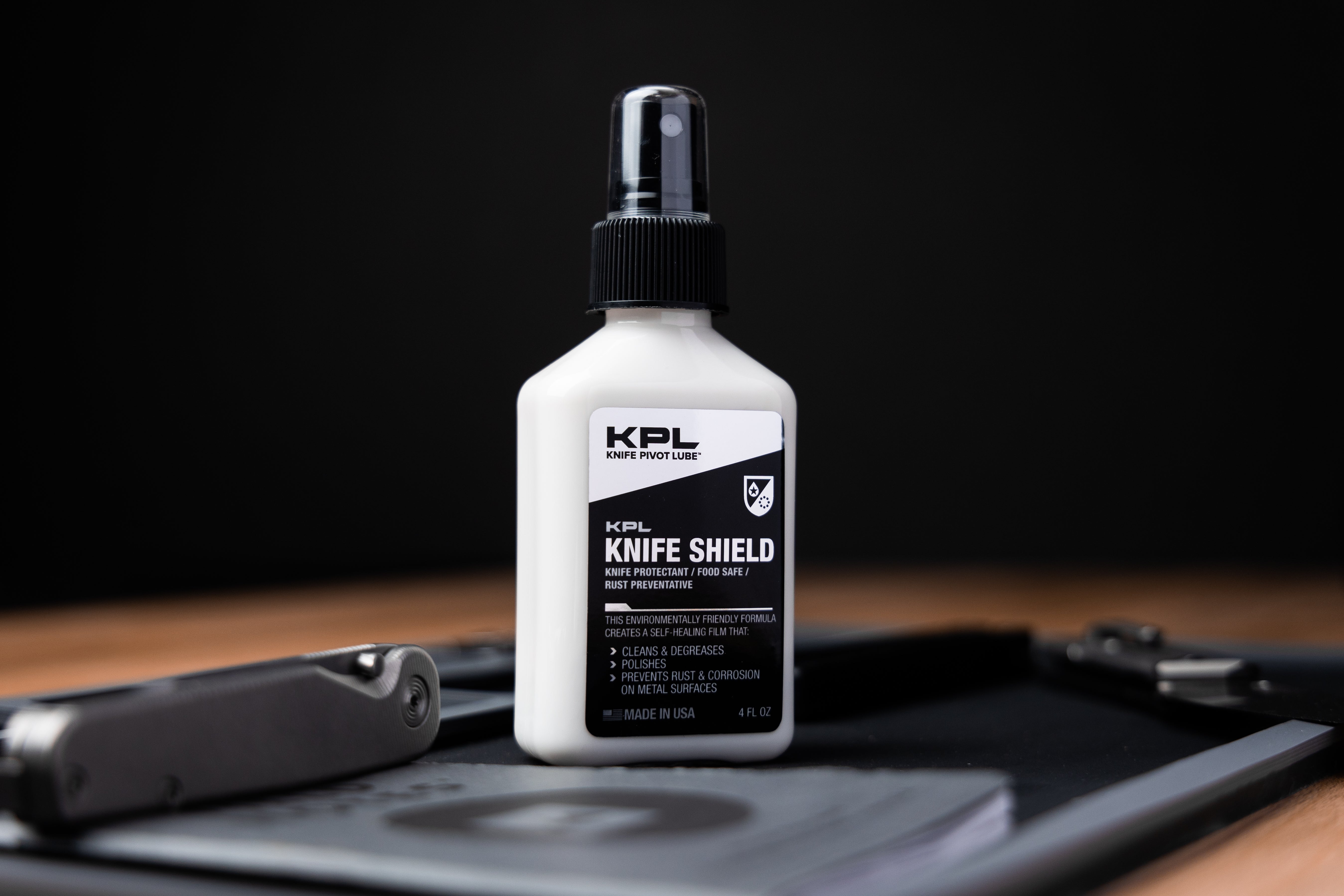
- Re-protect: After removal, clean, dry, and oil to restore corrosion protection.
Be cautious with harsh chemicals and grinding tools. They can harm blade metallurgy or temper.
Source: knifepivotlube.com
Maintenance schedule and checklist
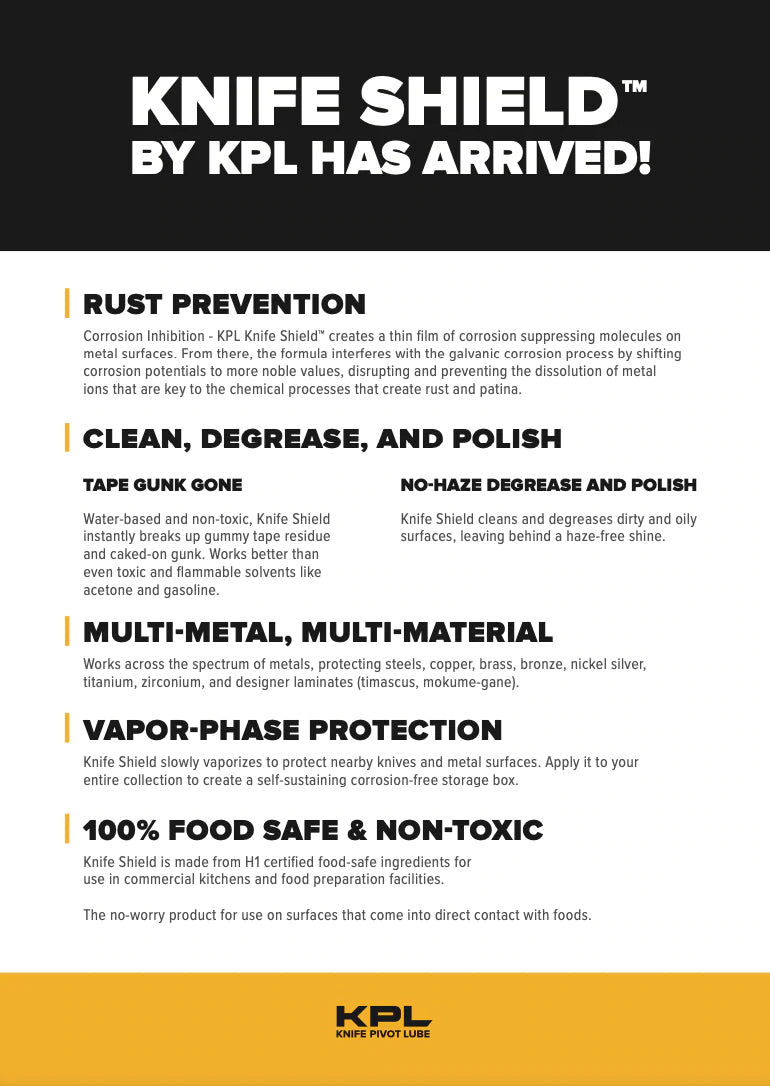
Establish a simple routine to prevent corrosion.
- Daily
- Clean and dry after use. Light oil if used on salty or acidic foods.
- Weekly
- Inspect for spots, clean handles and screws, apply oil to high-use blades.
- Monthly
- Remove blade from sheath (if possible) and check inside crevices. Replace silica packs.
- Yearly
- Deep clean, remove minor rust, and check coatings. Consider professional service for sharpening or re-tempering.
A short checklist keeps knife corrosion prevention manageable and effective.
Source: com.au
Field and outdoor tips for knife corrosion prevention
Outdoor use adds challenges like saltwater and humidity. Use these tips.
- Rinse saltwater off immediately. Salt accelerates corrosion.
- Dry with a microfiber cloth and use an oil coat before storage.
- Carry a small oil bottle and a folded cloth in your kit.
- Use a stainless or coated blade for marine work.
- For long storage, apply a thicker protective wax or a corrosion inhibitor and include desiccants.
These small habits prevent major corrosion problems in the field.
Source: towncutler.com
Personal experience and common mistakes
I once left a high-carbon chef’s knife in a wet sink overnight. The next day it had surface rust and a tiny pit near the tip. I learned that same-day drying and oiling mattered more than I thought. I also found that using cheap vegetable oil made a sticky mess and attracted dust. Mineral oil and a microfiber cloth fixed both problems. Avoid these mistakes:
- Leaving knives wet in sinks.
- Storing knives in closed sheaths with trapped moisture.
- Using rancid oils or heavy greases that gum up edges.
These lessons shaped my practical approach to knife corrosion prevention.

Source: riversedgecutlery.com
Common quick questions
How quickly does a knife start to corrode?
Knives can show surface corrosion within hours in salty or acidic conditions. Corrosion speed depends on metal type, moisture, and contaminants.
Is stainless steel fully rust-proof?
No, stainless steel resists corrosion but can still pit or stain under harsh conditions. Proper cleaning and drying remain important.
Which oil is best for kitchen knives?
Use food-grade mineral oil or camellia oil for kitchen knives. Apply a very light coat and wipe off excess.
Frequently Asked Questions of knife corrosion prevention
What is the best method to store knives long-term?
Store knives dry with a light protective oil or wax and use silica gel packs to control humidity. Keep blades separated to avoid scratches and galvanic contact.
Can I use WD-40 on my knives?
WD-40 can repel moisture temporarily, but it is not ideal for long-term food-contact protection. Use a food-safe mineral oil for kitchen blades.
How do I remove deep rust without ruining the edge?
Use gentle abrasive methods like fine steel wool and a rust remover designed for knives. If the edge is compromised, seek professional sharpening or restoration.
Does salt from hands cause corrosion?
Yes, salt and sweat from hands can cause corrosion over time. Clean and dry the blade after handling, and consider wearing gloves for high-resistance steels.
Are coated blades maintenance-free?
Coatings reduce corrosion but can chip or wear. Coated blades still need cleaning, drying, and periodic inspection to prevent under-coating corrosion.
Conclusion
Consistent care prevents most knife corrosion. Clean, dry, oil, and store knives properly to keep them sharp and safe. Small daily habits protect your investment and make sharpening less frequent. Start a simple routine today: wipe, dry, oil, and inspect. Leave a comment below, subscribe for more care tips, or share your rust stories to help others learn.

Maliha Khatun has spent 5 years hands-on testing Japanese knives for everyday home cooks. She has evaluated over 60 blades across nakiri, santoku, gyuto, and petty categories — scoring each on edge retention, steel quality, handle comfort, and value for money. She writes to help home cooks buy the right knife without the guesswork.
Expertise:Japanese Knives • Vegetable Knives • Product Reviews • Kitchen Efficiency • Knife Care
Leave a Reply