Choose the right knife by matching blade type, size, steel, and handle to your tasks.
I’ve spent years testing kitchen and outdoor knives and advising cooks and hobbyists. This knife selection guide gives clear, expert steps you can follow today. You’ll learn how to pick the right blade, match steels to care routines, and avoid common buying mistakes. Read on to make confident, lasting choices about knives.

Understanding the basics of a knife selection guide
Choosing a knife is about matching tools to tasks. A good knife selection guide helps you consider blade use, steel, size, and ergonomics. It also helps you balance cost, maintenance, and longevity. This section sets the foundation for the decisions ahead.

Source: mercerculinary.com
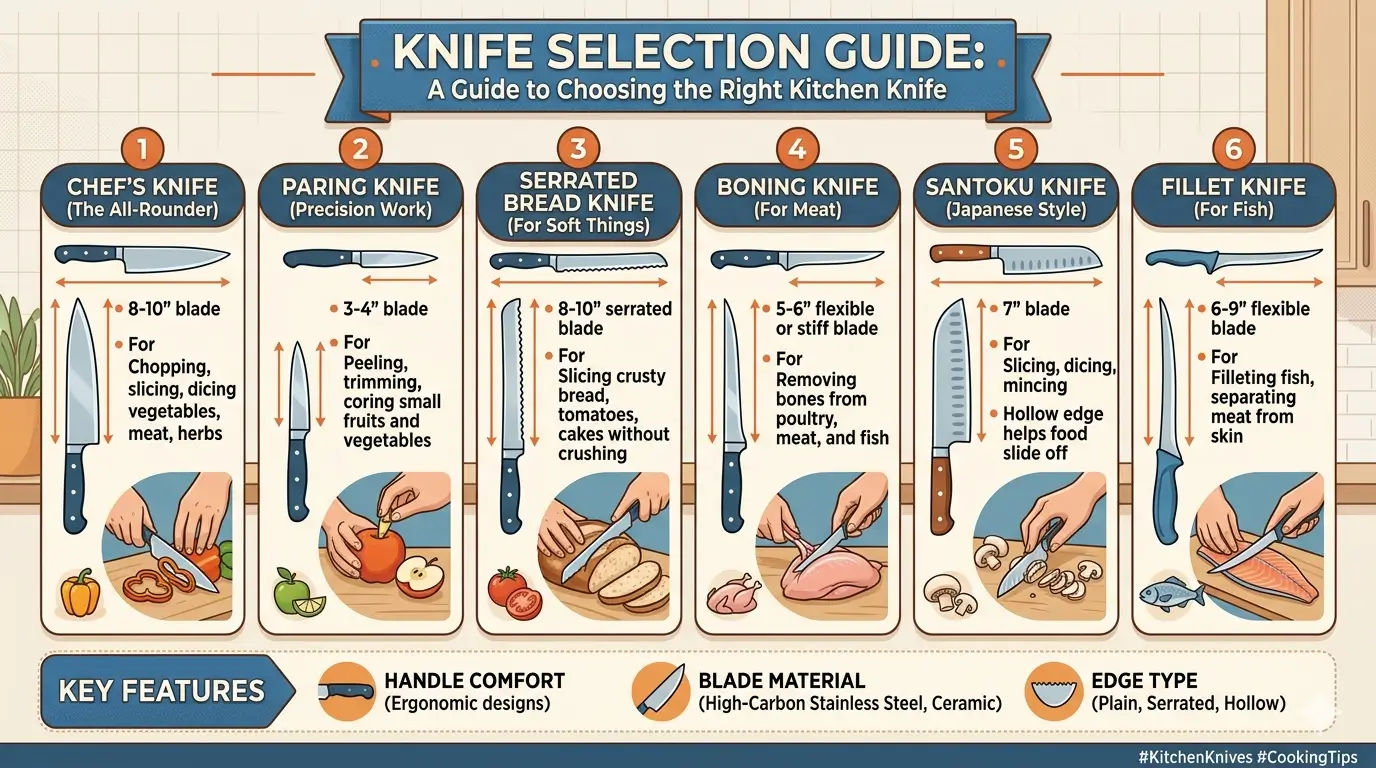
Types of knives and when to use them
Knowing common knife types is core to any knife selection guide. Choose by the work you do and how often you do it.
- Chef’s knife — Versatile, 8–10 inch blade for chopping, slicing, and dicing.
- Paring knife — Small blade for peeling and precise work.
- Serrated knife — Best for bread and soft fruits with tough skins.
- Santoku — Japanese-style, good for slicing and push-cutting.
- Utility knife — Mid-size for sandwiches and small tasks.
- Boning/deboning knife — Thin, flexible blade for meat and fish.
- Cleaver — Heavy blade for chopping bones and hard vegetables.
Practical example: If you cook nightly and prep vegetables, start with a high-quality 8-inch chef’s knife, then add a paring and serrated knife. This knife selection guide recommends a starter set built around those three.
Source: everythingkitchens.com
Blade materials and steel types
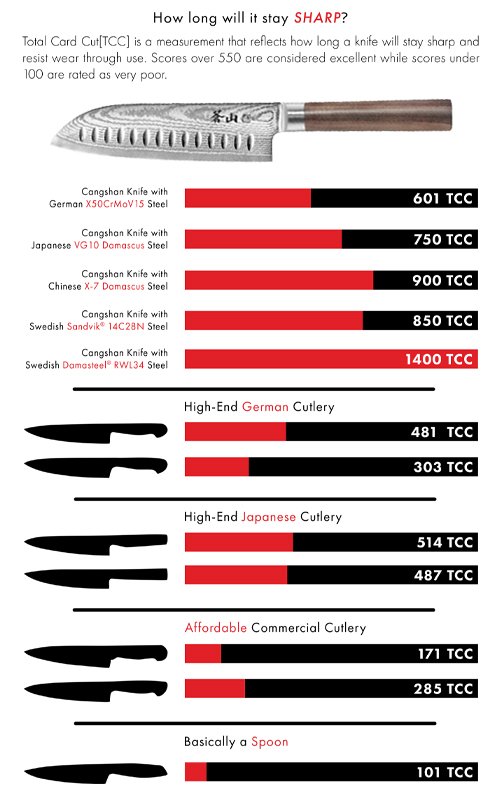
Blade steel determines edge retention, toughness, and maintenance needs. This part of the knife selection guide explains common steels and trade-offs.
- Stainless steel — Resists rust, low maintenance, slightly lower edge retention.
- High-carbon steel — Takes a very sharp edge, easier to sharpen, but can rust if not cared for.
- Powder metallurgy and tool steels — Offer excellent edge life and toughness; usually pricier.
- Ceramic — Very hard and keeps an edge long, but chips easily and needs special sharpening.
Tip: If you dislike frequent sharpening, choose a high-end stainless alloy with good edge retention. If you enjoy sharpening and want razor edges, pick carbon or tool steel and accept regular care.

Source: graybeardedgreenberet.com
Blade geometry, edge angle, and grind
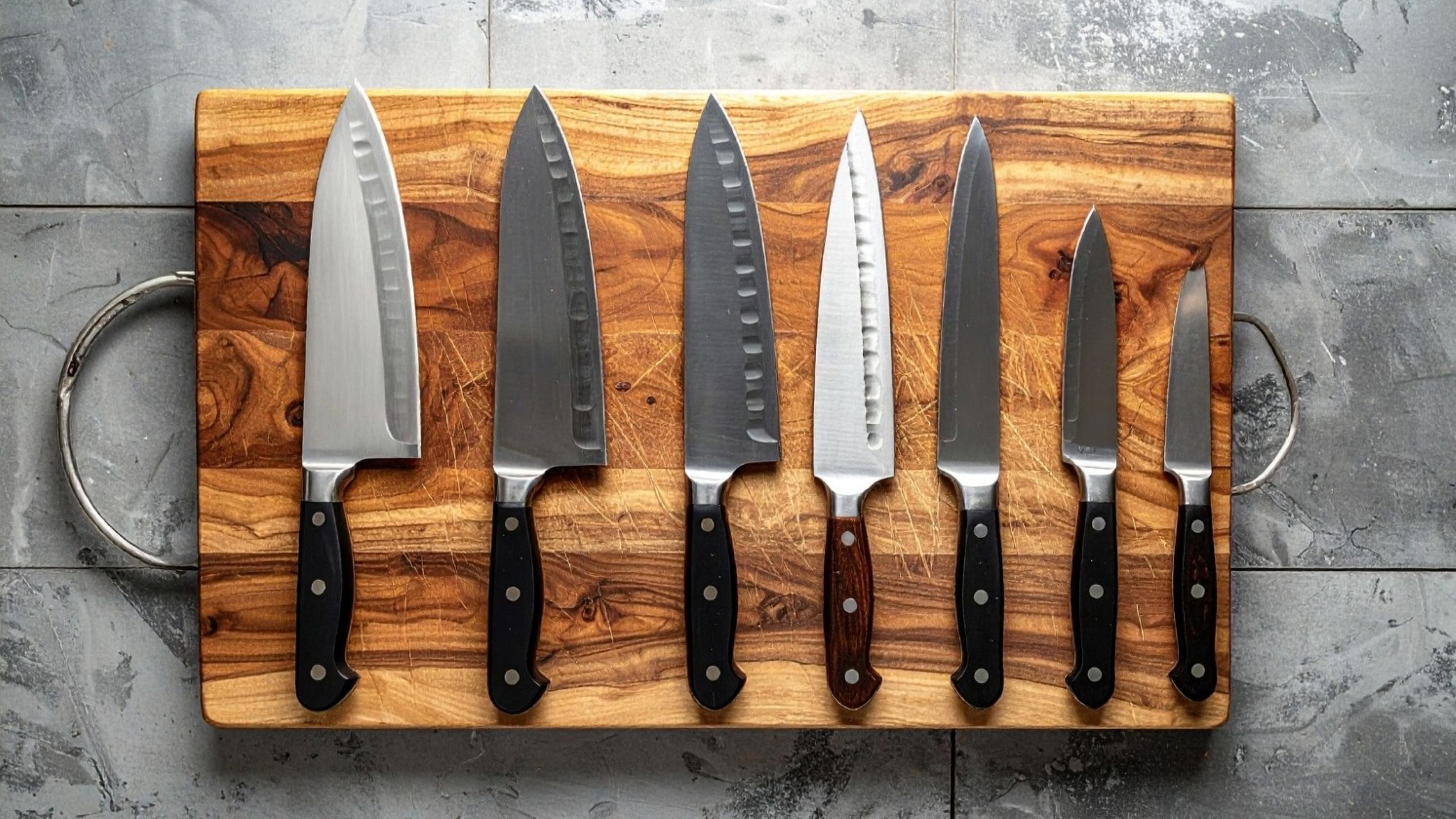
Blade shape and grind control how a knife slices and how easy it is to sharpen. This knife selection guide covers the essentials.
- Edge angle — Lower angles (12–15° per side) cut better but need more care; higher angles (20°+) are tougher.
- Hollow grind — Good for thin, precise cuts and easy release.
- Flat or saber grind — Balanced for general use and easier maintenance.
- Tip shape — Pointed tips are for piercing and detail; rounded tips are safer for push cuts.
Practical tip: For home cooks, a 15–20° per side edge offers a good balance of sharpness and durability.
Source: hocho-knife.com
Handle, balance, weight, and ergonomics
Comfort matters as much as steel. This knife selection guide stresses ergonomics for safety and control.
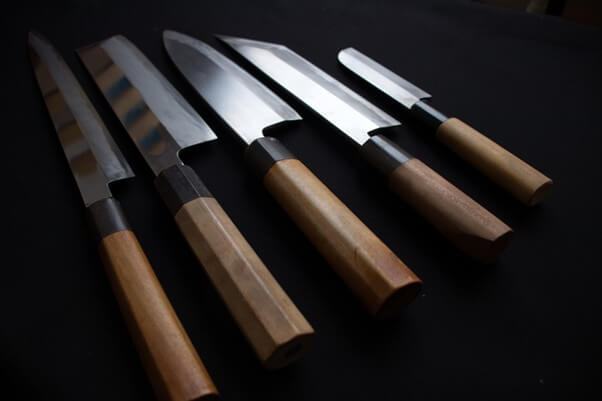
- Handle materials — Wood feels warm; micarta and G-10 resist water and wear.
- Balance point — A knife balanced at the finger guard feels natural and reduces fatigue.
- Weight — Heavier knives can power through tasks; lighter knives offer speed and finesse.
- Grip style — Match handle profile to your hand size and cutting style.
Test in hand when possible. I once recommended a lighter Japanese knife to a friend who suffered wrist pain; the change reduced fatigue and improved technique within a week.

Source: japan-knifeshop.com
Maintenance, sharpening, and care
A knife’s life depends on care. This knife selection guide outlines simple routines to keep blades performing.
- Hand-wash only — Avoid dishwashers to prevent corrosion and handle damage.
- Regular honing — Straightens the edge between sharpenings.
- Sharpening frequency — Varies by use; many home cooks sharpen 2–6 times per year.
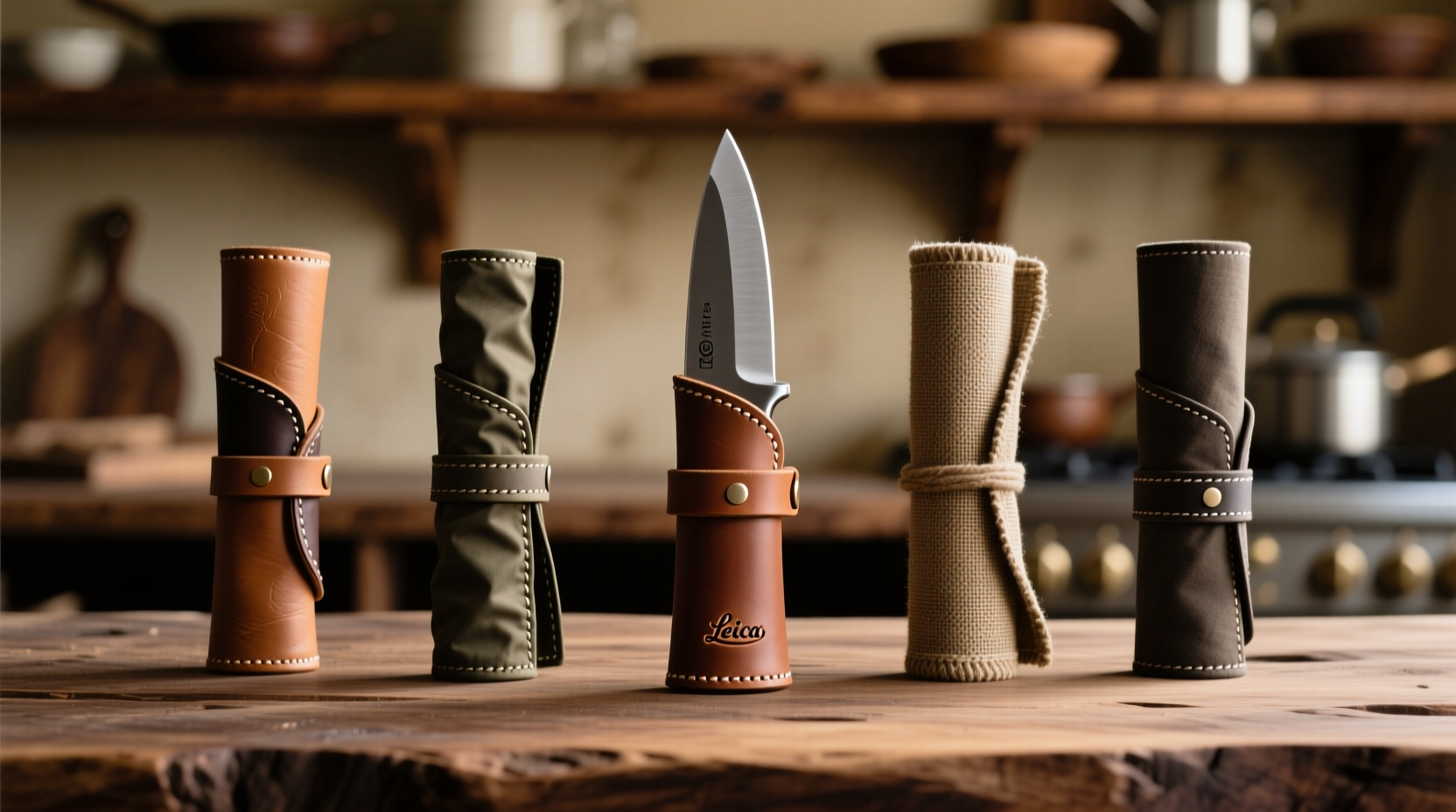
- Storage — Use a block, magnetic strip, or blade guards to protect edges.
Sharpening options: stones give best control, pull-through sharpeners are quick, and professional services restore complex profiles. I sharpen on whetstones and send specialty blades to pros when needed.
Source: gustowebzine.com
Budget, buying tips, and where to shop
This knife selection guide helps you shop smart. Quality varies with price, but the most expensive blade isn’t always best for you.
- Set a budget — Allocate more for your primary knife (chef’s knife) and less for secondary knives.
- Try before you buy — Handle shape and balance are personal.
- Read specs — Check steel type, hardness (HRC), and grind.
- Warranty and service — Look for makers who offer sharpening or repair.
Buying paths: local kitchen stores let you test grip and balance. Reputable online retailers offer wide selection and reviews. For custom or high-end blades, work with known makers.
Source: com.au
Personal experience, mistakes to avoid, and practical tips
I’ve tested dozens of knives and advised many buyers. Here are lessons from real use to apply in this knife selection guide.
- Mistake — Buying on looks alone. Lesson: prioritize fit and feel.
- Mistake — Assuming one knife fits all tasks. Lesson: build a small, task-focused set.
- Tip — Start with a good chef’s knife and learn to sharpen it. This saves money long-term.
- Tip — Match blade length to counter space and storage.
- Tip — Keep a log of sharpening dates to track performance and wear.
Anecdote: I once bought a beautiful high-carbon knife that rusted quickly because I left it wet. That taught me to match steel to my willingness to maintain it.
Source: alibaba.com
Common quick questions (PAA-style)
These short answers address common search queries related to a knife selection guide.
What is the best all-purpose knife?
A high-quality 8-inch chef’s knife is the best all-purpose choice for most home cooks. It balances length, weight, and versatility.
How often should I sharpen my knives?
Sharpening frequency depends on use; home cooks often sharpen 2–6 times per year and hone weekly. Heavy daily use may need monthly sharpening.
Are expensive knives worth it?
Expensive knives often use better steels and crafts, giving longer edge life. The value depends on your use and care routine.
Frequently Asked Questions of knife selection guide
What size knife should I choose for home cooking?
Choose an 8-inch chef’s knife for general home use. If you have a small prep area, a 6–7 inch may be easier to handle.
How do I pick between stainless and carbon steel?
Pick stainless if you want low maintenance and corrosion resistance. Choose carbon steel for superior sharpness if you commit to care.
Can I sharpen serrated knives at home?
Serrated knives require special sharpeners and techniques, but minor touch-ups are possible with a tapered rod. For full sharpening, professional service is often best.
Is a heavier knife better than a lighter one?
Neither is universally better. Heavier knives add power; lighter knives offer speed and control. Pick based on comfort and task type.
How many knives do I really need?
Most home cooks do well with three to five: chef’s knife, paring knife, serrated knife, and optionally a utility and boning knife.
Conclusion
This knife selection guide gives clear steps to choose knives that fit your cooking style, budget, and care habits. Start with a reliable chef’s knife, match steel to your maintenance preferences, and prioritize feel and balance. Test knives when you can, sharpen wisely, and build a small, task-focused set that lasts. Take action: handle a few models, pick one that feels right, and commit to simple care to enjoy it for years. Leave a comment with your knife questions or subscribe for more hands-on buying advice.

Maliha Khatun has spent 5 years hands-on testing Japanese knives for everyday home cooks. She has evaluated over 60 blades across nakiri, santoku, gyuto, and petty categories — scoring each on edge retention, steel quality, handle comfort, and value for money. She writes to help home cooks buy the right knife without the guesswork.
Expertise:Japanese Knives • Vegetable Knives • Product Reviews • Kitchen Efficiency • Knife Care
Leave a Reply