KnifeScope is reader-supported. When you buy through links on this page, we may earn a small commission at no extra cost to you.
Knife storage advice usually assumes a big counter and an adults-only kitchen. Real life is often a narrow galley kitchen, a rented flat where you cannot drill the walls, or a toddler who can reach the counter edge.
This guide focuses on those situations: how to store knives safely when space is tight, when you cannot make holes in the wall, and when little hands are around.
Why proper knife storage matters
Proper knife storage keeps blades sharp, prevents rust, and reduces accidents. Good knife storage methods also extend the life of blades and save you money over time. I’ve seen dull knives cause more slips than most people expect. Choosing the right approach protects you, your tools, and your workflow.

Popular knife storage methods and how to use them
Below I break down the most Common knife storage methods. Each option lists pros, cons, and practical tips. Use these to match the method to your space, budget, and safety needs.
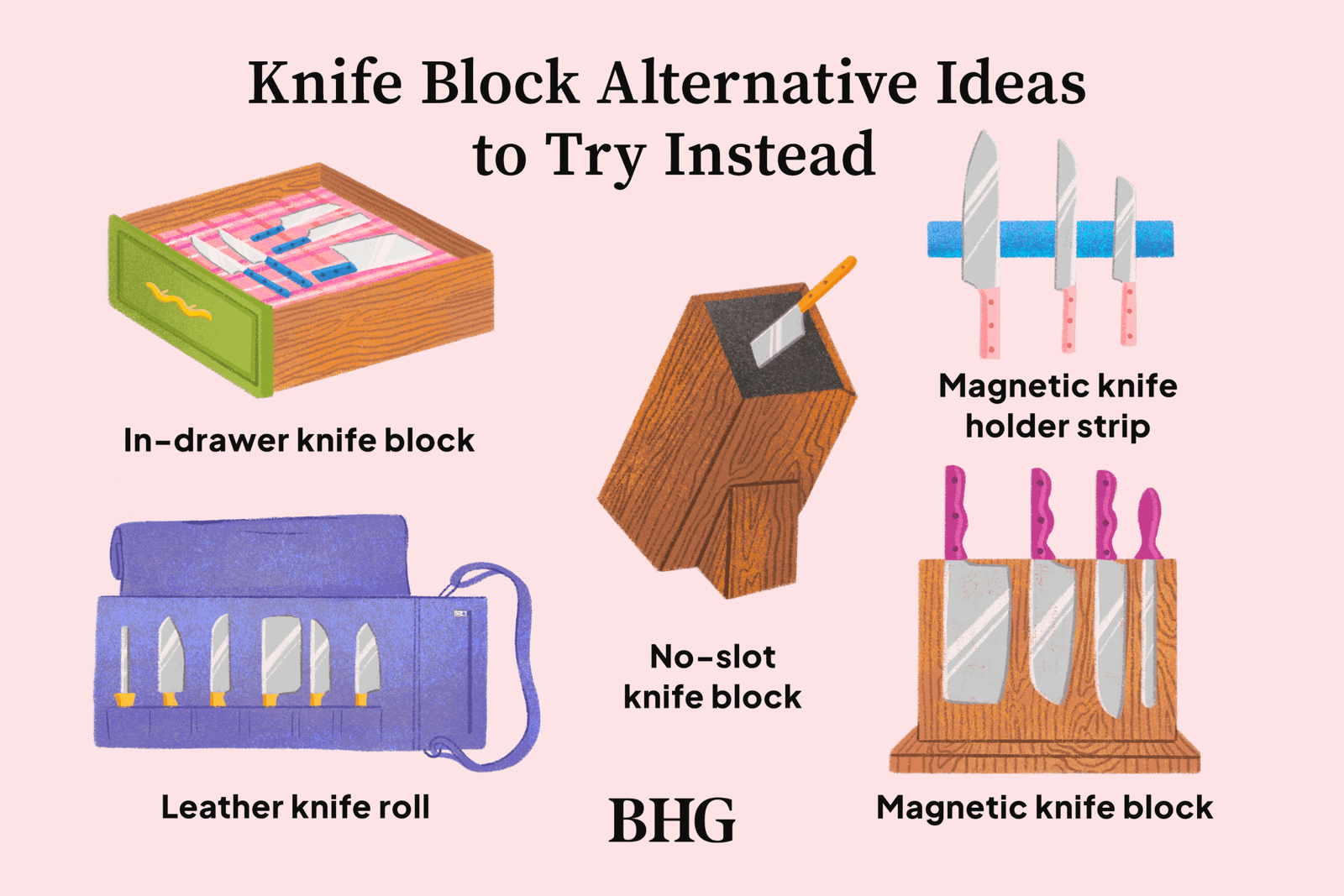
Knife block (countertop)
Pros: Keeps knives accessible and upright. Protects blades from bumping. Looks tidy on a counter.
Cons: Blocks can trap moisture and dull knives if stored improperly. Not all blocks fit every knife shape.
Tips:
- Clean and dry knives before inserting.
- Rotate slots for balanced wear.
- Choose a slotted block with removable inserts for easy cleaning.
Magnetic strip (wall-mounted)
Pros: Saves counter space and displays knives. Keeps edges away from other tools. Easy cleaning and visual access.
Cons: Requires secure mounting and correct magnet strength. Thin blades can chip if slammed on.
Tips:
- Mount on studs or use strong anchors.
- Place magnet high enough to avoid children’s reach.
- Align knives flat against the magnet to avoid tipping.
In-drawer knife organizer
Pros: Hidden storage for a clean look. Keeps knives secure and protected from nicks. Good for limited counter space.
Cons: Drawers must fit the organizer. Moisture or food particles in drawers can cause corrosion.
Tips:
- Use bamboo or plastic organizers that lift knives off drawer floor.
- Keep a small silica packet in the drawer to control humidity.
- Clean the drawer area regularly.
Blade guards and edge guards
Pros: Low-cost and flexible. Protects blades in drawers, bags, or when transported. Prevents accidental cuts when reaching into drawers.
Cons: Wear over time and may not fit all blade shapes tightly.
Tips:
- Match guard size to blade length and thickness.
- Use polypropylene guards for wet storage; leather guards for dry display.
- Replace guards when they no longer fit snugly.
Knife rolls and cases (for chefs and travel)
Pros: Ideal for mobile chefs and storage in tight quarters. Protects blades during transport. Keeps set organized.
Cons: Not ideal for daily kitchen access. Fabric rolls can retain moisture.
Tips:
- Choose a roll with individual pockets and snap closure.
- Dry knives thoroughly before rolling.
- Use hard cases for air travel or long trips.
Pegboards and rails
Pros: Customizable layout and visible storage. Good for large kitchens and workshop setups.
Cons: Requires wall space and careful layout to prevent accidents.
Tips:
- Keep sharp tips pointed away from walking paths.
- Use magnetic or hooked holders designed for knives.
- Label spots for each knife to keep order.
Countertop racks and open stands
Pros: Decorative and handy for frequent use. Can hold many knives or specialty tools.
Cons: Exposes blades to air and humidity. Requires frequent cleaning.
Tips:
- Opt for stainless steel or wood that resists moisture.
- Clean rack grooves weekly to avoid buildup.
- Avoid overcrowding to prevent blade contact.
Professional/custom storage solutions
Pros: Tailored fit for chef sets and specialty blades. Combines security and presentation.
Cons: Higher cost and limited flexibility for new tools.
Tips:
- Measure blade profiles before ordering custom slots.
- Consider modular systems that adapt over time.
- Add lockable covers for high-security environments.
How to choose the right knife storage methods for your kitchen
Choosing the best knife storage methods depends on space, safety needs, and how often you use knives. Answer a few quick questions to decide: Do you need quick access? Do you have kids? Do you cook professionally?
Simple selection steps:
- Assess space: Counter, wall, or drawer.
- Prioritize safety: Out of reach or lockable if children are present.
- Consider maintenance: Will you regularly dry and clean blades?
- Match your knives: Thin chef knives need different slots than thick cleavers.
- Budget: Some knife storage methods are cheap; custom inserts cost more.
From my experience, magnetic strips and in-drawer organizers suit most home cooks. Chef professionals often prefer custom racks or rolls for transport and display. Whatever you choose, make sure it prevents blade-to-blade contact and allows airflow when blades are not perfectly dry.

Maintenance and care for stored knives
Good storage only works when paired with proper care. Simple habits extend blade life dramatically. I learned this the hard way after storing damp knives and finding pitting and rust.
Key care steps:
- Wipe knives dry before storage to avoid rust.
- Oil carbon steel blades lightly if storing long-term.
- Hone edges often and sharpen on schedule.
- Clean storage units monthly to remove crumbs and moisture.
- Replace worn guards and blocks that trap moisture.
PAA-style questions (short answers)
What is the best moisture control for in-drawer storage? Use silica gel packets or charcoal pouches to absorb humidity. Keep drawers dry and ventilated.
Can magnetic strips damage a blade? Not if you mount them properly and place knives gently. Avoid slamming blades onto hard magnets.
How often should I sharpen stored knives? Sharpen based on use; most home cooks Need sharpening every 3–6 months. Hone more often to keep the edge aligned.

Personal experience, common mistakes, and practical tips
I once stored a favorite chef knife in a tight block after washing. The slot trapped water and the edge developed rust spots. After that, I switched to edge guards and a magnetic strip.
Lessons learned:
- Never store knives wet.
- Match storage to knife shape to prevent bending or edge damage.
- Keep knives out of reach of children with higher or lockable storage.
Practical tips I use daily:
- Keep a small towel and oil in a drawer for quick drying.
- Use labeled slots so each knife has a home.
- Test magnet strength before trusting it with an expensive blade.
Safety and legal considerations
Safe knife storage prevents accidental injury and theft. In shared or rental kitchens, follow any local rules for locking or storing sharp tools. For professionals, secure storage is often required by workplace safety rules.
Safety checklist:
- Store tips away from common walkways.
- Lock or raise storage if children are present.
- Keep clear labeling for emergency responders when storing many blades.

Pick by situation
| Your kitchen | Best option | Why |
|---|---|---|
| Tiny counter, no drilling | In-drawer knife dock | Uses dead drawer space, edges stay covered |
| Rented flat, wall OK with adhesive | Adhesive or freestanding magnetic block | No holes, knives visible and dry |
| Toddlers in the house | Locking drawer or high wall strip | Out of reach and behind a latch |
| Knives that travel | Individual edge guards (saya) | Protects edge and hands in a bag or drawer |
Child-safety basics
- Mount wall strips at least 150 cm (5 ft) high and away from the counter edge.
- Fit a child lock on the knife drawer, even if knives are in a dock.
- Never leave knives in the sink or dish rack where small hands can reach in.
- Put knives away straight after use instead of leaving them on the board.
Frequently Asked Questions of knife storage methods
What is the safest way to store knives at home?
Store knives where they cannot fall or be grabbed by children. Use high-mounted magnetic strips, lockable drawers, or sealed blocks for safety.
Can I store knives in the dishwasher?
No. Dishwashers can dull blades, cause corrosion, and damage handles. Hand wash and dry knives, then store them properly.
Do magnetic strips damage knife edges?
A properly mounted magnetic strip will not damage edges if knives are placed gently. Avoid sliding blades along the magnet to prevent nicks.
How do I prevent rust on stored knives?
Dry knives completely before storage and store in a low-humidity environment. Apply light oil to carbon steel blades for long-term storage.
Are in-drawer organizers better than blocks?
In-drawer organizers hide knives and prevent tip exposure. Blocks are convenient but can trap moisture. Choose based on space and cleaning habits.
Should I cover my knives when traveling?
Yes. Use individual sheaths or a knife roll to protect edges and hands during transport. Hard cases are best for air travel.
Conclusion
Small kitchens and family homes need storage that is compact and safe, not just good-looking. An in-drawer dock with a child lock covers most situations; a high magnetic strip works if you can mount it. Add edge guards for any knife that lives loose, and your blades and fingers will both last longer.

Maliha Khatun has spent 5 years hands-on testing Japanese knives for everyday home cooks. She has evaluated over 60 blades across nakiri, santoku, gyuto, and petty categories — scoring each on edge retention, steel quality, handle comfort, and value for money. She writes to help home cooks buy the right knife without the guesswork.
Expertise:Japanese Knives • Vegetable Knives • Product Reviews • Kitchen Efficiency • Knife Care
Leave a Reply