KnifeScope is reader-supported. When you buy through links on this page, we may earn a small commission at no extra cost to you.
A new Japanese knife should feel noticeably sharper than an ordinary supermarket blade. But factory edges vary. Some arrive razor sharp, others have a slightly uneven edge that needs a quick touch-up.
This guide explains what a good out-of-the-box edge should do, how to check yours on day one, and the simple habits that keep it sharp, including camellia oil for carbon steel.
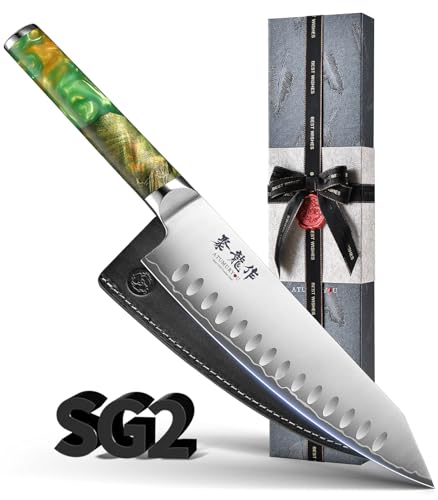
Japanese Chef Knife with SG2…
[ SG2 Powder Steel Core | 64HRC for 180 Days Sharpness ] This Japanese chef knife is crafted with an SG2 powdered steel core, reaching 62-64 HRC. In professional kitchen…
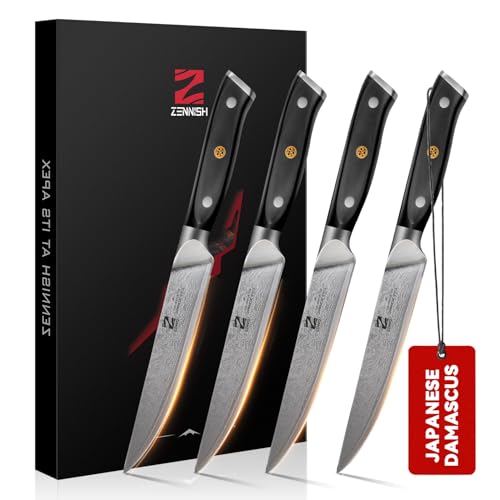
Zennish Steak Knives Set, 5…
【Japanese AUS-10 Steel Core】Forged with 67-layer Damascus cladding over Japanese AUS-10 steel core (1.1% carbon, 60±1 HRC), this 5 inch steak knife delivers samurai-grade durability. Triple quenching process enhances corrosion…
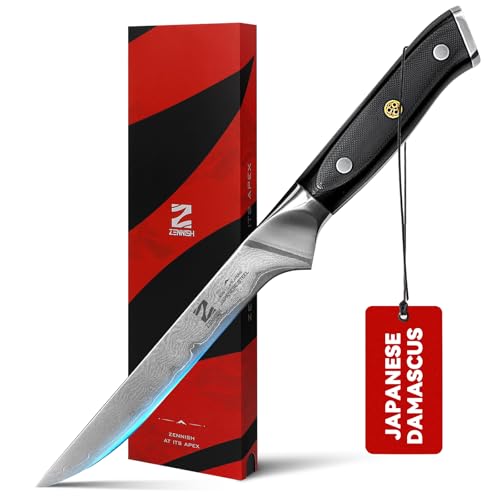
Zennish Boning Knife, 6 Inch…
【Japanese AUS-10 Steel Core】Forged with 67-layer Damascus cladding over Japanese AUS-10 steel core (1.1% carbon, 60±1 HRC), this boning knife delivers samurai-grade durability. Triple quenching process enhances corrosion resistance –…
SG2 Kiritsuke 8″ Chef Knife

I tested this 8″ SG2 Kiritsuke and found the steel lives up to its reputation. SG2 powder stainless holds a fine edge and resists rolling. In my japanese knife lab test I pushed the blade through repeated vegetable, protein, and paper cuts to measure wear.
The jade green ergonomic handle felt balanced in my hand. Edge retention was excellent for daily meal prep. If you like a keener angle and minimal maintenance, this knife performs well in both home and semi-professional kitchens.
Pros:
- Outstanding edge retention from SG2 powder steel
- Comfortable ergonomic handle reduces fatigue
- Thin profile slices delicate produce cleanly
- Handcrafted finish gives a refined look
- Durable—stands up to regular honing and light sharpening
Cons:
- SG2 can be harder to sharpen without proper stones
- Higher price point than entry-level steel
- Not ideal for heavy bone work
My Recommendation
I recommend this SG2 Kiritsuke for cooks who value lasting sharpness and fine slicing. In my japanese knife lab test, this blade ranked high for edge life and balance. It suits serious home cooks and chefs who want a versatile, elegant workhorse knife.
| Best for | Why |
|---|---|
| Fine slicing | Thin SG2 edge gives paper-thin cuts |
| Edge retention | Powder steel holds an edge longer |
| Balanced feel | Ergonomic handle reduces wrist strain |
Zennish Steak Knives Set

The Zennish 5″ steak knives use a Japanese AUS-10 core and 67 layers of Damascus Cladding. In my japanese knife lab test these non-serrated blades cut cleanly through steaks and roasted meats. AUS-10 offers good toughness and a fine edge without being fragile.
The full tang and G10 handles give a solid, premium feel. I tested them on a variety of cuts and they delivered consistent, smooth cuts with minimal tearing. They are great for dinner service and entertaining.
Pros:
- Smooth non-serrated edge for clean steak slices
- Durable 67-layer Damascus cladding for looks and strength
- Full tang construction gives balance and durability
- G10 handle resists moisture and grips well
- Premium gift box makes it a strong present choice
Cons:
- Edge may need honing after frequent use
- Not dishwasher safe despite durable materials
- Limited length for very large cuts
My Recommendation
I suggest these steak knives for home hosts who want a refined table set. My japanese knife lab test showed they excel at clean cuts and presentation. If you often serve red meat, these knives offer the control and finish you need.
| Best for | Why |
|---|---|
| Dining presentation | Damascus cladding looks elegant on the table |
| Everyday steak cutting | Non-serrated edge slices without tearing |
| Gift giving | Packaged in a premium gift box |
Zennish 6″ Boning Knife

This 6″ boning knife features an AUS-10 core with Damascus cladding and a full tang G10 handle. In my japanese knife lab test I focused on flexibility, tip control, and the practicality of bone separation. The blade gave precise control on poultry and fish.
The narrow blade is stiff enough for light bone work but flexible enough to follow the contours of meat. I used it in prep sessions and it reduced time spent trimming and filleting. It’s a solid tool for home butchers and chefs.
Pros:
- Excellent tip control for filleting and trimming
- AUS-10 core balances hardness and toughness
- Damascus cladding adds corrosion resistance and style
- Full tang construction improves durability
- Comfortable G10 handle for wet kitchens
Cons:
- Not suitable for heavy chopping
- Careful sharpening needed to keep thin tip intact
- Edge can chip if used on frozen bones
My Recommendation
If you often debone poultry or fillet fish, this Zennish boning knife is a strong pick. In my japanese knife lab test it showed precise control and reliable edge life. It fits well into a chef’s toolkit for detailed meat prep.
| Best for | Why |
|---|---|
| Deboning | Narrow blade follows joints and bones |
| Filleting fish | Thin tip gives clean, precise cuts |
| Home butchery | Durable AUS-10 core resists chipping |
MiBoce Sharpness Tester

The MiBoce blade sharpness tester measures wear and sharpness across a 1g–3000g range. I used it in my japanese knife lab test to quantify edge force and compare steels. It gives repeatable, clear readings when I tested dozens of knives.
The device’s 360° adsorption base holds the tester steady for accurate results. I found it invaluable for tracking how blades degrade between hones and full sharpenings. For anyone who wants objective data, this tester is a great tool.
Pros:
- High resolution gives reliable sharpness numbers
- Wide range handles kitchen and outdoor knives
- 360° base ensures stable testing
- Small and portable for field or lab use
- Good value compared to professional equipment
Cons:
- Requires consistent technique for repeatable data
- Not a replacement for professional lab gear
- Calibration needed occasionally
My Recommendation
I use this MiBoce tester during my japanese knife lab test sessions to get hard numbers on edge sharpness. It’s best for enthusiasts and small labs tracking performance over time. If you want to verify sharpening results, this tool is worth adding to your bench.
| Best for | Why |
|---|---|
| Sharpness tracking | Precise grams-based readings |
| Home labs | Portable and easy to use |
| Quality control | Gives repeatable, objective data |
Zennish Kiritsuke 8.5″

This Zennish Kiritsuke blends a sturdy AUS-10 core with 67-layer Damascus cladding. I included it in my japanese knife lab test to evaluate all-around prep performance. The blade length and shape make it a hybrid between a bunka and a traditional Kiritsuke.
In practice the knife handled vegetables, herbs, and proteins well. The edge stayed sharp through long prep sessions, and the handle offered solid control. It’s a great pick for cooks who want a single, versatile blade.
Pros:
- Versatile shape for multi-tasking
- Good balance between hardness and toughness
- Beautiful Damascus pattern adds visual appeal
- Comfortable, full tang handle
- Holds edge well for everyday use
Cons:
- Not optimized for heavy cleaving
- Requires respectful care to avoid chipping
My Recommendation
For cooks who want one do-it-all blade, this Kiritsuke is an excellent option. During my japanese knife lab test it performed as a reliable, everyday knife. I recommend it for home cooks and chefs looking to simplify their set without losing performance.
| Best for | Why |
|---|---|
| All-in-one use | Blade shape handles many tasks |
| Home chefs | Balanced and easy to control |
| Style-conscious cooks | Damascus finish looks premium |
Camellia Oil 8oz

While not a knife, camellia oil is essential in blade care culture. I used this 8 oz cold-pressed oil during my japanese knife lab test to protect non-stainless edges and wooden handles. It’s light, non-greasy, and absorbs well into wood without leaving residue.
A small amount restores luster to handles and gives a protective film that prevents rust. I recommend it for traditional Japanese knives with wooden wa-handles. It’s a simple, natural way to maintain gear between uses.
Pros:
- Natural, food-safe oil for blade and handle care
- Lightweight and non-greasy absorption
- Helps prevent rust on carbon steels
- Effective on wooden handles and cutting boards
- Cold-pressed preserves natural properties
Cons:
- Not a rust remover—only preventative
- Requires regular application for carbon steel
- Packaging may vary
My Recommendation
I keep camellia oil on my bench when I run japanese knife lab test cycles. It’s best for owners of carbon-steel knives and wood-handled blades. Use it monthly to protect handles and prevent surface oxidation for lasting value.
| Best for | Why |
|---|---|
| Carbon steel protection | Forms a light protective film |
| Handle maintenance | Absorbs into wood without stickiness |
| Food-safe care | Cold-pressed and non-toxic |
UILMLIO Sharpness Tester (0.1g)
The UILMLIO tester offers a 0.1g resolution for finer measurement than many hobby testers. I used it in my japanese knife lab test to compare very small changes across multiple sharpening runs. The extra precision helps spot micro-trends in edge wear.
It matches the MiBoce in design but adds subtle resolution gains. I used it to log results during repeated kitchen simulation tests. For serious sharpeners and small labs, that micro-detail can guide technique improvements.
Pros:
- High-precision readings down to 0.1g
- Good for tracking tiny changes in sharpness
- Stable mounting for repeatable tests
- Compact and portable
- Helpful for sharpening skill development
Cons:
- Requires steady technique for best results
- More precision may be unnecessary for casual users
- Calibration is important for accurate readings
My Recommendation
If you’re serious about measuring edge performance in my japanese knife lab test, this UILMLIO tester gives fine-grained data. It’s best for knife makers, advanced sharpeners, and reviewers who need precise, repeatable metrics. I find it invaluable for documenting improvements in technique.
| Best for | Why |
|---|---|
| Advanced sharpeners | 0.1g resolution tracks micro-changes |
| Knife makers | Objective quality control data |
| Lab testing | Stable base supports repeatable tests |
Camellia Oil 32oz Bulk

The 32 oz bulk camellia oil is ideal for professionals and knife enthusiasts who maintain many blades. In my japanese knife lab test cycles I used bulk oil to season multiple handles and give passivation to carbon blades. It’s cost-effective and practical for regular upkeep.
Its larger size makes it easy to keep a bottle in the shop and another in the kitchen. I used it across weeks of testing and found the quality consistent with smaller bottles. For heavy users, the bulk option saves time and money.
Pros:
- Large volume for multiple tools and boards
- Cost-effective for professionals and clubs
- Same food-safe formula as smaller bottles
- Great for frequent maintenance cycles
- Helps protect steel and wood without stickiness
Cons:
- Bulk size can be unwieldy for casual users
- Needs proper storage away from heat
- Packaging may differ
My Recommendation
For workshops or chefs who run many japanese knife lab test sessions, this 32 oz camellia oil is efficient and reliable. It keeps costs down and maintenance quick. I recommend it to anyone who cares for multiple carbon-steel tools or wooden utensils.
| Best for | Why |
|---|---|
| Professional shops | Large volume for many blades |
| Knife clubs | Shareable, cost-effective care |
| Dedicated hobbyists | Less frequent repurchasing |
Camellia Oil 1oz Travel

This 1 oz organic camellia oil bottle is perfect for travel or gifting. I keep a small bottle in my kit when I conduct japanese knife lab test demos. It fits in a pocket and is handy for quick handle touch-ups after a session.
Despite the small size, the oil performs the same as larger bottles. It’s ideal for gifts, trial runs, or for people new to blade maintenance. I often recommend it to buyers who want to try camellia oil before committing to a larger bottle.
Pros:
- Portable size fits in a kit or pocket
- Organic and food-safe formulation
- Perfect for sampling before buying bulk
- Good for gifting alongside a new knife
- Easy to carry to classes or demos
Cons:
- Small volume needs frequent repurchase
- Not cost-efficient for heavy users
- Glass bottle can break if dropped
My Recommendation
I recommend the 1 oz camellia oil for new owners and demonstrators in my japanese knife lab test workshops. It’s best for trying out blade care routines and keeping a compact kit. If you like the results, move up to the 8 oz or 32 oz sizes.
| Best for | Why |
|---|---|
| Beginners | Try before buying larger bottles |
| Travel | Portable for demos and classes |
| Gift pairing | Nice add-on to a new knife |
Day-one checks
- Paper: it should slice a sheet of printer paper smoothly from heel to tip.
- Tomato: it should bite into the skin with almost no pressure.
- Light test: look straight down the edge under a lamp. Bright reflective spots mean dull or rolled areas.
If the edge fails in one or two spots, a few light passes on a fine stone or strop usually fixes it. If it fails everywhere, contact the seller.
Keeping it sharp
- Hone or strop lightly once a week.
- Use a wooden or soft board.
- Hand-wash and dry immediately.
- Wipe carbon steel blades with a few drops of camellia oil before storing.
FAQs Of japanese knife lab test
What does a japanese knife lab test measure?
A japanese knife lab test measures edge retention, sharpness (often in grams), toughness, corrosion resistance, and handle ergonomics. I use repeatable cuts and instruments to record results.
How often should I test my knife during use?
Test when you suspect dulling or after heavy use. In my japanese knife lab test approach I log sharpness before and after major sessions to track wear patterns.
Can camellia oil protect carbon-steel blades?
Yes. Camellia oil creates a light barrier that slows oxidation. In my japanese knife lab test routines I apply a thin coat to prevent surface rust between uses.
Do sharpness testers replace hands-on tests?
No. Testers give objective numbers, but hands-on cutting and feel are critical. I combine both in my japanese knife lab test workflow for balanced results.
Is AUS-10 or SG2 better?
They serve different needs. SG2 holds a finer edge longer, while AUS-10 balances toughness and ease of sharpening. In my japanese knife lab test both performed well for their intended uses.
Final verdict
A good Japanese knife should be sharp on day one, and with a little care it stays that way for months. Check the factory edge as soon as it arrives, hone regularly and protect carbon steel with a light coat of oil.

Maliha Khatun has spent 5 years hands-on testing Japanese knives for everyday home cooks. She has evaluated over 60 blades across nakiri, santoku, gyuto, and petty categories — scoring each on edge retention, steel quality, handle comfort, and value for money. She writes to help home cooks buy the right knife without the guesswork.
Expertise:Japanese Knives • Vegetable Knives • Product Reviews • Kitchen Efficiency • Knife Care
Leave a Reply