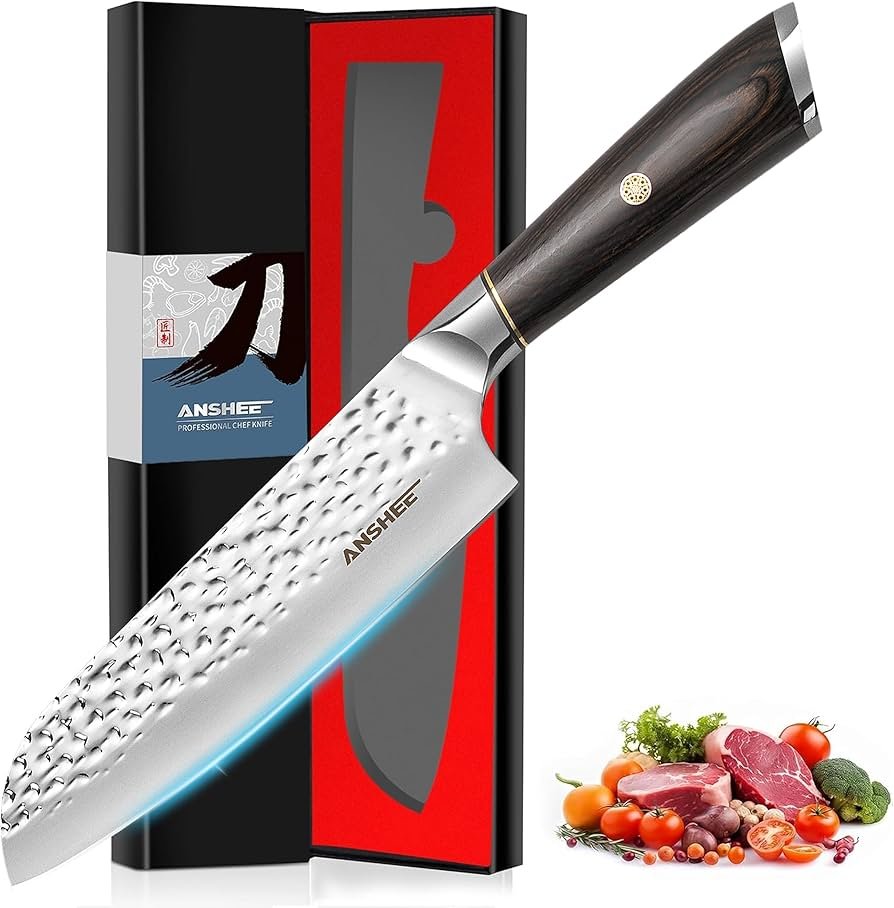
A santoku knife handles most meat tasks well, especially slicing and trimming.
If you want clean cuts, less waste, and a calm prep flow, the santoku knife for meat is a smart choice. I’ve spent years testing blades on brisket, chicken, pork, and steak. In this guide, you’ll learn what makes the santoku shine, where it struggles, and how to use it like a pro. You’ll get clear steps, expert tips, and real stories so you can pick and use the best santoku knife for meat with confidence.
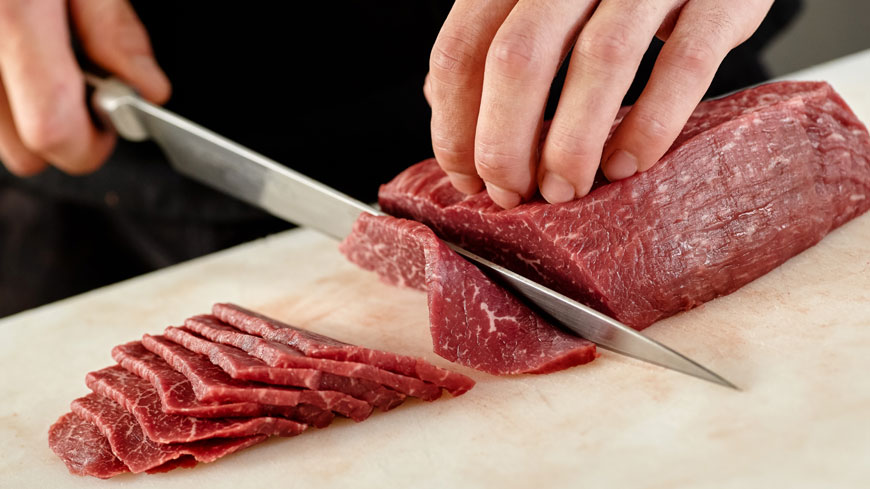
What Is a Santoku Knife and Why It Works for Meat
A santoku is a Japanese-style, all-purpose knife. It usually has a 5 to 7-inch blade, a flat or near-flat edge, and a sheep’s foot tip. Many have shallow dimples, called grantons, to reduce drag.
This blade is built for push cuts and straight slices. That is great for proteins because it reduces tearing. You get even slices and fewer ragged edges. The santoku knife for meat also keeps portions tidy and helps protect juices.
Use it for boneless cuts, trimming fat, and slicing cooked meat. It excels on chicken breast, pork loin, tri-tip, and fish. Avoid bones and frozen foods. That is not what it was made for.
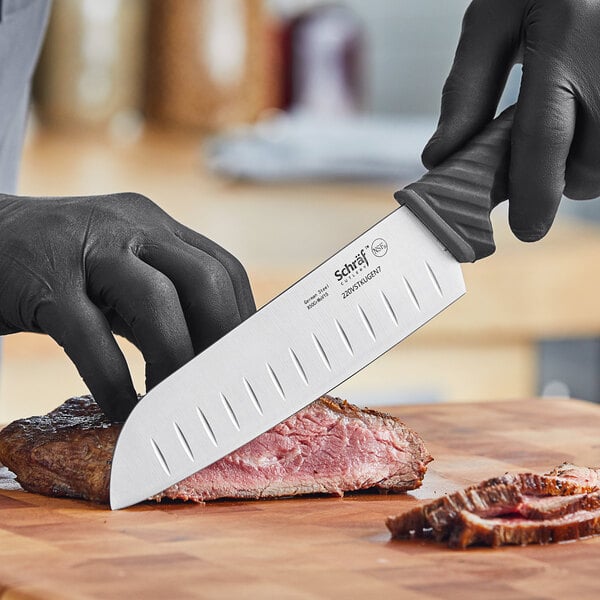
Source: webstaurantstore.com
Santoku vs Chef’s Knife for Meat: Key Differences
A chef’s knife has a curved belly and a pointed tip. It rocks well and handles tall tasks. The santoku has a flatter edge and shorter blade. It pushes forward and keeps cuts straight.
Where a santoku wins:
- Thin, even slices of cooked meat with less drag.
- Trimming fat and silver skin with control.
- Small spaces where a long blade feels clumsy.
Where a chef’s knife wins:
- Working around big roasts and tall briskets.
- Breaking down larger cuts where reach matters.
- Steering through joints when you need leverage.
If your main goal is neat, juicy slices, the santoku knife for meat is hard to beat. If you break down large primal cuts often, keep a chef’s knife too.

Source: wayfair.com
Blade Materials and Hardness: What Matters for Meat
Steel and hardness affect edge life and toughness. German-style stainless like X50CrMoV15 sits near 56–58 HRC. It is tough and forgiving. It rolls rather than chips if you hit a hard spot. Japanese steels like VG-10 or AUS-10 run 59–61 HRC. They stay sharp longer but need a bit more care.
Powder steels, such as SG2 or R2, can reach 62–64 HRC. They hold a razor edge for long slicing sessions. That is great if you slice lots of cooked meat thinly. Carbon steels take a wicked edge and feel silky on the board. But they need quick cleaning to prevent rust.
For a santoku knife for meat, pick a steel that fits your routine. If you are careful and sharpen at home, a harder steel shines. If you share the kitchen or hit the board hard, a tougher mid-hard blade is safer.
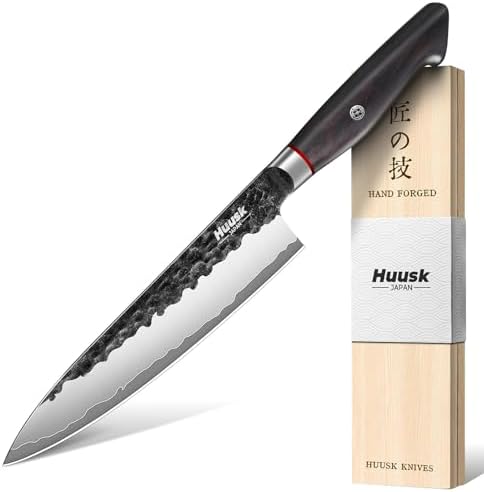
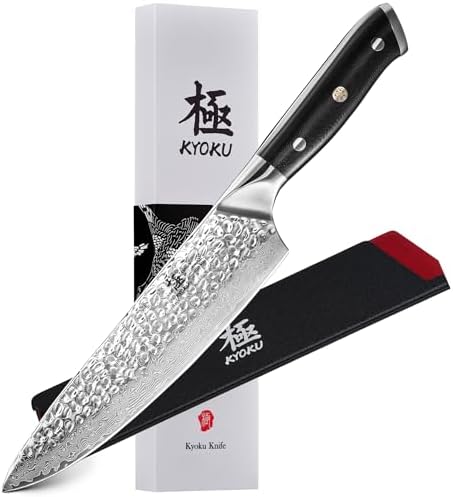
Edge Profiles and Grinds for Cutting Meat
Angle matters. Many santoku knives are sharpened around 12–15 degrees per side. That makes slices glide with little force. Some Japanese blades use a 70/30 edge. That can pull meat to one side if you are not used to it.
A light micro-bevel adds strength without killing bite. It helps if you sometimes brush cartilage. Thin grinds reduce drag. That keeps slices smooth and juicy. Granton dimples can also lower sticking on moist cuts.
If you want max control with a santoku knife for meat, keep a fine, even edge. Hone often. Touch up on a 3000–6000 grit stone when it starts to slide.
Best Uses: Raw, Cooked, and Boneless vs Bone In
When to reach for a santoku:
- Raw, boneless prep: Trim fat caps, remove silver skin, and portion steaks.
- Cooked slicing: Slice smoked turkey, pork loin, brisket flats, and roast beef.
- Poultry: Butterfly chicken breasts and cube meat for stir-fries.
- Fish: Portion fillets and clean edges before cooking.
When to pick another tool:
- Bones and joints: Use a boning knife for tight work and a cleaver for bones.
- Frozen meat: Thaw first. Hard crystals can chip fine edges.
- Thick skin or hard rinds: Pick a heavier blade if you need force.
The santoku knife for meat thrives on gentle control. It keeps cuts neat and helps you waste less. It is a clean finish tool, not a breaker.

Source: amazon.com
Techniques: How to Cut Meat with a Santoku Knife
Grip the knife with a pinch grip. Thumb and index finger on the blade’s spine-heel area. Wrap the rest on the handle. This gives control and balance.
For raw meat, chill it a bit. Slightly firm meat resists less and cuts cleaner. Use a push cut. Set the heel, press forward, and finish the stroke. For long slices on cooked meat, use a gentle draw cut. Start near the heel and pull to the tip in one smooth pass.
Cut across the grain for tenderness. For cubes, make planks, then sticks, then dice. Wipe the blade as needed to prevent smearing. The santoku knife for meat likes steady, light pressure, not force.
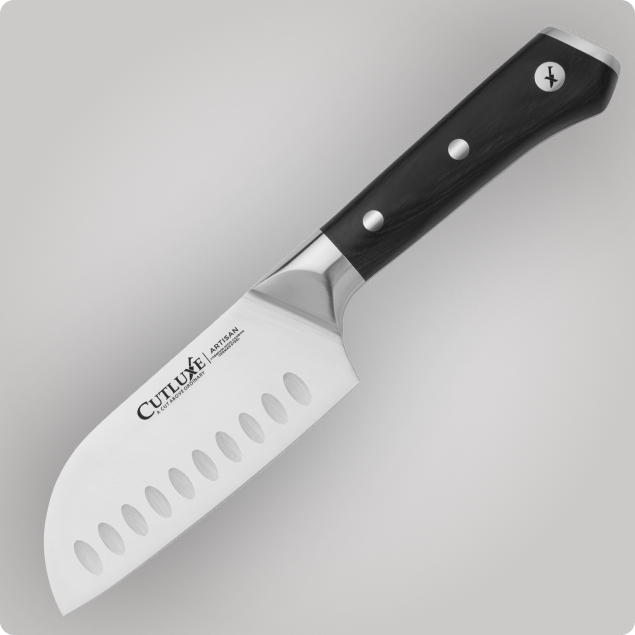
Source: cutluxe.com
Safety and Care: Sharpening, Maintenance, and Storage
Hone often with a ceramic rod to keep the edge aligned. Sharpen on stones. A 1000 grit resets the edge. A 3000–6000 grit refines it. A leather strop can add bite between sessions.
Wash by hand with mild soap. Dry right away. Use a wooden or soft plastic board. Hard glass or stone boards ruin edges fast. Store with a saya, sheath, or in a block to protect the tip.
If the santoku knife for meat chips, do not panic. A professional can regrind it. Small rolls are easy to fix at home with a coarse stone.

Source: amazon.com
Buyer’s Guide: Picking the Right Santoku Knife for Meat
Key features to look for:
- Blade length: 6.5–7 inches is a sweet spot for meat work.
- Steel and hardness: Aim for 58–61 HRC for balance and easy upkeep.
- Grind and thickness: Thin behind the edge for low drag on slices.
- Handle comfort: Pick a handle that locks into your grip when wet.
- Balance: A neutral or slightly blade-forward feel helps with push cuts.
Budget tips:
- Entry level: Tough German-style stainless for shared kitchens.
- Mid-range: VG-10 or AUS-10 for sharper edges and better slicing.
- Premium: Powder steels for long sessions and ultra-thin slices.
Must-haves for a santoku knife for meat:
- Even factory edge with no burrs.
- Flat spot long enough for full contact cuts.
- A guard or sheath for safe storage.
Avoid big red flags:
- Overly thick edges that wedge in meat.
- Loose handles or poor fit and finish.
- Fake “granton” dimples that are too shallow to help.
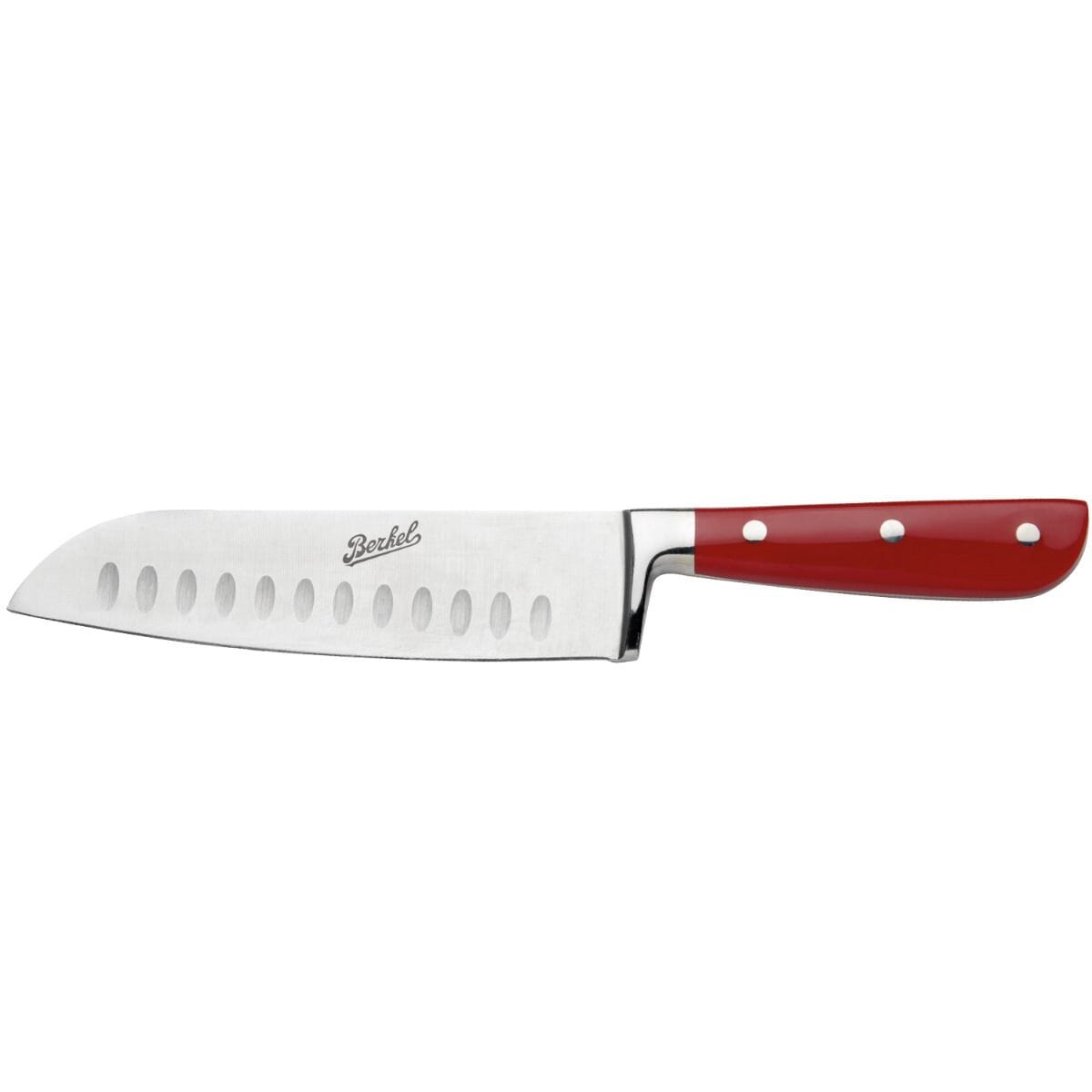
Source: pasta.kitchen
My Field Notes: Real-World Lessons and Mistakes to Avoid
I first used a santoku to trim a packer brisket. The flat edge skimmed silver skin with calm control. I wasted less, and the blade did not dive into the meat. Later, I sliced the cooked flat in long, even pulls. The slices held shape and stayed juicy.
My worst mistake was forcing the edge through a chicken backbone. I rolled the apex in seconds. A quick reprofile fixed it, but I learned fast. Now I grab a boning knife for joints and save the santoku for clean work.
Practical tips that stuck with me:
- Chill steak 10–15 minutes before portioning for clean blocks.
- Wipe the blade between slices to avoid greasy drag.
- Use a light micro-bevel if you share knives with heavy hands.
- For a big roast, switch to a longer slicer for final plating, but use the santoku knife for meat to trim and portion first.
Common Myths About Using a Santoku Knife for Meat
Myth: Santoku knives are only for vegetables. Truth: They excel at neat meat slices and fine trimming on boneless cuts.
Myth: Granton dimples mean food never sticks. Truth: They help, but technique and a sharp edge matter more.
Myth: You need a cleaver for every meat job. Truth: A santoku handles most day-to-day meat prep if it is boneless.
Myth: Harder steel is always better. Truth: Harder edges can chip if misused. Match steel to your habits.
Myth: Stainless never rusts. Truth: It stains less, but poor care can still cause corrosion.
A clear view beats hype. Use the right tool, and the santoku knife for meat becomes a steady friend at the board.
Frequently Asked Questions of santoku knife for meat
Is a santoku knife good for cutting meat?
Yes, it is great for boneless meat. It excels at trimming, portioning, and clean slices with less tearing.
Can I use a santoku knife on bones?
No. Use a boning knife for joints and a cleaver for bones. A santoku’s fine edge can chip on hard contact.
What size santoku is best for meat?
A 6.5–7 inch blade offers reach and control. It handles most slicing, trimming, and portioning tasks with ease.
How often should I sharpen a santoku knife for meat?
Hone lightly before each session. Sharpen on stones when the blade slips or needs extra force, usually every few weeks with regular use.
What cutting board should I use with a santoku?
Use end-grain wood or soft plastic. Avoid glass, marble, or ceramic, which dull edges fast.
Can a santoku replace my chef’s knife for meat?
For many home cooks, yes, especially for boneless tasks. Keep a chef’s knife if you handle large roasts or need more reach.
Are granton edges important for slicing meat?
They help reduce sticking on moist cuts. Still, a sharp, thin edge and proper technique matter more.
Conclusion
A well-chosen santoku brings calm, clean control to meat prep. It trims with care, slices with grace, and turns everyday cuts into neat portions. Pair it with good technique and simple care, and it will reward you with tidy plates and less waste.
Try one session this week with your santoku knife for meat. Chill the meat a bit, cut across the grain, and use a gentle push cut. If you felt the difference, share your take, subscribe for more knife guides, or leave a question—I’m here to help you slice smarter.
Maliha Khatun has spent 5 years hands-on testing Japanese knives for everyday home cooks. She has evaluated over 60 blades across nakiri, santoku, gyuto, and petty categories — scoring each on edge retention, steel quality, handle comfort, and value for money. She writes to help home cooks buy the right knife without the guesswork.
Expertise:Japanese Knives • Vegetable Knives • Product Reviews • Kitchen Efficiency • Knife Care
Leave a Reply