Keep blades razor-sharp: master angles, stones, steady strokes, and regular honing.
I’ve spent years sharpening kitchen and outdoor knives for home cooks and pros. This guide on knife sharpening tips walks you through why sharp knives matter, what tools to use, step-by-step sharpening on stones, honing habits, safety, and common mistakes. Read on for clear, field-tested advice you can use today to keep every blade clean, safe, and precise.

Why sharp knives matter
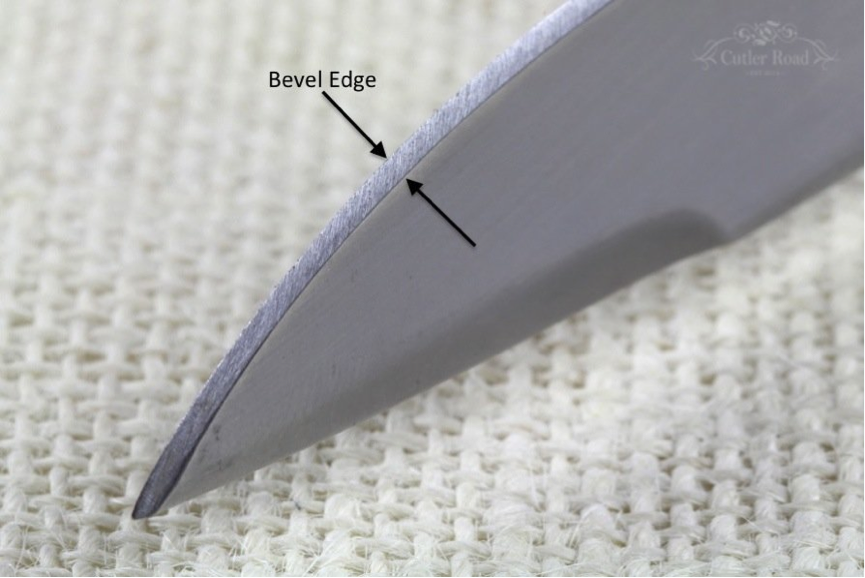
Sharp knives cut cleaner and safer. Dull blades slip and require more force, which raises the risk of injury. Good knife sharpening tips improve food prep speed, cut quality, and blade life. Keep this in mind when you plan your sharpening routine.
Source: knife-depot.com
Types of sharpening methods
There are several reliable methods to sharpen knives. Each method fits different skill levels and blade types. Below are common options and when to use them.
- Whetstones — Traditional and flexible. They give the best edge control and work on most steels.
- Ceramic rods and honing steels — Great for quick alignment and light touch-ups between sharpening sessions.
- Electric sharpeners — Fast and easy. They are good for beginners but can remove more metal than needed.
- Guided sharpening systems — Use clamps or guides to keep angles uniform. They help beginners get repeatable results.
- Professional sharpening services — Ideal for high-end blades, complex grinds, or when you want a perfect edge without learning techniques.
Source: tumblerware.com
Step-by-step guide to sharpening on a whetstone
Sharpening on a whetstone is a core knife sharpening tip. It gives control and a lasting edge when done right.
- Prepare the stone. Soak water stones for the recommended time or apply oil to oil stones. A flat, cushioned mat helps stability.
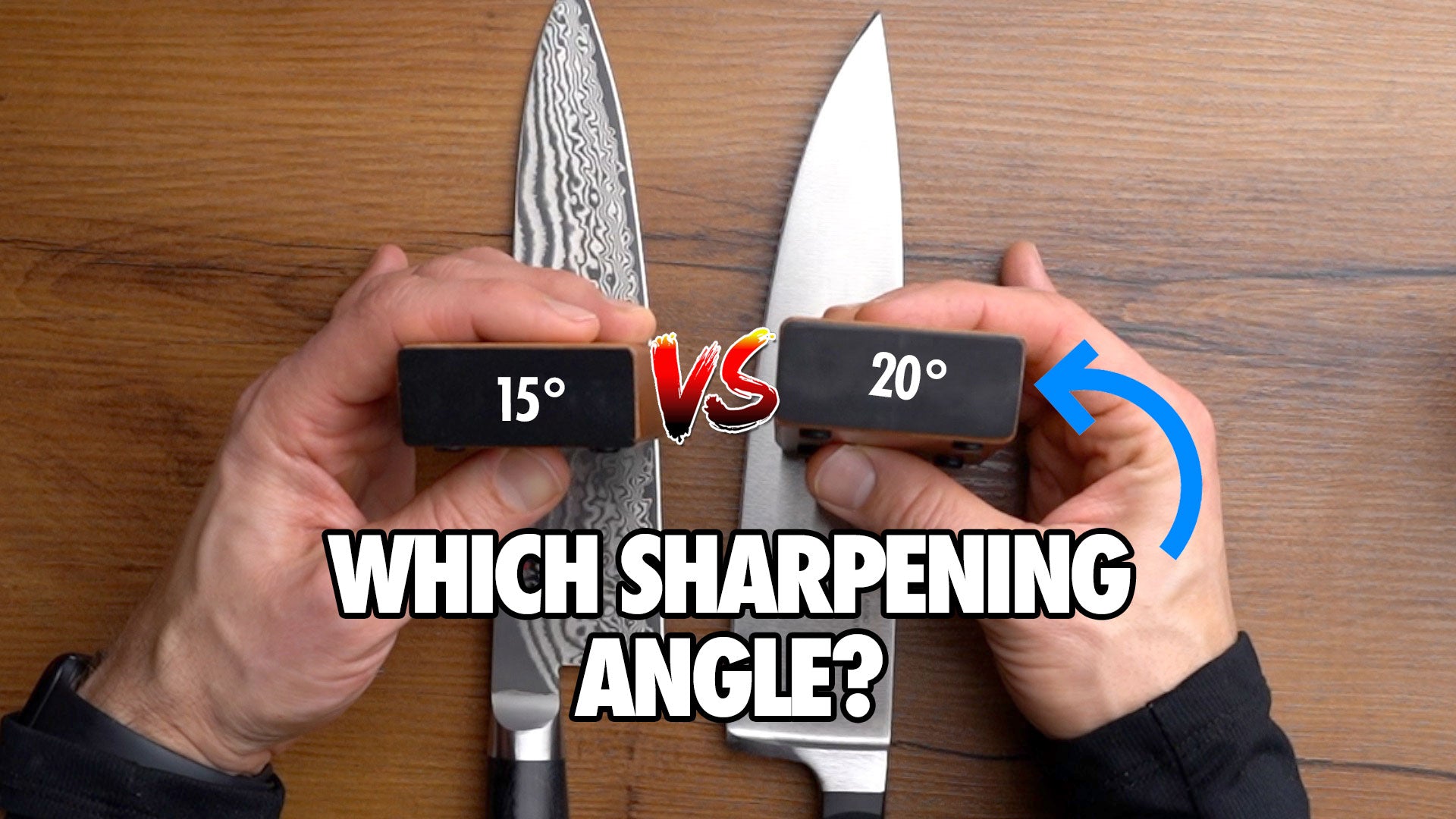
- Set the angle. Most kitchen knives sharpen well between 15 and 20 degrees per side. A pocketknife or outdoor blade may need 20–25 degrees.
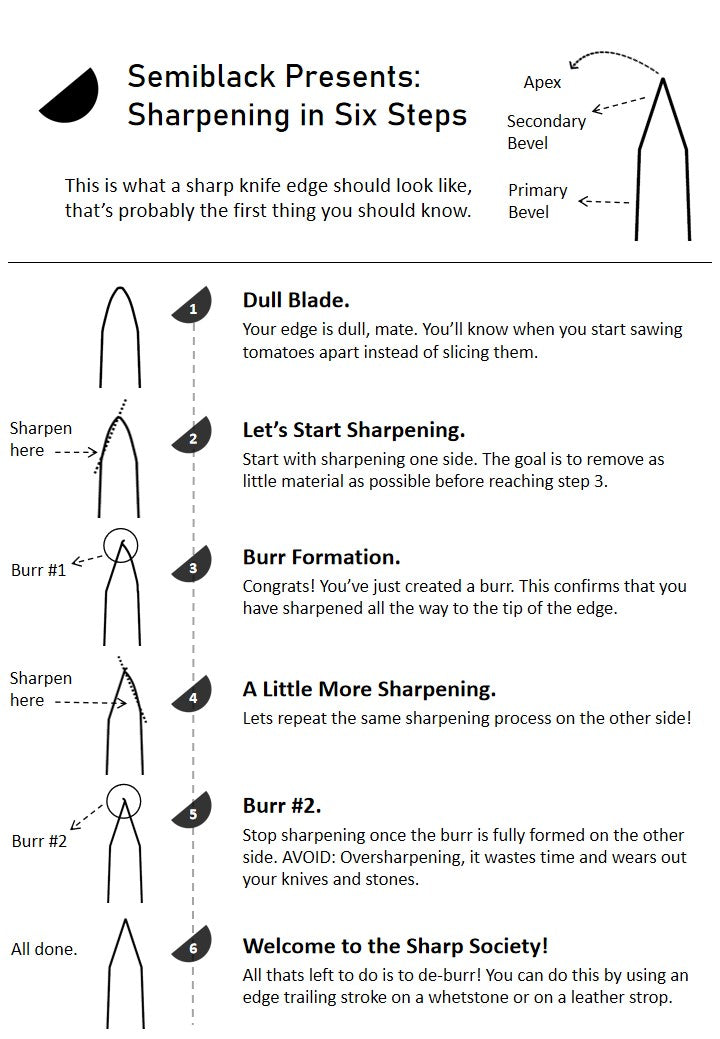
- Start with a coarse grit. Use 400–1000 grit to reprofile a dull edge. Keep light, even pressure and establish a burr.
- Create a burr. Stroke each side evenly until you feel a thin burr along the opposite side. The burr proves metal has been removed to form the edge.
- Move to medium and fine grits. Progress to 3000–6000 grit for a polished, sharp edge. Finish with 8000+ if you want a razor finish.
- Use consistent strokes. Maintain the same angle and number of strokes per side. Short, smooth passes work better than long, erratic ones.
- Deburr and test. Gently run the spine across a soft thumb or slice paper to check sharpness. Remove the burr with light strokes on a fine stone.
- Clean and dry. Wipe the blade and stones. Store blades dry and stones flat.
Personal note: I learned to trust the burr. Early on I skipped it and had uneven edges. Now I always seek a consistent burr before moving to finer grits.

Source: youtube.com
Honing versus sharpening: when and how
Honing realigns the edge. Sharpening removes metal to create a new edge. Use honing as a daily or weekly maintenance step. Sharpen only when honing no longer fixes cutting performance. A few quick honing passes before use can keep a blade usable for months between full sharpening sessions.

Source: reddit.com
Choosing the right tools and stones
Pick tools that match your knives and your skill level.
- Stone grit guide — 200–800 for heavy repair, 1000–3000 for general sharpening, 4000–8000 for polishing.
- Material — Water stones cut fast and feel smooth; oil stones are durable; diamond stones cut very fast and stay flat.
- Rods and strops — Ceramic rods are for minor touch-ups; leather strops with compound remove burrs and refine the edge.
- Guides and jigs — Helpful for beginners to maintain angle. I used a guided system for the first month to train my hands.
Tip: Start with one good water stone or a reliable combo stone (coarse + fine). Adding a strop completes the kit.
Source: semiblack.sg
Common mistakes and how to avoid them
Avoid these frequent errors to get better results faster.
- Using the wrong angle — Too steep or shallow angles damage edge geometry. Match angle to blade type.
- Skipping the burr — If you don’t form a burr, you likely haven’t sharpened the whole bevel.
- Applying too much pressure — Heavy pressure removes metal fast but reduces control and can overheat the edge.
- Neglecting stone maintenance — A hollow or uneven stone yields inconsistent edges. Flatten stones regularly.
- Relying only on electric sharpeners — They can work, but they may remove too much metal and shorten blade life.
Source: reddit.com
Safety and care when sharpening
Keep safety first while practicing knife sharpening tips.
- Secure your stone and blade — Use a non-slip mat and a steady grip.
- Work slowly at first — Rushing leads to slips and uneven edges.
- Wear cut-resistant gloves if you’re nervous — They reduce the chance of cuts while learning.
- Clean the blade and tools after sharpening — Metal filings and abrasive residue can harm hands or food.
- Store knives properly — Use a block, magnetic strip, or sheath to keep edges protected.

Source: boroughkitchen.com
Maintenance routine to keep knives sharp
A short, regular routine avoids major sharpening sessions.
- Daily — Wipe blade clean after use and hone once or twice with a ceramic rod.
- Weekly — Hone before heavy prep days and use the rod for 10–20 light passes per side.
- Monthly — Check edge performance on paper and sharpen if tearing rather than slicing.
- Every few months or as needed — Use a whetstone to reprofile and polish the edge.
- Storage and board care — Use wood or plastic boards; hard surfaces dull knives faster.
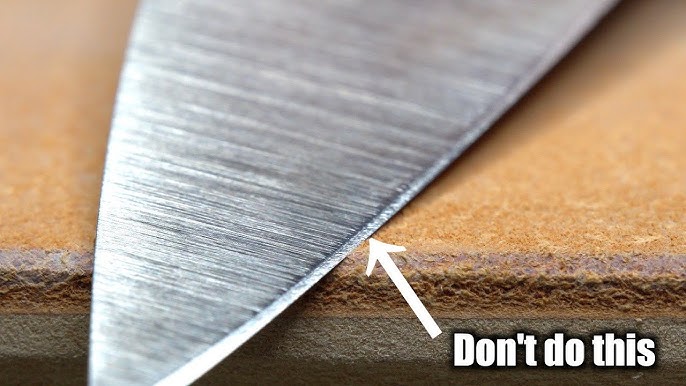
Doing small steps often saves time and metal. In my kitchen, a quick hone before dinner prevents the need for frequent full sharpening.
Source: youtube.com
Quick questions (People also ask)
How often should I sharpen kitchen knives?
Sharpen when honing no longer restores a clean slice, typically every few months for home cooks. Frequency depends on use and cutting surface.
What angle is best for kitchen knives?
Most kitchen knives use 15–20 degrees per side. Asian-style knives may use lower angles; heavy-duty blades use higher ones.
Can I sharpen serrated knives at home?
Serrated knives need special tools like tapered ceramic rods and more patience. Sharpen the scalloped edge individually and avoid grinding the serrations flat.
Frequently Asked Questions of knife sharpening tips
How do I know I formed a burr while sharpening?
A burr feels like a slight wire along the opposite side when you run your finger gently across the bevel. It signals the edge is being reshaped.
Is it better to use oil or water on stones?
Use the lubricant recommended for your stone. Water stones use water; oil stones require oil. The wrong lubricant can harm performance.
Will electric sharpeners ruin my knives?
Electric sharpeners can remove more metal than needed if used often. They are fine for quick fixes but not for frequent full-edge re-profiling.
How long does a sharpened edge last?
Edge life depends on steel, angle, and use. Harder steels hold an edge longer but may chip if misused. Expect weeks to months for home use with regular honing.
Can I sharpen ceramic knives?
Ceramic knives require diamond abrasives and are best handled by professionals. At-home diamond stones can work if you know the technique.
What grit should I start with for a very dull knife?
Begin with coarse grit, around 200–400, to rebuild the bevel. Then move to mid and fine grits to refine and polish the edge.
How do I flatten a stone?
Use a flattening plate or coarse lapping stone and rub the stone in a figure-eight pattern until it is uniformly flat. A flat stone yields consistent edges.
Conclusion
Sharp knives make prep safer, faster, and more enjoyable. Use these knife sharpening tips to choose the right tools, learn whetstone technique, and build a simple maintenance routine. Start small: hone regularly, practice angle control, and sharpen on a stone when needed. Try one method this week and track the difference in your cooking then share your experience or questions below to keep learning.
Maliha Khatun has spent 5 years hands-on testing Japanese knives for everyday home cooks. She has evaluated over 60 blades across nakiri, santoku, gyuto, and petty categories — scoring each on edge retention, steel quality, handle comfort, and value for money. She writes to help home cooks buy the right knife without the guesswork.
Expertise:Japanese Knives • Vegetable Knives • Product Reviews • Kitchen Efficiency • Knife Care
Leave a Reply