Most common knife care mistakes are neglecting cleaning, wrong storage, and improper sharpening.
I have worked with knives for years in kitchens and workshops. I’ll show common knife care mistakes, why they damage blades, and exactly how to stop them. Read on to learn practical steps you can use today to keep knives sharp, safe, and long‑lasting.

Why proper knife care matters
Knives are tools. Good care keeps them sharp and safe. Poor care shortens blade life and raises injury risk. This article explains common knife care mistakes and fixes you can use right away.
Proper care saves money. A well‑maintained knife cuts better. It reduces slips and food damage. Small habits make a big difference.

Top common knife care mistakes
Below are the most frequent common knife care mistakes, why they matter, and how to avoid them.
Using the dishwasher
- Why it’s a mistake: Heat and harsh detergents can warp and dull blades. Handles can loosen or crack.
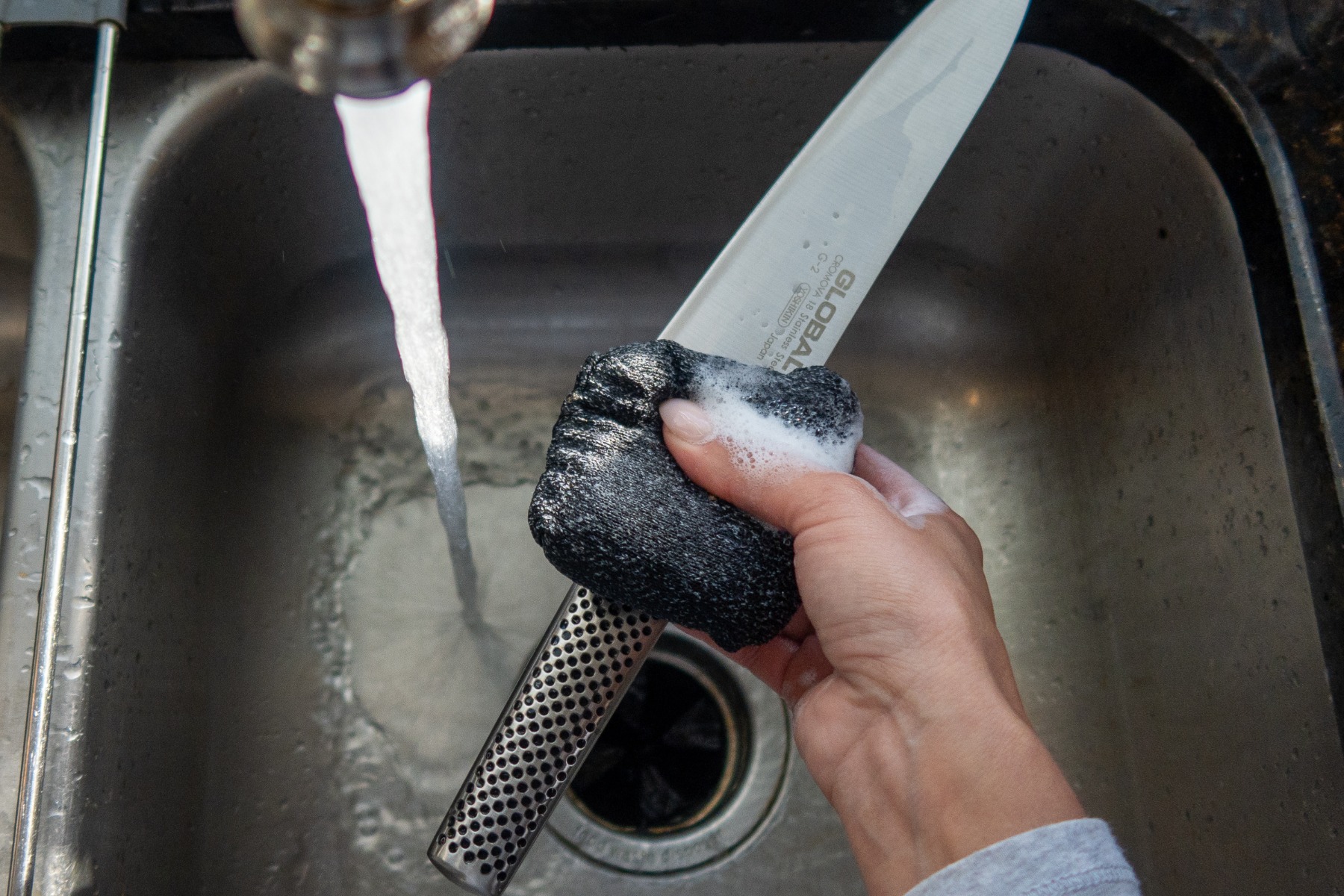
- Fix: Wash knives by hand with mild soap, rinse, and dry immediately.
Storing knives loosely in a drawer
- Why it’s a mistake: Blades knock together and nick. Reaching into a crowded drawer increases cuts.
- Fix: Use a magnetic strip, knife block, or blade guards for safe storage.
Cutting on hard surfaces
- Why it’s a mistake: Glass, stone, and metal dull edges fast.
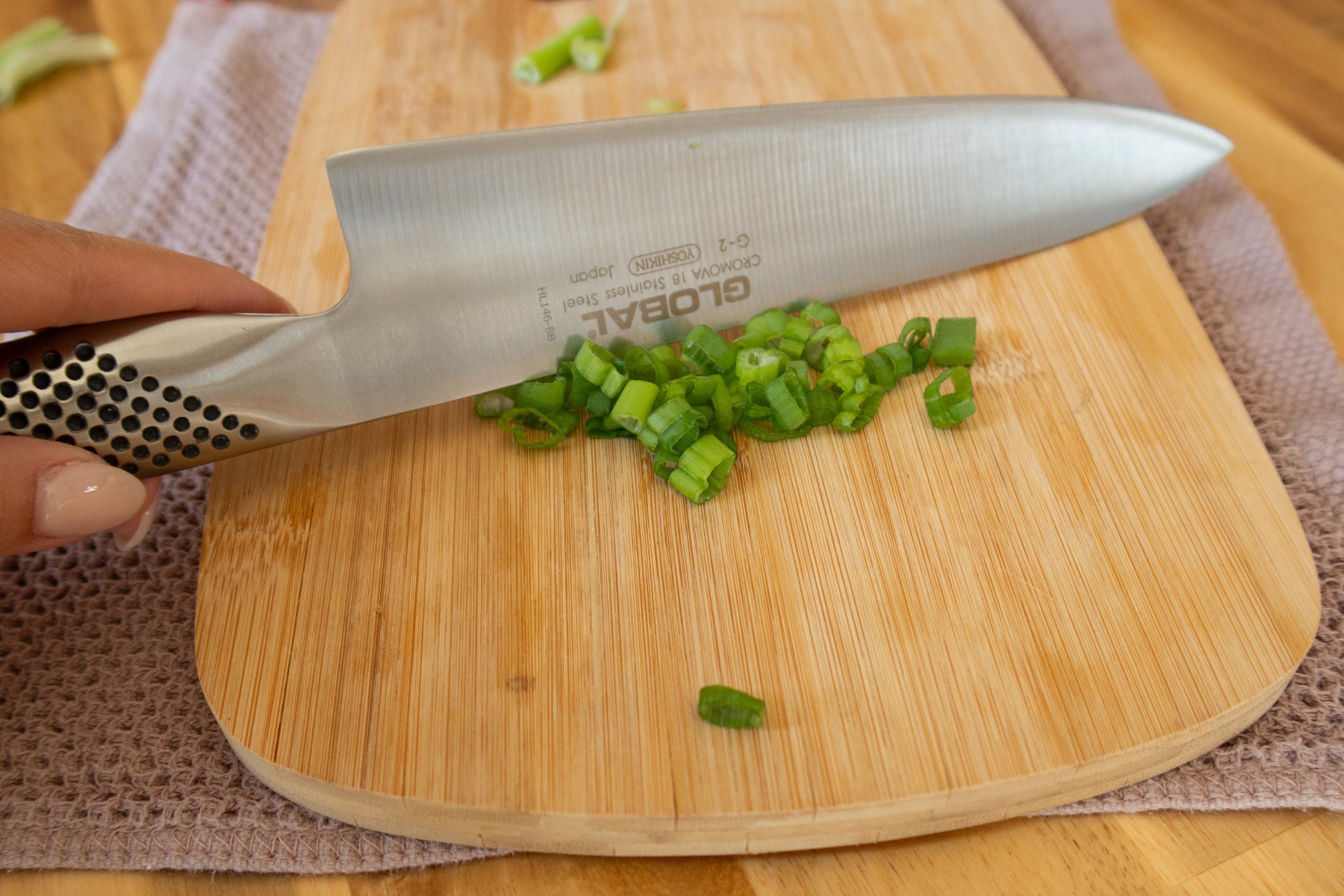
- Fix: Use wood or plastic cutting boards to protect the blade.
Using the wrong sharpening method
- Why it’s a mistake: Pulling a serrated or ceramic knife across a steel damages it. Over‑sharpening removes too much metal.
- Fix: Match the tool: hone daily with a honing rod and sharpen on a whetstone or send to a pro when needed.
Neglecting regular honing
- Why it’s a mistake: A dull edge forces more pressure and causes slips.
- Fix: Hone often to realign the edge. Sharpen only when honing no longer helps.
Leaving knives wet or soaking
- Why it’s a mistake: Water causes rust and stains, especially on high‑carbon steel.
- Fix: Dry knives immediately after washing. Do not soak knives.
Using knives for non‑cutting tasks
- Why it’s a mistake: Prying, can opening, or using a knife as a screwdriver can chip or break the tip.
- Fix: Use the right tool for the job.
Ignoring blade types and steel care
- Why it’s a mistake: High‑carbon steel needs different care than stainless or ceramic blades.
- Fix: Learn your knife’s steel and follow the care it needs, such as oiling high‑carbon blades.
Storing blades without protection during travel
- Why it’s a mistake: Loose knives in bags can dull or damage edges and harm people.
- Fix: Use a padded roll or sheath for transport.
Skipping inspection and maintenance
- Why it’s a mistake: Small chips or loose handles get worse over time.
- Fix: Inspect knives regularly and repair or replace parts early.
I’ve seen many of these mistakes in kitchens I’ve worked in. Simple changes fixed problems fast.
How to fix damage from common knife care mistakes
Minor issues are often fixable at home. Major damage may need a pro.
Remove rust
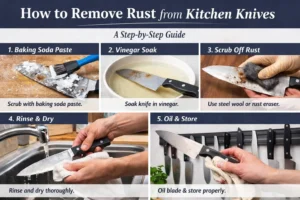
- Use a soft scrub with baking soda paste or a fine abrasive pad and oil. Rinse and dry well.
Fix small chips
- Light chips can be smoothed on a fine stone. Work slowly and keep the angle steady.
Reset the edge
- Start with a coarse whetstone if the blade is very dull. Move to finer grits to polish the edge.
Handle repairs
- Tighten screws or pins. Replace or rewrap grips if loose. For wood handles, sand and oil to restore condition.
When to seek professional help
- Major chips, warped blades, or complex serrations often need a pro sharpener. A pro can restore edge geometry safely.
From my own bench, I learned that trying to rush a repair makes things worse. When in doubt, slow down or seek help.

Best practices to prevent common knife care mistakes
Adopt these habits to avoid common knife care mistakes and keep blades in top shape.
Clean and dry immediately
- Wash by hand, rinse, then dry with a towel.
Hone regularly
- Use a honing rod before or after shifts. It’s quick and keeps edges aligned.
Sharpen on schedule
- Sharpen with a stone or service every few months, depending on use.
Store safely
- Use a block, strip, or sheath to protect edges and hands.
Use the right board and tool
- Soft wood or plastic boards help edges last. Use knives only for cutting.
Learn your steel
- High‑carbon needs oiling; stainless is more forgiving. Ceramic needs specialist care.
Transport wisely
- Protect blades in cases or sheaths.
These steps reduce the chance of the common knife care mistakes that ruin knives and cause accidents.

Tools and products to use and avoid
Choose the right tools to prevent common knife care mistakes.
Use
- Whetstones with coarse to fine grits
- Ceramic or steel honing rods (match rod to edge type)
- Soft wood or plastic cutting boards
- Magnetic strips or knife blocks with slots
- Food‑safe oil for carbon steel blades
- Blade guards or padded rolls for travel
Avoid
- Dishwashers for hand knives
- Glass or stone boards
- Abrasive cleaners that strip finishes
- Pull‑through sharpeners for high‑end blades
- Using knives as prying tools
I recommend a medium grit stone and a fine grit stone as a starter combo. From experience, they cover most needs without harm.

People also ask
What is the single biggest mistake people make with knives?
- The biggest mistake is using the dishwasher and then leaving knives wet. That mix dulls and corrodes blades fast.
How often should I hone and sharpen my knives?
- Hone often, even daily for busy cooks. Sharpen every few months or when honing no longer restores the edge.
Can I fix a chipped knife at home?
- Small chips can be smoothed on a fine stone. Large chips are best handled by a professional sharpener.

Source: globalcutleryusa.com
Frequently Asked Questions of common knife care mistakes
What happens if I use a dishwasher for my knives?
Dishwashers expose knives to high heat, harsh detergent, and metal collisions. This can dull edges, cause rust, and loosen handles.
Is a honing rod the same as sharpening?
No. A honing rod realigns the blade edge. Sharpening removes metal to form a new edge. Both are useful, but they serve different jobs.
How do I know when to sharpen a knife?
When it takes more force to cut or food tears instead of cleanly slicing, it’s time to sharpen. If honing no longer helps, sharpen.
Can I use a ceramic knife on a steel rod?
No. Ceramic knives require diamond abrasives and specialist tools. Using a steel rod can chip or break ceramic edges.
Will cutting on glass or marble ruin my knife immediately?
It won’t ruin a knife in one cut, but repeated use on glass or marble will dull the edge quickly. Switch to wood or plastic boards to preserve the blade.
Conclusion
Avoiding common knife care mistakes is mostly about simple habits. Clean and dry knives, store them properly, hone often, and match sharpening methods to blade type. Small changes cut accidents and save you money over time.
Take one step today: pick one habit from this guide and try it for a week. Share your results or questions below, subscribe for more knife care tips, or try a professional sharpening service if your knife needs repair.

Maliha Akter is a kitchen knife reviewer and food preparation specialist with over 6 years of experience testing Japanese kitchen knives and everyday cooking tools. She focuses on performance, safety, durability, and real-world usability to help home cooks choose the right knives for efficient and enjoyable cooking.
Expertise:Japanese Knives • Vegetable Knives • Product Reviews • Kitchen Efficiency • Knife Care