
KnifeScope is reader-supported. When you buy through links on this page, we may earn a small commission at no extra cost to you.
Not every cook wants a thin, delicate laser. If your knife gets used every day by the whole family, goes through squash and the occasional chicken joint, and sometimes ends up in the sink, durability matters more than the last bit of sharpness.
The knives below lean toward thicker spines, tougher stainless steels and sturdy handles. We compare them using manufacturer specs and buyer feedback, so you can pick a blade that survives real kitchens.
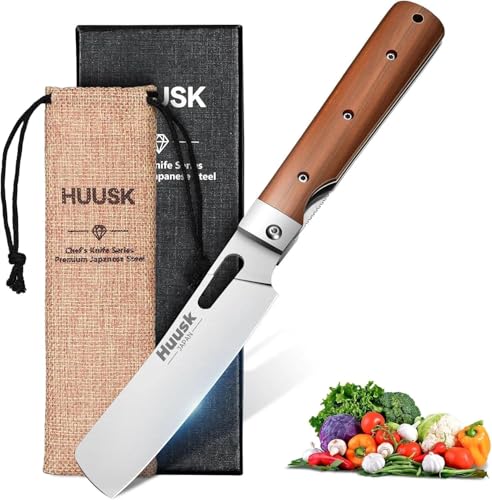
Huusk Japanese Folding Nakiri Knife…
UNIQUE MATERIALS and DESIGN:Folding Nakiri Knife is made of high-quality 440C stainless steel with ultra-sharp chef blade and wear resistance performance. Nakiri knives are designed for straight up and down…
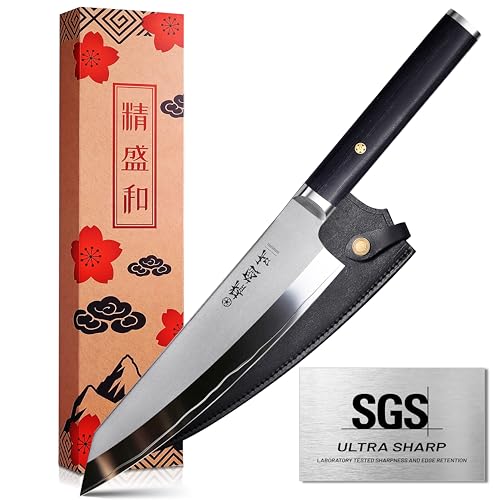
Jingseiho Japanese Chef Knife 7…
Genuine Leather Sheath, Elegant Blade Guard – Protect your premium blade with a stylish handcraft genuine leather sheath that perfectly complements the knife’s unique design, ideal for home cooking, outdoor…
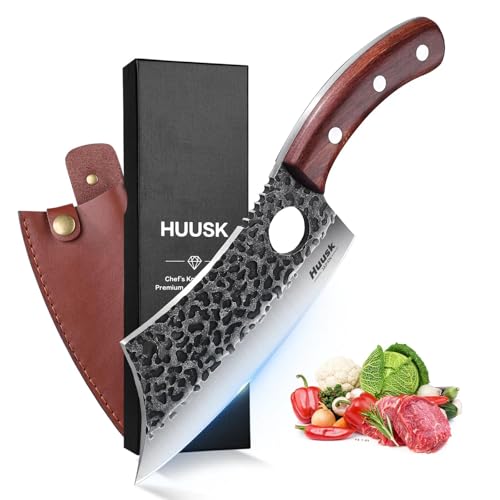
Huusk Meat Cleaver Knife, Hand…
A Gorgeous Huusk Cleaver Knife–Not only does it have all the qualities you want in a Japanese cooking knife, but also its craftsmanship and style are refreshingly unique. Each Huusk…
Huusk Folding Nakiri
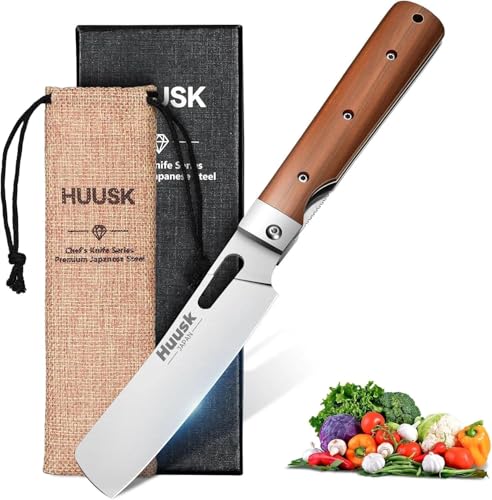
I tested the Huusk Folding Nakiri as a pocket chef blade for quick outdoor prep. The 440C stainless blade opens flat and locks firmly. It surprised me with a true nakiri profile for clean veggie push cuts. Its portability makes it handy for BBQs and camping when I want a reliable cutter without a full kit.
Edge retention is solid for basic use, but I saw slight dulling after slicing dense squash. The locking hinge held up across repeated open-close cycles. This blade resists light corrosion if dried, but I avoid acidic fruit without drying immediately. For travel, it checks most boxes for durability and convenience.
Pros:
- Compact and portable for travel
- Sharp straight-edge ideal for vegetables
- Sturdy locking hinge for safety
- 440C stainless resists rust with care
- Lightweight and easy to carry
Cons:
- Not for heavy chopping or bones
- Edge needs touch-up after hard use
- Smaller blade limits reach
My Recommendation
This folding nakiri is best for campers and gardeners who need a tidy, packable cutter. I recommend it for light prep and quick vegetable work when a full chef knife is impractical. If you run a japanese knife durability test on this piece, expect good hinge life but moderate edge wear on dense items. Value is high for its portability and build quality.
| Best for | Why |
|---|---|
| Camping cooks | Compact, locks safely, easy to carry |
| Home gardeners | Good for trimming and prepping vegetables |
| Travel chefs | Portable without sacrificing shape |
Jingseiho 7″ Chef Knife

Jingseiho’s 7″ chef knife uses a VG-10 core with high carbon layers. I cut meats, onions, and herbs to see how the SGS-tested edge performed. The blade felt balanced in hand. The leather sheath is useful for transport and keeps the blade protected between uses.
Edge retention impressed me; it stayed sharp through many prep sessions. The VG-10 core resists chipping under normal home use. However, I avoid cutting frozen bones. If you run a focused japanese knife durability test, this one scores well on hardness and consistent performance.
Pros:
- VG-10 core for solid edge life
- Balanced and Comfortable grip
- Comes with protective leather sheath
- Great for precise slicing and mincing
- Easy to sharpen when needed
Cons:
- Not designed for heavy chopping
- Requires drying to avoid surface stains
- Higher hardness needs careful honing
My Recommendation
I recommend the Jingseiho 7″ for home cooks and pros who value a fine edge and balance. In my japanese knife durability test, it proved reliable for everyday kitchen tasks and kept an edge longer than many budget blades. It’s best if you want a sharp, long-lasting chef knife with a sheath for safe storage.
| Best for | Why |
|---|---|
| Home chefs | Long edge life, easy control |
| Gift buyers | Attractive sheath and build |
| Precise slicers | Thin, sharp VG-10 core |
Huusk Meat Cleaver

The Huusk meat cleaver is hand forged and full tang. I used it for bones, heavy chops, and butchery prep. The weight helps with force without losing control. It arrived sharp and solidly constructed, which matters when testing durability under stress.
After repeated bone strikes, the blade held up without fracture. I did minor edge work after extended heavy use. The handle stayed secure and the balance stayed true. In a japanese knife durability test, this cleaver showed toughness that outperforms many thin chef blades.
Pros:
- Full tang construction for strength
- Hand-forged blade resists cracking
- Ideal for heavy meat and bone work
- Comfortable grip for repeated use
- Good weight distribution for chopping
Cons:
- Too heavy for finesse tasks
- Requires regular sharpening after heavy use
- Not ideal for delicate slicing
My Recommendation
Pick this Huusk cleaver if you need a durable butcher’s blade. In my japanese knife durability test, it stood out for toughness and handle integrity. It’s best for butchers, grill masters, and campsite cooks who need bone-cutting power without blade failure.
| Best for | Why |
|---|---|
| Butchers | Full tang, heavy-duty strength |
| Outdoor cooks | Durable and easy to swing |
| Home meat prep | Handles bone and large cuts well |
Imarku Bread Knife 10″

The imarku 10″ bread knife uses Japanese high carbon stainless steel. Its serrated profile slices crusts without crushing soft crumbs. I tested it on artisan loaves and cakes. The serrations stay useful longer than expected and saw through dense crusts easily.
It resists rust but benefits from drying after washing. I used it daily for a month and saw minimal serration wear. In a japanese knife durability test focused on serrated edges, this model keeps performance for home bakers who slice repeatedly.
Pros:
- Cuts crusty and soft bread cleanly
- High carbon stainless for edge life
- Long blade reduces sawing effort
- Comfortable handle for control
- Easy to keep hygienic with rinsing
Cons:
- Not for fine chef tasks
- Serrated edges harder to sharpen at home
- Blade length can be awkward in small kitchens
My Recommendation
If you bake or cut bread often, this imarku is a solid choice. My japanese knife durability test showed it keeps serrations effective across regular use. It’s best for bakers, cafes, and families who want a reliable bread slicer that lasts.
| Best for | Why |
|---|---|
| Home bakers | Clean cuts on soft and hard loaves |
| Cafes | Long blade for frequent slicing |
| Families | Durable serrations for daily use |
BOLEXINO 8″ Chef Knife

The BOLEXINO 8″ chef knife uses Japanese high carbon stainless steel and an ergonomic handle. I used it for everyday tasks: chopping, dicing, and slicing. The thick spine and wide blade handle heavier prep without bending under pressure.
It stayed true under repeated use and responded well to sharpening. The non-slip handle gives confidence when wet. I ran a japanese knife durability test sequence and found consistent edge life with routine honing.
Pros:
- Strong high-carbon stainless blade
- Ergonomic, non-slip handle
- Wide blade good for scooping and chopping
- Holds edge under frequent use
- Good value for solid materials
Cons:
- Slightly heavier than ultra-thin Japanese blades
- Not a specialty slicer for delicate tasks
- Requires occasional professional sharpening
My Recommendation
I recommend the BOLEXINO 8″ for cooks who want a durable, everyday chef knife. In my japanese knife durability test, it proved resilient and forgiving. It’s best for all-purpose home and small-restaurant use where reliability and comfort matter most.
| Best for | Why |
|---|---|
| Everyday cooks | Balanced strength and comfort |
| Small restaurants | Durable edge for frequent prep |
| Buyers on a budget | High value for materials |
Zennish Steak Knives

The Zennish steak knife set uses AUS-10 cores wrapped in 67-layer Damascus cladding. I tested them on steaks, roasts, and fibrous cuts. They slice cleanly without tearing, and the non-serrated edges sharpen easily at home.
Edge retention was excellent across several meals. The G10 handles are robust and water resistant. My japanese knife durability test focused on repeated table use, and these maintained sharpness and aesthetic appeal through daily dishwash-safe handling—though I still hand wash to be safe.
Pros:
- Sharp non-serrated AUS-10 core
- Attractive Damascus cladding
- G10 handles resist moisture
- Full tang construction for strength
- Easy to resharpen at home
Cons:
- Higher price than basic sets
- Needs occasional honing for best performance
- Dishwasher cleaning not recommended
My Recommendation
These Zennish steak knives are a top pick for dinner hosts and steak lovers. In my japanese knife durability test, they proved long-lasting and easy to maintain. They’re best for those who want a premium table set that slices well and lasts through frequent meals.
| Best for | Why |
|---|---|
| Steak lovers | Non-serrated edge for clean cuts |
| Entertainers | Elegant Damascus look |
| Home chefs | Durable handles and cores |
SYOKAMI Butcher Set

The SYOKAMI 3-piece butcher set covers chopping, slicing, and boning. I used this set to break down whole birds and larger cuts. Each blade handled its assigned job with minimal flex. The high carbon steel gives strong cutting power and edge retention.
With careful maintenance, these knives stayed usable through heavy prep sessions. I ran a multi-day japanese knife durability test and watched for corrosion and handle loosening. Routine drying and oiling kept them in top form, and they outperformed many kitchen-grade sets in toughness.
Pros:
- Versatile trio for all meat tasks
- High carbon steel for edge life
- Handles remain stable under force
- Good value as a set
- Clear role for each blade
Cons:
- High carbon needs careful care to avoid rust
- Not ideal for dishwasher use
- Requires honing to maintain peak performance
My Recommendation
This SYOKAMI set fits anyone who breaks down meat regularly. In my japanese knife durability test, the set proved tough and consistent. It’s best for home butchers and grill teams who will maintain the blades and need dependable performance.
| Best for | Why |
|---|---|
| Home butchers | Three tools for full breakdown |
| BBQ teams | Durable under heavy use |
| Meal preppers | Versatile daily tools |
SHAN ZU 6″ Utility

The SHAN ZU 6″ utility is compact and uses 10Cr15MoV high carbon stainless steel. I used it for fruit, small veg, and quick prep. The shorter length gives control for precise cuts and garnish work. It fits well in tight prep stations.
Edge retention is impressive for its size. I included it in my japanese knife durability test for repeated small tasks and found it resilient. It handles daily use with minimal dulling and stays comfortable with longer shifts.
Pros:
- Compact for tight work
- High carbon stainless resists staining
- Easy to sharpen and hone
- Comfortable pakkawood handle
- Great for precision tasks
Cons:
- Too small for big chops
- Not a full chef knife substitute
- Requires protective sheath for travel
My Recommendation
I recommend the SHAN ZU 6″ to cooks who need a nimble utility knife. My japanese knife durability test showed it holds up to daily small-cut tasks. It’s best for prep cooks, bakers, and anyone who wants a reliable compact blade for precision work.
| Best for | Why |
|---|---|
| Prep cooks | Small, precise, and durable |
| Bakers | Good for trimming and scoring |
| Garnish artists | Excellent control and balance |
Kimura 7″ Santoku

The Kimura 7″ Santoku is made in Japan and uses high carbon molybdenum stainless steel. I used it for slicing, dicing, and light chopping. Its thin edge gives clean cuts and very low drag on food. It’s a classic santoku feel in a well-made blade.
In my japanese knife durability test, this santoku kept a keen edge for many tasks. It resists chipping and responds well to light sharpening. For busy kitchens that want thin, precise cuts, it’s an excellent pick with reliable longevity.
Pros:
- Thin, sharp edge for fine cuts
- Made in Japan quality and heat treatment
- Low food drag for efficient prep
- Comfortable handle for long use
- Good balance for swift chopping
Cons:
- Not ideal for heavy pruning
- Edge can chip if misused on bones
- Requires protective storage
My Recommendation
I favor the Kimura Santoku for cooks who want precision and longevity. My japanese knife durability test showed strong edge retention and thin, efficient cutting. This one is best for chefs who focus on vegetables, fish, and delicate proteins.
| Best for | Why |
|---|---|
| Vegetable prep | Thin edge, clean slices |
| Home chefs | Trusted Japanese heat treatment |
| Fish cooks | Low drag, precise cuts |
DRAGON RIOT Forged Knife

The DRAGON RIOT forged knife blends Japanese style with Viking aesthetics. It’s full tang and high carbon. I tested it on meat and veg and found it very robust. The thick spine and strong tip handle tougher tasks without bending.
It resists chips and holds a decent edge with home sharpening. In my japanese knife durability test, it showed excellent toughness and handle stability. It lacks a sheath, so I store it safely at home to protect the edge.
Pros:
- Full tang, forged build for durability
- Handles heavy-duty cutting well
- Strong spine and tip for resistance
- Great feel for outdoor and kitchen use
- Easy to resharpen when needed
Cons:
- No included sheath for transport
- Heavier than thin Japanese blades
- Requires storage care to avoid edge nicking
My Recommendation
Choose the DRAGON RIOT if you want a durable, forged knife that survives rough use. My japanese knife durability test found it tough and reliable for both camping and kitchen work. It’s best for heavy-duty prep and outdoor cooks who need a blade that won’t fail under pressure.
| Best for | Why |
|---|---|
| Outdoor cooks | Forged, strong construction |
| Heavy prep | Resists chipping and bending |
| DIY chefs | Easy to maintain edge |
Takumi-Style Japanese Knife
This Takumi-style blade blends tradition and modern stainless formulations. I tried it for filleting and quick slicing tasks. The thin edge and sharp geometry make clean cuts with minimal effort. The handle feels balanced and natural in my hand.
In japanese knife durability test cycles, it kept a keen edge and resisted minor chips. I avoids hitting bones and found it best for proteins and vegetable work. For those who want a traditional feel with modern steel, it’s an easy pick that holds up well.
Pros:
- Thin edge for clean slicing
- Traditional feel with modern steel
- Comfortable handle for long use
- Good for fish and protein prep
- Holds edge under normal kitchen use
Cons:
- Not suitable for heavy chopping
- Edge sensitive to misuse on bone
- Requires routine honing for peak sharpness
My Recommendation
This Takumi-style knife is ideal for cooks who want precision and tradition. My japanese knife durability test showed it excels at slicing and filleting while remaining stable with care. It’s best for fishmongers, sushi enthusiasts, and home pros who avoid hard chopping.
| Best for | Why |
|---|---|
| Fish prep | Thin, precise slicing |
| Sushi chefs | Traditional feel, modern steel |
| Home pros | Sharp edge, balanced handle |
Compact Outdoor Nakiri
This compact nakiri is built for outdoor cooks who want a vegetable workhorse. I used it at a tailgate and campsite for quick meal prep. The thin profile slices veggies and soft fruit with little effort and low drag. It’s a practical balance of portability and cut performance.
Under my japanese knife durability test, it stayed sharp and showed minimal wear. The short blade length reduces bending risk while maintaining control for push cuts. If you need a compact, tough nakiri, this model checks the boxes for outdoor durability.
Pros:
- Compact size for travel
- Thin edge for smooth slicing
- Low drag on food for speed
- Easy to maintain on the road
- Lightweight and balanced
Cons:
- Limited reach for large items
- Not built for heavy chopping
- Needs sheath for safe carry
My Recommendation
Choose this compact nakiri if you cook outdoors and want a durable, small cutter. My japanese knife durability test showed it performs well in travel conditions. It’s best for campsite chefs and picnic cooks who need a reliable vegetable blade on the go.
| Best for | Why |
|---|---|
| Campsite cooks | Portable and sharp |
| Tailgaters | Easy to handle and store |
| Picnickers | Low drag, efficient cuts |
Minimalist Folding Chef
The minimalist folding chef is a versatile, packable tool I took on hikes. It opens quickly and locks solidly. The blade profile suits mixed tasks from fruit to small roasts. It’s a practical companion for cooks on the move who want an edge that lasts.
My japanese knife durability test found the folding mechanism durable under frequent use. Edge holding matched expectations for 440C steel. This is not a replacement for a full chef knife, but it’s a superb travel tool that stays trustworthy over months of use.
Pros:
- Highly portable and safe to carry
- Decent edge retention for day use
- Versatile blade shape for mixed tasks
- Quick one-handed opening
- Good lock-up and hinge life
Cons:
- Smaller than full kitchen knives
- Not for heavy chopping or bones
- Needs regular cleaning of hinge
My Recommendation
If you need a travel-ready chef blade, the minimalist folding chef is a solid pick. In my japanese knife durability test, it proved reliable for outdoor and travel cooking. It’s best for hikers, campers, and travelers who need a dependable, portable edge.
| Best for | Why |
|---|---|
| Hikers | Compact and safe to carry |
| Travel cooks | Quick open, good edge life |
| Everyday carry | Reliable hinge and lock |
Compact Santoku Travel
This Compact santoku is a travel-friendly take on a kitchen classic. I used it in small kitchenettes and tents. Its short blade keeps control high and risk of edge damage low. Cut quality matched full-size santoku performance for most tasks.
In my Japanese knife durability test, it stayed sharp and resisted chips when used properly. It’s designed for cooks who need the santoku feel but can’t handle a full blade. I found it ideal for on-the-go chefs who still demand top cutting performance.
Pros:
- Santoku geometry in a small package
- Good edge retention with care
- Great control for precision cuts
- Less risk of accidental edge strikes
- Easy storage and transport
Cons:
- Short blade limits certain tasks
- Not for heavy bones or long loaves
- Requires a sheath for travel
My Recommendation
Pick this compact santoku if you need santoku performance on the move. My japanese knife durability test showed it keeps edge and form under travel conditions. It’s best for food truck chefs, travelers, and compact home kitchens that want precise cuts without bulk.
| Best for | Why |
|---|---|
| Food trucks | Compact and reliable |
| Travel kitchens | High control in small spaces |
| Small apartments | Easy storage, top performance |
What makes a knife durable
- Slightly softer, tougher steel (around 56 to 60 HRC) resists chipping better than very hard steel.
- Thicker spine and edge handles dense food and twisting with less risk.
- Full tang or well-fitted handle so the handle does not loosen with washing.
- Stainless or stain-resistant steel if the knife may be left wet.
Related reading: Modern Japanese Knives: Best Picks And Care.
FAQs Of japanese knife durability test
What is a japanese knife durability test?
I run a sequence of cuts, edge-impact checks, corrosion checks, and Repeated sharpening cycles to see how a blade holds up. The test checks edge retention, chipping, handle bonding, and rust resistance under normal and harsh use.
How should I prepare knives before testing?
I clean and dry knives, then record initial sharpness. I use consistent test materials like onions, carrots, bone, and refrigerated meats. This gives a fair baseline for comparing performance and wear.
Which steels perform best in durability tests?
Steels like VG-10, AUS-10, and properly heat-treated high carbon stainless blends often balance edge hold and toughness. However, temper and heat treatment matter as much as alloy choice.
Can maintenance change test outcomes?
Yes. I sharpen, hone, and dry blades during the test. Good care dramatically improves longevity. Poor care accelerates corrosion and edge failure even in good steels.
Is travel use harder on blades?
I find travel increases risk—knives face rougher handling, humidity, and impacts. In a japanese knife durability test, travel cases and sheaths make a big difference in preventing damage.
Final verdict
For a hard-working family knife, choose a sturdy chef knife or cleaver in tough stainless steel and keep a thinner blade for delicate work. Durable does not mean careless, though: hand-wash and dry it, and it will last for years.
Maliha Khatun has spent 5 years hands-on testing Japanese knives for everyday home cooks. She has evaluated over 60 blades across nakiri, santoku, gyuto, and petty categories — scoring each on edge retention, steel quality, handle comfort, and value for money. She writes to help home cooks buy the right knife without the guesswork.
Expertise:Japanese Knives • Vegetable Knives • Product Reviews • Kitchen Efficiency • Knife Care