
KnifeScope is reader-supported. When you buy through links on this page, we may earn a small commission at no extra cost to you.
“Handmade” and “hand-forged” are some of the most overused words in knife marketing. Some knives are made start to finish by a single smith in Japan; others are factory blades with a hammered finish.
Both can be good knives. This guide helps you understand what you are actually buying and which handmade-style knives offer good value.
Our picks are based on manufacturer specifications, materials and long-term buyer feedback.

Forged, Stamped or Handmade: What the Label Means
Words like forged and handmade describe how a blade was made, not how well it cuts. When looking at a handmade japanese knives:
- Forged: shaped from heated steel, often thicker with a bolster and more weight.
- Stamped: cut from a sheet, usually lighter and more affordable.
- Handmade: can mean hand-finished or fully hand-forged, so ask what exactly is done by hand.
- Judge by steel, grind and fit and finish, not the label alone.
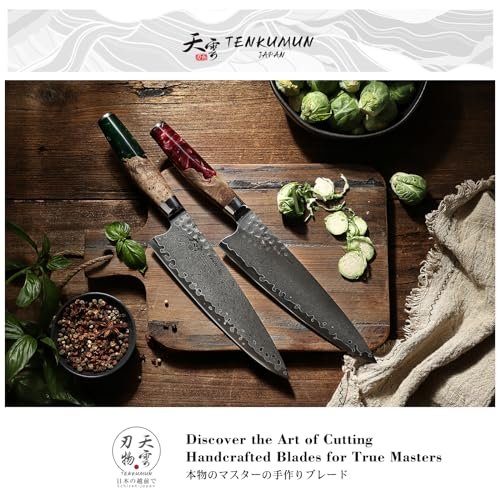
Tenkumun Japanese Gyutou Knife Pro….
Unleash the Art of Cutting: Exquisite Handcrafted Blades for True Masters. Indulge in the Harmony of Ancient Japanese Tradition and Modern American Design, Crafted and Honed to Perfection. Our knives…

KAWAHIRO Japanese Chef Knife, 8…
【Precision Perfection in Every Slice】Our professional-grade kitchen knife are hand-forged and feature a luxurious black forged finish. The razor-sharp blades are crafted from the finest VG10 stainless steel, allowing them…

MITSUMOTO SAKARI 8 inch Gyuto…
JAPANESE TRADITIONAL HAND FORGED: Professional chef knife blends traditional handmade forging craft with advanced tech and premium materials. Through careful metal hammering and tempering, the blade forms a unique “water…
Tenkumun 8″ Gyuto Pro
I tested the Tenkumun 8″ Gyuto Pro over weeks. The VG-10 core and Damascus finish give a stunning look. The blade felt thin and fast on veg, and it held an edge well. The balance is forward but still controllable for rocking cuts.
The handle is comfortable and light. I used it for slicing meats and for delicate mincing. It resists stains and cleans easily. This handmade japanese knife impressed me with consistency and edge retention.
Pros:
- Sharp VG-10 core for reliable edge retention
- Damascus finish hides wear and looks professional
- Balanced for thin slicing and rocking techniques
- Lightweight handle reduces wrist strain
- Easy to resharpen and maintain at home
Cons:
- Edge can chip if misused on bones
- Forward balance not ideal for heavy cleaving
My Recommendation
I recommend the Tenkumun 8″ Gyuto Pro to home cooks who want a visually striking, high-performing handmade japanese knife. It fits those who do frequent slicing and prefer a sharper, thinner edge. For small professional kitchens or avid home cooks, it offers strong value for the price.
| Best for | Why |
|---|---|
| Everyday slicing | Thin blade and VG-10 core for clean cuts |
| Gifting | Damascus look with premium presentation |
| Home chefs | Comfortable handle and easy upkeep |
KAWAHIRO 8″ Gyuto

The KAWAHIRO 8″ Gyuto is hand-forged from VG-10 steel. I noted a razor-sharp factory edge out of the box. The octagonal handle gives an ergonomic grip that resists slipping. The blade glides through carrots and onions with almost no resistance.
It shines for protein prep. I sliced salmon and beef and found the edge stayed true. The knife cleans fast and remains light in the hand. This handmade japanese knife matches pro specs at a mid-range price.
Pros:
- Factory-sharp VG-10 edge for Immediate use
- Ergonomic octagonal handle for secure grip
- Forged construction increases toughness
- Excellent balance for controlled cuts
- Good gift presentation with premium box
Cons:
- Blade finish shows water spots if not dried
- Slightly thin tip can be delicate
My Recommendation
I find the KAWAHIRO 8″ Gyuto ideal for cooks who want a durable, razor-sharp handmade japanese knife for both vegetables and meats. It’s best for cooks who value an ergonomic handle and immediate sharpness. Overall, it offers strong performance and a professional feel.
| Best for | Why |
|---|---|
| Professional home cooks | Sharp VG-10 edge and forged strength |
| Gift buyers | Attractive presentation and ready-to-use edge |
| Those who value grip | Octagonal handle gives stable control |
MITSUMOTO SAKARI 8″ Gyuto

The MITSUMOTO SAKARI 8″ Gyuto feels like a classic hand-forged blade. The 3-layer 9CR18MOV steel core offers solid edge retention and simple sharpening. The rosewood handle is elegant and warms in the hand quickly. I used it daily for prep and enjoyed how predictable the edge behaved.
The blade has good weight for controlled cuts without being heavy. It handles root veg and proteins equally well. The included sandalwood box makes storage and gifting neat. For those who want a boutique handmade japanese knife, it’s a fine choice.
Pros:
- Robust 9CR18MOV core for durable sharpness
- Attractive rosewood handle with comfortable grip
- Good mid-weight balance for control
- Nice presentation box included
- Forged layers add toughness and visual depth
Cons:
- High-carbon core needs drying to avoid rust
- Handle finish may wear with heavy use
My Recommendation
I recommend the MITSUMOTO SAKARI Gyuto to cooks who appreciate a traditional look and solid cutting performance. This handmade japanese knife is best for those who want a balance of durability and beauty. It’s a reliable blade for daily kitchen tasks.
| Best for | Why |
|---|---|
| Traditionalists | Rosewood handle and forged layers |
| Daily users | Durable 9CR18MOV core holds up to regular use |
| Gift givers | Sandalwood box adds premium feel |
DRGSKL Tanto Fixed Blade

The DRGSKL Tanto is a fixed-blade designed for outdoors and survival tasks. It has a full-tang construction and a wooden sheath. I tested it for campsite prep and light baton work. The blade stayed true and the sheath was sturdy for transport.
This is not a kitchen tool but a versatile handmade japanese knife in style and build. It works well for woodwork, light bushcraft, and as a collector’s piece. If you need a tough fixed blade with Japanese design, this fits.
Pros:
- Full-tang build for durability
- Wooden sheath for safe carry
- Robust for outdoors tasks
- Comfortable handle for grip in wet conditions
- Good as a display or gift item
Cons:
- Too heavy for kitchen slicing
- Not intended for fine food prep
My Recommendation
I recommend the DRGSKL Tanto to outdoor enthusiasts who want a strong handmade japanese knife for camping and survival tasks. It’s best for those who need a reliable fixed blade for cutting wood, rope, and shelter work. Overall, it offers rugged performance off the cutting board.
| Best for | Why |
|---|---|
| Campers | Full-tang strength for fieldwork |
| Collectors | Traditional tanto shape and sheath |
| Outdoor prep | Sturdy blade for hard use |
Minowe Damascus Pocket Knife

The Minowe folding knife uses VG10 Damascus steel in a compact package. I carried it for EDC tasks like cutting paracord and opening packages. The 3.1″ blade locks solidly and feels precise. The resin and maple handle adds visual flair.
It’s handy for outdoor quick tasks and light food prep when camping. The liner lock is secure and the included holster helps carry. For an everyday pocket tool with artisan looks, this handmade japanese knife pocket folder is a smart pick.
Pros:
- VG10 Damascus blade with attractive pattern
- Compact and easy to carry
- Secure liner lock for safety
- Good edge for general EDC tasks
- Nice handle materials for style
Cons:
- Not suited for heavy-duty chopping
- Smaller blade limits food prep use
My Recommendation
I suggest the Minowe Damascus pocket knife for hikers and EDC fans who want a stylish, compact handmade japanese knife folder. It’s best for daily tasks, light camping, and as a carry piece. It’s a blend of utility and design in a small package.
| Best for | Why |
|---|---|
| Everyday carry | Compact size and secure lock |
| Campers | Useful for basic campsite tasks |
| Collectors | Damascus pattern and maple handle |
FAMCÜTE 8″ Chef Knife

The FAMCÜTE 8″ chef knife brings a five-layer high carbon 9CR18MOV construction. Its rosewood handle is comfortable and classic. I used it for heavy prep and thin slicing. The blade felt durable and the edge kept up with frequent use.
This handmade japanese knife performs well for families cooking multiple meals a day. It has good heft for tougher cuts yet remains nimble. If you want a resilient kitchen workhorse with a hand-forged feel, consider this model.
Pros:
- Five-layer steel for toughness and resilience
- Rosewood handle for comfort and style
- Sharp and durable edge for daily use
- Handles heavier prep without flex
- Good price for layered construction
Cons:
- Higher maintenance for high-carbon core
- Heavier for users who prefer very light knives
My Recommendation
I recommend the FAMCÜTE 8″ chef knife for home cooks who want a hardworking handmade japanese knife that can handle heavy prep. It’s best for households that cook frequently and need a durable blade. The value is strong for layered, high-carbon construction.
| Best for | Why |
|---|---|
| Busy kitchens | Durable multi-layer steel holds up under heavy use |
| Meat prep | Heft and edge durability for cutting proteins |
| Value seekers | Good performance at a mid-range price |
Higo no Kami Pocket Knife

The Higo no Kami is a classic folding pocket knife with brass finish. I used it for small workshop tasks and kitchen odd jobs. It’s compact and reliable. The simple build appeals to those who like vintage style and function.
It’s not a chef’s blade but a useful EDC tool. The brass gives a warm patina over time. If you want a small handmade japanese knife-inspired pocket folder for everyday tasks, this model works well.
Pros:
- Classic Japanese folding design
- Compact and easy to carry
- Durable brass finish that ages well
- Simple and reliable mechanism
- Good for light workshop and kitchen tasks
Cons:
- Small blade not suitable for heavy food prep
- No locking mechanism on some versions
My Recommendation
The Higo no Kami fits collectors and fans of vintage Japanese design who want a small everyday handmade japanese knife folder. It’s best for light cutting tasks and those who like a knife that develops character over time. Overall, it’s a charming, functional piece.
| Best for | Why |
|---|---|
| Everyday carry | Compact and reliable vintage design |
| Collectors | Authentic brass finish and history |
| Light tasks | Great for small workshop and kitchen jobs |
ALVELY VG10 Folding Knife

The ALVELY folding knife packs a 3.1″ VG10 blade in a wooden handle. I used it for urban EDC and trail chores. The liner lock is sturdy and the blade keeps a good edge. It balances practical use with a handmade japanese knife aesthetic.
The leather case adds carry convenience. I liked the solid feel in pocket and the fast deployment. For an affordable VG10 folder with a classic look, this model performs well under daily use.
Pros:
- High-hardness VG10 blade for edge retention
- Attractive wooden handle with leather case
- Solid liner lock for safety
- Useful 3.1″ blade for many tasks
- Good value for VG10 materials
Cons:
- Not suited for heavy chopping or batoning
- Handle finish may show wear over time
My Recommendation
I recommend the ALVELY VG10 folder to commuters and outdoor hobbyists who want a reliable handmade japanese knife-style folding blade. It’s best for everyday tasks and light outdoor work. The value and build quality make it a smart carry choice.
| Best for | Why |
|---|---|
| Commuters | Compact blade and leather case for carry |
| EDC users | VG10 holds edge for daily tasks |
| Gift buyers | Nice presentation and usable blade |
8″ VG10 Damascus Chef Knife
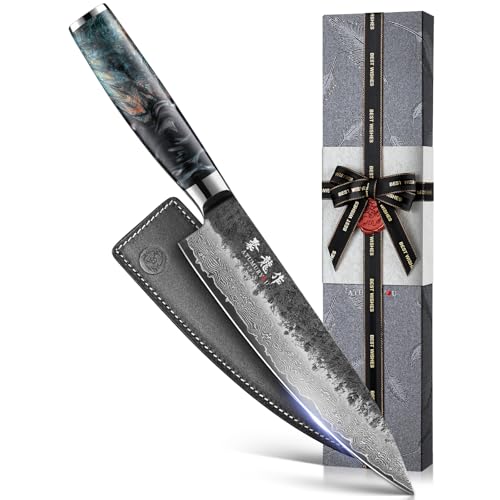
This 8″ VG10 core Damascus chef knife looks and performs like a premium handmade japanese knife. I used it for precision tasks and heavier slicing. The leather sheath and box make it easy to store. The edge stays keen after many uses.
The handle is ergonomic and the blade’s profile suits both push cuts and rocking. I recommended it to friends who wanted professional feel without custom pricing. It’s a strong all-around choice for serious home cooks.
Pros:
- VG10 core with Damascus surface for looks and performance
- Versatile profile for many cutting styles
- Ergonomic handle reduces fatigue
- Leather sheath for safe storage
- Good edge life for frequent use
Cons:
- Requires gentle care to avoid scratching Damascus surface
- Higher price than basic mass-made knives
My Recommendation
I recommend this 8″ VG10 Damascus knife for cooks seeking a premium handmade japanese knife with professional performance. It’s best for those who want a long-lasting, sharp blade and a refined look. The overall value is excellent for home chefs stepping up to pro-grade tools.
| Best for | Why |
|---|---|
| Pro-level home cooks | VG10 core and fine profile for precise cuts |
| Gifts | Luxury sheath and box presentation |
| Entertaining cooks | Elegant Damascus finish for show and use |
FUSIONKEI Tanto Decorative

The FUSIONKEI Tanto is a decorative fixed blade with a carved sheath. I tested it as an ornamental piece and for light cutting. The carved sheath adds ceremony to display. The blade has a striking aesthetic and cultural vibe.
It’s suited for collectors and display in themed spaces. It isn’t a kitchen tool but follows Japanese blade traditions. If you want a showpiece that echoes samurai style, this handmade japanese knife-inspired tanto fits the bill.
Pros:
- Beautiful carved sheath for display
- Strong cultural and decorative appeal
- Solid fixed blade construction
- Good as a collectible or gift
- Lightweight for wall or shelf display
Cons:
- Not intended for heavy chopping or kitchen use
- Sheath carving is decorative, not functional protection for heavy carry
My Recommendation
I recommend the FUSIONKEI Tanto for collectors who want a distinctive handmade japanese knife-style piece for display. It’s best for those who value ornament and tradition over kitchen utility. Overall, it’s a striking and meaningful decorative blade.
| Best for | Why |
|---|---|
| Collectors | Decorative sheath and samurai-style design |
| Home display | Striking look for shelves and themed rooms |
| Gift buyers | Unique cultural piece with visual impact |
FAMCÜTE 8″ Layered Chef Knife
This FAMCÜTE variant brings a 5-layer high carbon 9CR18MOV blade with a rosewood handle. I retested it for a second look at durability. It feels strong and keeps an edge after repeated kitchen sessions. The blade slices cleanly and feels steady under pressure.
It handles vegetables and meats without fuss. The handle resists slipping and gives good leverage. If you want a handmade japanese knife that leans toward robust performance, this is a reliable pick for steady daily use.
Pros:
- Five-layer build for strength and edge support
- Comfortable rosewood handle
- Good edge life for busy kitchens
- Steady feel for heavier prep
- Attractive finish for home use
Cons:
- Higher upkeep for carbon core blades
- Heft may not suit those preferring ultra-light knives
My Recommendation
I recommend this FAMCÜTE layered chef knife to cooks who need a tough handmade japanese knife for steady, frequent prep. It’s best for families and entertainers who use a chef’s knife daily. It balances strength and ease of maintenance well.
| Best for | Why |
|---|---|
| Frequent cooks | Durable layered steel holds up to daily use |
| Meat handling | Heft and edge suit protein prep |
| Home pros | Looks and performance for serious home chefs |
Japanese Chef Knife Damascus
This Japanese chef knife with VG10 core fits cooks who want a blend of art and function. I used it for fine prep and felt confident with its thin grind. The ergonomic handle aids control during long prep sessions. Edge retention kept pace with heavy slicing.
It’s a versatile handmade japanese knife for home and semi-pro use. I found it easy to resharpen and maintain. If you want a knife that delivers consistently clean cuts and looks good on a block, this suits you well.
Pros:
- VG10 core for steady edge life
- Thin grind for clean, precise cuts
- Ergonomic handle for long prep sessions
- Leather sheath for storage and gifting
- Attractive finish that resists staining
Cons:
- Thin grind requires careful use on hard materials
- Higher-end look with corresponding price
My Recommendation
This Japanese Chef Knife Damascus is best for cooks who want an elegant, reliable handmade japanese knife for precision work. It fits fine slicing and professional home use. The overall value is strong for cooks upgrading to a quality blade.
| Best for | Why |
|---|---|
| Precision cooks | Thin grind and VG10 core for clean slicing |
| Stylish kitchens | Beautiful finish and leather sheath |
| Serious home chefs | Edge retention and ergonomics for long sessions |
Signs of a genuinely handmade knife
- The maker or workshop is named, often with the town (Sakai, Seki, Echizen, Tosa, Sanjo).
- Small variations between knives in grind, finish and weight.
- Traditional steel such as Aogami, Shirogami or a named laminated construction.
- A price that reflects hours of work, usually well above $100 for a gyuto.
- Kanji stamped or engraved with the maker’s name.
FAQs Of handmade japanese knife
What makes a handmade japanese knife different from mass-made knives?
I’ll keep it short. Handmade japanese knife blades are often forged and ground by craftsmen. They use higher-grade steels like VG-10 or 9CR18MOV. The result is a thinner, Sharper blade with better balance and edge life.
How do I care for a handmade japanese knife?
Dry it after washing. Use a gentle soap and soft sponge. Hone regularly and sharpen with a whetstone as needed. Store in a block or magnetic strip. High-carbon cores need extra drying to prevent rust.
Can I use a handmade japanese knife for all kitchen tasks?
Many can handle most tasks. Thin blades excel at slicing and dicing. Do not chop bones or frozen items. Use a heavier cleaver for those tasks. Match blade type to your main chores.
How often should I sharpen a handmade japanese knife?
I hone weekly if you cook often. Sharpen with a whetstone when honing no longer restores the edge—often every few months with regular use. Frequency depends on use and steel type.
Are handmade japanese knives worth the cost?
Yes, if you value sharpness, balance, and longevity. A handmade japanese knife can perform better and last longer than cheap mass-produced knives when cared for. It’s an investment in daily cooking ease.
Final verdict
A true handmade Japanese knife is a joy to own, but handmade-style factory knives are a sensible value choice too. Know which you are buying, and judge the knife by steel, grind and comfort rather than the word on the box.
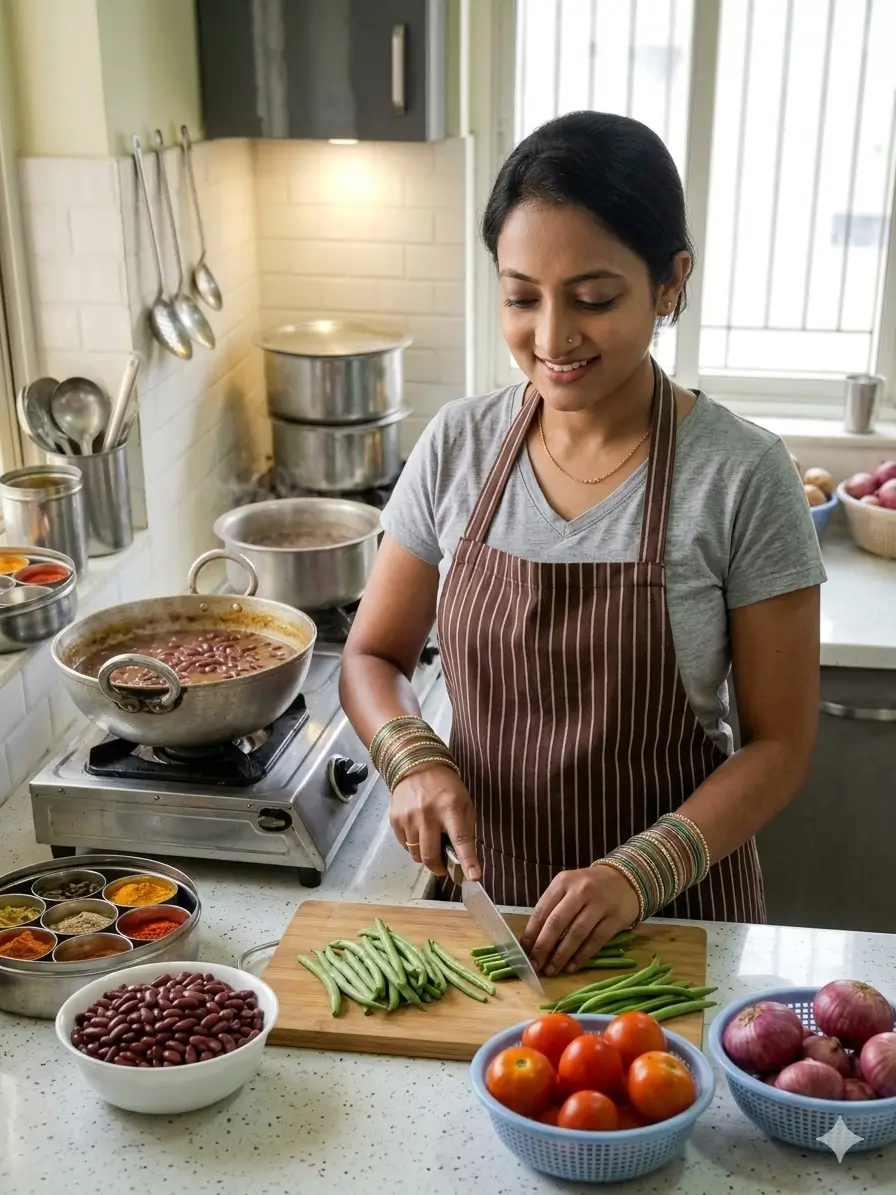
Maliha Khatun has spent 5 years hands-on testing Japanese knives for everyday home cooks. She has evaluated over 60 blades across nakiri, santoku, gyuto, and petty categories — scoring each on edge retention, steel quality, handle comfort, and value for money. She writes to help home cooks buy the right knife without the guesswork.
Expertise:Japanese Knives • Vegetable Knives • Product Reviews • Kitchen Efficiency • Knife Care