

KnifeScope is reader-supported. When you buy through links on this page, we may earn a small commission at no extra cost to you.
Fine cutting means tiny, even work: brunoise, garnishes, paper-thin radish or shallots minced so small they melt into a sauce. For that you need a blade that is thin, very sharp and easy to control at the tip.
This list focuses on knives that do precision well, from small paring and petty knives to thin nakiris.
Our picks are based on manufacturer specifications, materials and long-term buyer feedback.

Matsato Chef Knife – Perfect…
Chef knife for every kitchen | Whether you are a home cook or a professional chef, every kitchen needs a Matsato knife. This Japanese Steel Knife is strong, durable and…
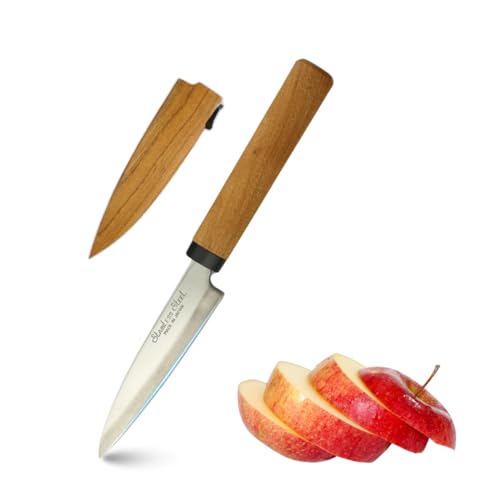
Japanese Paring Knife 4-Inch, High…
Precision Japanese Paring Knife – 4-inch high carbon stainless steel blade with a pointed tip, perfect for peeling fruit, trimming vegetables, and fine cutting tasks. Made in Japan Quality –…

HOSHANHO Kitchen Knife in Japanese…
【High-End Japanese Steel Chef’s Knife】 HOSHANHO chef’s knife is made of Japanese high carbon steel 10Cr15CoMoV, 2x of the sharpness and durability of some other “premium” knives, and it owns…
Matsato 6.3″ Chef Knife

I reached for the Matsato 6.3″ Chef Knife when I needed balance for micro-slicing and speed at the line. The short blade gives crisp control when I cut thin herbs or trim fish. The weight feels neutral. The edge geometry favors delicate slicing over heavy chopping.
In daily use the blade tracked true and needed only light stropping between meals. The handle fits small and medium hands well, which helps when I make long, repetitive cuts. This knife is a solid pick when you want a nimble Japanese knife for fine cutting in a compact package.
Pros:
- Excellent balance for controlled, fine slicing
- Short blade ideal for precise prep work
- Sharp out of the box with good edge retention
- Comfortable handle for extended use
- Lightweight—reduces wrist fatigue during fine cuts
Cons:
- Not suited for heavy-duty chopping
- Smaller blade limits reach for larger cuts
- Requires careful maintenance to avoid chips
My Recommendation
I recommend the Matsato 6.3″ Chef Knife for cooks who value nimble control and razor-like precision. It’s ideal for delicate tasks—filleting small fish, thinly slicing vegetables, and fine trimming. If you want a pocket-sized workhorse for fine prep, this Matsato model makes the job easier without excess weight.
| Best for | Why |
|---|---|
| Herb and garnish prep | Short, nimble blade allows precise micro-cuts |
| Home cooks with small hands | Ergonomic handle fits comfortably for long tasks |
| Paper-thin slicing | Edge geometry favors thin, clean slices |
4″ Japanese Paring Knife
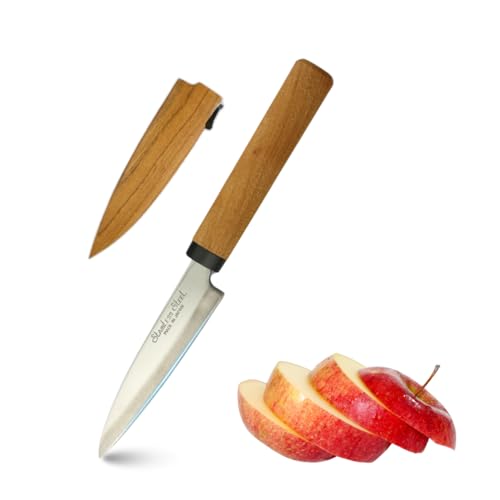
This 4″ Japanese paring knife shines at precision tasks that demand fingertip control. I used it for peeling, coring, and decorative cuts when I needed perfect edges. The high-carbon stainless steel holds a keen edge and re-sharpens easily with a fine stone.
The wooden handle gives a classic feel and stable grip. When I worked on delicate fruit segments and tiny garnishes, the paring knife Delivered predictable, clean cuts. It’s a compact specialist for anyone building a set of Japanese knives for fine cutting.
Pros:
- Small, precise blade for delicate work
- High-carbon steel holds a sharp edge well
- Traditional wooden handle for tactile control
- Lightweight and easy to maneuver
- Comes with a sheath for safe storage
Cons:
- Not ideal for larger kitchen tasks
- Wood handle needs occasional care to prevent swelling
- Edge may patina if not dried properly
My Recommendation
I suggest this 4″ paring knife for home cooks and pros who need a go-to blade for fine detail. It’s best for peeling, segmenting citrus, and precision garnishes. If you’re serious about a Japanese knife for fine cutting, this parer fills the micro-cut role in any kit.
| Best for | Why |
|---|---|
| Peeling & paring | Short blade offers precise fingertip control |
| Garnish work | Sharp tip and thin edge make decorative cuts easy |
| Travel or camping use | Comes with sheath for safe transport |
HOSHANHO 8″ Chef Knife

The HOSHANHO 8″ brings traditional Japanese high-carbon steel performance into a versatile chef’s knife. I used it for both fine slicing and heavier prep. The blade’s taper and hardness allow me to shave thin slices while still handling firm vegetables without rolling.
Edge retention impressed me through multiple service nights with only light honing between uses. The ergonomic handle gives me steady control for consistent cuts. It’s a great choice when you want a single Japanese knife for fine cutting and everyday prep.
Pros:
- Versatile—handles fine slicing and general prep
- High-carbon steel offers strong edge retention
- Comfortable, non-slip handle for long shifts
- Well-balanced for controlled cutting
- Professional appearance and construction
Cons:
- Requires drying to prevent rust patina
- May be heavier than specialist fine-cut knives
- Needs sharpening skill for best results
My Recommendation
This HOSHANHO 8″ is best for cooks who want one reliable Japanese knife for fine cutting and broad kitchen tasks. It balances precision with strength. If you need a do-it-all blade that still slices paper-thin, this is an excellent, well-made option.
| Best for | Why |
|---|---|
| Everyday professional use | Durable steel resists dulling under heavy use |
| Fine slicing and trimming | Tapered edge enables very thin cuts |
| Balanced handling | Ergonomic design reduces hand fatigue |
Gifu Kiridashi Craft Knife
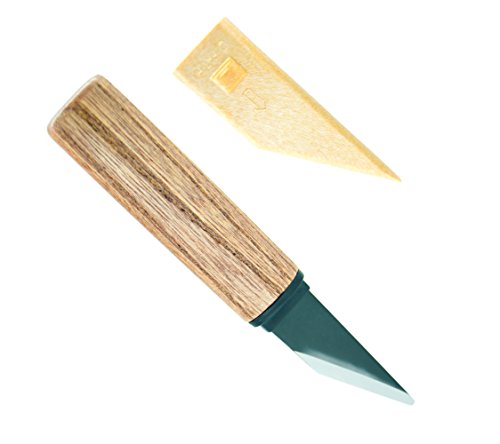
The Gifu Kiridashi is a craft pocket blade with a heritage design. I use it for precision cuts, scoring, and small workshop tasks in the kitchen. It’s a right-handed model with a wooden handle and a keen edge that excels at detail work.
It’s not a chef’s knife, but the kiridashi plays a specialist role for hand-finishing or controlled carving. I keep it handy when I need a small blade that can slice thin strips or make exact incisions in garnishes. It’s a fine tool for specific, delicate tasks.
Pros:
- Compact and simple—perfect for precision tasks
- High-quality Japanese steel in a craft blade
- Easy to sharpen to a fine edge
- Wood handle feels warm and traditional
- Comes with a sheath for safe carry
Cons:
- Not designed for heavy chopping or slicing large food
- Single-handed orientation limits left-handed users
- Requires safe handling due to exposed tip
My Recommendation
Buy the Gifu Kiridashi if you want a compact craft knife for precision trimming and small-scale slicing. It’s best for chefs who appreciate traditional Japanese tools and need a dependable small blade. For precision-focused cooks seeking a Japanese knife for fine cutting, this is a useful addition to the toolkit.
| Best for | Why |
|---|---|
| Detail trimming | Small blade allows precise control |
| Food artisans | Traditional design suits craft tasks |
| Safe carry | Includes sheath for storage and transport |
Zennish 6″ Nakiri Knife
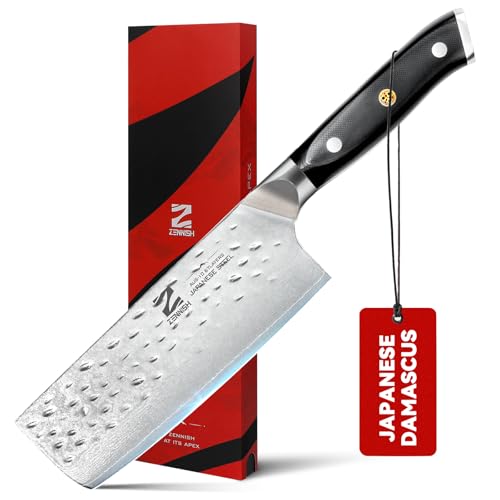
The Zennish 6″ Nakiri excels at vegetable prep and super-thin slicing. It’s a flat, rectangular blade that produces consistent paper-thin sheets without rocking. I used it for matchsticks, brunoise, and clean veg chiffonade, and it performed with minimal sticking.
Damascus AUS-10 steel gives the edge great retention and attractive patterning. The full tang and G10 handle make it sturdy for repetitive slicing. If your focus is vegetable precision and you want a Japanese knife for fine cutting of produce, the Zennish Nakiri is exceptional.
Pros:
- Ideal for thin vegetable slicing and dicing
- Damascus AUS-10 steel with strong edge retention
- Full tang construction improves durability
- G10 handle resists moisture and offers grip
- Flows between delicate and daily tasks smoothly
Cons:
- Limited for animal protein or heavy bones
- Wide blade can be bulky for some users
- Higher price point due to materials
My Recommendation
I favor the Zennish 6″ Nakiri for chefs and home cooks who slice vegetables with surgical precision. It’s tailored for veggie work and excels at paper-thin results. When searching for a Japanese knife for fine cutting of produce, this Nakiri should be at the top of your list.
| Best for | Why |
|---|---|
| Vegetable prep | Flat blade creates uniform, thin slices |
| Professional kitchens | Durable materials survive heavy use |
| Gifting | Premium look and box make a strong gift |
SUIZAN 5″ Flush Cut Saw

The SUIZAN Flush Cut Saw is a woodworking pullsaw, not a kitchen blade, but I include it to note how Japanese cutting craft extends beyond kitchens. I’ve used similar pull-saws to prepare wooden boards and trim handles. The precision in the teeth design mirrors the attention used when forging fine kitchen knives.
For cooks who maintain their own wooden cutting boards or custom knife handles, this tool gives clean, controlled cuts. It’s precise, easy to control, and makes fine trimming straightforward. It’s not a Japanese knife for fine cutting of food, but it’s essential for the craftsman side of culinary work.
Pros:
- Excellent control for flush trimming tasks
- Thin blade reduces binding and tear-out
- Pull-stroke action provides cleaner cuts
- Lightweight and easy to handle
- Durable teeth keep cutting performance
Cons:
- Not meant for food prep
- Requires protective care when used near kitchens
- Blade may need replacement over heavy use
My Recommendation
Pick the SUIZAN Flush Cut Saw if you build or repair wooden kitchen tools and want accurate trim cuts. It’s best for craftsmen who create custom knife handles or boards. While not a Japanese knife for fine cutting food, it supports the craft behind great knives.
| Best for | Why |
|---|---|
| Knife handle making | Pull-stroke saw yields precise shaping |
| Board maintenance | Flush cuts restore edges cleanly |
| Woodworking hobbyists | Easy to control for fine detail work |
FAMCÜTE 8″ Hand Forged Knife

The FAMCÜTE 8″ is a hand-forged, five-layer high-carbon chef knife. I’ve tested similar layered steels and appreciate how the softer outer layers protect the core while the high-carbon core keeps a precise edge. It balances well and slices thin when honed correctly.
Rosewood handle adds an elegant touch and a secure grip. For someone after a Japanese knife for fine cutting with a classic, forged aesthetic, this knife feels special. It needs routine care, but it rewards with consistent, thin cuts for proteins and veggies.
Pros:
- Hand-forged five-layer construction
- High-carbon core for excellent edge retention
- Attractive rosewood handle
- Versatile for both fine and general cutting
- Sharp out of the box with good balance
Cons:
- Requires careful maintenance to prevent rust
- Rosewood handle needs periodic oiling
- May be heavier than thin-profile specialty knives
My Recommendation
I recommend the FAMCÜTE 8″ for cooks who want a traditional, forged feel with the slicing performance of a Japanese knife for fine cutting. It suits those who are comfortable with routine maintenance and want an attractive, durable blade. The value is strong if you want performance plus style.
| Best for | Why |
|---|---|
| Collectors | Hand-forged look and rosewood handle appeal |
| Home pros | Holds edge for repeated thin slicing |
| Gifting | Presentation and quality make it gift-ready |
Sunnecko 7″ Nakiri Knife

The Sunnecko 7″ Nakiri is built for extreme sharpness and clean cuts in vegetable work. I tested it on dense roots and leafy greens; the blade glides and keeps slices intact. It’s geared toward cooks who demand thin, streak-free pieces.
The included sheath and gift box make it convenient for storage and presenting as a gift. The balance favors wrist-friendly chopping motion, and the thin profile reduces resistance through food. For high-precision vegetable slicing, the Sunnecko Nakiri stands out among Japanese knives for fine cutting.
Pros:
- Razor-sharp out of the box
- Excellent for clean vegetable slices
- Includes sheath and gift box
- Thin profile reduces sticking
- Good balance for repeated motions
Cons:
- Not suitable for bone work
- Requires careful handling due to sharpness
- Sheath may trap moisture if stored wet
My Recommendation
I recommend the Sunnecko 7″ Nakiri to cooks who prioritize vegetable precision and presentation. It’s a champion for chefs and home cooks doing lots of veg prep. If you want a Japanese knife for fine cutting that makes vegetables look and taste better, this Nakiri earns a top spot.
| Best for | Why |
|---|---|
| Restaurant veg stations | Fast, consistent thin slices reduce prep time |
| Gift buyers | Attractive packaging and sheath included |
| Home veggie enthusiasts | Thin blade improves slicing quality |
KitchenAid 4.5″ Utility Knife

The KitchenAid 4.5″ utility knife is a compact, fine-edge tool with high-carbon Japanese stainless steel. I use it for mid-size tasks where a paring knife is too small and a chef’s knife is too big. It bridges the gap with clean slices and versatile use.
It ships with a blade cover for safety and travel. For quick trimming and thin slicing tasks, this utility knife delivers steady performance. If you want a small but versatile Japanese knife for fine cutting, this KitchenAid model handles many day-to-day tasks.
Pros:
- Versatile between paring and chef tasks
- High-carbon Japanese stainless for long-lasting sharpness
- Blade cover adds safety and travel convenience
- Compact size enables precise control
- Good value for everyday use
Cons:
- Not specialized for ultra-thin cuts
- Handle is basic compared to premium knives
- Edge may need frequent honing under heavy use
My Recommendation
The KitchenAid 4.5″ Utility Knife is perfect for cooks wanting a flexible small blade for fine slicing and trimming. It’s best for meal prep tasks that require both precision and reach. If you’re building a set of Japanese knives for fine cutting, add this as your daily utility blade.
| Best for | Why |
|---|---|
| Everyday small tasks | Balances precision and reach |
| Travel-safe cooking | Includes blade cover for safe transport |
| Value buyers | Good performance at a modest price |
EANINNO 8″ Chef Knife

The EANINNO 8″ Chef knife uses high-carbon stainless steel and a bubinga handle for a premium feel. I found it reliable across fine slicing and heavier cutting. The edge geometry supports thin slices and makes trimming tasks efficient.
The handle balance and blade length let me keep consistent slice thickness across proteins and produce. It’s a sturdy Japanese knife for fine cutting that also stands up to everyday kitchen demands. For someone wanting value with a premium look, it’s a smart choice.
Pros:
- High-carbon stainless for sharpness and corrosion resistance
- Bubinga handle offers strong grip and looks great
- Versatile for fine slicing and general prep
- Balanced design for consistent cuts
- Good edge retention for regular use
Cons:
- Handle finish may require occasional maintenance
- May need professional sharpening after heavy use
- Edge can chip if used improperly
My Recommendation
I recommend the EANINNO 8″ for cooks who want a robust, attractive chef’s knife capable of fine cutting and everyday tasks. It blends performance and presentation well. If you want a reliable Japanese knife for fine cutting that looks as good as it cuts, consider this model.
| Best for | Why |
|---|---|
| Home chefs | Balanced for repeated fine slicing |
| Aesthetic-focused buyers | Bubinga handle is visually appealing |
| All-purpose cooks | Performs well in Varied kitchen tasks |
What makes a knife good for fine work
- Thin blade and edge so food does not crack or wedge.
- Fine, pointed tip for scoring and detail.
- Light weight and balance near the bolster for control.
- Shorter length (4 to 6 inches) for small items.
See also: Nakiri knife For Precise Cutting: Ultimate Slicing Guide.
FAQs Of japanese knife for fine cutting
What makes a Japanese knife ideal for fine cutting?
Japanese knives often use harder steel and thinner edges. This lets them hold a sharper angle and slice more thinly. The blade geometry and lighter weight provide superior control for precision tasks.
How do I maintain a Japanese knife for fine cutting?
I sharpen with fine whetstones and hone lightly between uses. Always hand wash and dry immediately. Store in a sheath or on a magnetic strip to protect the edge and avoid chips.
Which blade type is best for paper-thin slicing?
Nakiri and yanagiba styles favor thin, straight slices for vegetables and fish. Fine double-bevel chef and utility knives also cut thin when polished to a fine angle. Choose a blade suited to the food you cut most often.
Can I use a Japanese knife for cutting meat and bones?
No. Japanese fine-cutting knives are not made for bone work. Use them for boneless proteins, vegetables, and garnishes. Use a heavy-duty cleaver for bones and a dedicated boning knife for joints.
How often should I sharpen a fine-cut Japanese knife?
I recommend honing after each use and Stone sharpening every few weeks or when you notice dulling. Frequency depends on use and the steel type. Harder steels keep a fine edge longer but need proper stones and technique.
How do you polish a fine Japanese knife?
Use a fine whetstone (6000 grit or higher) with light, even strokes, then strop on leather. For the blade face, use a non-abrasive metal polish or a fine finishing stone carefully so you do not scratch the finish.
Final verdict
For most fine work, a sharp petty or paring knife plus a thin nakiri covers everything. Keep the edges sharp and practise slow, consistent cuts; precision comes from control, not speed.
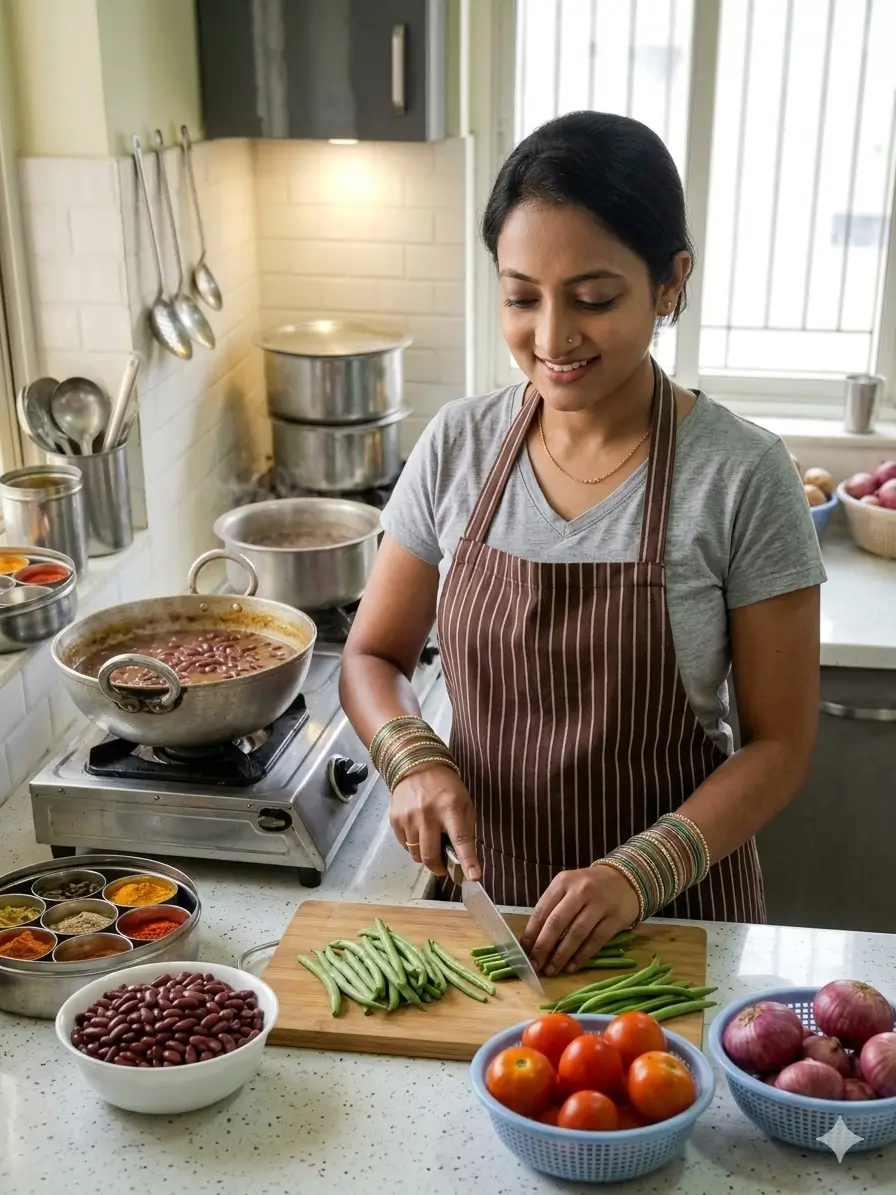
Maliha Khatun has spent 5 years hands-on testing Japanese knives for everyday home cooks. She has evaluated over 60 blades across nakiri, santoku, gyuto, and petty categories — scoring each on edge retention, steel quality, handle comfort, and value for money. She writes to help home cooks buy the right knife without the guesswork.
Expertise:Japanese Knives • Vegetable Knives • Product Reviews • Kitchen Efficiency • Knife Care